How to Dress Professionally: What Makes an Outfit Read Polished
Professional dress is less about the specific pieces and more about five variables you can control tonight. Here is what actually makes an outfit read as polished.

Working out an outfit for tomorrow? Save this page. It is easier to skim the night before than to remember.
At a glance
Works
- Well-fitted pieces in structured fabric that hold their shape through the day
- Pressed and lint-free garments with no visible wear
- Accessories edited down to one or two quiet pieces
Depends
- Denim — only where you have seen people at your level or above wear it on a regular workday
- Open-toe shoes — some offices accept them in business casual, most do not in professional settings
- Collarless tops — fine in casual offices, too relaxed where the norm is a button-down or blouse
Skip
- Wrinkled or pilling fabric, regardless of how expensive the piece was
- Logos, athletic details, or graphic prints
- Flip-flops, athletic sandals, or visibly scuffed shoes
You own clothes that should work for the office. But some mornings the outfit reads as polished and other mornings it reads as forgettable. The difference is rarely about what you bought.
It comes down to five variables you can control tonight: fit, fabric, condition, proportion and accessory restraint. None of them require a new wardrobe.
Here is how each one works, and what to check before you leave the house.
Why Some Outfits Read as Professional and Others Do Not
The same blazer can look sharp on one person and sloppy on another. The reason is almost never the blazer itself.
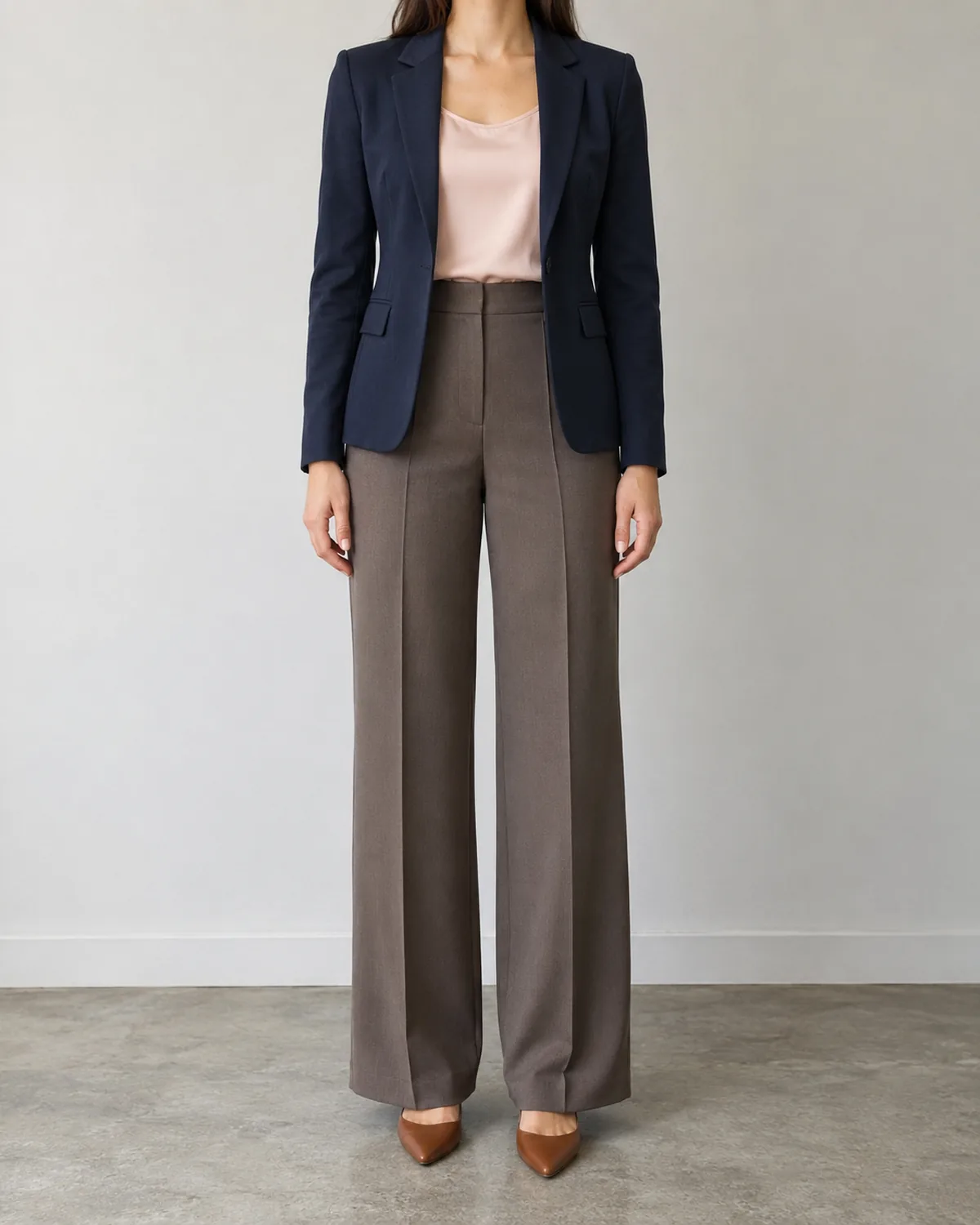
Professional dress is a signal, and signals are built from details. Career centres across the country define it through the same short list: clothes that fit, fabrics that hold their shape, surfaces that are clean and pressed, proportions that are intentional and accessories that stay out of the way.
- UMass Dartmouth puts it directly: "Work clothes should be clean, in good condition, and free of wrinkles, holes, lint, pilling, and excessive fading."
- Duke's career guide leads with fit: "Selecting a cut of fabric that suits your body shape will ensure that you are choosing flattering silhouettes that show your body's proportions without clinging."
- None of these definitions mention price, brand or trend.
These five variables are the rest of this guide. If you already own pieces that are the right formality for your office, the work is in how you wear them.
Start with Fit
Fit is the first thing people register, even before they notice what you are wearing.
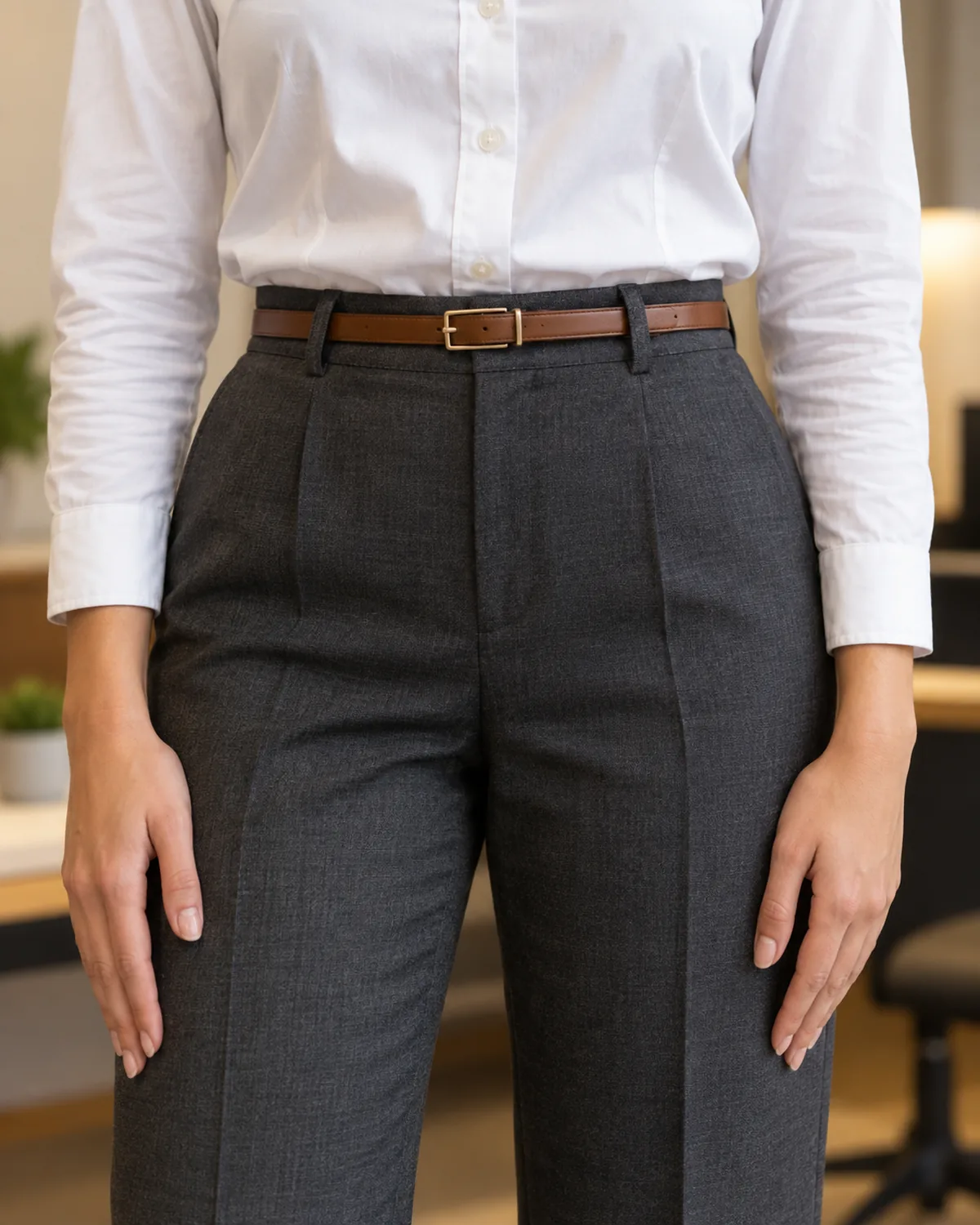
Fit does not mean tight. It means the garment follows the body without pulling or pooling. Duke's attire guide says it plainly: "Generally, do not wear oversized items or clothing that is too tight." Iowa's career centre adds the sit test: "Make sure the suit is not too tight to sit down comfortably and not too loose either."
- Shoulders: the shoulder seam of a blazer or structured top should sit at the point of your shoulder, not sliding down the arm or pulling inward.
- Sleeves: a blazer sleeve should end at the wrist bone. A blouse sleeve should show about a centimetre of cuff below the jacket.
- Trousers: the hem should just touch the top of the shoe with no more than a slight break. Fabric pooling on the floor reads as careless.
- The sit test: sit down in the full outfit. If the waistband digs, the blouse gaps, the skirt rides up above the knee or the jacket bunches at the back, the fit is wrong.
Tailoring is the most cost-effective upgrade. Having a pair of trousers hemmed or a blazer taken in at the waist costs less than a new garment and does more for the overall impression.
Where to start
Find your situation, skip ahead
Your office has a written dress code
Start at the formality section to calibrate where your office sits, then work backward through fit and fabric.
You own the clothes but they never look quite right
The issue is almost always fabric or condition, not the pieces themselves. Start there.
Choose Fabric That Holds Its Shape
A structured fabric does half the work for you. It resists wrinkles, holds a crease and looks the same at five o'clock as it did at eight.
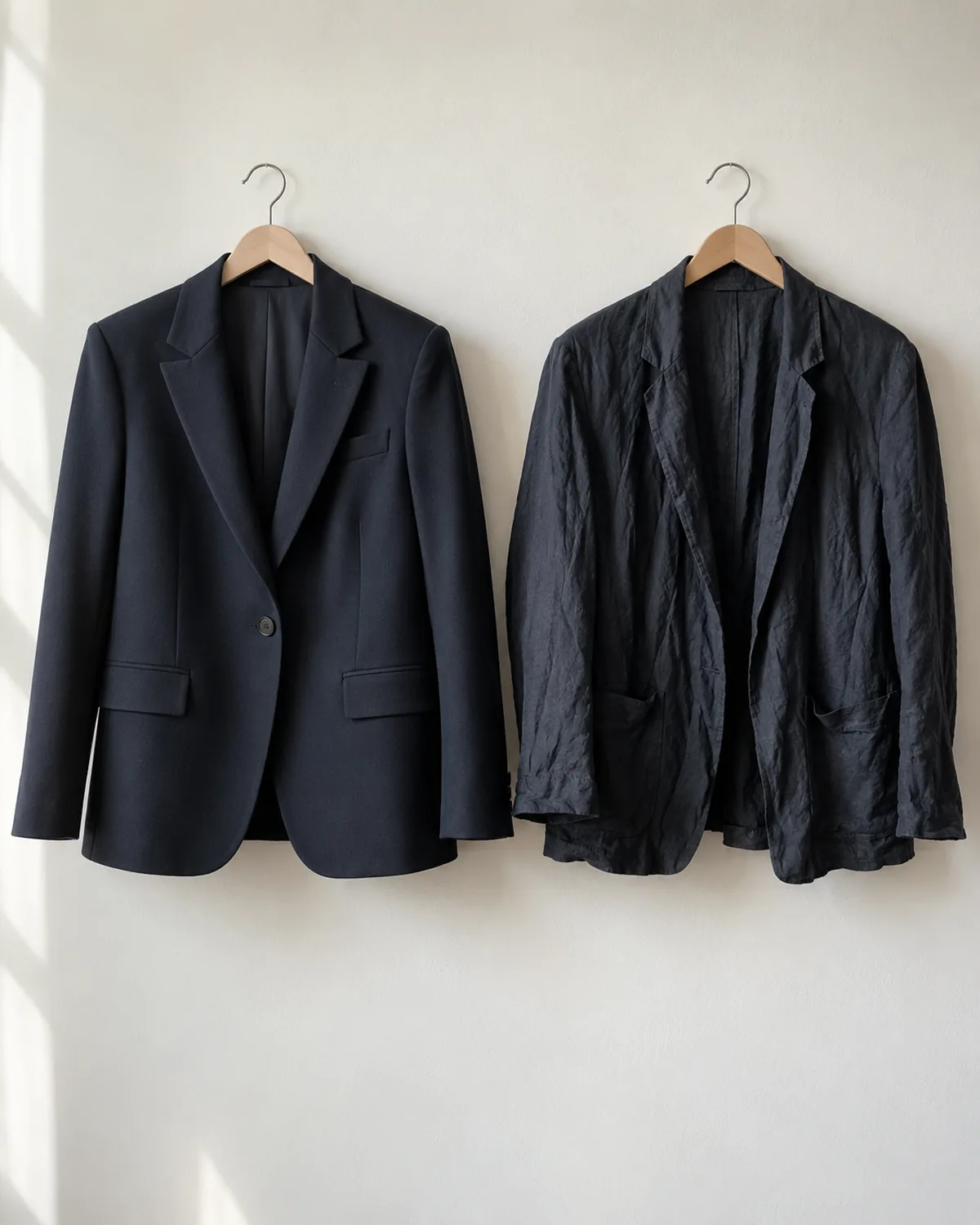
Duke's guide recommends being "mindful of the climate, the season, and the drape of the material on your body." Heavier wovens like wool crepe, ponte and tropical wool hold their silhouette through a full workday. Lighter options like cotton-linen blends and unlined linen crumple within an hour of sitting down.
- Wool blend and ponte hold structure without stiffness. A ponte blazer keeps its shape through back-to-back meetings.
- Crepe drapes without clinging and resists visible wrinkles. It works for blouses and sheath dresses.
- Thin cotton and unlined linen lose their shape quickly. They can work in casual offices during summer, but they need pressing every time you sit down.
- The hanger test: hang the garment for a day. If it holds its shape on the hanger, it will hold its shape on your body.
This is not about price. A twenty-dollar ponte top from a chain store holds its shape better than a hundred-dollar linen blouse. What matters is the weave, not the label.
Press and Maintain
The fastest way to make an outfit look more professional is to make it look maintained.

Iowa's career centre defines professional dress clothes as "well pressed, clean suits without dangling threads." Illinois lists the standard: "Clothes should be fitted, clean, in good condition, and wrinkle, pet hair, and lint-free." USC keeps it even shorter: "Wear wrinkle-free clothing."
Every one of these checks is free.
- Steam or iron the night before. A handheld steamer takes two minutes and catches the wrinkles a hanger cannot fix.
- Lint-roll every dark surface. Pet hair, lint and loose fibres on a navy blazer are visible from across a room.
- Check for pilling. A fabric shaver removes surface pills from knits and woven blends. Pilling on the sleeves or torso makes new clothes look old.
- Cut loose threads. Iowa specifically calls out "dangling threads" as a mark against professional dress. A pair of small scissors in your desk drawer handles this.
- Press a crease into tailored trousers. A visible centre crease is one of the clearest signals that the wearer is paying attention.
These are not one-time tasks. Condition is a daily check, and it is the variable that separates an outfit that reads as deliberate from one that reads as an afterthought.
Get the Proportions Right
Proportion is the relationship between the volume on top and the volume on the bottom. When the ratio is intentional, the outfit looks designed. When it is accidental, the outfit looks unfinished.
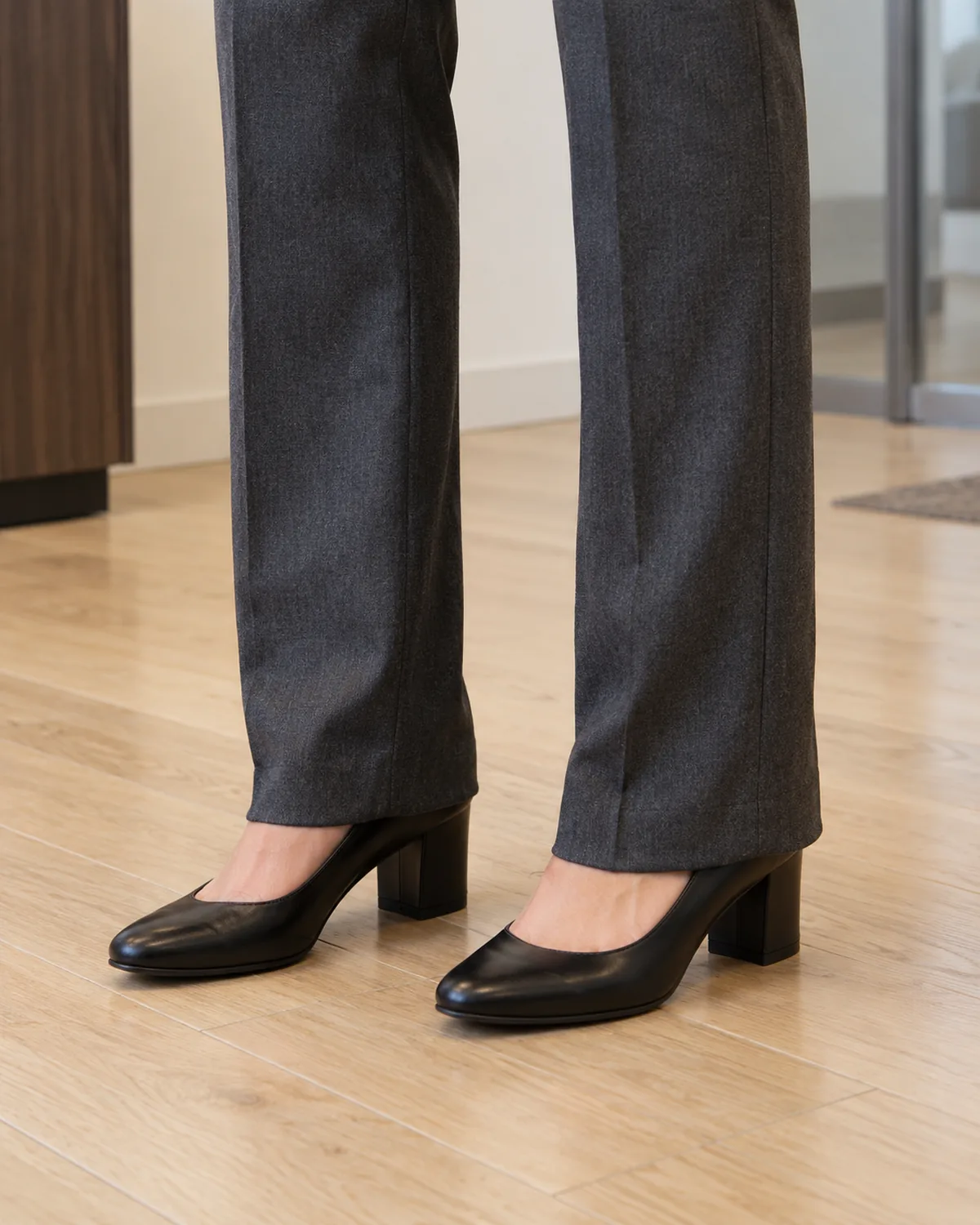
Duke's attire guide addresses this through hemlines and silhouette: "Hemlines should not be above the top of your kneecap and be sure to test how the fabric moves when you sit." The underlying principle is that every visible line should look intentional.
- Tucked vs untucked: a tucked-in blouse creates a visible waistline and reads as more polished. An untucked top works when it is structured and hits at the hipbone, not when it is long enough to look like you forgot to tuck it in.
- Volume balance: a loose wide-leg trouser pairs with a fitted top. A slim trouser pairs with a slightly relaxed blouse. Matching loose with loose or tight with tight throws the proportions off.
- Trouser break: the place where the trouser hem meets the shoe tells the story. A slight break, where the fabric just touches the top of the shoe, reads as clean. Fabric pooling on the floor reads as too long. A gap between the hem and the shoe reads as too short, unless the style is cropped.
- Skirt length and shoes: a knee-length skirt with a low block heel gives a clean line. A midi skirt with flats can shorten the visible leg unless the colour of the shoe matches the tights or skin tone.
When proportions are off, no amount of good fabric or pressing fixes it. This is the variable that makes people look at an outfit and sense that something is wrong without being able to name it.
Edit Your Accessories Down
Professional accessorising is mostly about removal.
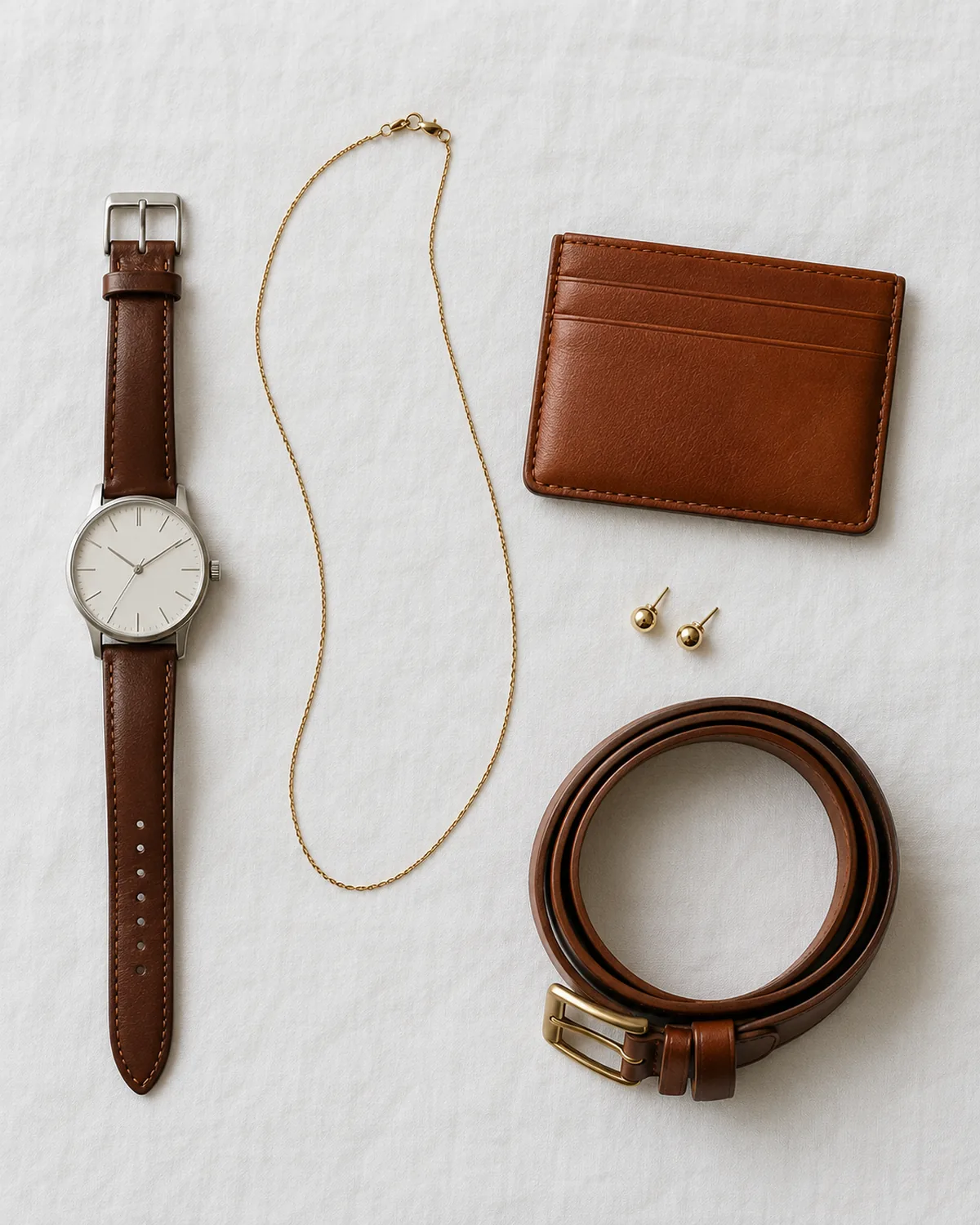
UMass Dartmouth's career centre is direct: "Avoid accessories that are too flashy or distracting. Jewelry should be minimal." Illinois says to "keep additional accessories to a minimum; avoid flashy/hanging items." USC reduces it to three words: "Keep accessories simple."
- One statement piece is enough. A watch or a single necklace, not both layered together.
- Belt and shoes in the same colour family. This is an old rule and it still works because it creates a consistent colour line from the waist down.
- Bags should be structured and proportional. A tote the size of a weekend bag reads as overpacked, not professional.
- Earrings that do not move. Studs or small hoops stay quiet. Long dangles draw the eye away from the conversation.
The test is whether the accessory adds to the outfit's message or competes with it. If you notice the jewellery before you notice the person, there is too much.
Match the Formality to the Room
Dressing appropriately is not just about dressing up. Overdressing and underdressing both miss the mark.
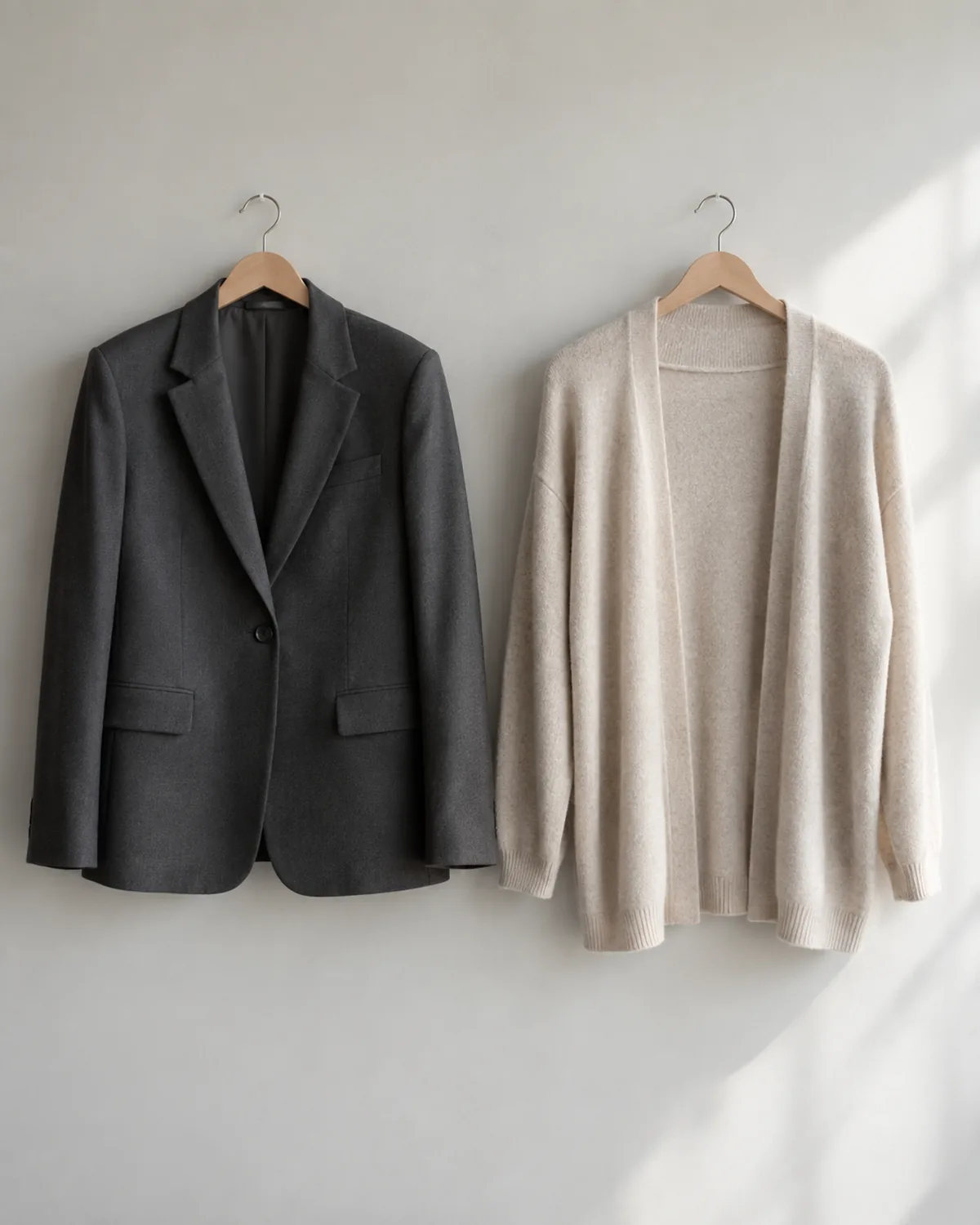
Texas A&M frames it this way: "Different companies and industries have different norms in regard to business dress, so it's important to research a company and its culture to learn more about its dress code." The outfit that reads as professional in a law firm is too formal for a design studio, and the outfit that works in a startup reads as underdressed in a bank.
- Read the room, not the policy. A written dress code gives you the minimum. The actual norm is set by what people one level above you wear on a regular Tuesday.
- A blazer is a dial. The same trousers and blouse read as business casual without a blazer and as business professional with a matching one. Keeping a blazer at the office gives you a formality adjustment on short notice.
- First days and client meetings call for the higher end of whatever the office norm is. Texas A&M recommends dressing "a little more conservatively and formally than employees typically dress at that organization" for interviews, and the same logic applies to any high-stakes first impression.
- If your office has a written dress code, it outranks anything here. The specific terms, whether business casual or business professional, define the range you are working within.
Getting the formality wrong is more costly than getting a single garment wrong. A perfect blazer in a no-blazer office reads as out of touch.
The Details That Undermine Everything Else
Some details are not about adding polish. They are about removing the things that subtract from it.

Texas A&M groups them into a single line: "These include wearing dirty or wrinkled clothes, scuffed shoes, chipped nails." Iowa mentions "dangling threads." UMass Dartmouth adds "holes, lint, pilling, and excessive fading."
These are the details that register unconsciously. Nobody will compliment you on having clean shoe soles, but people notice when they are visibly worn.
- Shoes are the most common failure point. Scuffed toes, worn-down heels and dirty soles make everything above them look careless. A quick wipe with a damp cloth and a shoe brush takes less than a minute.
- Nails should be clean and trimmed. Texas A&M flags "chipped nails" by name. Bare nails are always appropriate. Polish, if worn, should be unchipped.
- Collar and lapel should lie flat. A collar that curls up or a lapel that buckles telegraphs that the blazer has not been pressed or does not fit.
- Loose buttons and broken zips are the easiest things to ignore and the hardest to unsee. Check closures before you leave, not after you arrive.
These checks take five minutes and cost nothing. They are the difference between an outfit that someone trusts and an outfit that someone second-guesses.
How to Dress Professionally FAQ
Can you dress professionally without spending a lot?
Yes. Professional dress is about fit, fabric and condition, not brand or price. Duke's career guide suggests buying basics like shoes and a blazer that are "less susceptible to fashion trends and weight fluctuations," and looking at "local thrift shops" and sales. Having a pair of trousers tailored to your body costs far less than a new pair and does more for the overall look.
Is professional dress the same as business professional?
No. Business professional is a specific dress code that centres on a matched suit. Texas A&M defines it as "a conservative, well-tailored suit." Professional dress is a broader standard of polish that applies across dress codes, from business casual to business professional. This guide covers the variables that make any outfit within your dress code read as polished.
How do you dress professionally in summer?
The variables do not change. Fit, fabric and condition still matter. What changes is the weight of the fabric and the colour range.
Lightweight wool, linen blends and cotton poplin replace heavier wovens. Lighter colours are appropriate. The standards for pressing, lint and shoe condition stay the same. For specific summer outfits, see summer work outfits for air-conditioned offices.
What is the biggest mistake people make?
Wearing clothes that are appropriate in style but not in condition. UMass Dartmouth's list of what to avoid centres on garment state: "wrinkles, holes, lint, pilling, and excessive fading." Iowa defines professional clothes as "well pressed, clean suits without dangling threads." The piece itself is fine. The wrinkles, the lint and the loose thread are what undermine it.
Does professional dress look different for different body types?
The five variables stay the same for every body. What changes is the specific application.
A trouser rise that sits at the natural waist works differently on different torso lengths. A blazer that buttons without pulling requires a different cut depending on the bust and waist ratio.
The principles are universal. The specific garments that satisfy them are personal. This site has guides sorted by body type, including petite, curvy and midsize frames.
Where the dress-code definitions come from
- Attire Guide — Career Hub, Duke University
- Professional Attire — Career Center, UMass Dartmouth
- Dress for Success — Pomerantz Career Center, The University of Iowa
- Dress for Success — Career Center, Texas A&M University
- Dress for Success — The Career Center, University of Illinois Urbana-Champaign
- Dress for Success Guide — Career Center, University of Southern California
Keep this one
Save it where you plan outfits
Pin the image above to the board you actually check on a Sunday night. This guide is written to be re-read, not read once.
Tonight, before you close this tab
- Steam or iron tomorrow's outfit tonight
- Check shoes for scuffs and clean them
- Remove lint, pet hair and loose threads from every visible surface
- Try the outfit on and sit down — if anything pulls or rides up, swap it