15 Business Casual Outfits for Plus Size Women That Actually Fit the Dress Code
Fifteen business casual outfits for plus size women, each built around what the dress code actually asks for. Full outfits, not single items.
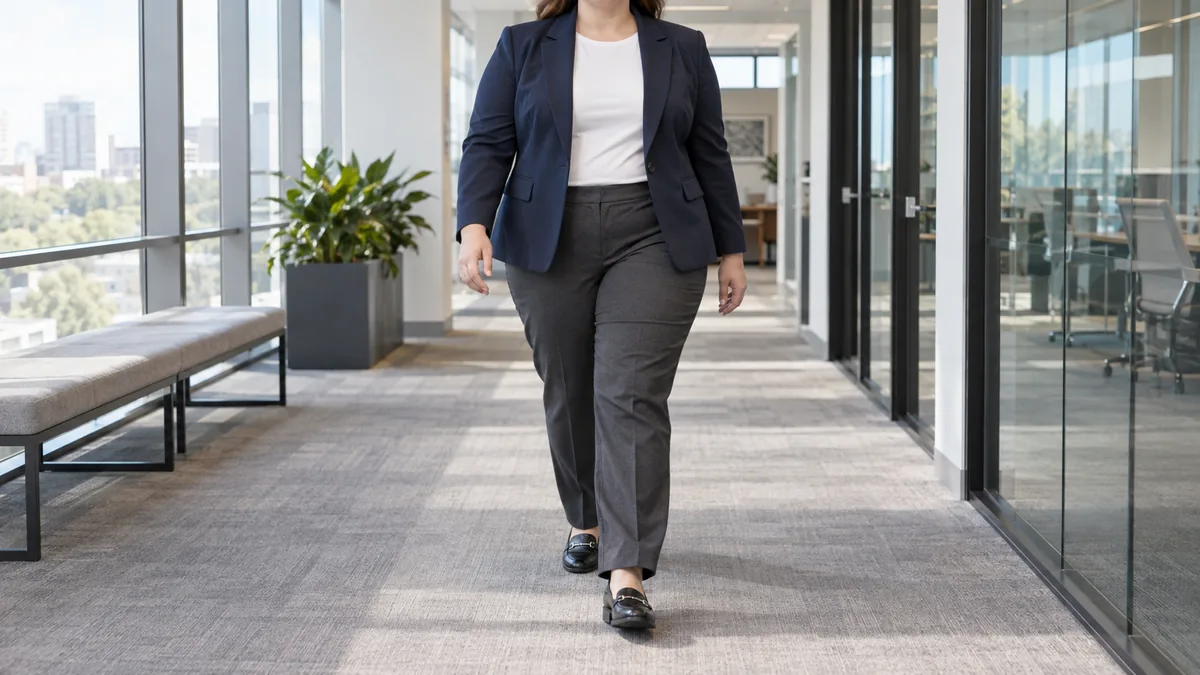
Working out an outfit for tomorrow? Save this page. It is easier to skim the night before than to remember.
At a glance
Works
- A structured single-breasted blazer over straight-leg trousers, which hits every business casual baseline regardless of size
- A midi dress with a hem at or below the knee, which meets the hemline standard that Duke and Illinois both set
- Closed-toe flats or low-heeled pumps with any trouser or skirt outfit, listed as business casual footwear by Indeed
Depends
- Dark straight-leg jeans under a blazer, which Indeed lists as business casual but Illinois does not include in its trouser options
- Tailored bermuda shorts with a collarless blouse, acceptable only where a written summer addendum explicitly permits shorts
- A camisole as a visible layer, which works under a cardigan or blazer but reads as underwear alone in most offices
Skip
- Leggings worn as trousers, even under a tunic, because no major career-centre guide lists them as business casual bottoms
- A bodycon dress that clings from shoulder to hem, because it reads as evening rather than office
- Open-toe sandals unless your specific office allows them in its written policy
Most business casual guides treat plus sizes as a footnote. A line about stretch fabric, maybe a note about dark colours. The outfits themselves are built for a size 8.
These fifteen outfits start from size 16 and up. Each is a complete look anchored to what business casual dress codes actually require, not a single item with vague styling advice.
Where the sources disagree, the disagreement is written out rather than smoothed over.
1. Dark Straight-Leg Trousers With a Structured Blazer
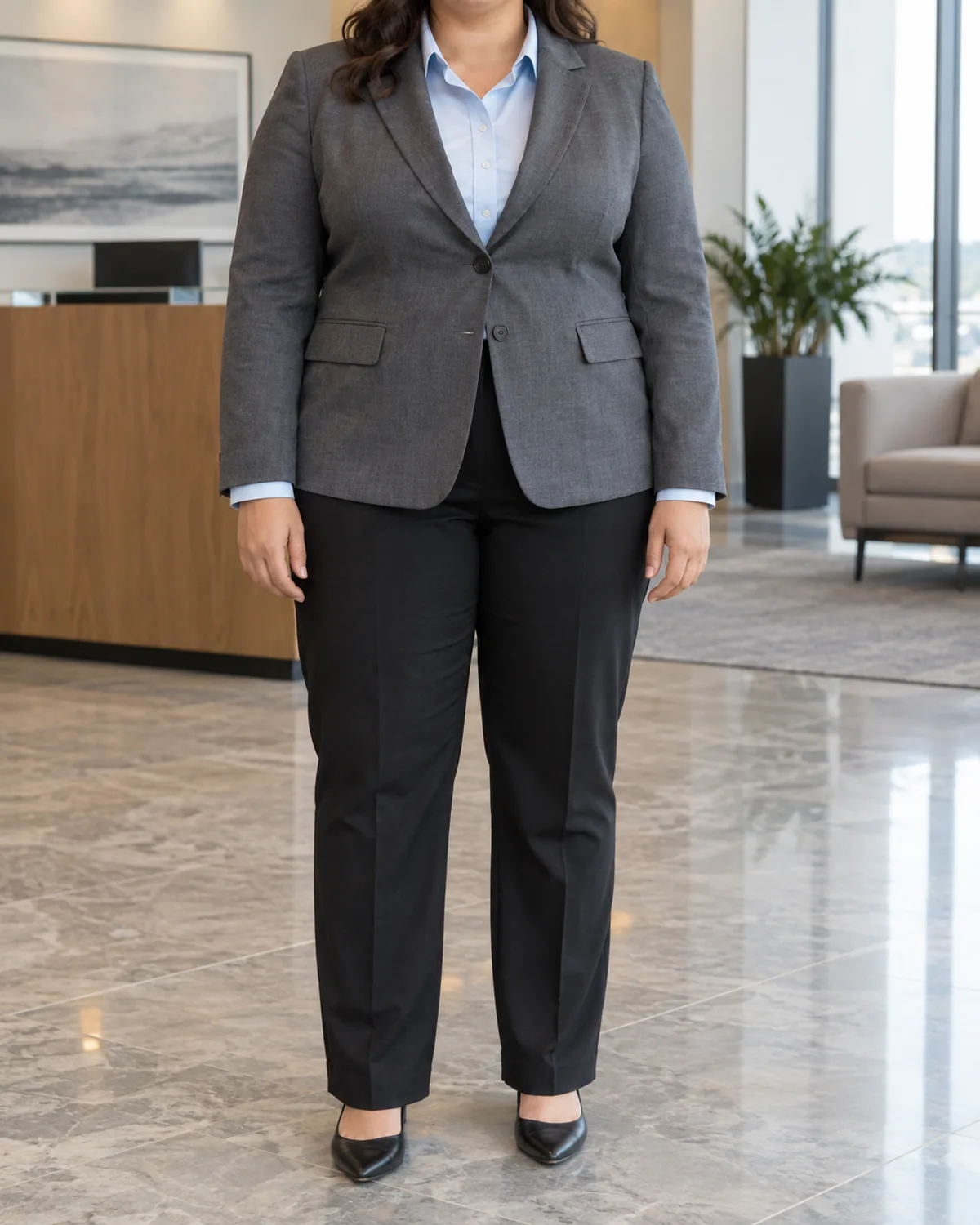
The straight leg is the most reliable trouser silhouette in extended sizes because it follows the thigh without tapering at the calf. This grey blazer sits at the hip with enough room through the midsection that the single button closes without pulling. Indeed lists "slacks or business dress pants" as the trouser baseline for business casual, and this combination meets it cleanly.
- Size the blazer to button comfortably across the fullest part of your torso, not your usual shirt size
- Choose a straight leg rather than a slim or skinny cut so the trouser drapes from the hip without compression
- Keep the shirt collar visible above the blazer lapel so the layering reads intentional
- Match the shoe colour to the trouser hem to extend the vertical line from hip to floor
2. A Relaxed-Fit Linen-Blend Blazer Over a Jersey Shell and Wide-Leg Trousers
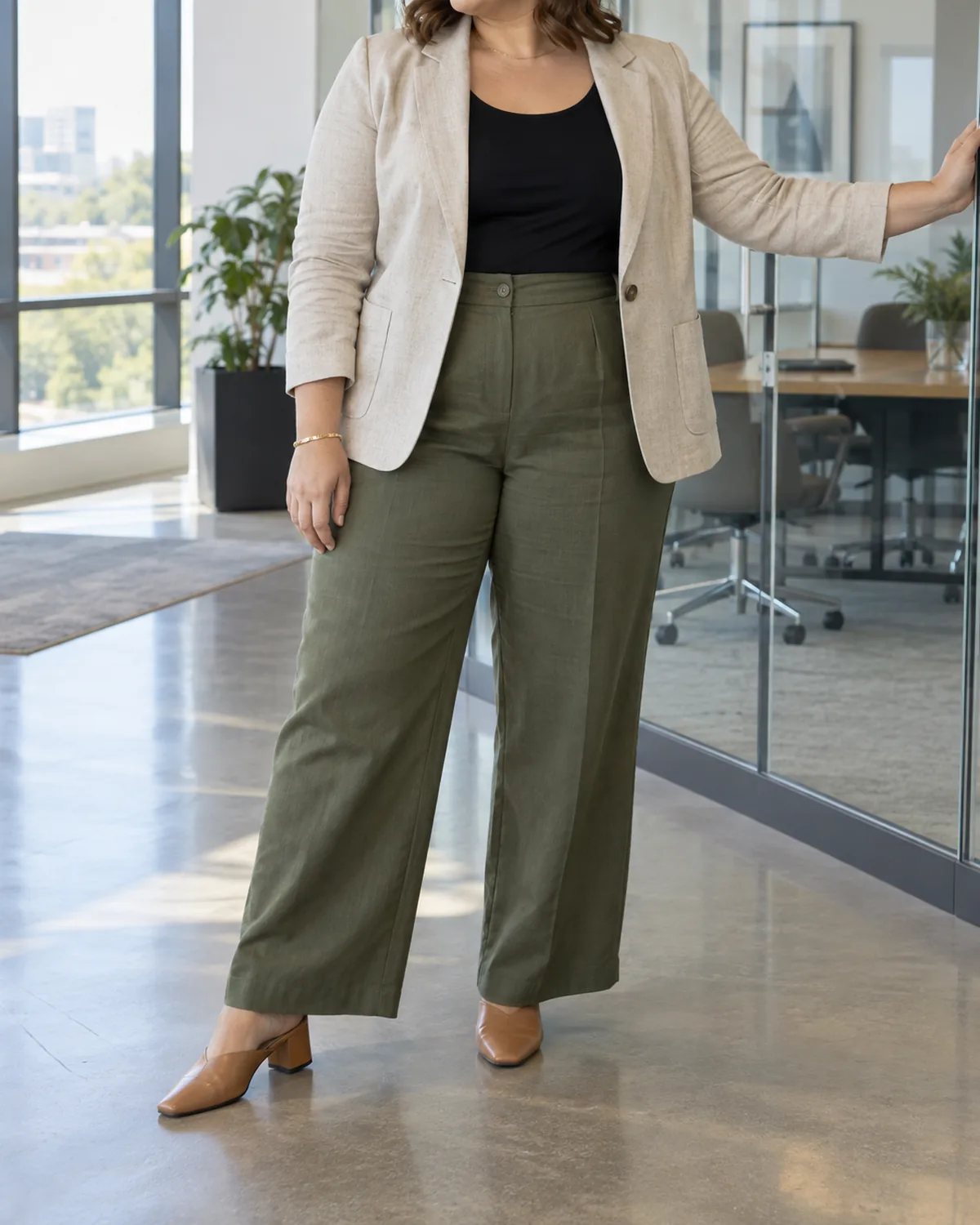
This blazer has no shoulder padding and no rigid lining, so it follows the body rather than imposing a shape. Duke's attire guide advises selecting "a cut of fabric that suits your body shape" to find silhouettes that show "your body's proportions without clinging." The unstructured blazer does that without the stiffness of a lined jacket.
- Choose a linen blend rather than pure linen to reduce wrinkling through the day
- Let the blazer sit open rather than buttoning it so the jersey shell does the fit work underneath
- Pair wide-leg trousers with a high rise so the waistband sits at or above the natural waist
- Pick a muted earthy palette where the blazer, shell and trouser are in three different tones rather than matching
3. Wide-Leg Trousers With a Tucked-In Button-Front Shirt
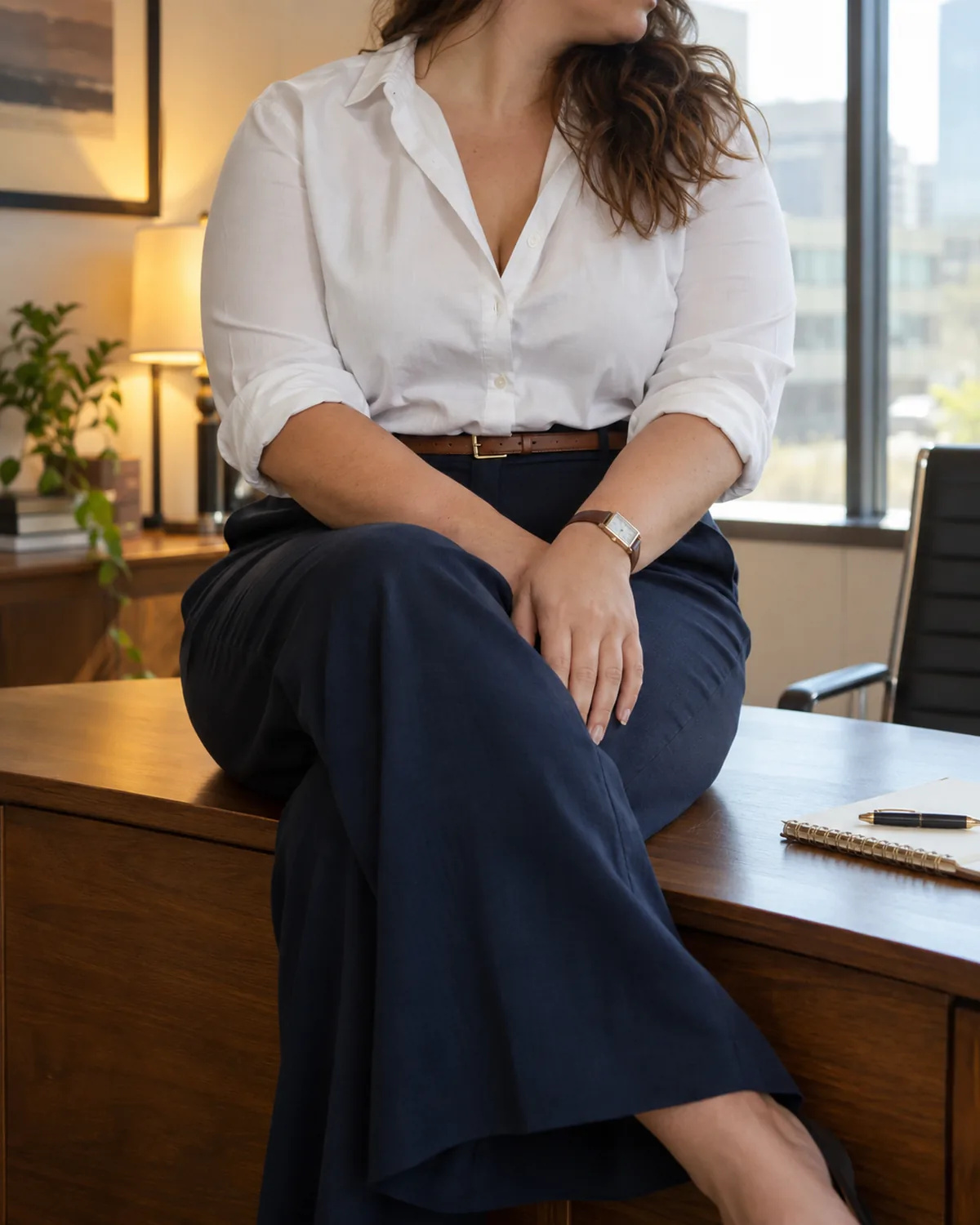
A front tuck anchors the waistline and shows the belt, which creates a clean horizontal break between the shirt and the trouser. The wide leg gives room through the thigh and hip without needing stretch fabric to do it. Creighton advises clothes that "fit properly, neither tight nor baggy," and a wide-leg trouser with a proper rise achieves that even in extended sizes where slim cuts compress.
- Use a half-tuck or a full front tuck rather than leaving the shirt out, which hides the waistline
- Choose a trouser with belt loops so the belt provides a visible anchor point
- Roll the sleeves to the forearm to balance the volume in the lower half
- Avoid a trouser rise that sits below the natural waist, which causes the fabric to pull when seated
4. A Button-Front Midi Dress in a Structured Cotton
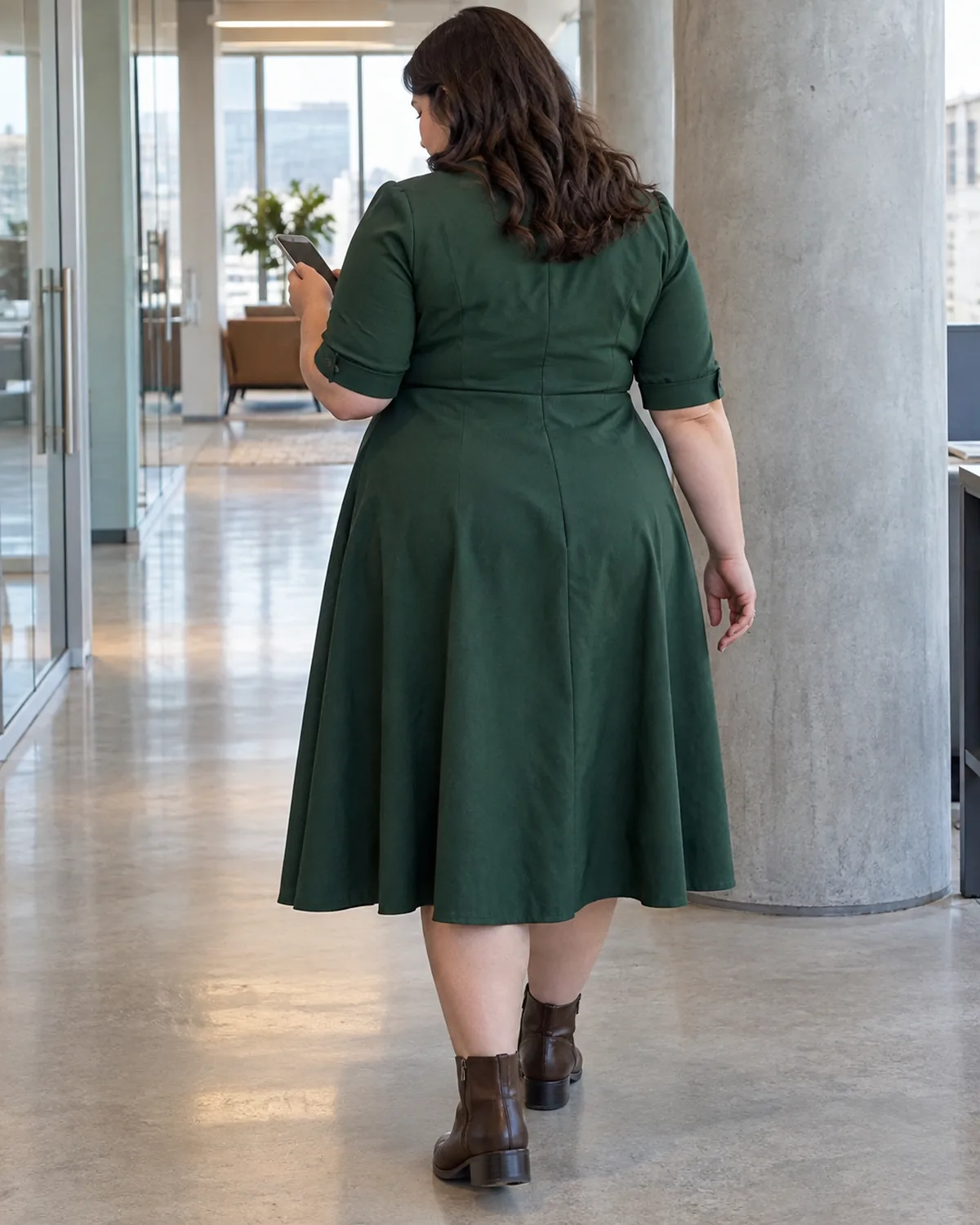
The button placket solves the fit problem that pull-on dresses create across the bust: each button adjusts independently, so the closure follows the body rather than stretching over it. The A-line skirt clears the hip and the mid-calf hem meets every hemline standard. Illinois specifies "dresses or skirts should sit at or below the knee," and this hem clears that mark by several inches.
- Choose a structured cotton or cotton-blend rather than a jersey so the skirt holds its A-line shape when walking
- Check that the buttons do not gap when seated, especially across the bust and at the waist
- Pair with ankle boots or closed-toe flats rather than heels so the midi length does not drag
- Leave the top button open if the neckline sits too high, but keep at least three buttons closed below it
Where to start
Find your situation, skip ahead
Your office has a written business casual policy and you want outfits that stay well inside the lines
Start with ideas 1 and 5. Trousers-and-blazer combinations are the safest baseline in any business casual setting.
01 Dark Straight-Leg Trousers With a Structured Blazer05 A Knit Blazer Over a Crew-Neck Top and Chinos
You prefer dresses over separates and want to skip the layering decisions entirely
Ideas 4, 6 and 15 are complete one-piece outfits that need nothing on top to read as office-ready.
04 A Button-Front Midi Dress in a Structured Cotton06 A Fit-and-Flare Dress With a Crew Neckline and Elbow Sleeves15 A Three-Quarter-Sleeve Shift Dress With a Structured Tote
Your office leans casual and you want to test the edges of the dress code without crossing them
Idea 9 brings in denim under a long blazer. Idea 7 adds bermuda shorts. Both need your office to allow them.
09 A Long Blazer Over a Jersey Top and Dark Straight-Leg Jeans07 Tailored Bermuda Shorts With a Collarless Blouse and Closed-Toe Flats
5. A Knit Blazer Over a Crew-Neck Top and Chinos
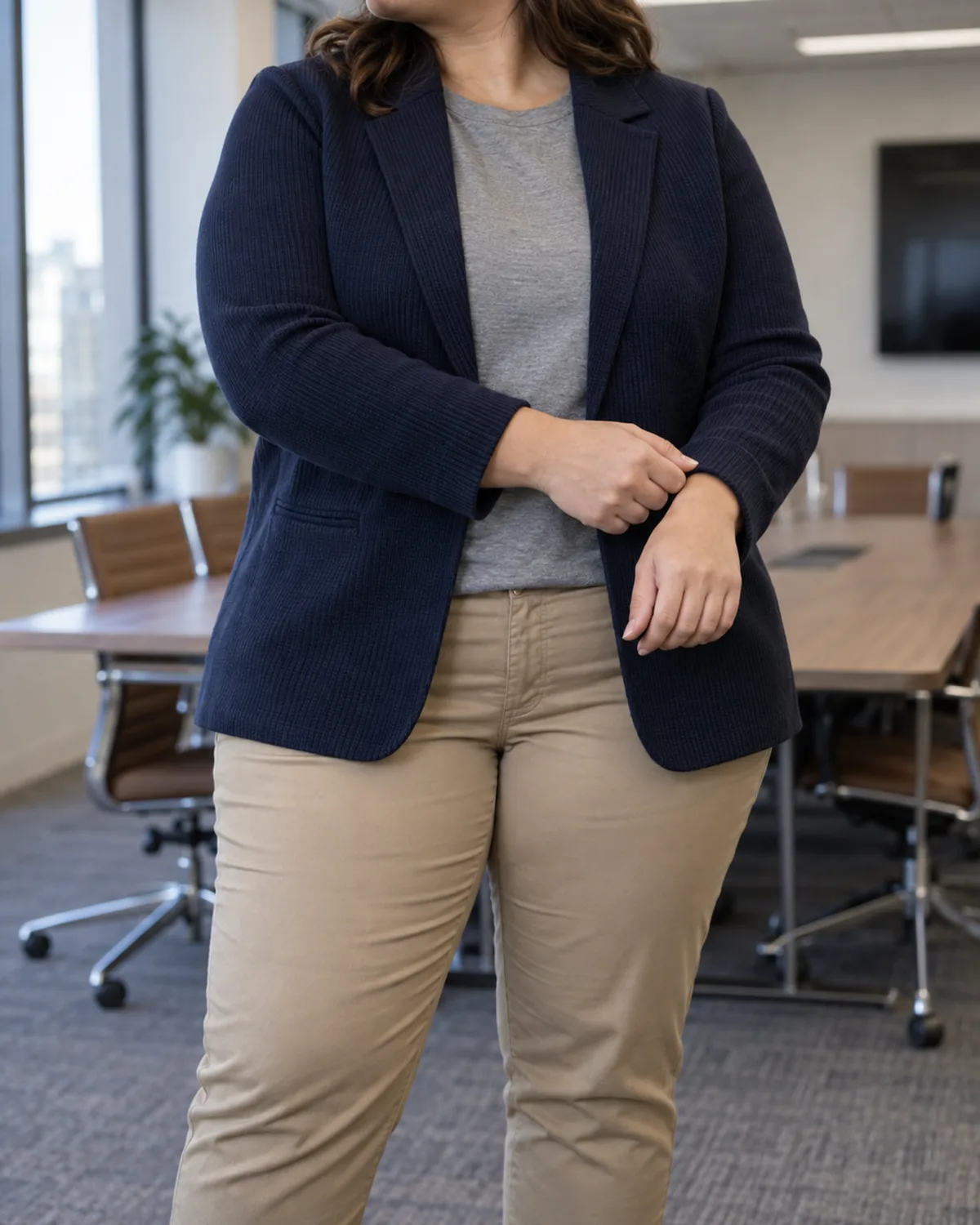
A knit blazer gives you the shoulder structure of a blazer with the give of a cardigan. The ribbed texture here reads more intentional than a smooth knit, and the notched lapel keeps it on the blazer side of the line. Indeed lists "khakis, chinos" among standard business casual bottoms, so the tan chinos underneath meet the policy without needing to be dress pants.
- Choose chinos in a dark neutral if your office runs more formal, or tan if the culture is relaxed
- Confirm the knit blazer has enough structure in the lapel that it holds its shape when open
- Layer a crew-neck rather than a V-neck under the blazer so the neckline disappears behind the lapel
- Push the blazer sleeves up slightly if the knit cuffs bunch at the wrist
6. A Fit-and-Flare Dress With a Crew Neckline and Elbow Sleeves
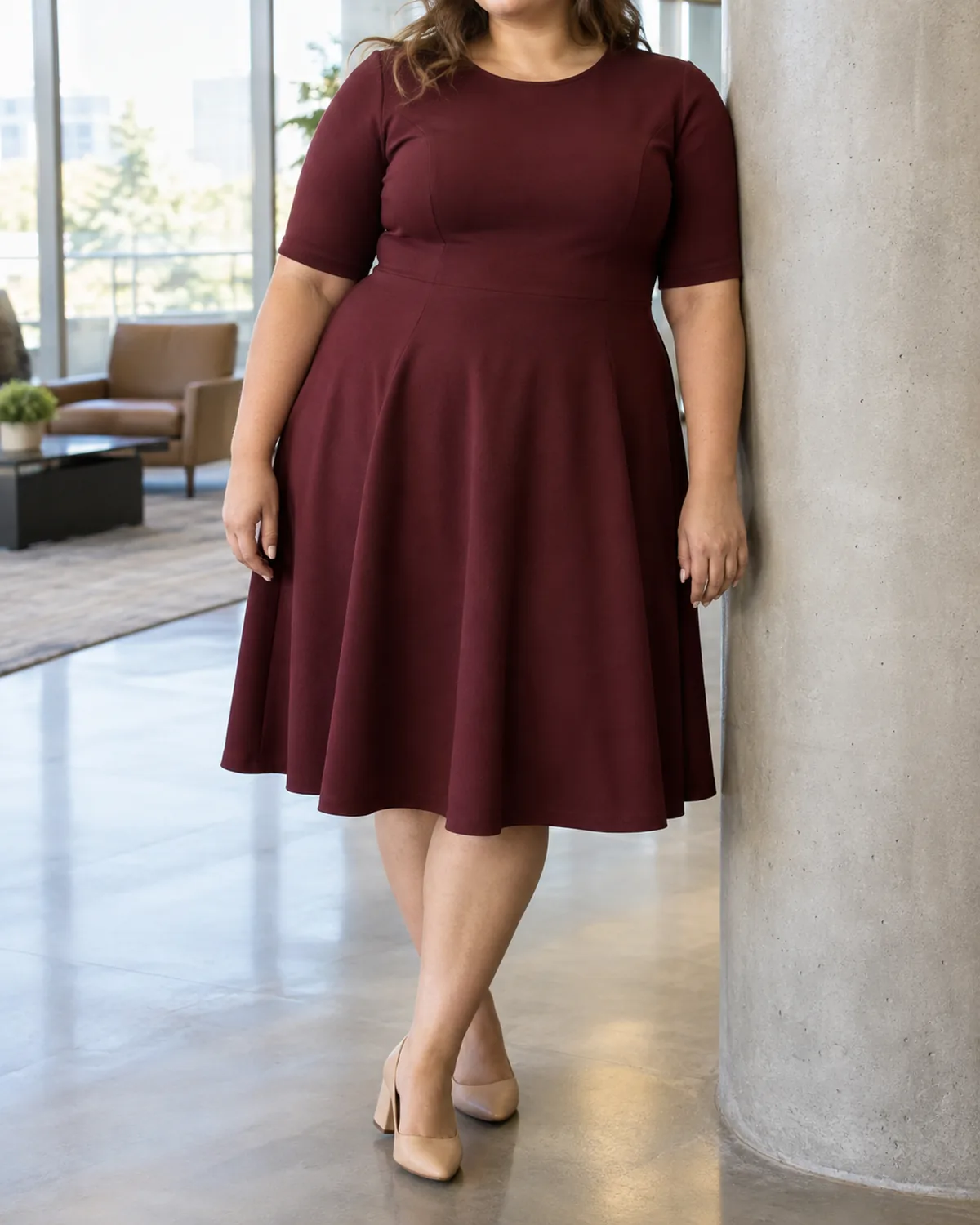
The fitted bodice and flared skirt create waist definition without a belt. This works because the seam at the waist is doing the shaping, not compression fabric. The crew neckline stays well within what Duke describes as appropriate: "make sure that the neckline is not too low." The elbow sleeves remove any bare-arm ambiguity.
- Look for a ponte or heavy jersey that holds its shape through the flare rather than collapsing against the legs
- Check that the waist seam sits at your actual waist, not your ribcage or your hips
- Pair with nude or skin-tone shoes to extend the leg line below the hem
- Steam the skirt flat before wearing because knit fabrics crease where they fold on the hanger
7. Tailored Bermuda Shorts With a Collarless Blouse and Closed-Toe Flats
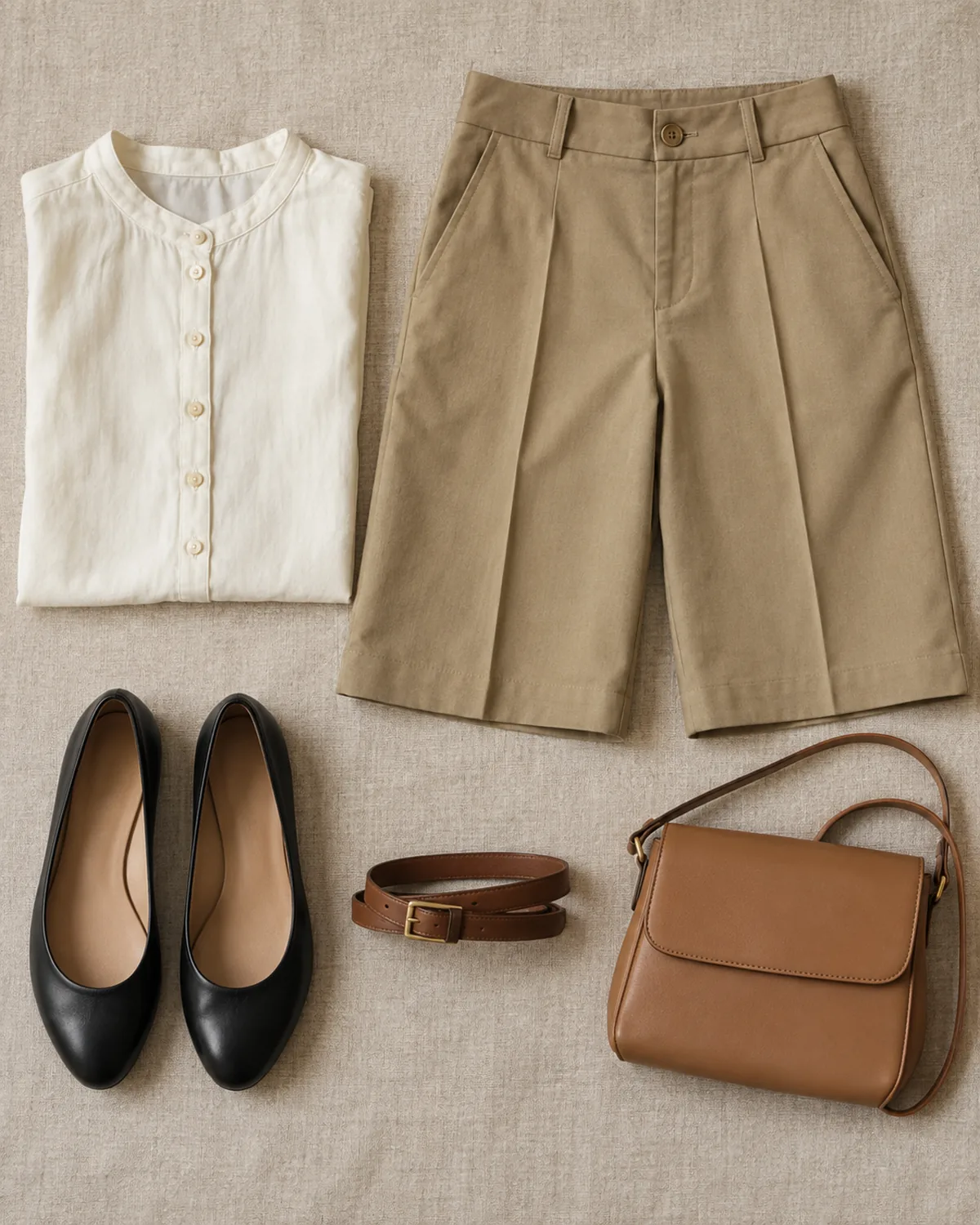
Illinois states "no shorts" in its business casual guide. This outfit exists for offices that override that rule with a summer addendum allowing longer shorts in structured fabrics. The bermuda length, front pleats and a collarless blouse push the look toward tailored rather than casual. Without a written exemption from your employer, skip this one.
- Confirm your office has a written summer policy that explicitly permits shorts before wearing them
- Choose a bermuda that ends at or just above the knee with a clean hem, not a rolled cuff
- Pair with closed-toe flats rather than sandals to keep the lower half grounded in office territory
- Add a structured bag and a leather belt to offset the casualness of exposed legs
8. A High-Waisted A-Line Skirt With a Soft Blouse and Belt
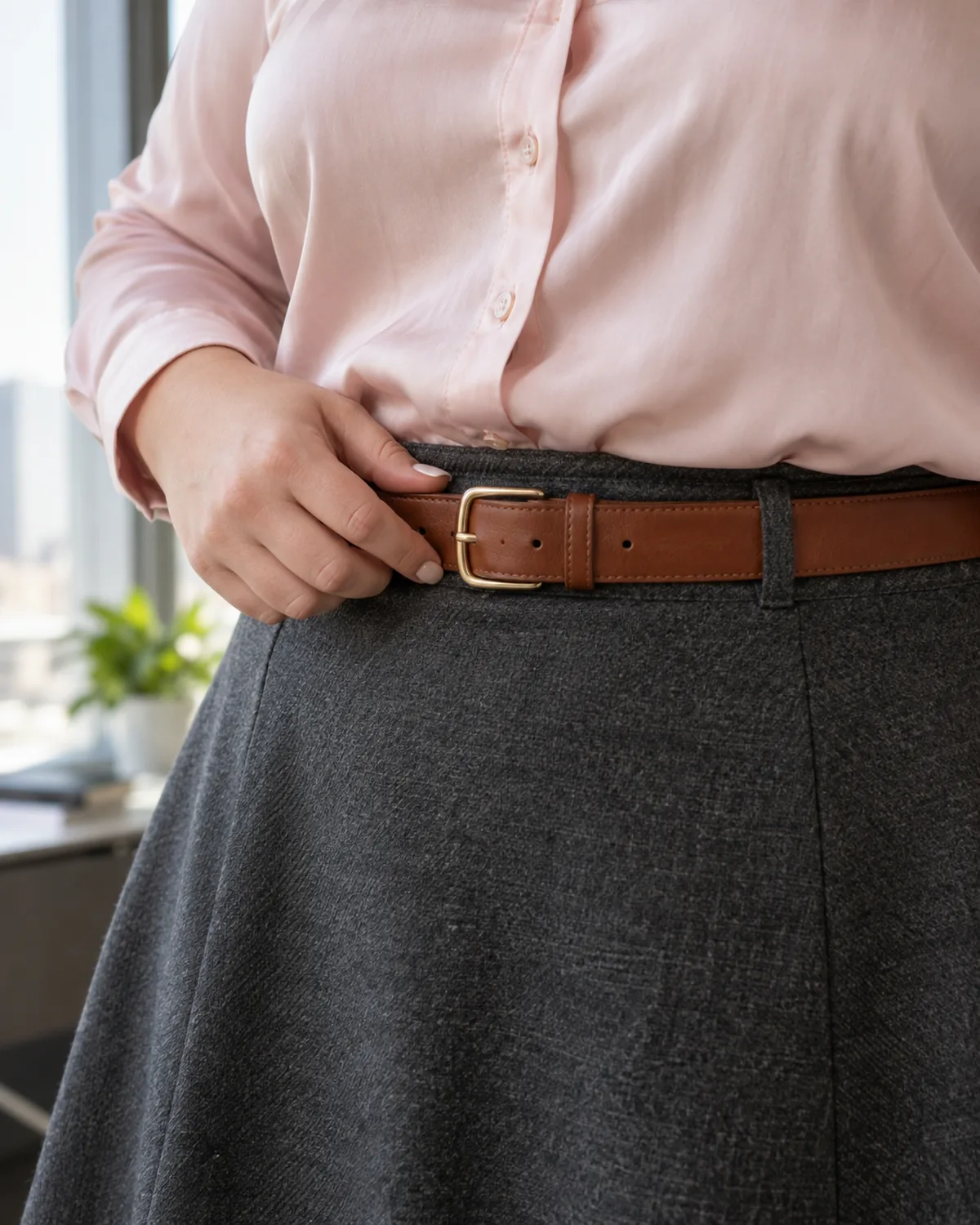
The belt at the natural waist creates a horizontal break between blouse and skirt. The A-line clears the hip without pulling or riding up. Duke notes that "hemlines should not be above the top of your kneecap" and that you should "test how the fabric moves when you sit." The A-line passes both tests more easily than a pencil skirt.
- Choose a belt width that sits flat in the skirt's waistband without bunching the blouse fabric
- Let the blouse blouse slightly above the belt rather than pulling it tight against the body
- Confirm the skirt hem stays below the knee when seated, not just when standing
- Pick a skirt in a heavier fabric like wool blend so the A-line holds its shape through the day
9. A Long Blazer Over a Jersey Top and Dark Straight-Leg Jeans
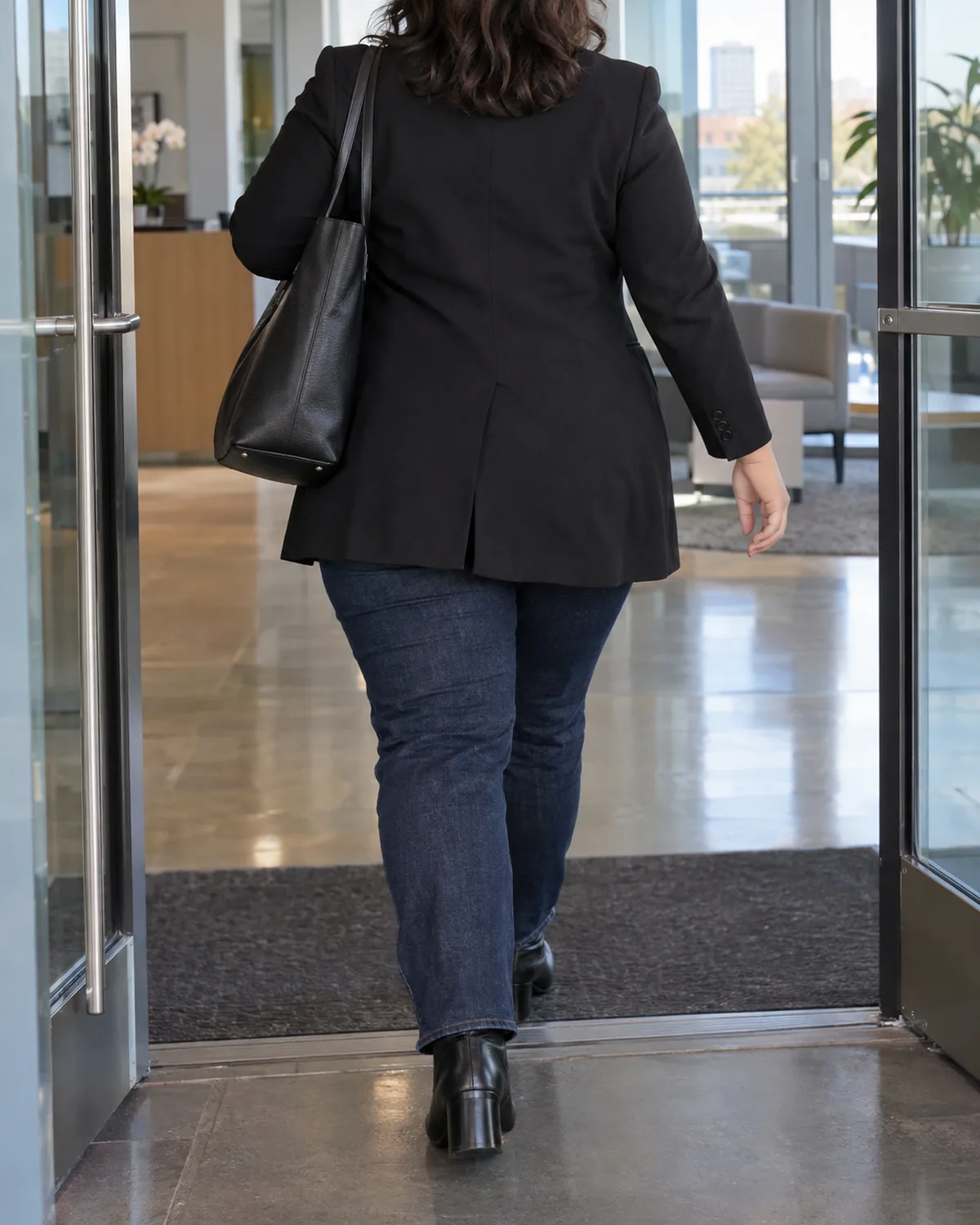
Denim in the office is a split decision. Indeed includes "dark jeans without holes" in its business casual list. Illinois mentions only "non-denim pants." The long blazer is what makes this work where denim is accepted: it extends past the hip and reads as a deliberate outfit rather than jeans with a jacket on top. The dark wash and straight leg keep the denim as close to trousers as jeans get.
- Check your company's written dress code for denim before wearing jeans to the office
- Choose a dark indigo with no fading, no distressing and no visible branding on the back pockets
- Wear the blazer long enough that it covers the back pockets and the hip entirely
- Pair with ankle boots or loafers rather than trainers so the lower half stays polished
10. Palazzo Trousers With a Fitted V-Neck Top
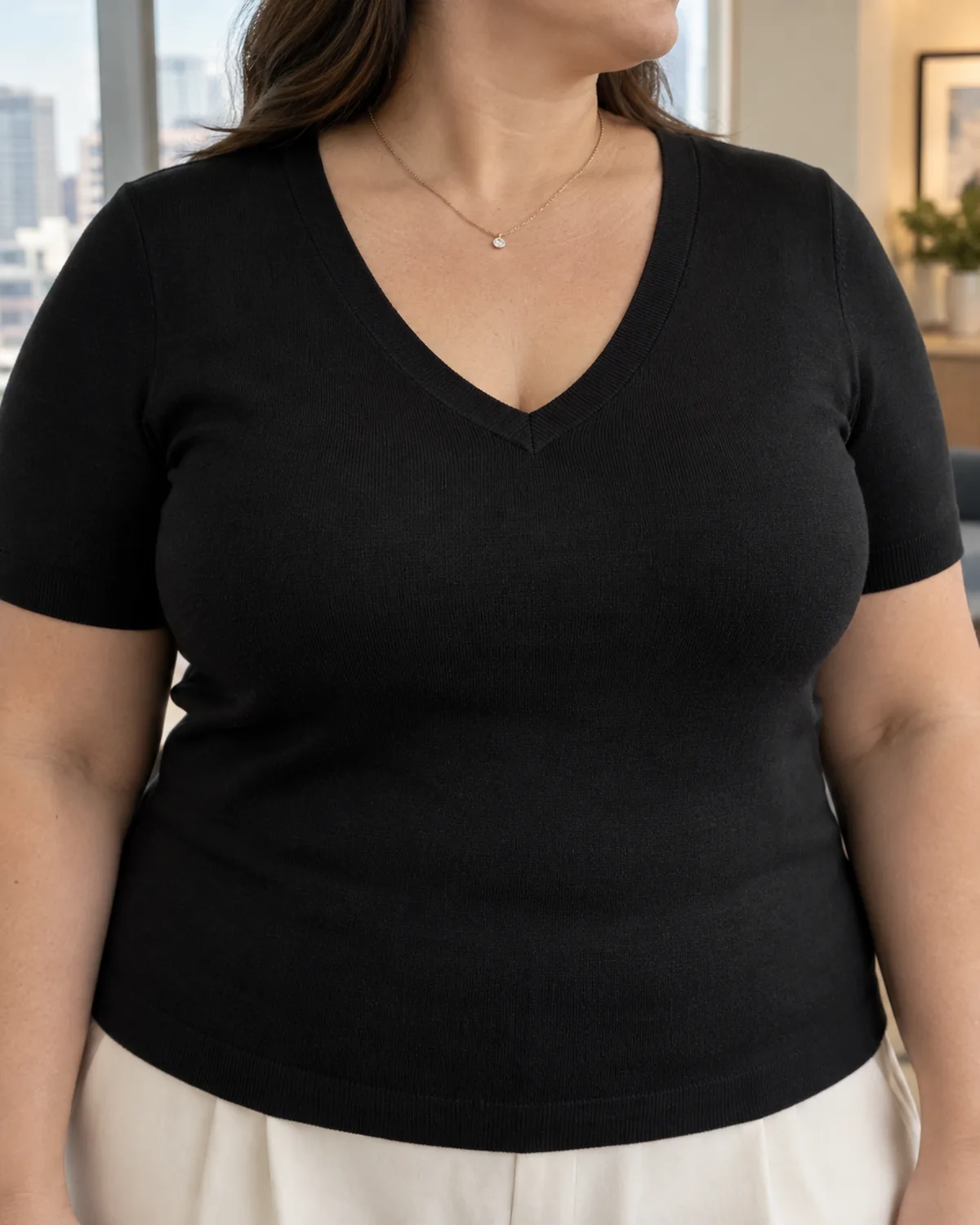
Palazzo trousers give the most room through the hip and thigh of any business casual option. The trade-off is volume: the wide flowing leg needs a fitted top to keep proportions balanced. This V-neck sits close to the body without compressing, and the neckline stays moderate. Duke advises keeping the neckline from going "too low," and this one falls within that range.
- Balance the wide leg with a top that ends at the hip rather than a tunic that adds more volume below the waist
- Choose palazzo trousers in a structured fabric like crepe so they drape rather than cling
- Add a single pendant or chain to draw attention to the V without crowding the neckline
- Avoid a palazzo in a thin jersey that shows every line underneath when backlit
11. A Structured Shirt Dress With a Self-Belt
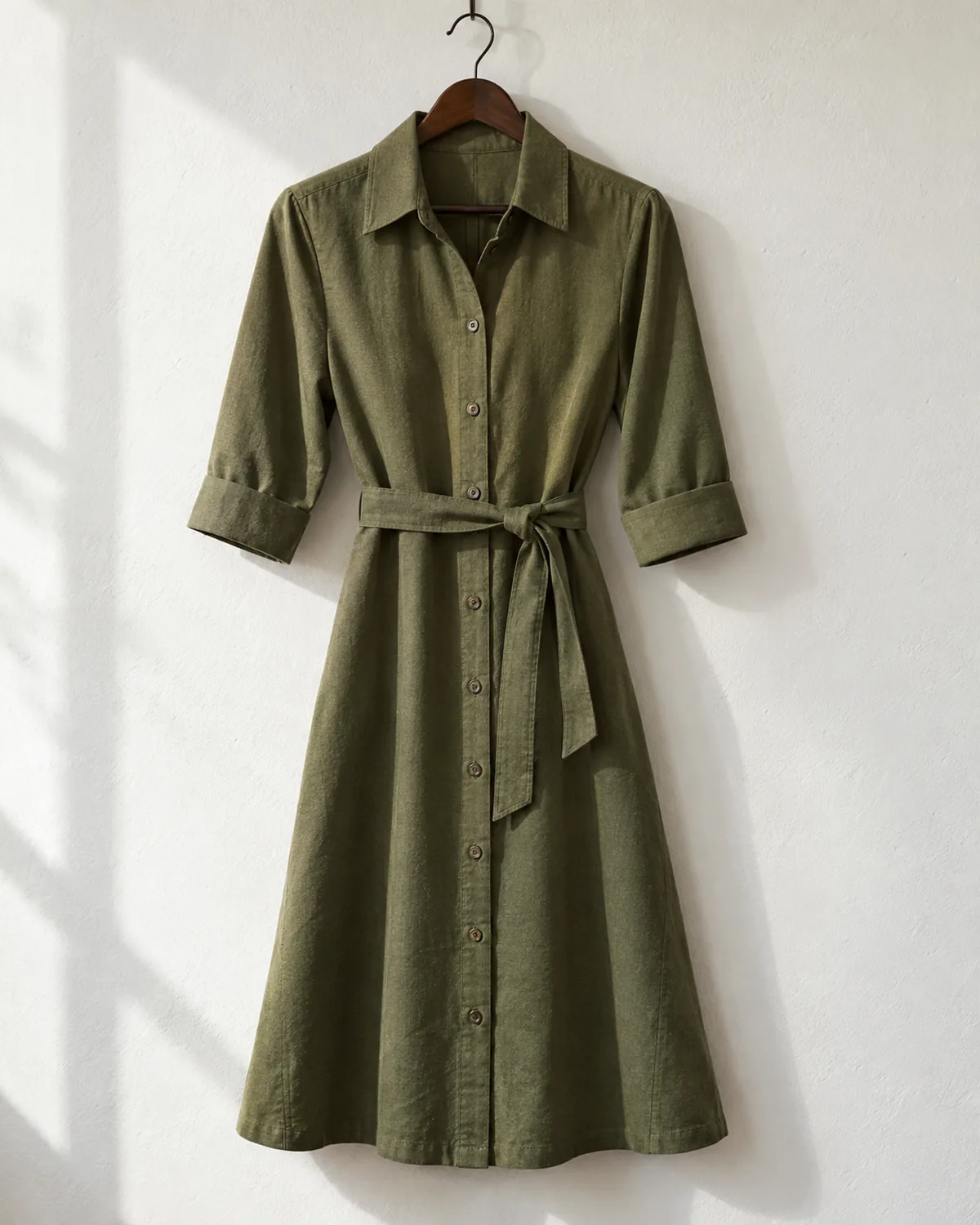
One piece, one closure, minimal layering. The collar reads business casual without a blazer on top, and the self-belt adjusts to whatever the body does rather than locking into a fixed notch the way a leather belt does. The button-front provides the same adjustable closure as idea 4, and the three-quarter sleeves keep the arms covered without trapping heat.
- Tie the self-belt at the side rather than the centre for a cleaner line
- Check that the collar sits flat without curling when unbuttoned at the top
- Choose a cotton or linen blend heavy enough to hold the A-line shape below the belt
- Hang the dress rather than folding it because the belt area creases fast in a drawer
12. Pull-On Ponte Trousers With a Tunic Blouse
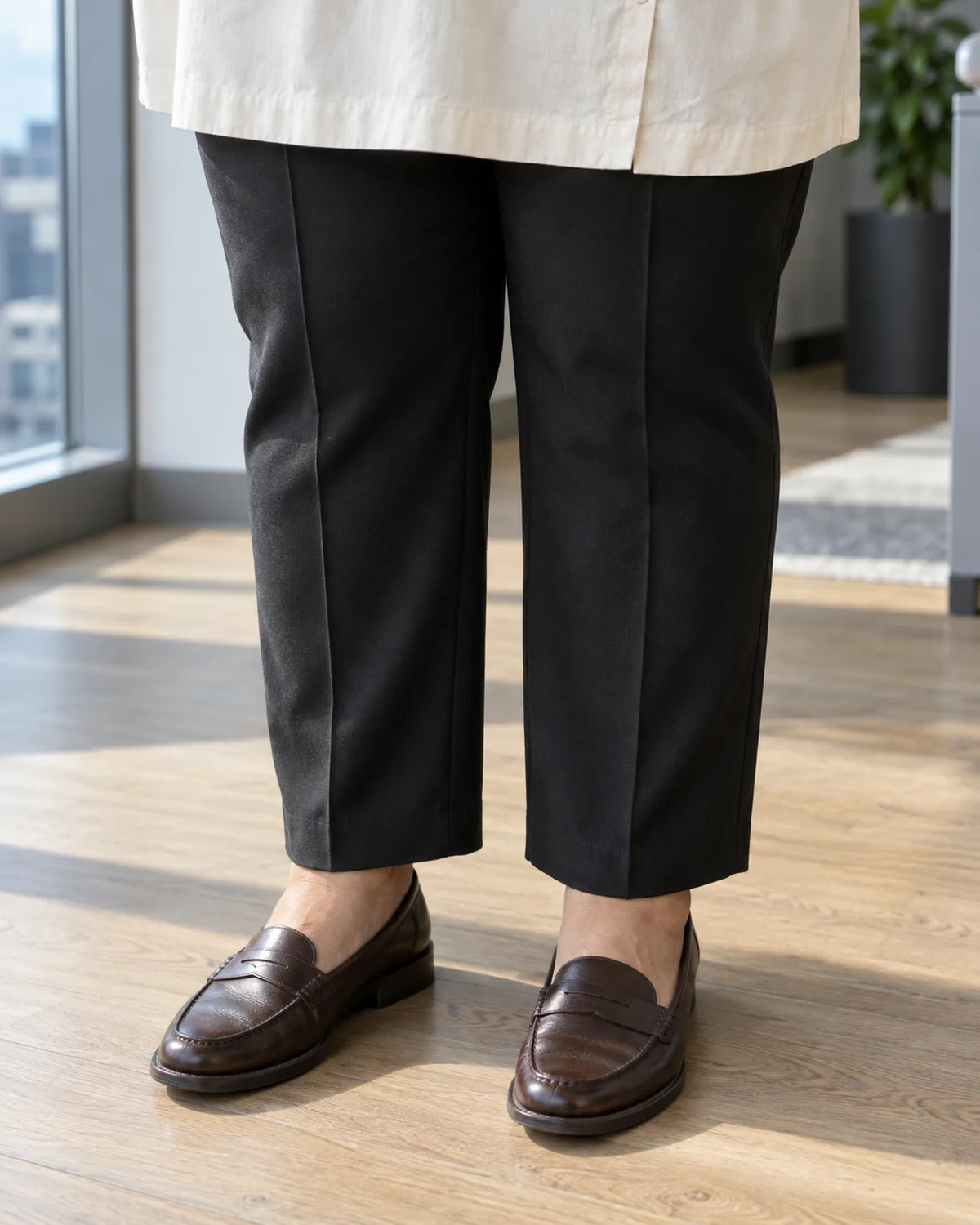
An elastic waist provides genuine comfort through a full day of sitting, and the tunic covers the waistband. The key is the centre crease: a ponte pant without one reads as leggings, and leggings are not on any business casual list. Creighton specifies "clothes should be clean, neatly pressed," and the pressed crease is what separates pull-on trousers from loungewear.
- Choose a ponte with enough weight that it does not go sheer when stretched across the thigh
- Press a centre crease into the front of each leg before every wearing
- Pair with a tunic that ends at mid-thigh so it covers the elastic waistband without reaching the knee
- Select loafers or structured flats rather than slip-ons to keep the bottom half polished
13. A Blazer-and-Skirt Set in Matching Fabric
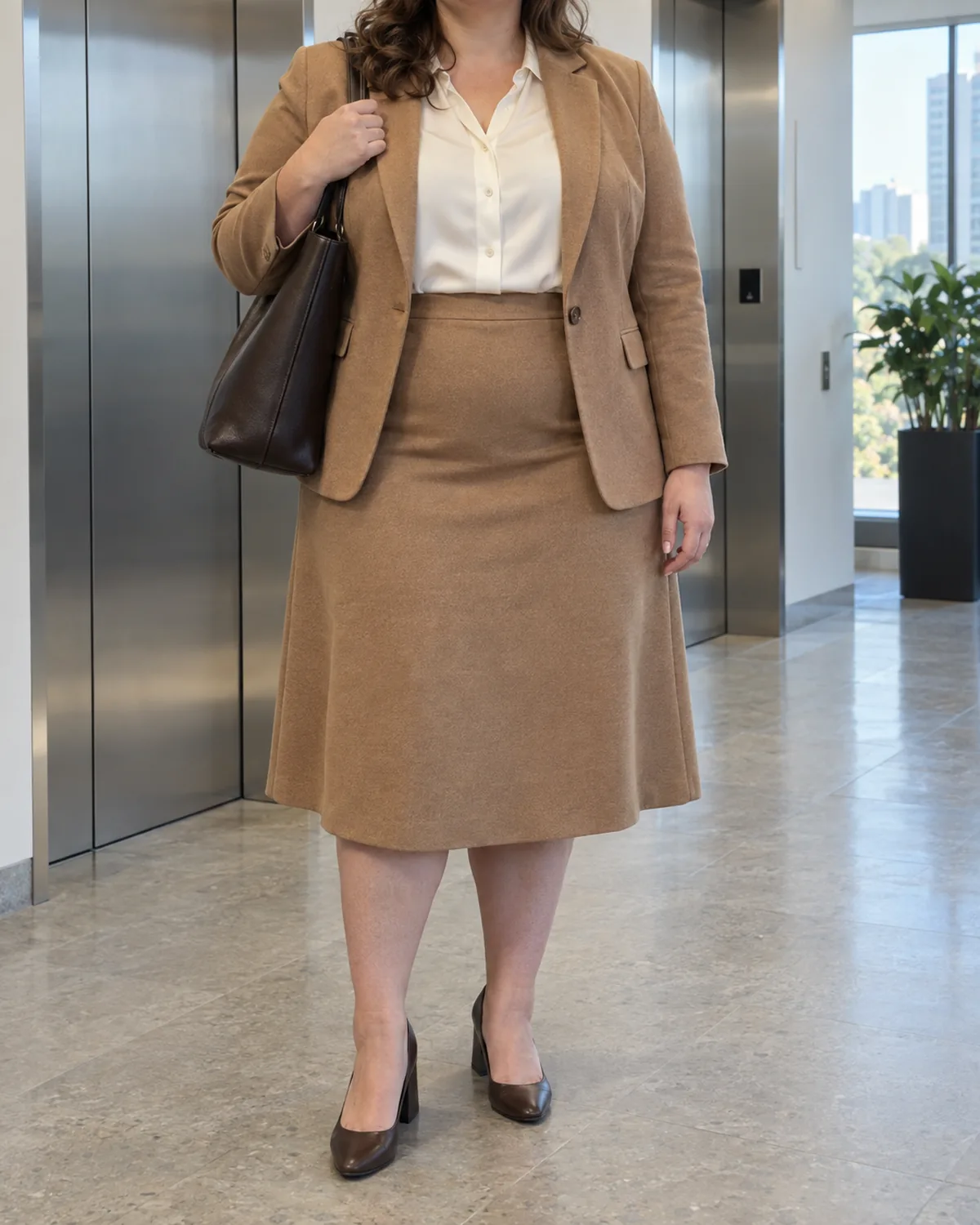
A matched set reads like a suit without the formality of one. The blazer and skirt share the same fabric and colour, which creates a continuous line from shoulder to hem. Each piece also works separately: the blazer pairs with trousers, the skirt pairs with a knit. That doubles the number of outfits per purchase.
- Buy the blazer and skirt in the sizes that fit each piece independently, even if those sizes differ
- Choose an A-line skirt rather than a pencil so the set reads business casual rather than business professional
- Break the set with a blouse in a lighter colour so the outfit does not read as a uniform
- Confirm the skirt hem reaches the knee when standing and stays there when seated
14. A Draped-Front Cardigan Over a Camisole and Tailored Trousers
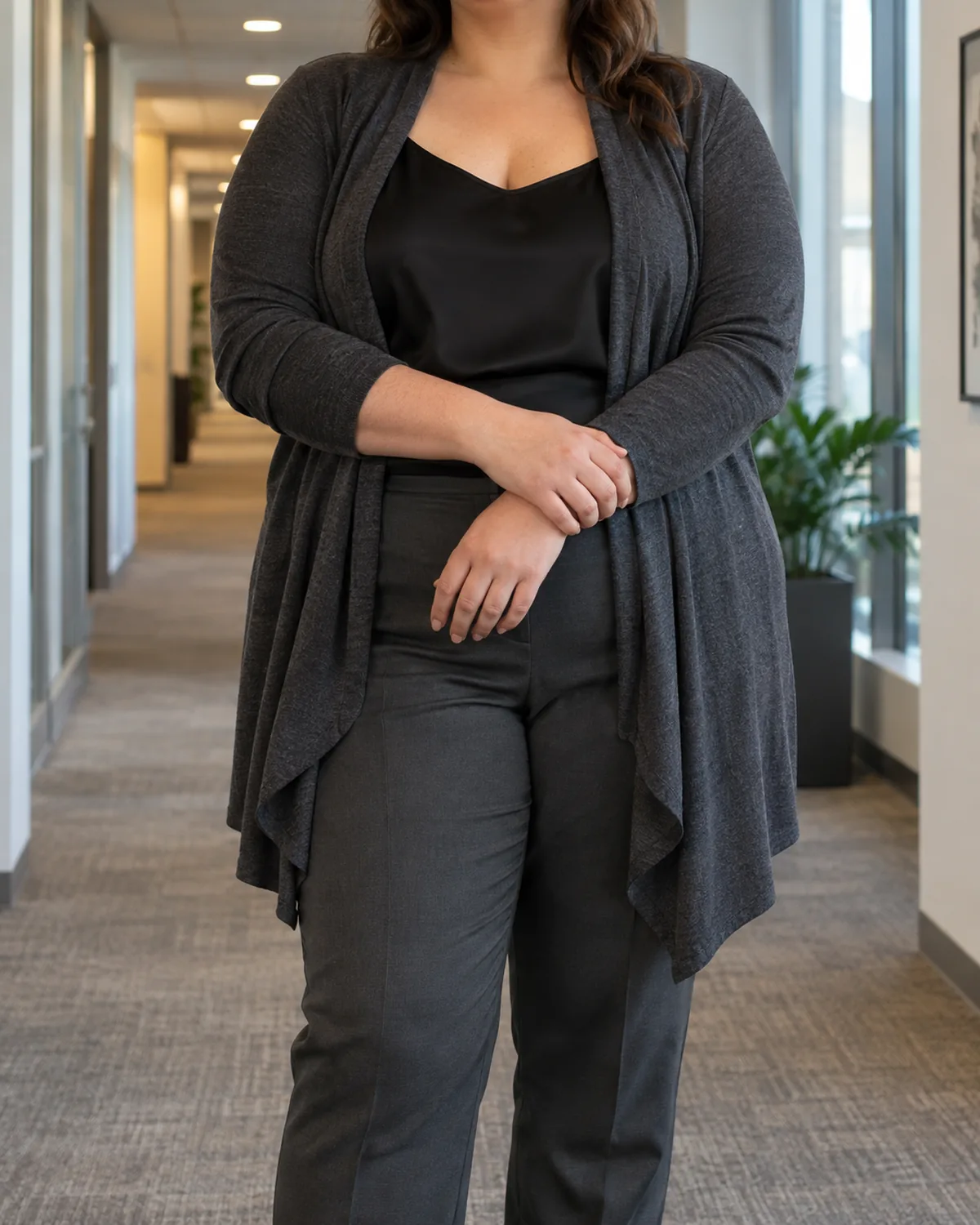
The drape falls in a vertical line from each shoulder, which creates a long unbroken column down the front. This lengthens the torso visually without any structural tailoring. The camisole works here because the cardigan covers the shoulders and upper arms. Creighton lists "cardigan or conservative top with pants" as a safe business casual combination, and this follows that formula.
- Keep the cardigan open so the vertical drape does the lengthening work
- Choose a camisole with a modest neckline and substantial straps, not spaghetti straps
- Match the cardigan and trouser in the same tone to extend the vertical line
- Confirm the camisole is fully covered by the cardigan from behind when walking
15. A Three-Quarter-Sleeve Shift Dress With a Structured Tote
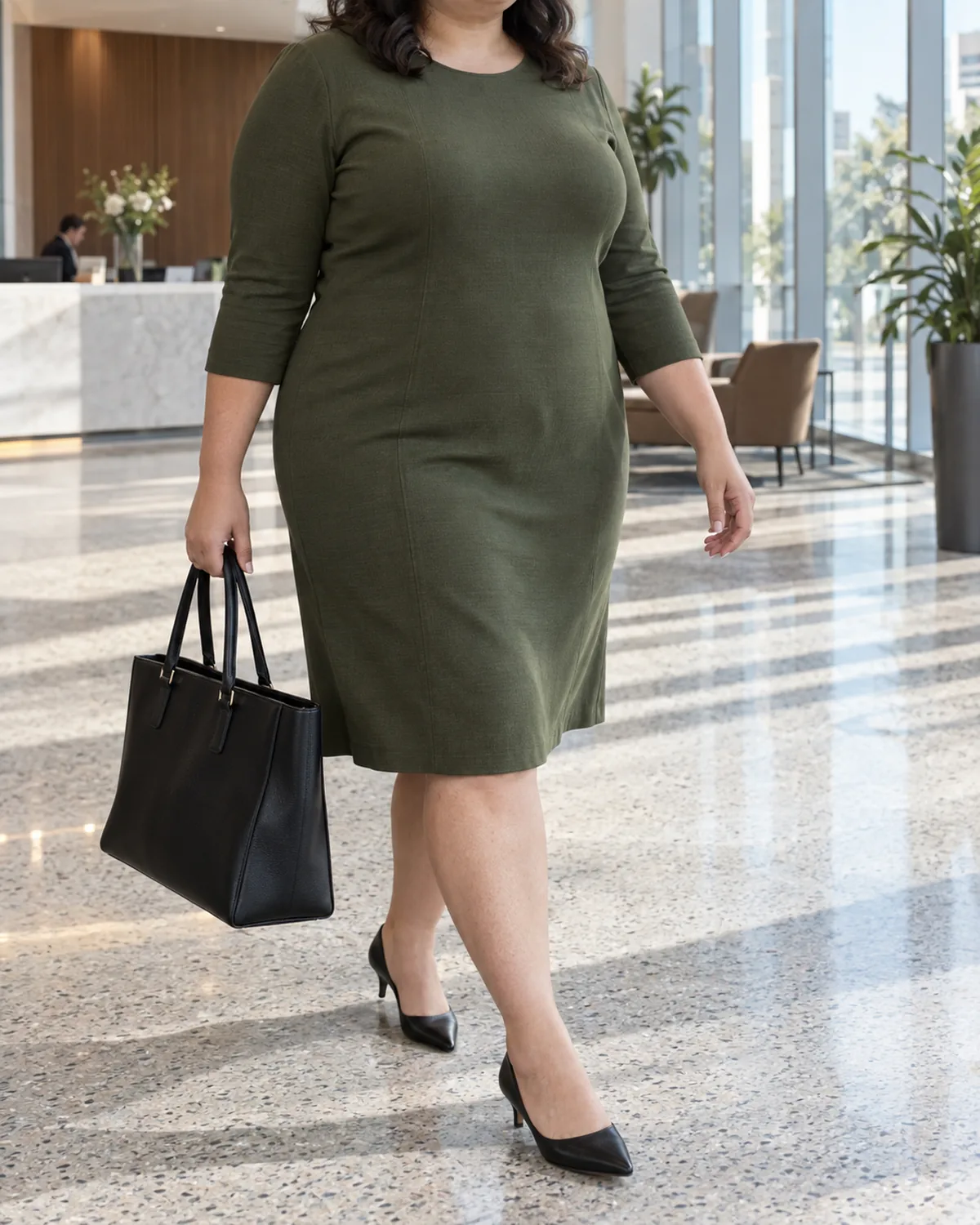
The shift skims rather than clings, and the three-quarter sleeve answers the bare-arm question without reaching the wrist. Duke advises choosing fabric that shows "your body's proportions without clinging," and the shift silhouette does that by design. The structured tote signals that the outfit was planned, not assembled from whatever was clean.
- Choose a shift in a medium-weight knit or ponte that holds its straight shape rather than draping against the body
- Confirm the hemline sits at or just below the knee so it clears every dress code threshold
- Pair with a kitten heel or low pump to keep the leg line clean below the hem
- Carry a structured bag rather than a soft slouch bag to match the clean lines of the dress
The fifteen outfits here are not the only options, but they cover the range from safest to most conditional. Start with the ones that match your office's written policy, wear them long enough to confirm they work, and then test the edges only after you know where the lines are drawn.
Where the dress-code definitions come from
- Attire Guide — Career Hub, Duke University
- What Is Business Casual Attire? (With Examples and Tips) — Indeed Career Guide
- Business Casual Attire — Career Center, Creighton University
- Dress for Success — The Career Center, University of Illinois Urbana-Champaign
Keep this one
Save it where you plan outfits
Pin the image above to the board you actually check on a Sunday night. This guide is written to be re-read, not read once.
Tonight, before you close this tab
- Pull three work trousers from your closet and check whether each one sits at your natural waist without rolling when you sit
- Try on your most-worn blazer and confirm it buttons without pulling across the chest or gapping at the back
- Measure the hem of every work skirt and dress to confirm each one reaches at or below the knee
- Set one complete outfit on a hanger tonight with the shoes underneath so tomorrow morning requires zero decisions