9 Office Casual Outfits Without Looking Underdressed
Office casual for women, defined by published dress codes. Nine outfits that relax business casual rules one at a time so you can see where underdressed begins.
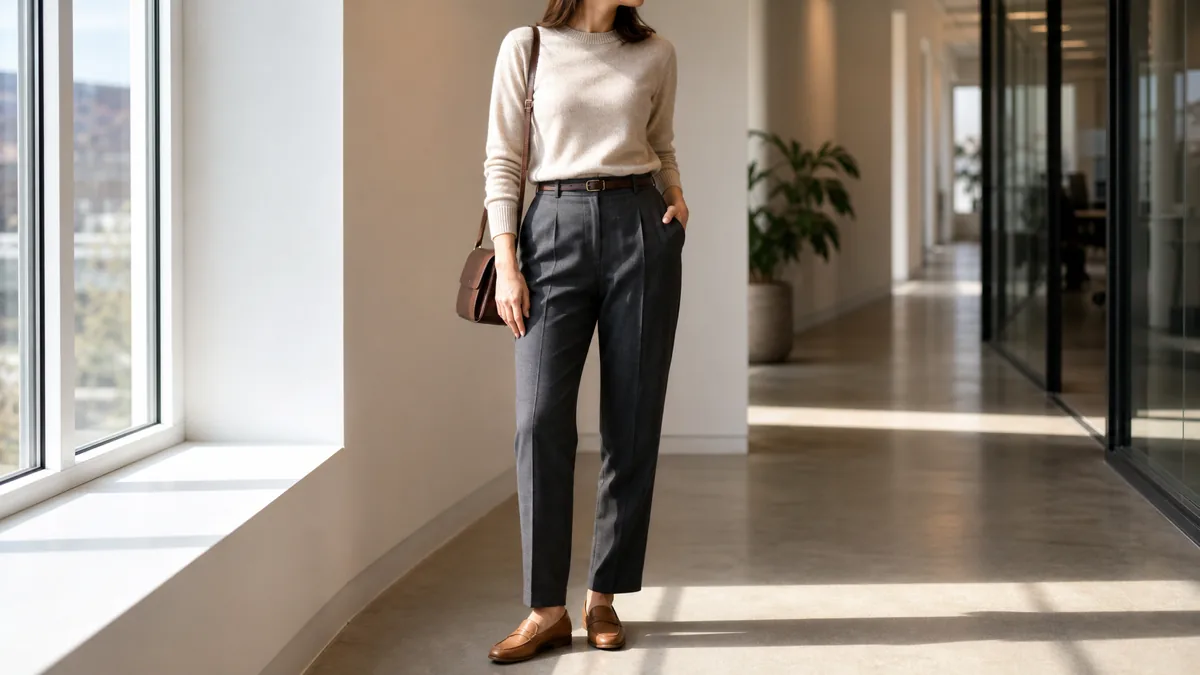
Working out an outfit for tomorrow? Save this page. It is easier to skim the night before than to remember.
At a glance
Works
- A fine-gauge knit or button-down with tailored trousers, no jacket needed
- A midi skirt with a structured knit and pointed-toe flats
- A shirtdress at knee length, belted or unbelted
- Chinos in a dark neutral instead of dress trousers
Depends
- Dark straight-leg jeans, and only where your own office already wears them
- A knit polo, accepted in warmer offices but outside most formal dress codes
- Ankle trousers or cropped trousers, fine if paired with a structured shoe
Skip
- Athletic sneakers, which sit outside the code regardless of the rest of the outfit
- Graphic tees, band tees or slogan shirts
- Anything ripped, distressed or visibly worn out
Office casual is what many offices actually mean when they drop the dress code label. Duke's career centre has a matching level, baseline casual: collared shirts, fitted blouses, dark fitted jeans and flat, non-athletic shoes.
Between those two lines sits the outfit you are looking for. These nine combinations each relax one business casual rule while keeping one deliberate formality cue.
Texas A&M draws the floor: no athletic sneakers or flip-flops, and no rips or holes in jeans. If your office has a written dress code, it outranks anything here.
1. A crewneck knit over tailored trousers
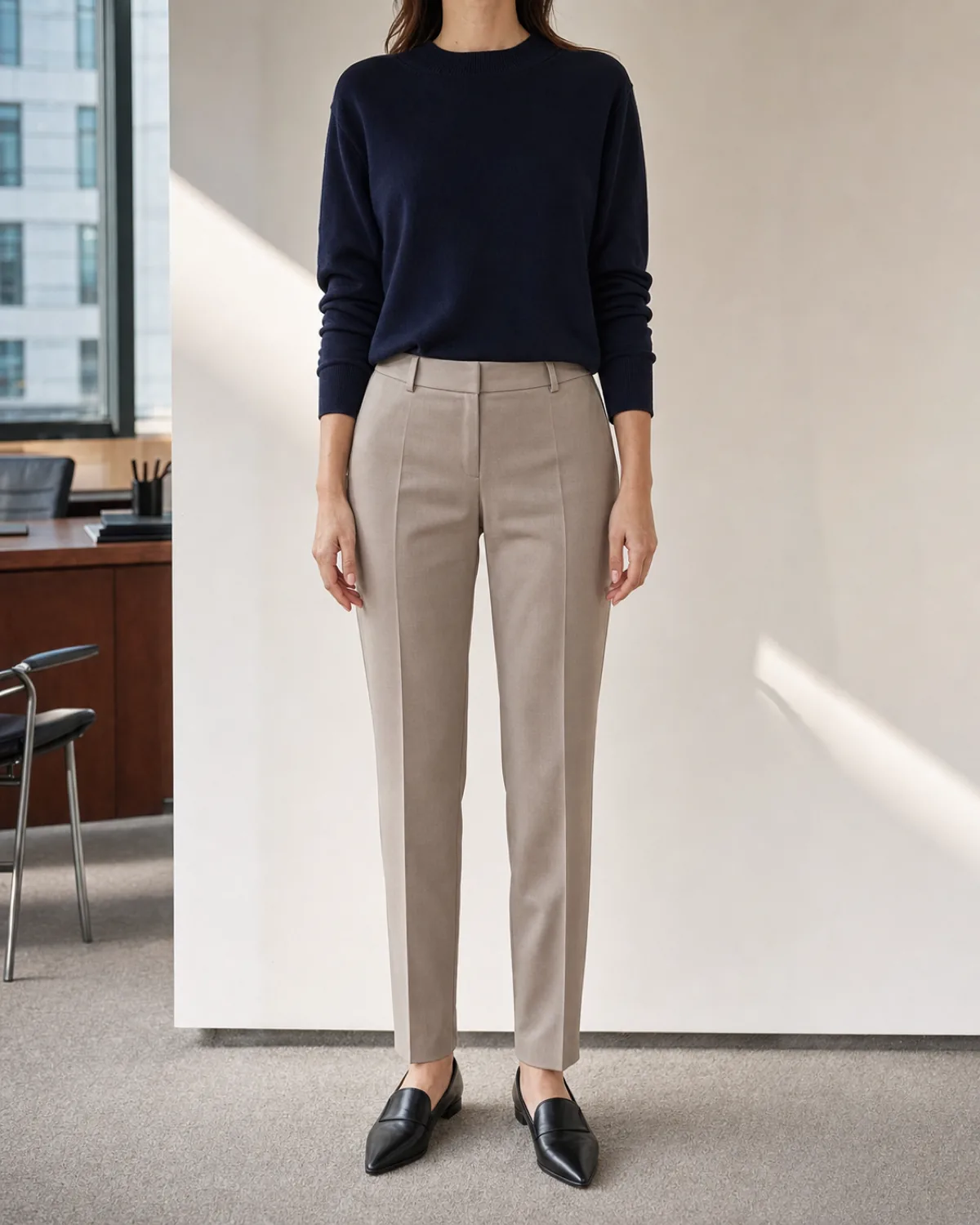
This is office casual at its baseline. The blazer is gone and nothing replaces it. A fine-gauge navy crewneck tucked into flat-front tailored trousers with a clean crease does the structural work on its own. The trouser silhouette stays slim-straight and the shoe is a pointed-toe loafer, which anchors the formality the jacket used to carry.
The University of Florida describes business casual as removing some elements of business professional. Office casual removes one more element: the structured layer. What stays is the silhouette.
- Match the knit to the trouser in weight, not necessarily in colour
- Keep the tuck clean so the waistline reads as intentional
- A crease in the trouser does more work than the top does
- Skip the belt if the trouser waistband sits flat on its own
2. A button-down tucked into chinos
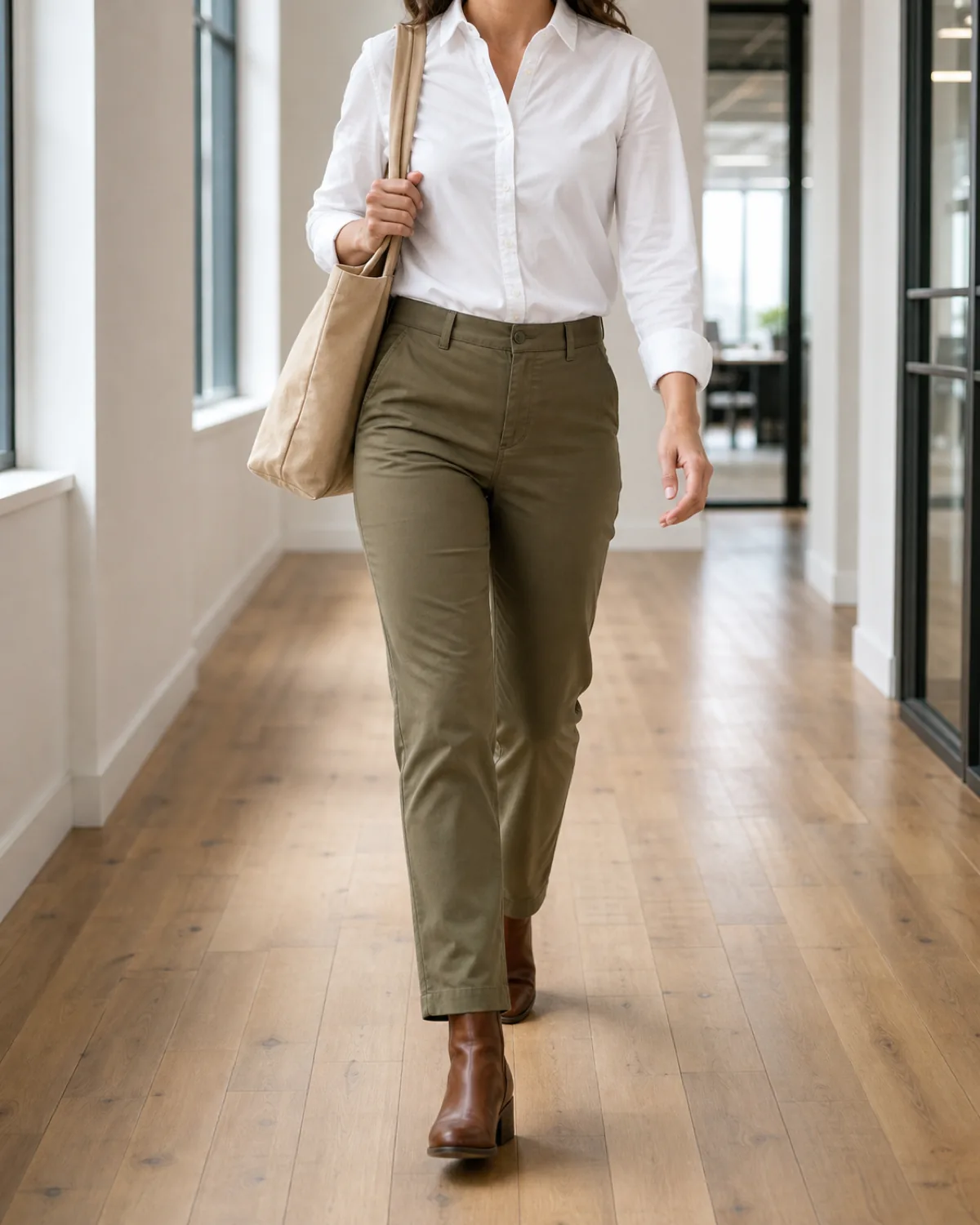
The button-down shirt is the most office-coded casual piece there is. Tucked into flat-front chinos in olive, it reads as deliberate without needing a jacket or a structured bag. The tuck does the work the blazer used to do: it defines the waistline and signals that the outfit was assembled, not grabbed.
Chinos sit one step below dress trousers on the formality ladder. They lack the crease and the drape but they hold a cleaner line than jeans. Dark neutrals read safer than light ones.
- Tuck the shirt fully, not half-tucked, so the waistline stays sharp
- Flat-front chinos read more office than pleated ones at this formality
- Brown leather boots ground the bottom half when the trouser is this casual
- A canvas tote is fine here; the outfit does not need a structured bag to carry the formality
Where to start
Find your situation, skip ahead
Your office says casual but you have never tested how casual
Start with the crewneck-and-trousers combination. It reads as office-intentional without overdressing.
01 A crewneck knit over tailored trousers02 A button-down tucked into chinos
You own business casual basics and want to relax them
Drop the blazer but keep the trouser silhouette. The difference between office casual and underdressed is usually the trouser, not the top.
03 A midi skirt with a knit top and flat shoes07 Wide-leg trousers and a relaxed blouse09 Loafers, ballet flats and the shoe line
You want to wear jeans or a polo and are not sure if you can
Jeans are the most office-dependent piece in this list. Idea 4 walks through the rule. The polo depends on your specific workplace.
04 Dark jeans with a structured top08 A knit polo with ankle trousers
3. A midi skirt with a knit top and flat shoes
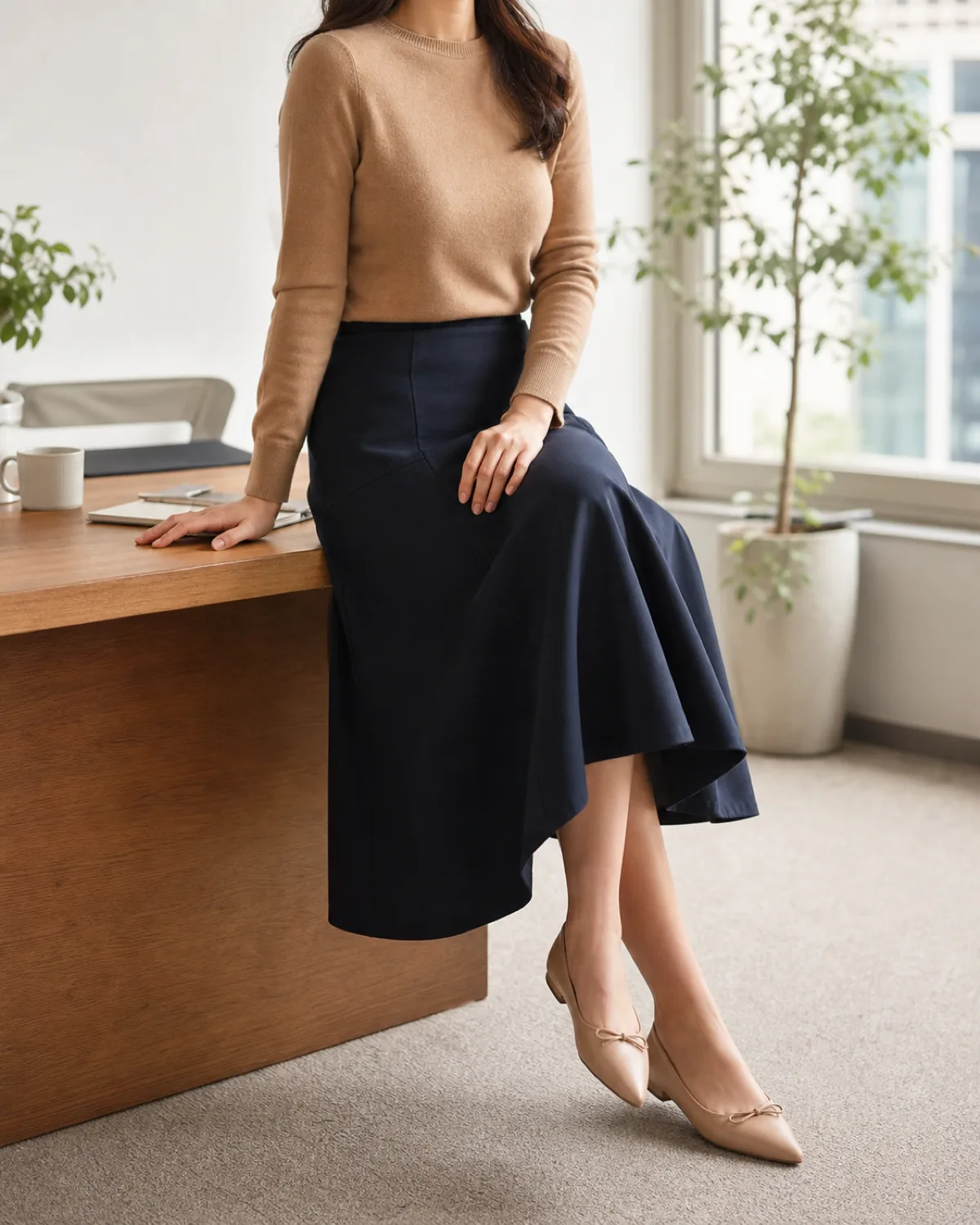
A midi skirt paired with a fine knit and pointed-toe flats is feminine office casual that does not depend on a jacket. The hem falls below the knee even while seated, which is the test Duke's attire guide spells out: no hemline above the top of the kneecap, and check how the fabric moves when you sit. If the skirt is too short when you sit down, it is too short for the office.
This combination works because the skirt does the formality work and the knit does the comfort work. Neither piece alone reads as dressed enough, but together they clear the line.
- Check the hem while sitting, not just standing
- Pointed-toe flats hold the line better than round-toe at this formality
- A camel knit and navy skirt is a safer palette than the reverse
- Skip the tights unless the office runs cold; bare legs are usually fine in a casual office
4. Dark jeans with a structured top
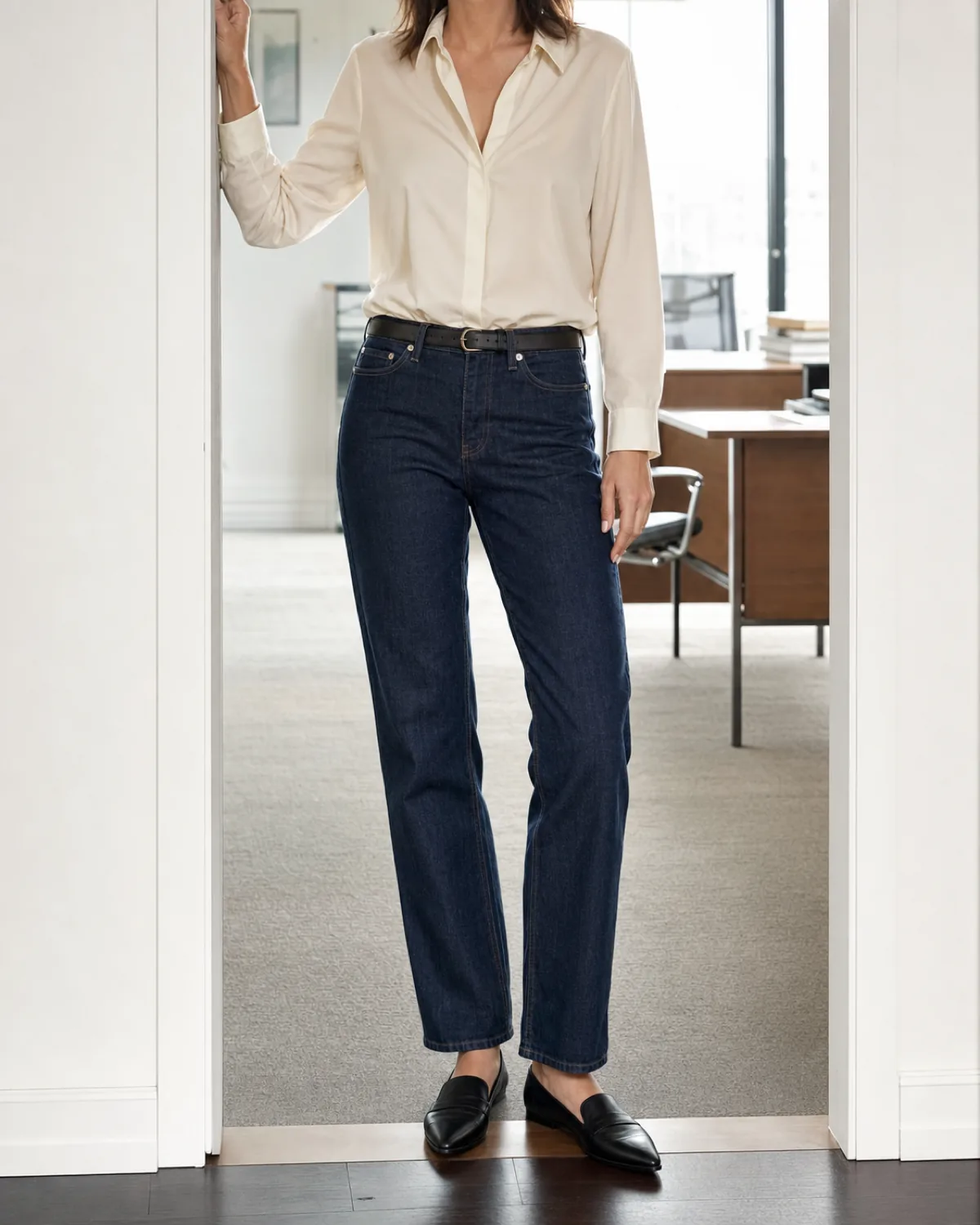
Jeans are the single most contested office casual piece, and the guides disagree. Iowa's career centre calls jeans too casual for business casual. Duke lists dark, fitted jeans at its baseline casual level, and Indeed's business-casual list includes dark jeans without holes.
The rule is not whether jeans are allowed in general. The rule is whether your specific office wears them. Look at what the people one level above you wear on a normal Tuesday. If they wear jeans, you can wear jeans. If they do not, the rest of this outfit still works with trousers.
- Dark indigo with no distressing, no fading, no rips
- Tuck the blouse to define the waist; an untucked blouse over jeans reads weekend
- A thin leather belt at the waist signals intention
- Black loafers are safer than sneakers when the bottom half is denim
5. A sweater vest over a collared shirt
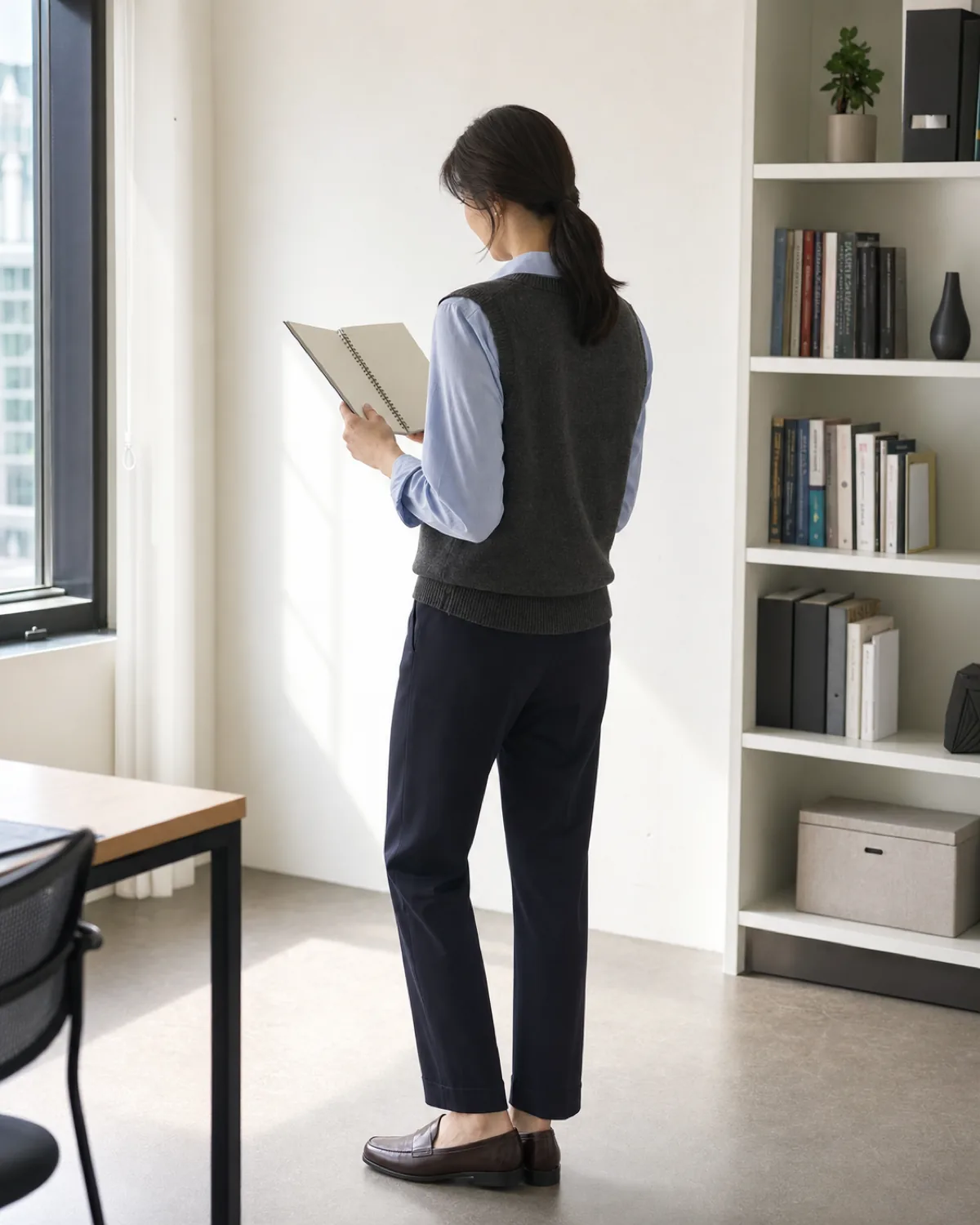
A sweater vest is a jacket replacement that reads as intentional without reading as formal. Layered over a pale blue collared shirt with the collar points visible above the V-neckline, it signals that you thought about the outfit. The collar does the work the blazer lapel used to do: it frames the face and gives the eye a stopping point.
This is one of the few office casual combinations where the layering itself carries the formality. The pieces underneath could be plain, but the fact that there are two layers is what moves it past casual.
- The collar points must sit above the vest neckline, not tucked inside
- A V-neck vest shows more collar than a crew neck, which reads more deliberate
- Keep the shirt cuffs visible past the vest hem at the wrist
- Navy trousers and brown loafers are safe enough to let the layering be the point
6. A shirtdress at knee length
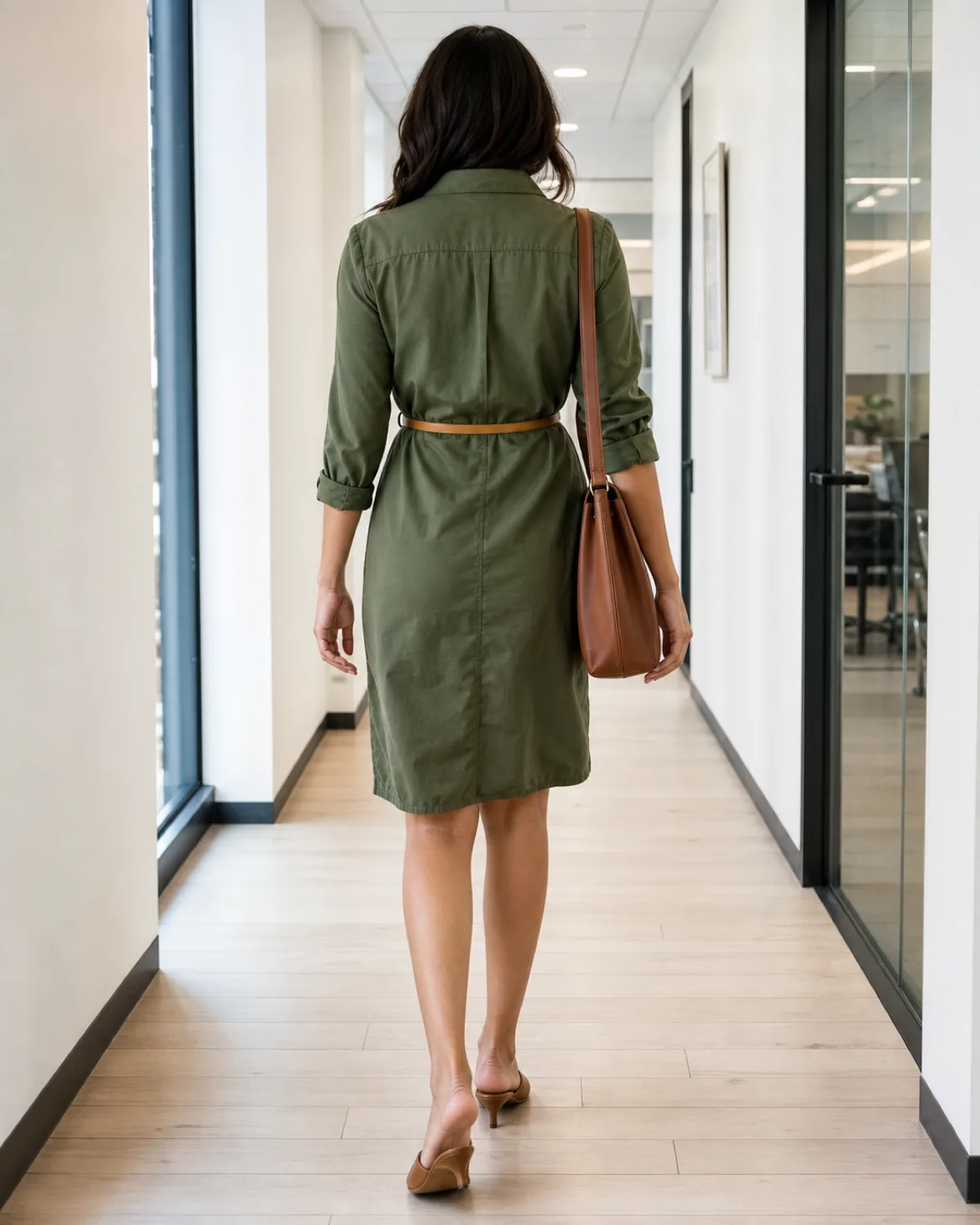
A shirtdress is the one-piece answer to office casual. A button-front in a muted solid colour at knee length, belted at the natural waist, covers the code without needing a second layer. It reads as dressed because it looks like a complete decision rather than a top and bottom that happen to share a body.
The belt matters. Without it, the silhouette is a column and the eye has no anchor point. With it, the waist is defined and the dress reads as tailored.
- Knee length or just below; above the knee is a different code
- A thin leather belt at the natural waist, not a wide statement belt
- Muted solids and muted patterns both work; avoid anything loud
- The sleeves can be rolled to three-quarter length in warmer offices
7. Wide-leg trousers and a relaxed blouse
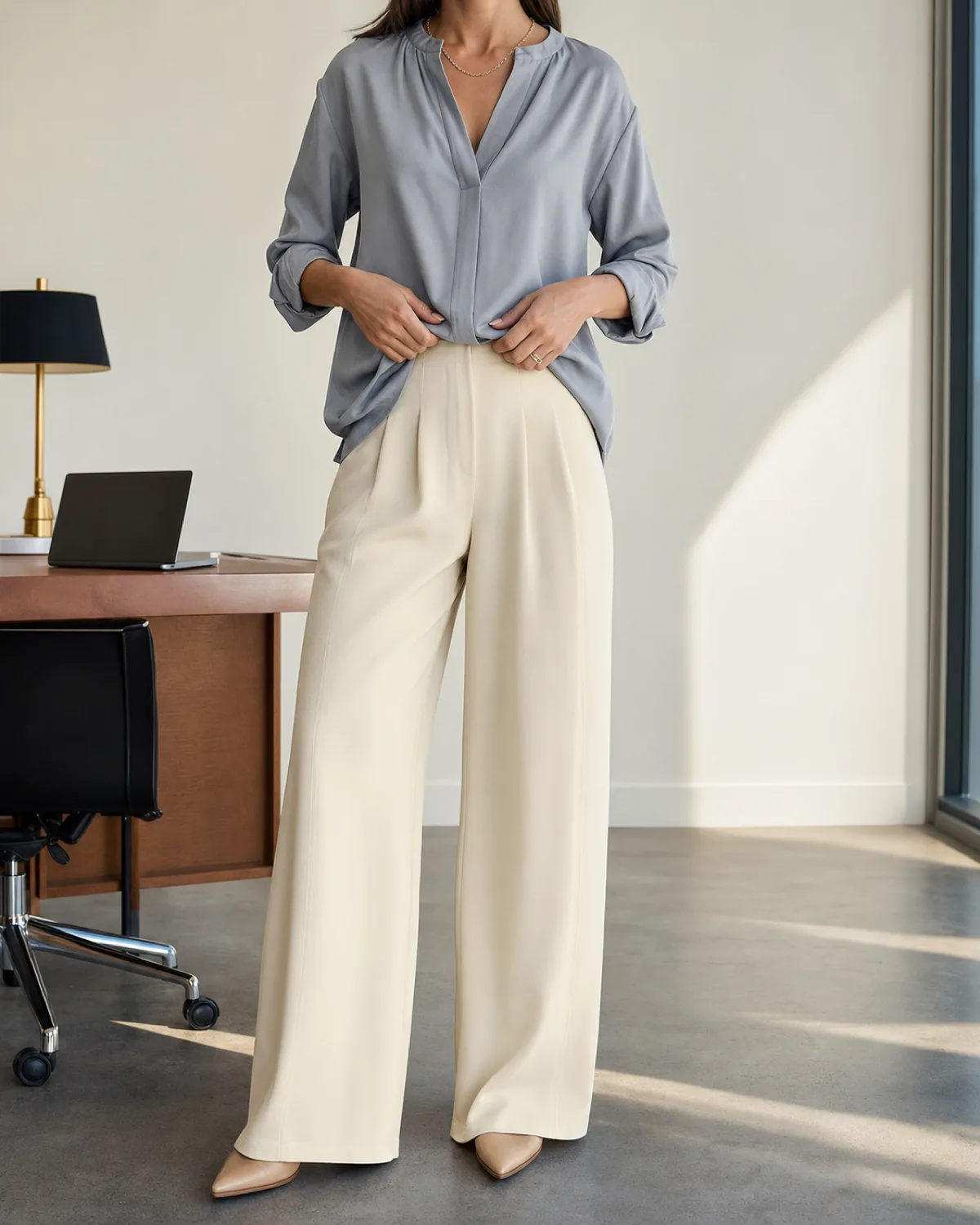
Volume in the silhouette can read as office casual when the fabric does the work. Wide-leg crepe trousers in a warm ivory paired with a grey-blue blouse tucked loosely at the front create a silhouette that moves without looking unstructured. The fabric has weight, and that weight is what separates these from pajama-adjacent trousers.
The front tuck is the smallest deliberate gesture in this list, and it is enough. It tells the eye that the waistline exists and the outfit was put together.
- Crepe, linen or wool-blend; avoid jersey or ponte at this cut
- The front tuck keeps the waist visible without making the blouse stiff
- A single thin necklace is enough at this level of simplicity
- Wide legs need a shoe with a point or a heel to anchor the hem
8. A knit polo with ankle trousers
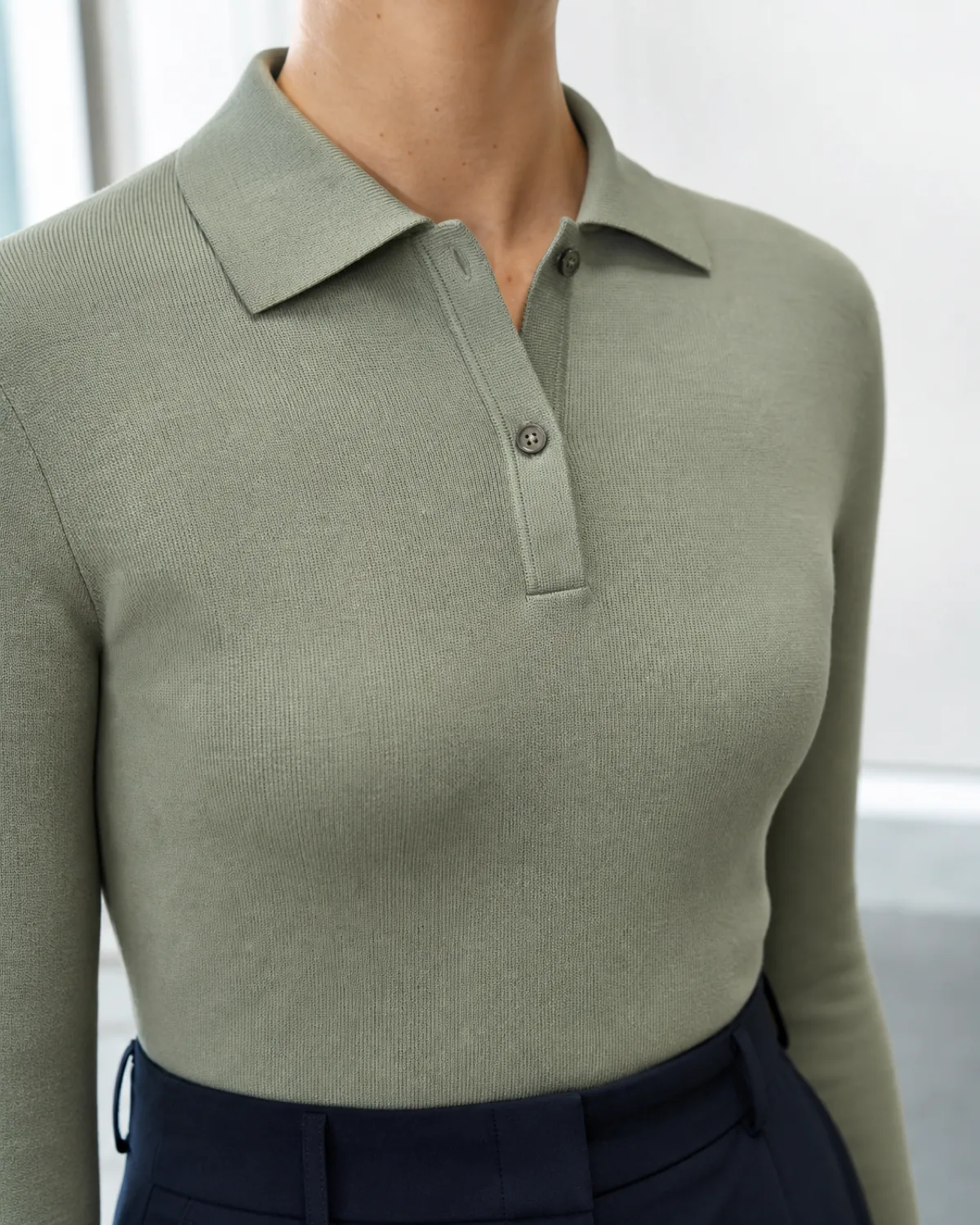
A fine-gauge knit polo is office casual for warmer weather. The collar and placket do the same work a button-down collar does: they give the neckline a shape that reads as intentional. The difference between a polo that reads as office and a polo that reads as weekend is the knit gauge and the fit. Fine ribs, matte finish, no sheen. The body follows the torso without clinging.
This is one of the more office-dependent pieces in the list. Some workplaces accept it; others consider a collared knit too casual. Check what your floor wears before committing.
- Fine gauge, not pique; the texture should read as knit, not sport
- The placket buttons should line up and the collar should lie flat without ironing
- Sage, navy, charcoal or cream; avoid bright colours that pull the eye
- Ankle trousers keep the proportions balanced when the top has no structure
9. Loafers, ballet flats and the shoe line
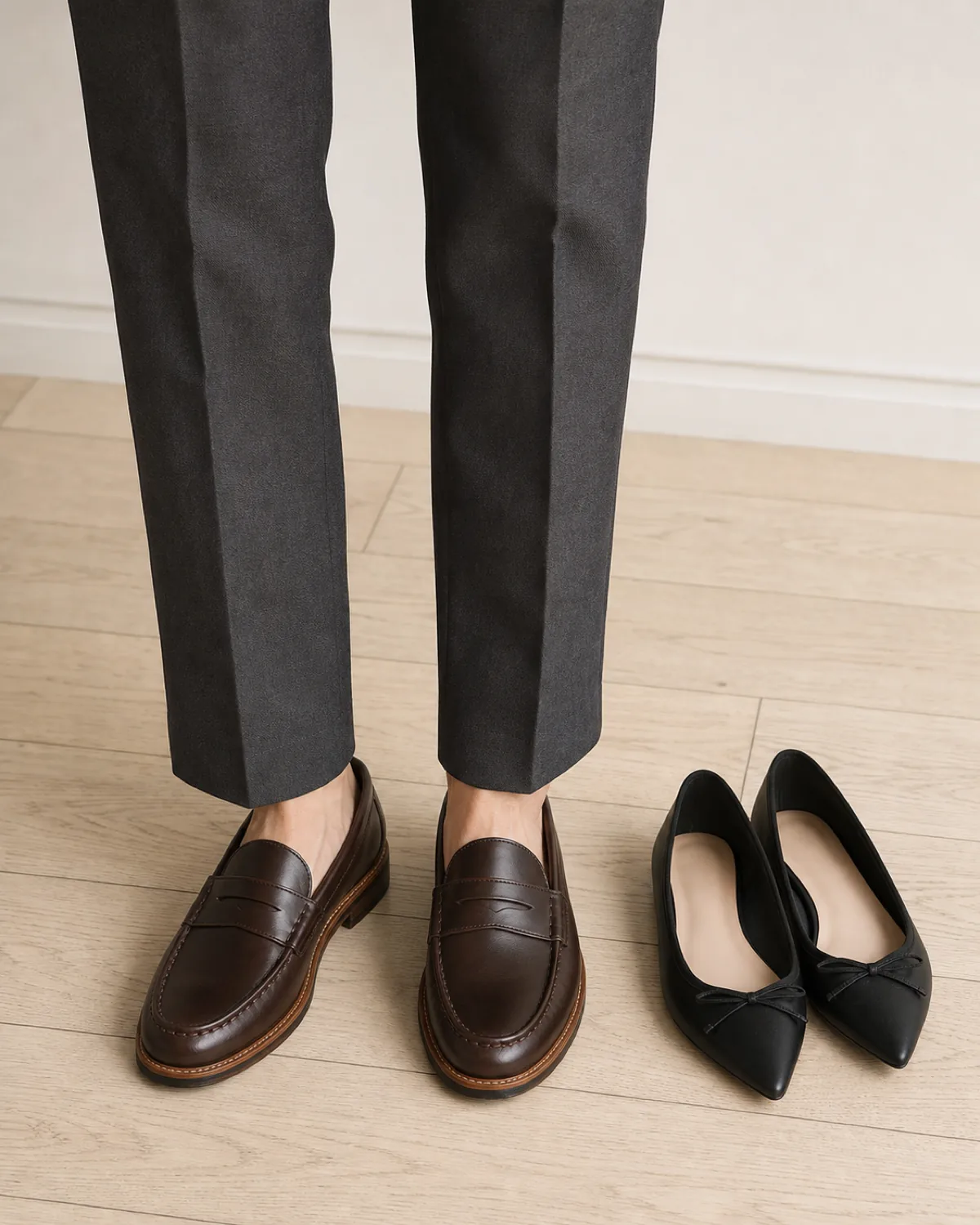
The shoe decides whether the rest of the outfit reads as casual or as sloppy. A leather penny loafer and a pointed-toe ballet flat are the two safest office casual shoes because they have structured soles and clean silhouettes. Both sit on the floor without the thick rubber sole that makes athletic shoes read as gym rather than office.
Texas A&M's career guide rules out athletic sneakers and flip-flops even at its smart casual level, and Duke's baseline casual level asks for flat, non-athletic shoes. That floor holds even when the rest of the code loosens. Everything above the ankle can relax; the shoe is the last thing to go.
- Leather or suede uppers with a flat or low stacked sole
- Pointed or almond toe holds the line better than a round toe at this formality
- Athletic soles read as gym even when the upper is leather
- Check the heel tips and the sole edge before you leave; worn-out shoes undercut the outfit
Where the dress-code definitions come from
- Attire Guide — Career Hub, Duke University
- Dress for Success — Career Center, Texas A&M University
- Dress for Success — Pomerantz Career Center, The University of Iowa
- What Is Business Casual Attire? (With Examples and Tips) — Indeed Career Guide
- So What Exactly Is Business Casual? - Career Connections Center — Career Connections Center, University of Florida
- Professional Attire — Career Center, UMass Dartmouth
Keep this one
Save it where you plan outfits
Pin the image above to the board you actually check on a Sunday night. This guide is written to be re-read, not read once.
Tonight, before you close this tab
- Pull out your most-worn trousers and check whether the crease is still clean
- Try your darkest jeans with a tucked button-down and check the mirror from the waist down
- Lay out tomorrow's outfit without a jacket and see if it still reads as deliberate
- Check the sole of the shoes you plan to wear; athletic soles read casual even on leather uppers