Business Casual vs Business Professional: Where the Line Actually Falls
The real difference between business casual and business professional comes down to one test. Here is how to read a dress code and pick the right level.

Working out an outfit for tomorrow? Save this page. It is easier to skim the night before than to remember.
At a glance
Works
- A matched two-piece suit in a dark neutral colour is always business professional
- Separates with a blazer optional is the business casual baseline
- Closed-toe dark dress shoes read as professional in any office
Depends
- Dark denim — only where you have seen seniors wear it on a regular workday
- A sheath dress — reads as business professional with a matching jacket, business casual without one
- Loafers — professional enough for most business casual offices, too relaxed for strict business professional
Skip
- Polo shirts to a business professional setting
- Open-toe shoes to any setting that specifies professional attire
- Athletic sneakers in either dress code
You got an email that says the dress code is business casual. Or business professional. And you are not sure what the difference actually is.
You are not alone. The two terms sit right next to each other on the formality scale, and most people have never seen them defined side by side.
Here is where the line falls, based on how career centres and HR departments actually draw it.
What Business Professional Actually Means
Business professional is the matched-suit standard. Duke University's career guide defines it around a "dark charcoal gray or navy blue suit" with "crisp white dress shirts" and "black oxfords or derbys; black closed-toe low or high heels (not above 4")." Texas A&M calls it a "two-piece suit and tie; solid, neutral colors are best."
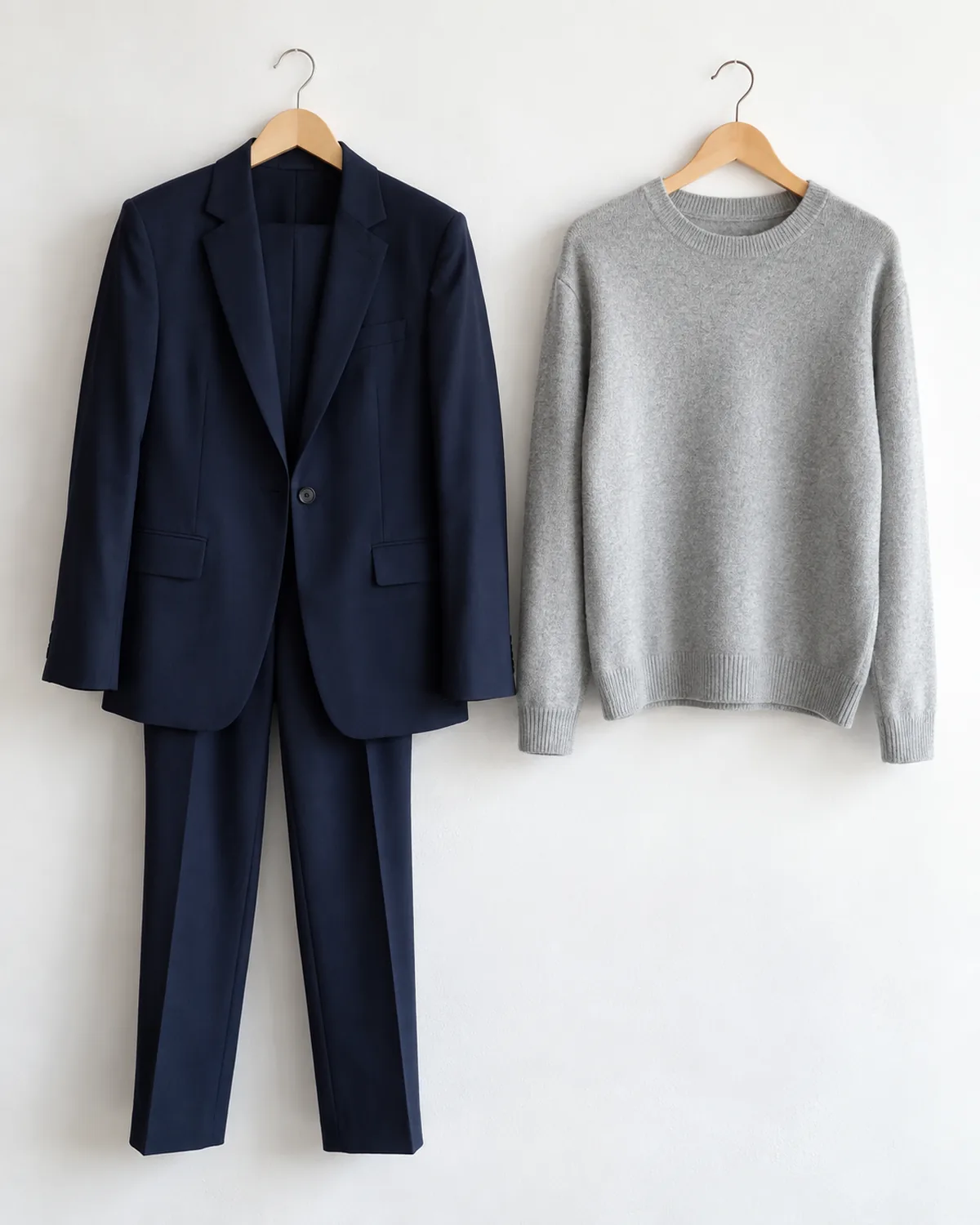
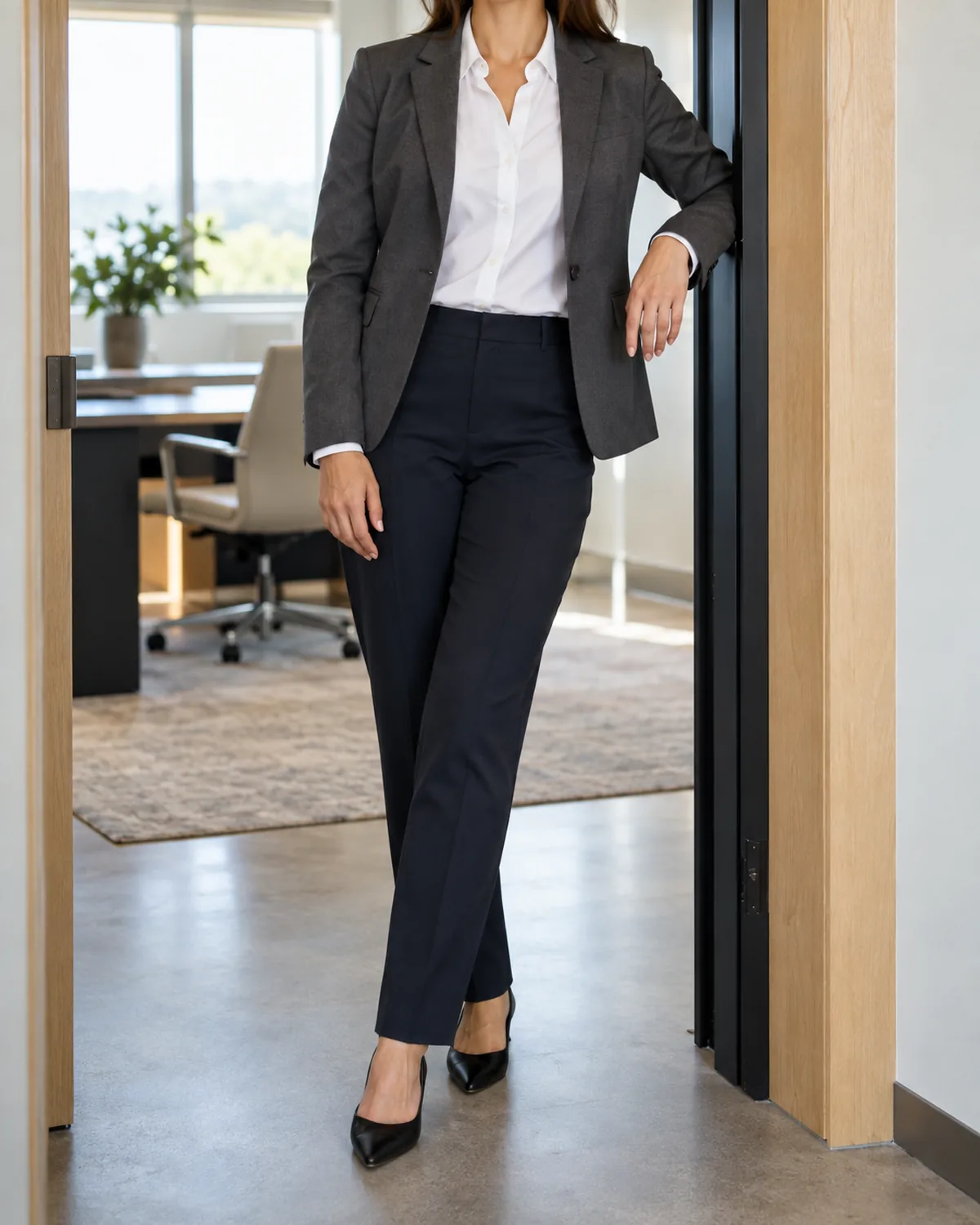
The key word is matched. The jacket and the bottom are the same fabric, the same colour, and usually from the same maker. Everything else follows from that: conservative colours, structured fabrics, minimal accessories, closed-toe shoes.
- The suit can be a trouser suit, a skirt suit, or a dress with a matching jacket.
- Colours stay in the dark neutral range: navy, charcoal, black.
- Illinois lists "solid, dark, or neutral colors" and "fitted custom to you (when possible)" under its business professional section.
If your office has a written dress code that says business professional, it is telling you to wear a coordinated suit.
What Business Casual Actually Looks Like
Business casual is what happens when you take the suit apart. The University of Florida's career advisor puts it plainly: "It's almost literally removing some of the elements of business professional. It's a more relaxed version of business professional."
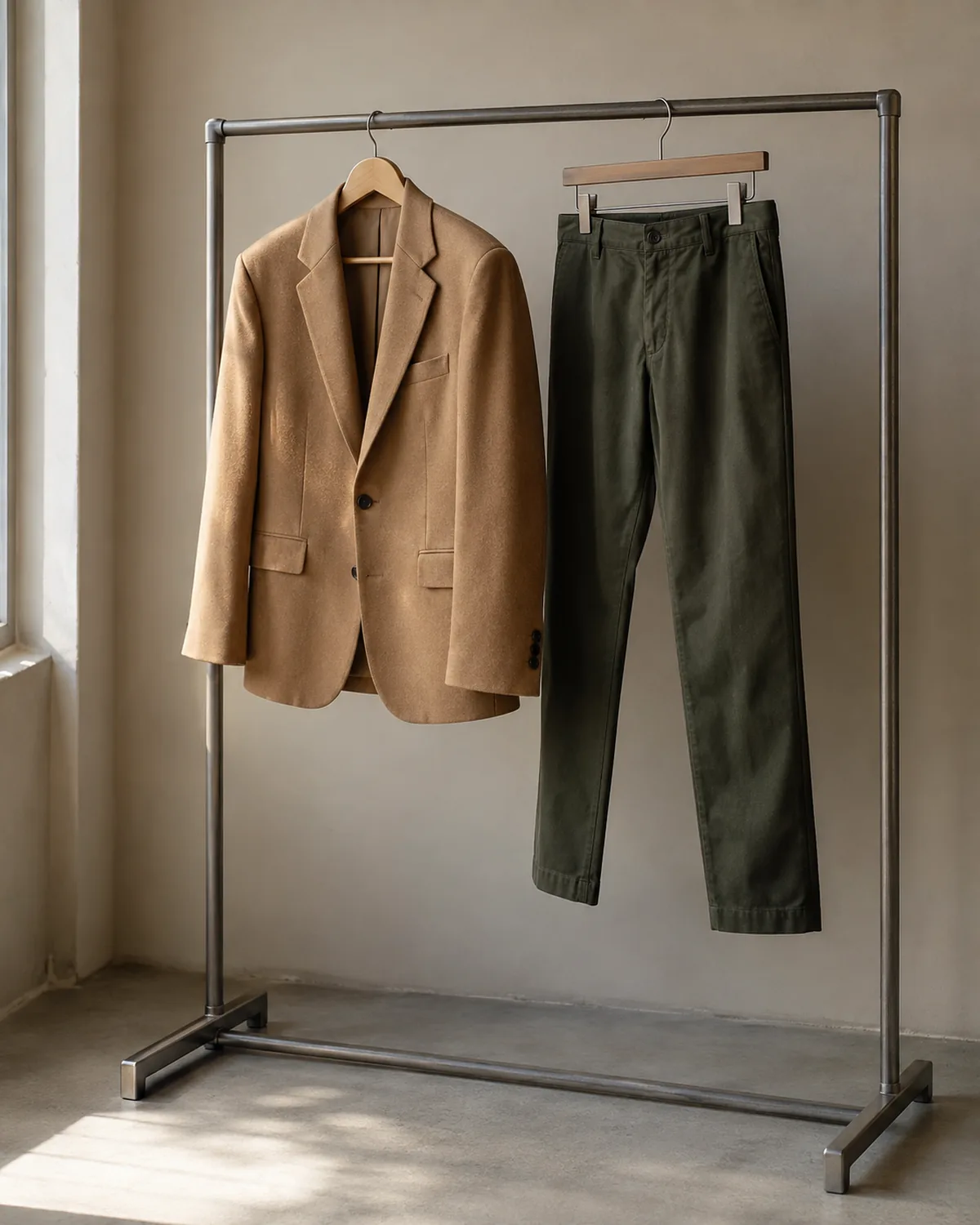
Indeed defines it as "a code of dress that blends traditional business wear with a more relaxed style that's still professional and appropriate for an office environment." The pieces no longer need to match. A blazer is welcome but not required.
- Duke lists "button-down or polo shirt, fitted blouses" and "blazer, sport coat, or sweater" for business casual.
- Texas A&M says "sport coats/blazers are appropriate, but not required."
- Bottom options widen to slacks, khakis, chinos, and knee-length skirts or dresses.
- The colour palette opens up beyond dark neutrals.
Business casual still means professional. It does not mean jeans and a T-shirt.
Where to start
Find your situation, skip ahead
Your office email says business professional
Start with the matched suit. Same fabric, same colour, top and bottom. That is the baseline.
01 What Business Professional Actually Means03 The Suit Test05 Shoes
Your office email says business casual
Separates are the point. A blazer is welcome but not required. Mix fabrics and colours intentionally.
02 What Business Casual Actually Looks Like04 Fabric and Finish07 When the Label Does Not Match the Room
The Suit Test
If you need a single rule to tell the two apart, it is this: look at the jacket and the bottom.
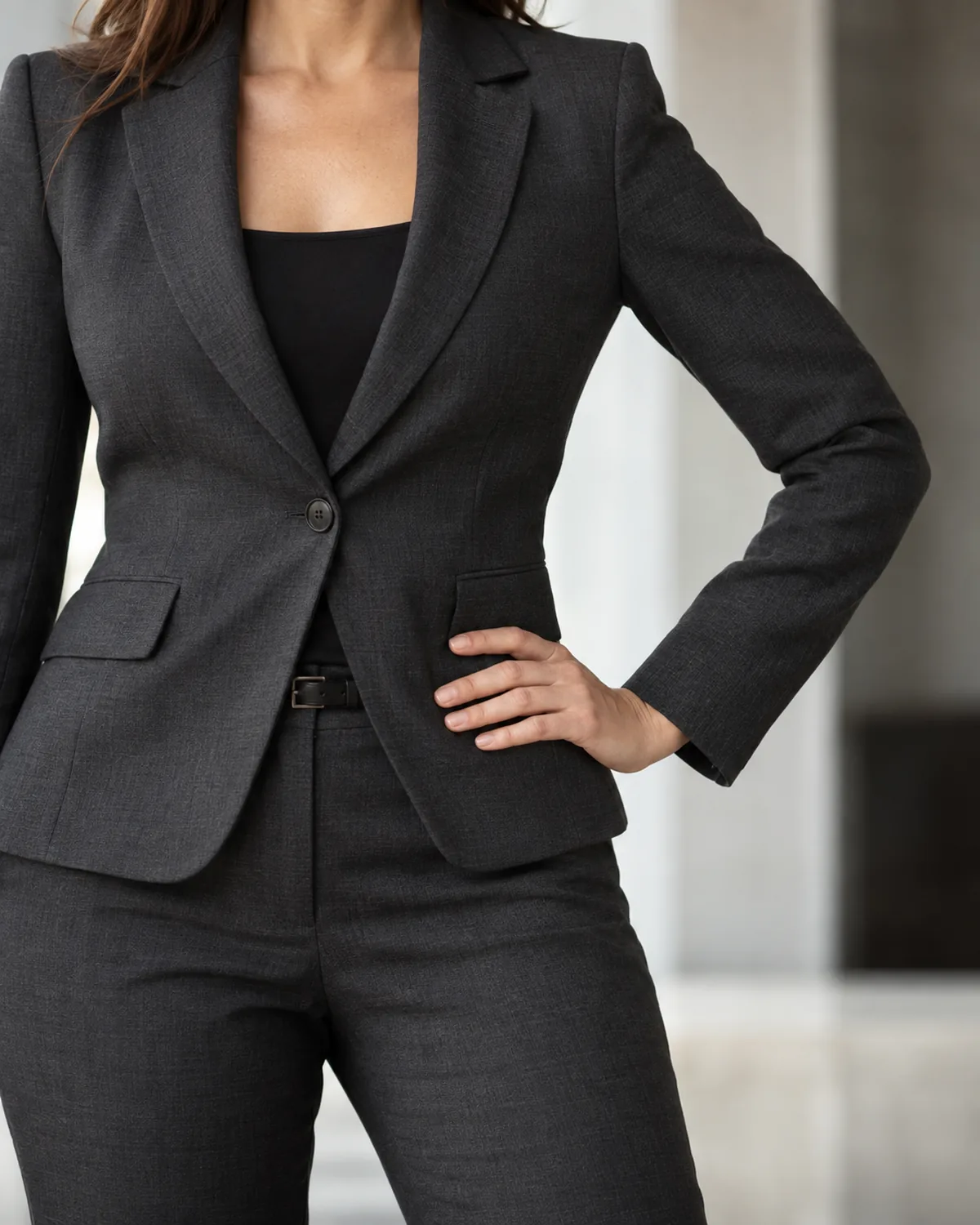
Same fabric, same colour, same set? That is business professional. Different fabrics, different colours, intentionally unmatched? That is business casual.
This test holds across almost every career-centre definition. The suit is what makes business professional professional. The absence of a matched suit is what makes business casual casual.
- A navy blazer over grey trousers is business casual, even though both pieces are individually formal.
- A charcoal blazer over matching charcoal trousers is business professional, even if the blouse underneath is a soft knit.
- A sheath dress becomes business professional when paired with a matching jacket. Without the jacket, it reads as business casual.
Fabric and Finish
Even when the silhouette looks similar, the fabric tells the story.
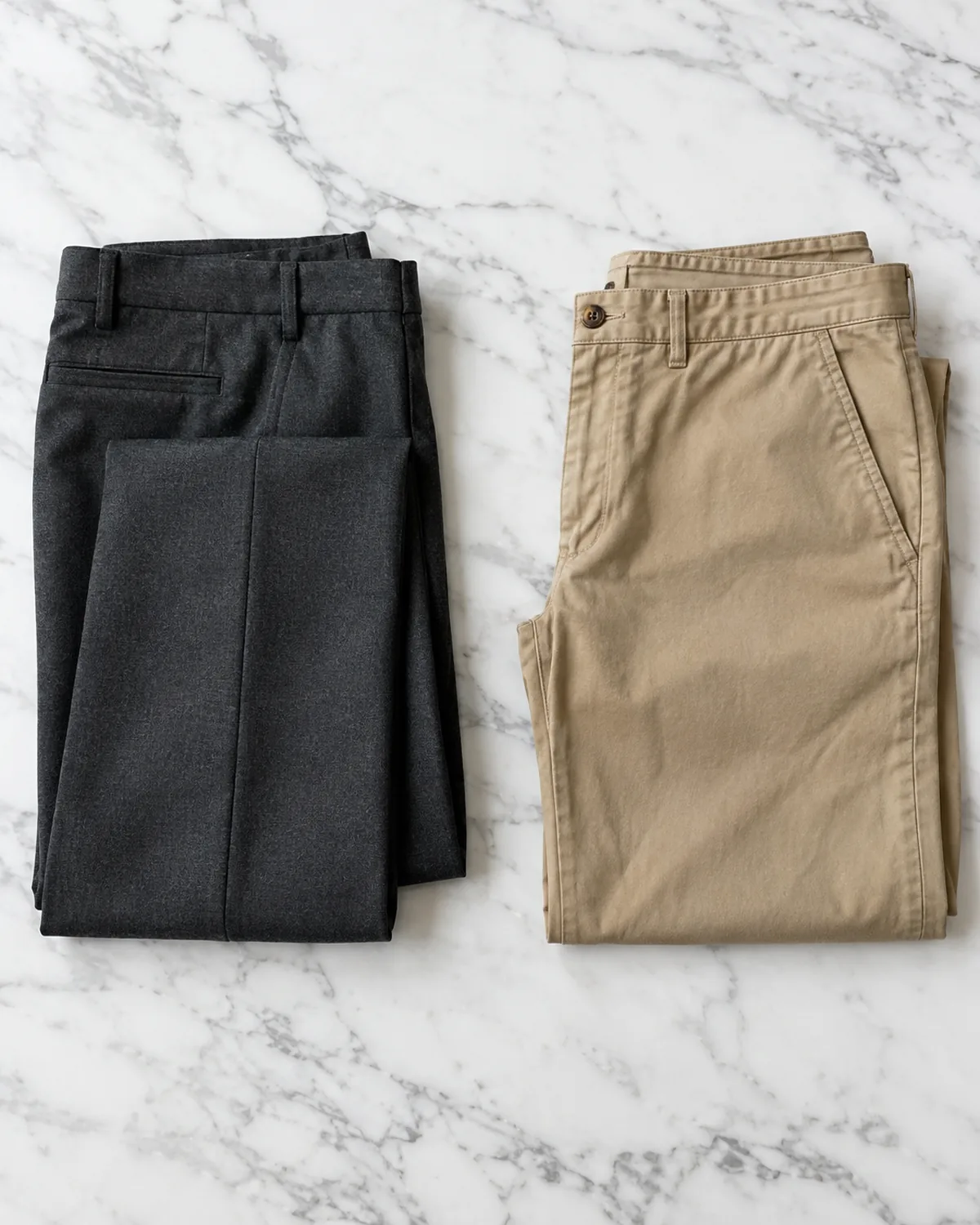
Business professional leans toward structured materials: wool crepe, worsted wool, crisp cotton poplin. These fabrics hold a crease, sit close to the body without clinging, and look the same at 8 a.m. and 5 p.m. Illinois lists "solid, dark, or neutral colors" and calls for clothes that are "fitted custom to you."
Business casual allows softer textures. Cotton-blend trousers, knit tops, corduroy, linen in warmer months. The garments are still pressed and neat, but they do not need to hold a sharp crease.
- A pressed wool trouser with a visible centre crease reads as professional.
- A khaki cotton chino with a relaxed drape reads as business casual.
- The fabric communicates formality even when the cut is identical.
Shoes
Shoes are one of the first things people notice, and the two dress codes draw a clear line here.
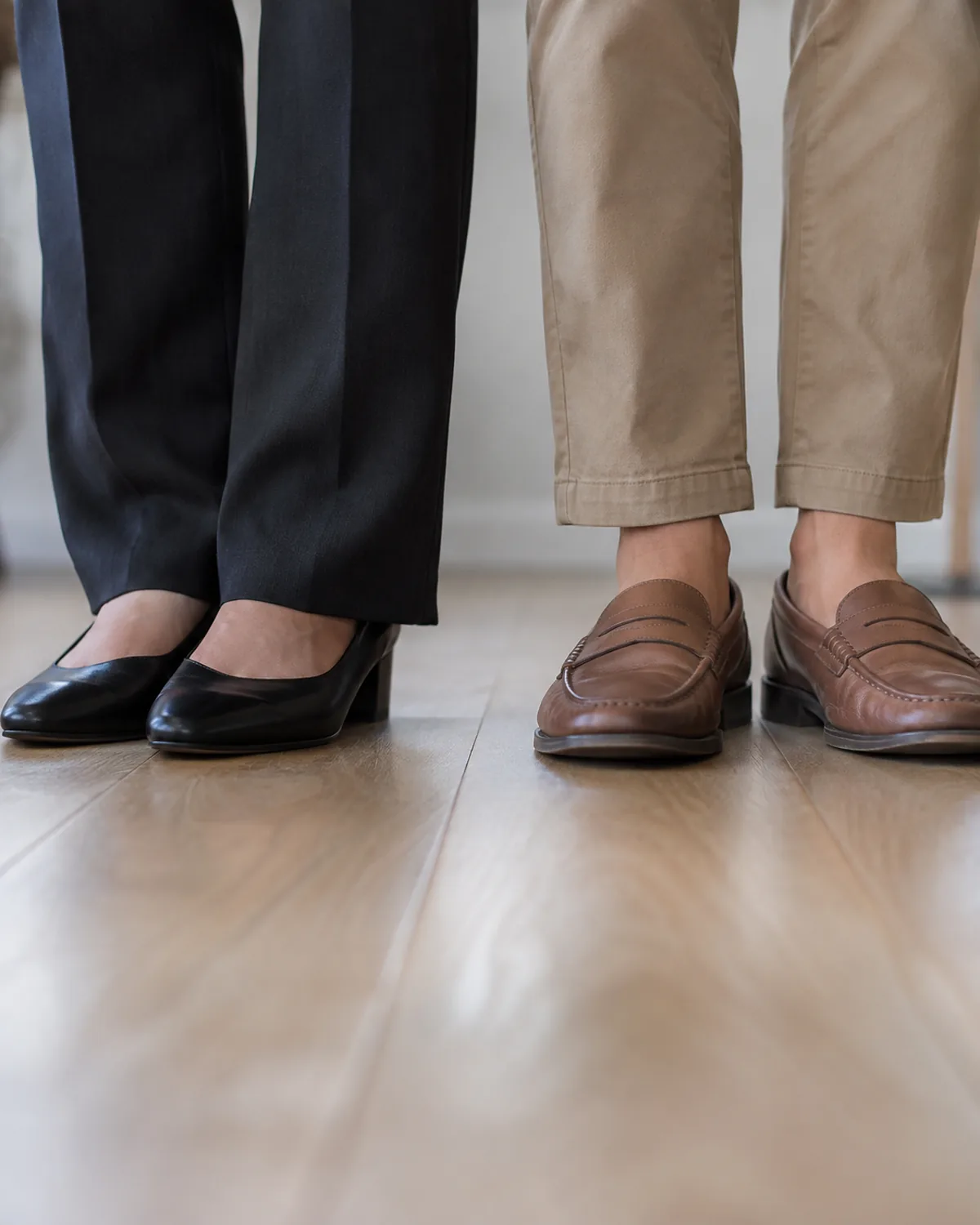
Duke's business professional list specifies "black oxfords or derbys; black closed-toe low or high heels (not above 4")." The shoes are dark, closed-toe, and polished. There is no room for sandals, mules, or fashion sneakers.
For business casual, Duke lists "flats, sling-backs, or boots; relaxed but elegant shoes." Texas A&M adds "loafers, flats, wedges, or low heels."
- Business professional: dark, closed-toe, formal. Pumps, oxfords, or pointed-toe flats in black or dark brown.
- Business casual: still closed-toe in most offices, but the colour range and style range open up. Loafers, ankle boots, ballet flats, and sling-backs all work.
- Open-toe shoes are a grey area. Duke allows them for business casual but not for business professional.
Accessories and Details
Business professional keeps accessories minimal and conservative. A watch, small stud earrings, a structured leather bag. Duke's guide notes "high quality accessories" for business professional and business formal settings.
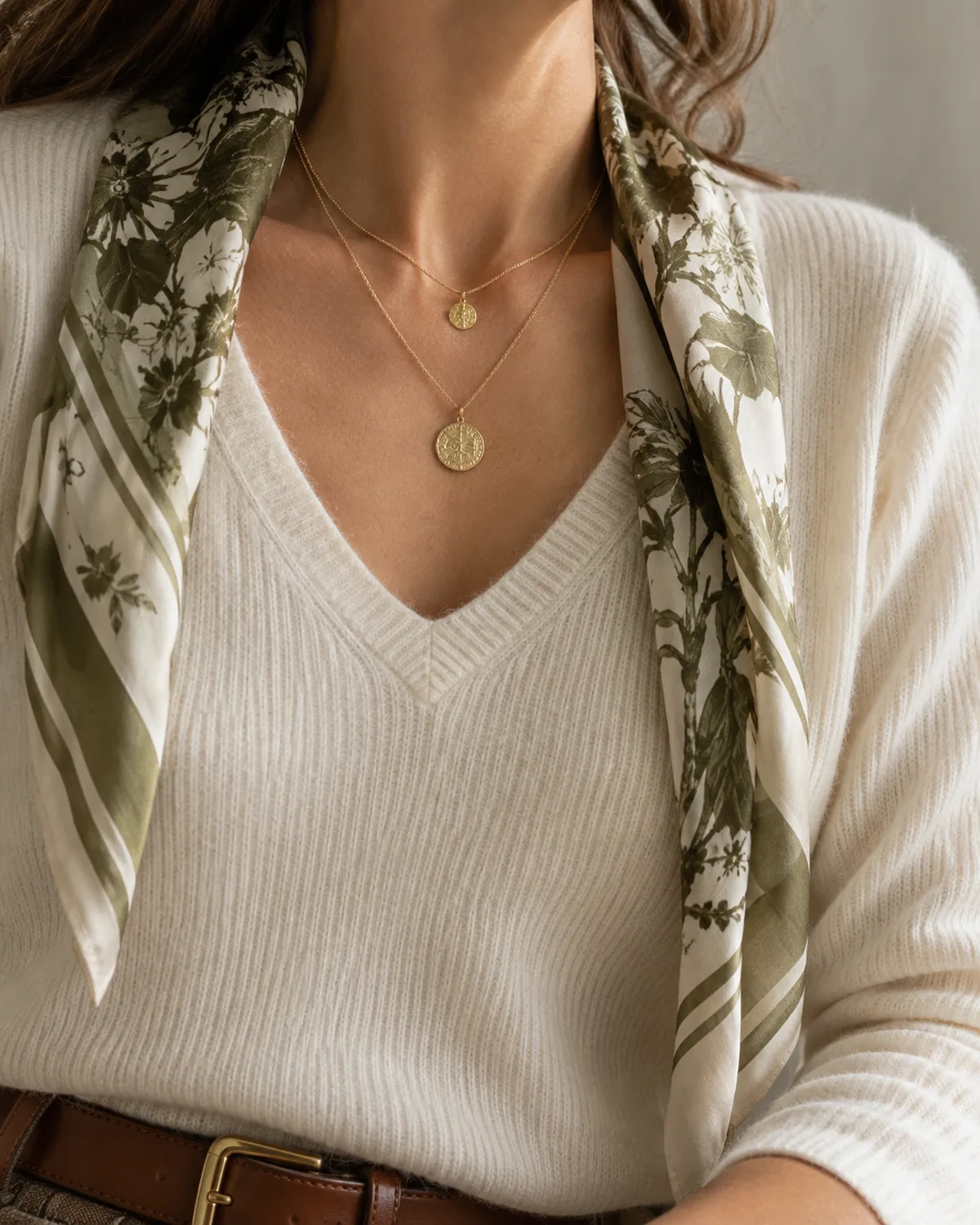
Business casual allows more personal expression. A patterned scarf, a layered necklace, a coloured belt. Creighton University's career centre says business casual "should look appropriate even for a chance meeting with a CEO" but leaves room for individual style.
- In a business professional setting, accessories should not draw attention away from the conversation.
- In a business casual setting, accessories can show more personality as long as they stay polished.
- Both codes agree: nothing distracting, nothing that makes noise, nothing that could catch on equipment.
When the Label Does Not Match the Room
Sometimes the email says "business casual" but the floor is full of suits. Sometimes it says "business professional" but nobody wears a jacket after the first week. The written policy and the actual culture can be two different things.

The most reliable way to read the real dress code: look at what the people one level above you wear on a regular Tuesday. Not on casual Friday, not on a client day, not on a day when the CEO is visiting. A normal working day.
- If they are in matched suits, the culture is business professional regardless of what the handbook says.
- If they are in separates with optional blazers, the culture is business casual.
- If you are brand new and cannot observe, default up one level. Duke's guide recommends dressing "up one level" for an interview or career fair, and the same logic applies to a first week.
The UFL career advisor's rule is useful here: "If they don't specify anything, wear business professional." You can always take off a jacket. You cannot add one you did not bring.
Which Situations Call for Which Level
Not every day at the same job calls for the same level. Here is how the two codes map to common situations.
Interviews. Default to business professional unless the employer says otherwise. The UFL advisor says it directly: "First, go by what the employer specifies. If they say business casual, wear business casual. If they don't specify anything, wear business professional."
Client-facing days. Match or slightly exceed the client's level. If they show up in suits, you should be in a suit. If they show up in separates, separates are fine.
Internal meetings. Follow whatever the daily norm is on your floor. Most internal meetings do not require dressing up unless a senior leader from another office is joining.
First day. UMass Dartmouth advises: "Unless there is an industry standard or pre-established dress code, opt for either business casual or more professional attire for your first day on the job." When in doubt, overdress. The UFL advisor puts it simply: "It's always better to be over dressed than underdressed."
- A blazer in your bag is insurance. If the room is more formal than you expected, put it on.
- If the room is less formal than you expected, you look like someone who takes the job seriously. That is not a problem.
Business Casual vs Business Professional FAQ
Can you wear jeans to a business casual office?
It depends on the specific office. Indeed lists "dark jeans without holes" as a business casual option, but many offices exclude all denim from their dress code. If you have never seen a senior colleague in jeans on a normal workday, leave them at home.
Is a blazer required for business casual?
No. Texas A&M says "sport coats/blazers are appropriate, but not required." A blazer adds polish, but a well-fitted blouse or knit top with tailored trousers meets the business casual standard on its own.
What is smart casual vs business casual?
Smart casual is one step below business casual. Texas A&M defines it as "anything listed as Business Casual, and: Jeans — avoid rips or holes; darker washes are generally considered more professional." Smart casual also allows clean, plain T-shirts, which business casual does not.
Does business professional always mean a full suit?
In nearly every career-centre definition, yes. The standard is a matched two-piece: same-fabric jacket and trousers, or jacket and skirt, or a dress with a matching jacket. The pieces need to coordinate as a set.
Should you dress business professional for an interview if the company says nothing about a dress code?
The UFL career advisor's recommendation: "If they don't specify anything, wear business professional." You can always dress down by removing the jacket. You cannot dress up without the right pieces.
Where the dress-code definitions come from
- Attire Guide — Career Hub, Duke University
- Dress for Success — Career Center, Texas A&M University
- What Is Business Casual Attire? (With Examples and Tips) — Indeed Career Guide
- So What Exactly Is Business Casual? — Career Connections Center, University of Florida
- Dress for Success — The Career Center, University of Illinois Urbana-Champaign
Keep this one
Save it where you plan outfits
Pin the image above to the board you actually check on a Sunday night. This guide is written to be re-read, not read once.
Tonight, before you close this tab
- Pull out the darkest suit you own and confirm the jacket and trousers are the same fabric
- Identify two tops that work with both a full suit and separates
- Look at what the people one level above you wear on a regular Tuesday
- Bookmark your company's written dress code if one exists