20 Work Outfits for Curvy Women That Fit the Dress Code and the Body
Twenty work outfits for curvy women that fit the dress code and the body. Each outfit uses specific garment structures to work with curves, not against them.
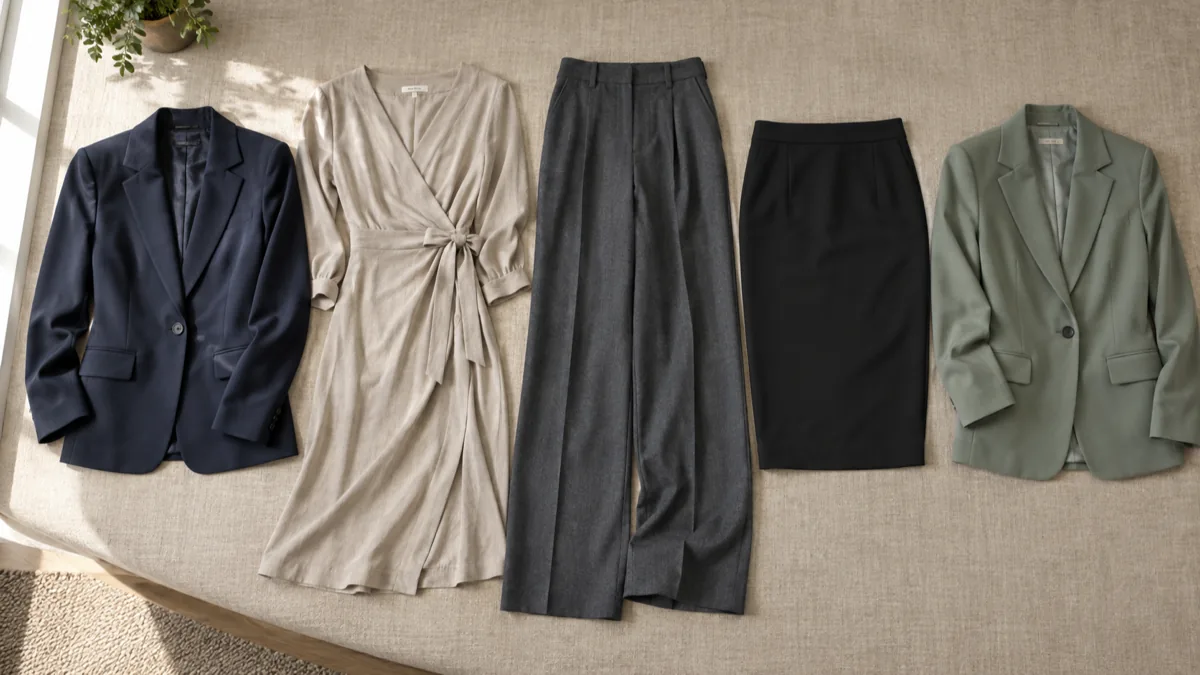
Working out an outfit for tomorrow? Save this page. It is easier to skim the night before than to remember.
At a glance
Works
- A structured blazer with a suppressed waist, because it sets the formality without compressing the body
- High-waisted wide-leg trousers, because the rise clears the natural waist and the wide leg balances hip width
- A wrap dress in a non-stretch matte fabric, because the closure follows the body instead of imposing a fixed size
Depends
- A pencil skirt, which reads business professional where the office expects it but can pull or ride in offices with a lot of movement
- Straight-leg chinos, which pass as business casual in most offices but fall below the bar where trousers mean wool or a crease
- Bermuda shorts with a tucked blouse, which work only where your office explicitly permits shorts
Skip
- Buying oversized silhouettes to hide curves, which lowers the formality read and adds visual volume where you did not want it
- Stiff undarted blazers that gap at the bust button, since the gap signals a fit problem to anyone facing you
- Bodycon fabrics without a structured outer layer, which cross the line from fitted to tight in most professional settings
Curvy here means bust-and-hip emphasis relative to the waist. Any size, not exclusively plus. The common thread across these outfits is garment structure: how seams, rises and closures are built to follow the body instead of fighting it.
If you already own the capsule basics, these outfits show how to pick versions that account for curves. If you are starting from zero, the first five ideas cover both business professional and business casual.
1. A Structured Blazer With a Suppressed Waist
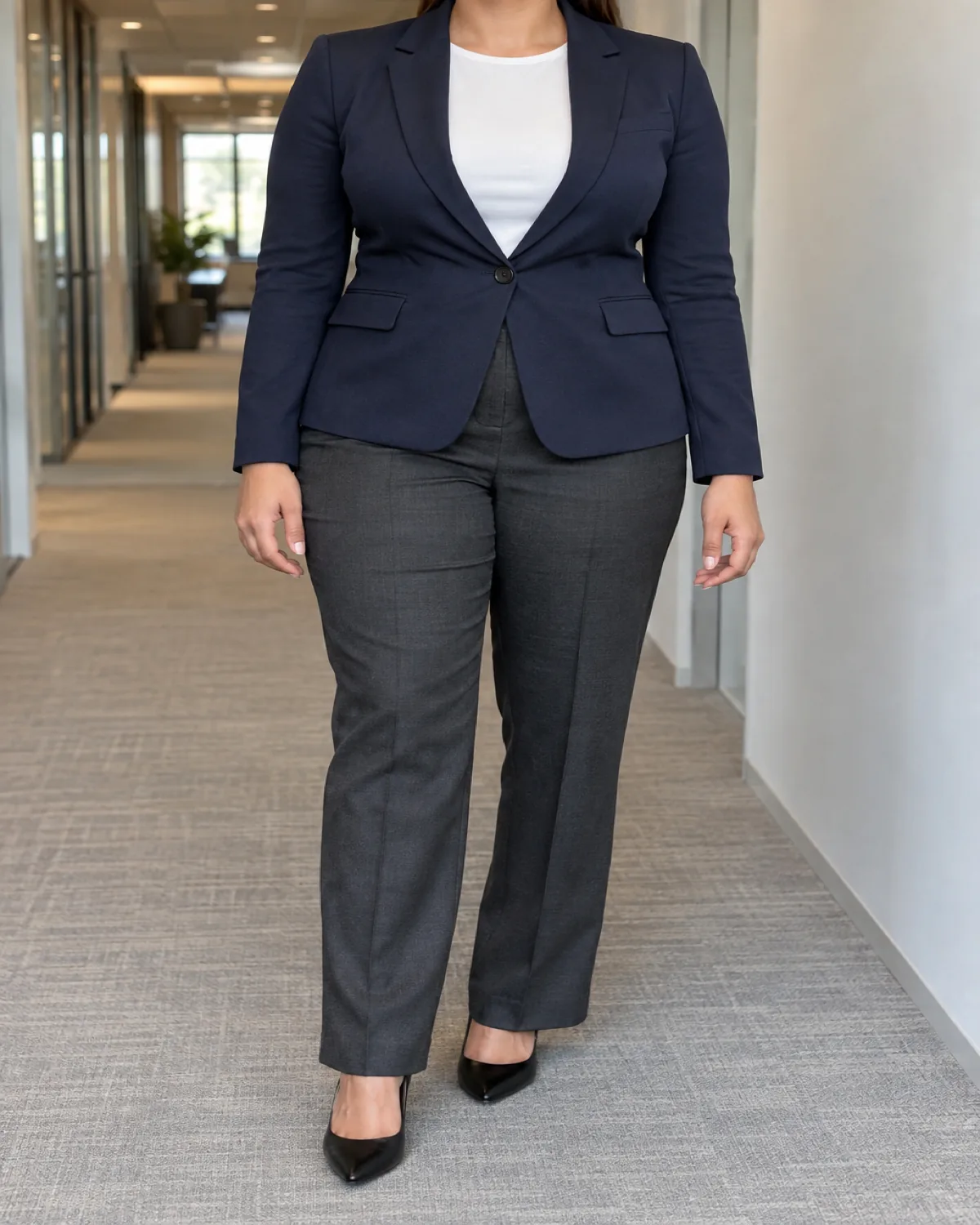
A suppressed-waist blazer nips in at the natural waist instead of hanging straight from the shoulder. On a curvy frame that means the fabric follows where the body actually is, so you get formality without compression.
Business casual and business professional dress codes both consider a blazer with non-matching trousers appropriate. The suppressed waist is what makes this version work on curves.
- Look for a single-button closure that sits at or just above the natural waist
- The lapels should lie flat without pulling when buttoned
- Pair with the charcoal trousers in idea 5 for the most versatile combination
- If you already own a blazer rotation, check whether the waist hits where it should
2. High-Waisted Wide-Leg Trousers
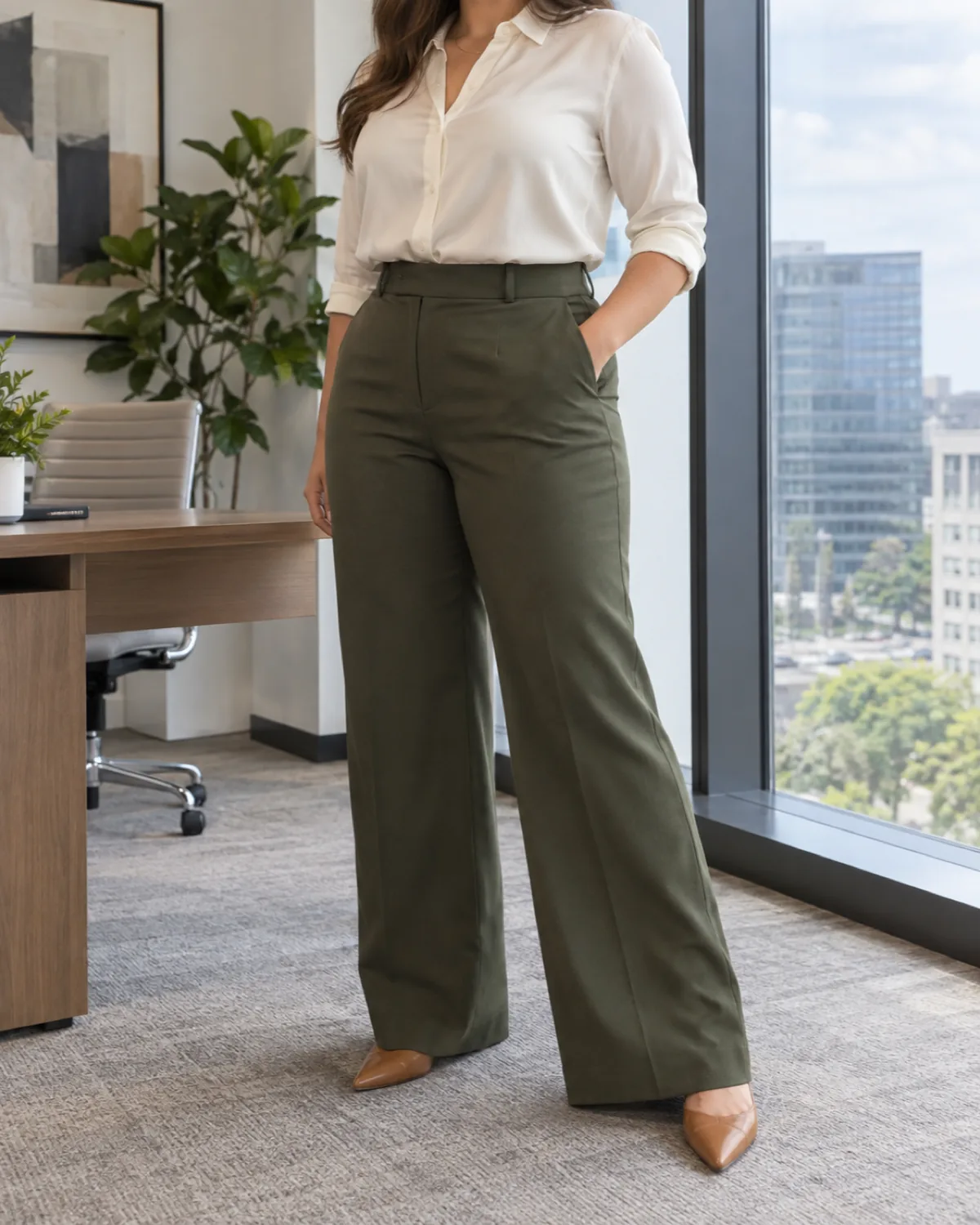
The rise on these trousers sits above the natural waist, which means the waistband clears the widest point of the hip and the fabric falls from there. The wide leg balances hip width rather than tapering into it, and the overall effect is a clean vertical line from waist to hem.
- A flat-front waistband sits smoother than pleats when the hip is wider than the waist
- Choose a fabric with enough weight to drape rather than cling
- The hem should break slightly over the shoe, not puddle
- These are the trouser shape that does the most for a curvy lower half in an office setting
3. A Wrap Dress in Matte Ponte
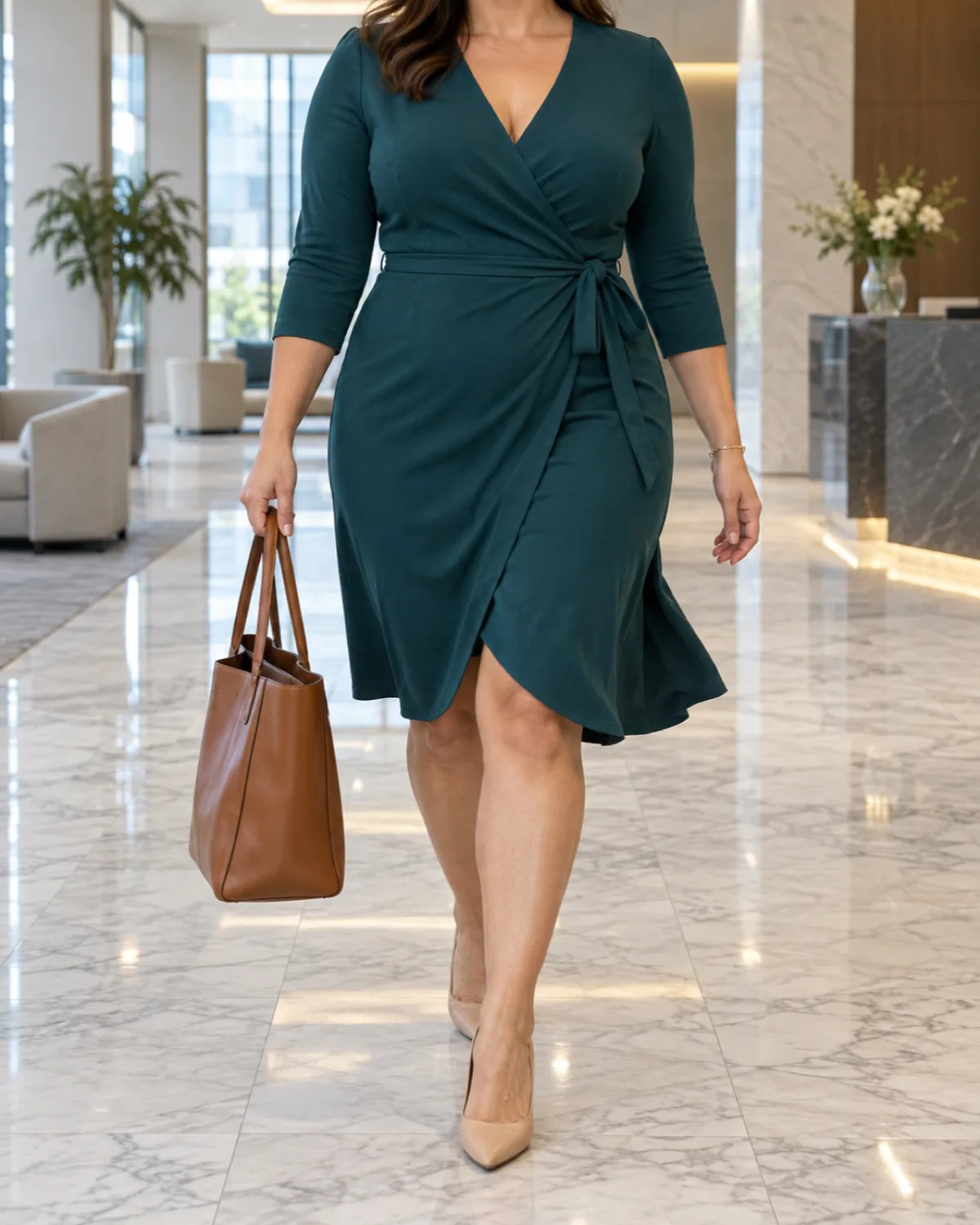
A wrap dress adjusts to the body rather than imposing a fixed size. The closure follows the natural waist and the V-neckline creates a vertical line through the centre. Ponte holds its shape better than jersey on a curvy frame because the fabric has structure without stiffness.
- Matte ponte avoids the shine that makes stretch fabrics read as casual
- Tie the wrap so it sits at the narrowest point of your waist, not below it
- A knee-length or just-below-knee hem keeps it within business casual range
- See the work dress guide for more single-piece options
4. A Sheath Dress With Princess Seams
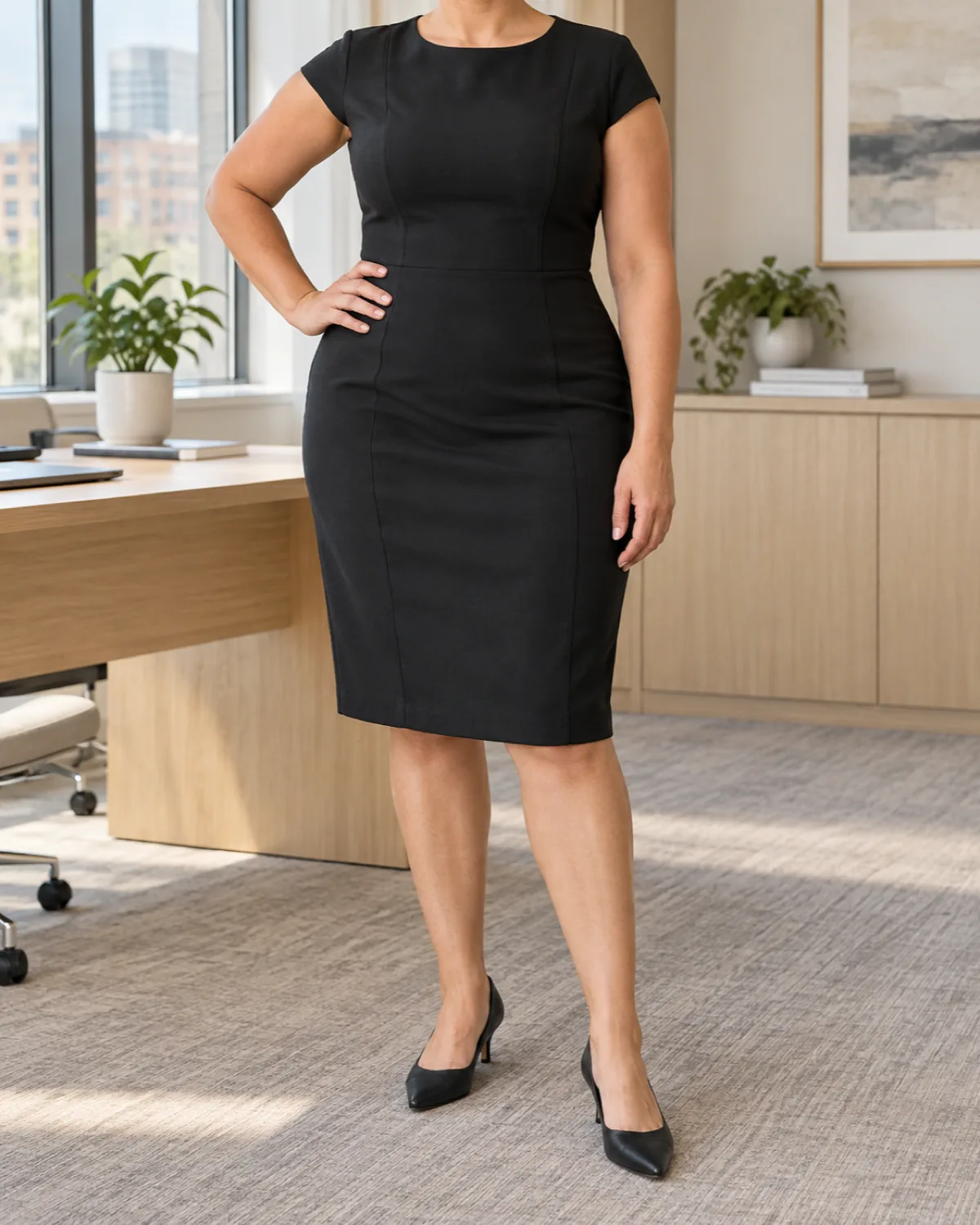
Princess seams run vertically through the bust and waist instead of relying on side seams alone. That means the dress can follow the curve of the bust and the taper of the waist without darts or a belt. On a curvy body this reads as fitted and intentional rather than tight. A sheath dress at or below the knee is appropriate in both business professional and business casual settings.
- The seams should curve with the bust, not cut across it
- Choose a fabric with enough body that the skirt skims rather than clings below the hip
- Add a blazer for the most formal version, or wear it alone with flats for business casual
- This is the hourglass-friendly equivalent of a straight-cut shift
5. Dark Straight-Leg Trousers With a Blazer
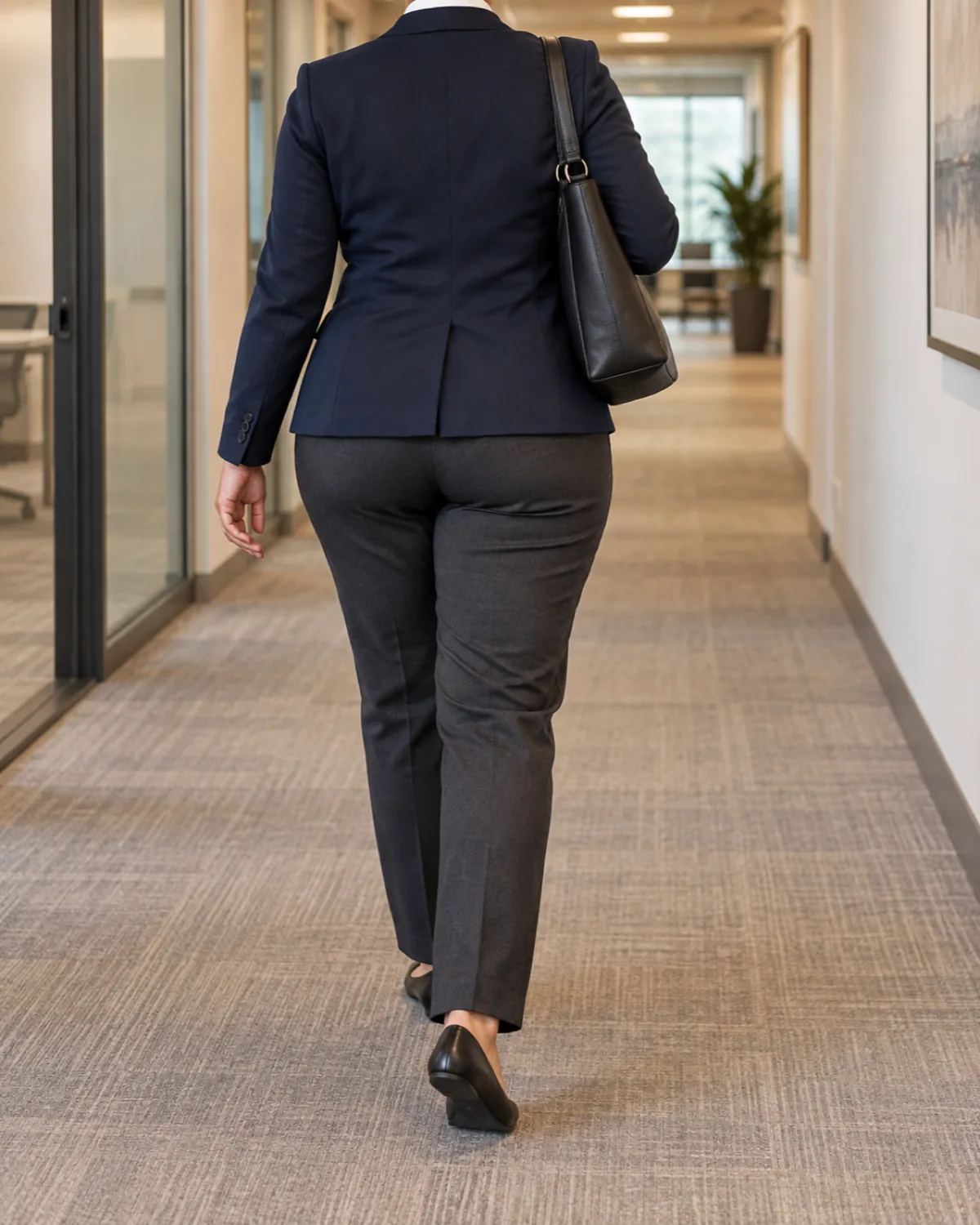
This is the default office combination that works at every dress-code level when two things are right: the trouser rise is high enough to clear the hip, and the blazer has enough shape to follow the waist. On a curvy frame, a mid-rise trouser will dig, and a boxy blazer will add width where you do not need it.
- The trouser should sit at or above the natural waist, not at the hip
- Straight leg avoids the trend risk of wide or tapered cuts
- Charcoal and navy together read more intentional than black on black
- This combination covers business professional without a matched suit
Where to start
Find your situation, skip ahead
Your office dress code says business professional and you need to look put-together from day one
Start with ideas 1, 4 and 5. A suppressed-waist blazer, a princess-seam sheath and a dark trouser pairing cover the top of the formality ladder.
01 A Structured Blazer With a Suppressed Waist04 A Sheath Dress With Princess Seams05 Dark Straight-Leg Trousers With a Blazer
Your office is business casual and you want options that fit without constant tailoring
Ideas 3, 9 and 10 use stretch or self-adjusting closures that work with curves instead of against them.
03 A Wrap Dress in Matte Ponte09 A Ponte Blazer Over a Crew Neck and Slim Trousers10 Straight-Leg Chinos With a Camp-Collar Blouse
You own the basics and want to add variety without repeating the same silhouette
Ideas 13 through 16 break the blazer-and-trouser pattern with collarless jackets, boat necks, cropped lengths and mock necks.
13 A Collarless Jacket With Tapered Trousers14 A Fit-and-Flare Dress With a Boat Neckline15 Wide-Leg Cropped Trousers With a Long Blazer16 A Mock-Neck Sleeveless Top With High-Waisted Trousers
6. A Pencil Skirt Below the Knee
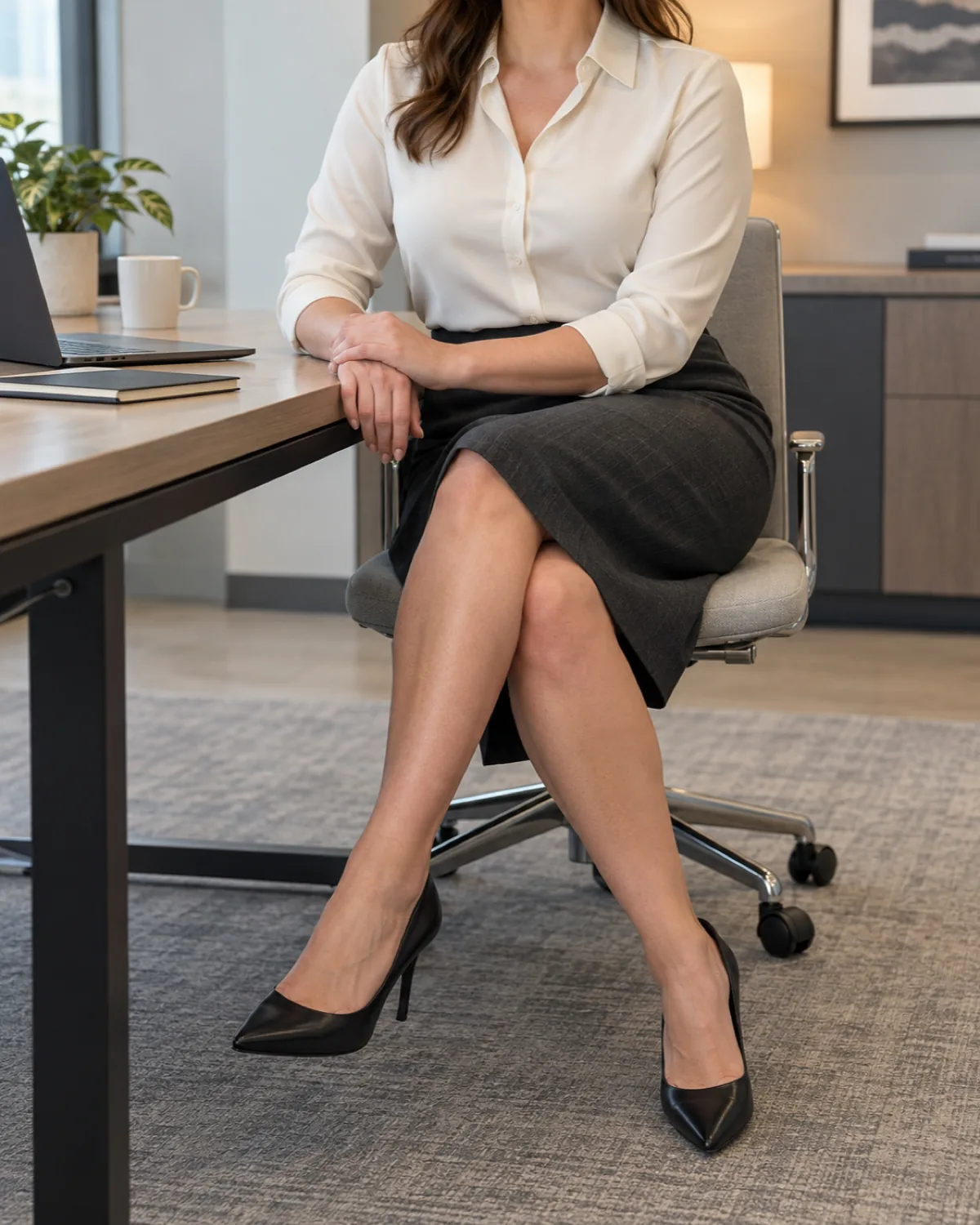
A pencil skirt that hits below the knee is one of the most widely accepted pieces in business professional environments. On a curvy body the fit matters more than the style: the skirt should follow the hip without pulling, and a back vent or kick pleat prevents the fabric from riding up with movement.
- The waistband should sit at the natural waist, not roll down when you sit
- Choose a fabric with enough structure to hold its line through a full day
- A below-knee hem reads more conservative than a knee-length hem and avoids riding issues
- Pair with the white shirt and blazer for a combination one step below a full suit
7. A Button-Front Shirt Under a Blazer
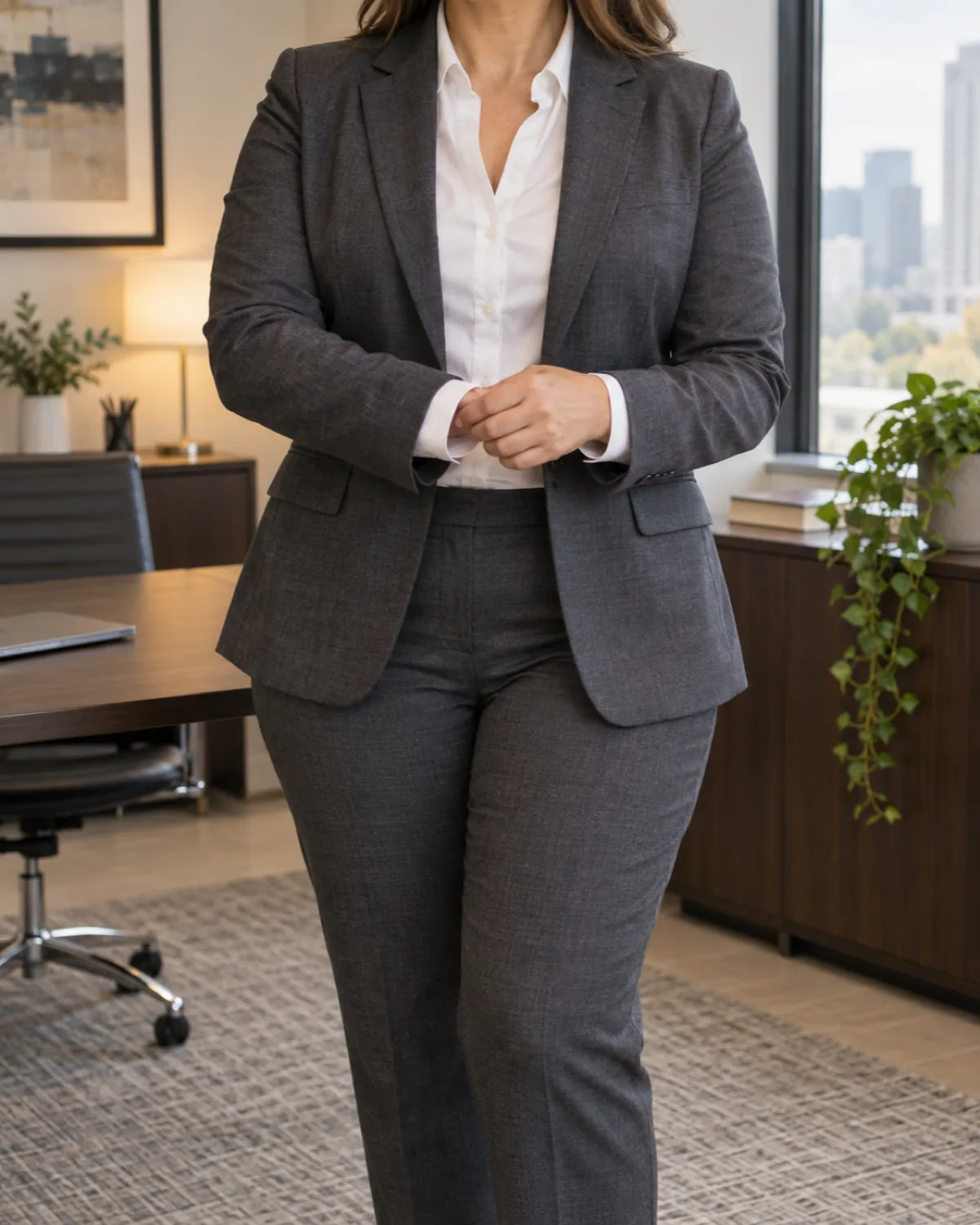
The blazer solves the bust-gap problem. A button-front shirt on a curvy frame often gaps between buttons where the fabric stretches across the bust, but a structured blazer sitting over the top covers that zone. You can button the shirt to a comfortable point and let the blazer do the rest.
- Choose a shirt with enough ease through the bust that the buttons do not strain when the blazer comes off
- A spread collar sits flat under the blazer lapel without bunching
- Cotton poplin holds its shape better than silk for daily wear
- Full tuck for meetings, front-only tuck for desk work
8. A Midi A-Line Skirt With a Tucked Knit
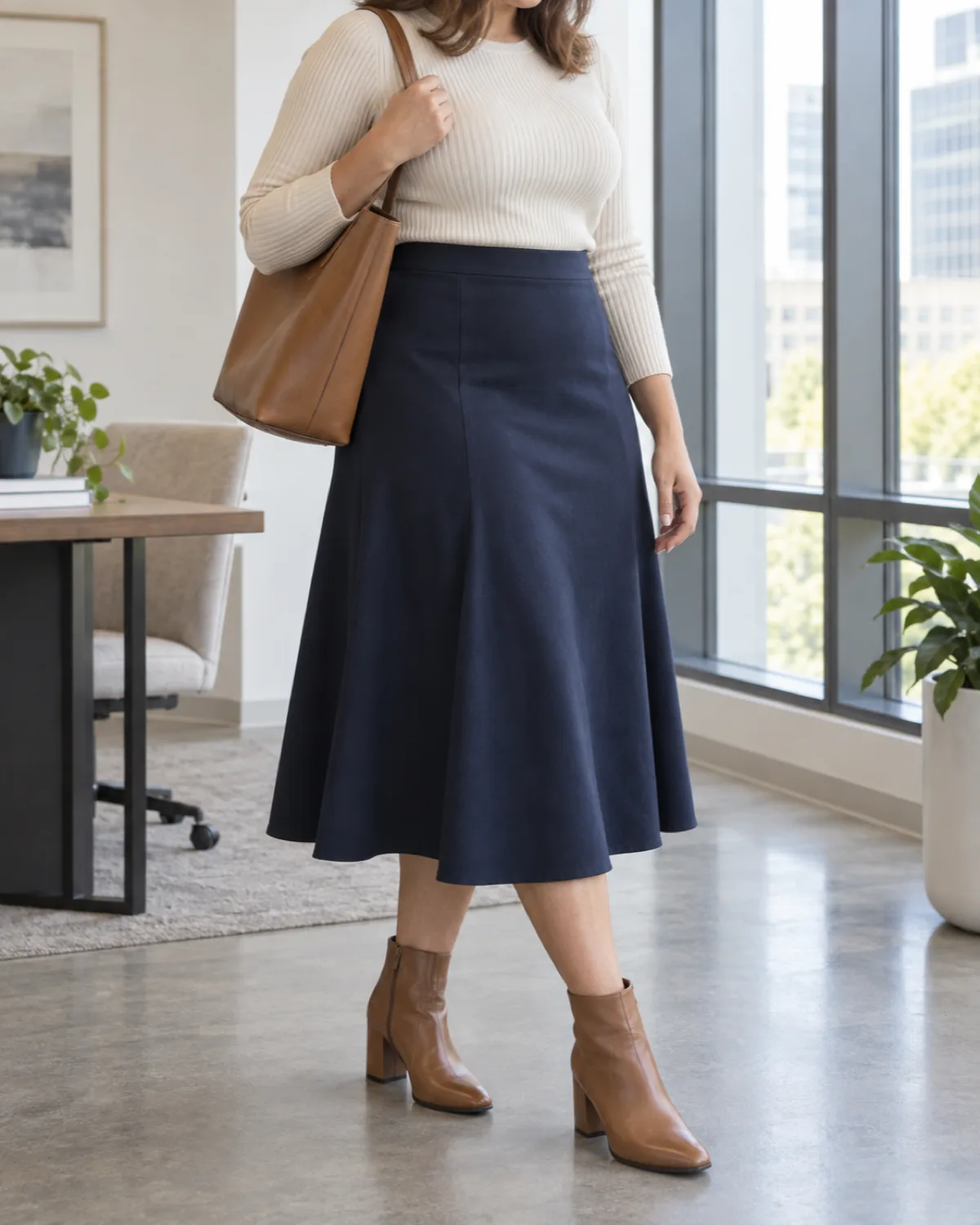
The flare on an A-line skirt starts below the hip, which means the fabric gives room through the thigh without adding volume at the waist. A tucked knit on top defines the waist and keeps the silhouette intentional. This combination reads as polished business casual without requiring a blazer.
- The skirt should sit at the natural waist with the knit tucked in
- A midi length that hits mid-calf keeps the proportion balanced with boots or flats
- Fine-gauge knit reads office-appropriate; chunky cable reads weekend
- The A-line shape is the skirt equivalent of the wide-leg trouser in idea 2
9. A Ponte Blazer Over a Crew Neck and Slim Trousers
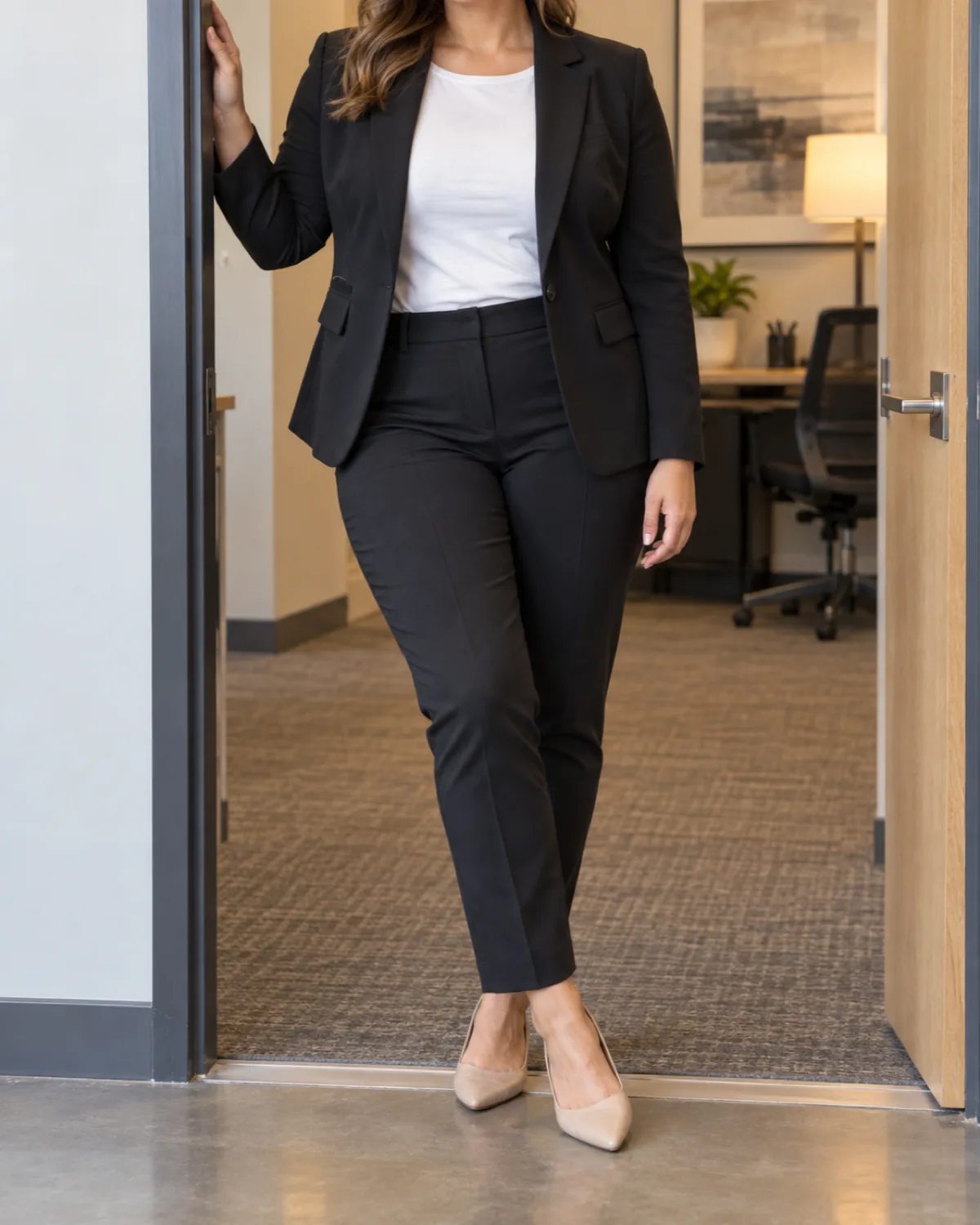
Ponte knit moves with the body instead of compressing it. A ponte blazer gives the structure of a jacket without the stiffness that can dig into curves. This works in offices where the business casual dress code leans toward the relaxed end and a wool blazer would read overdressed.
- Wear it open; buttoning a ponte blazer creates pulling across the bust
- Black ponte layers over most tops and under most coats without competing
- Slim trousers keep the lower half clean while the blazer provides the structure
- This is the softer alternative to the suppressed-waist blazer in idea 1
10. Straight-Leg Chinos With a Camp-Collar Blouse
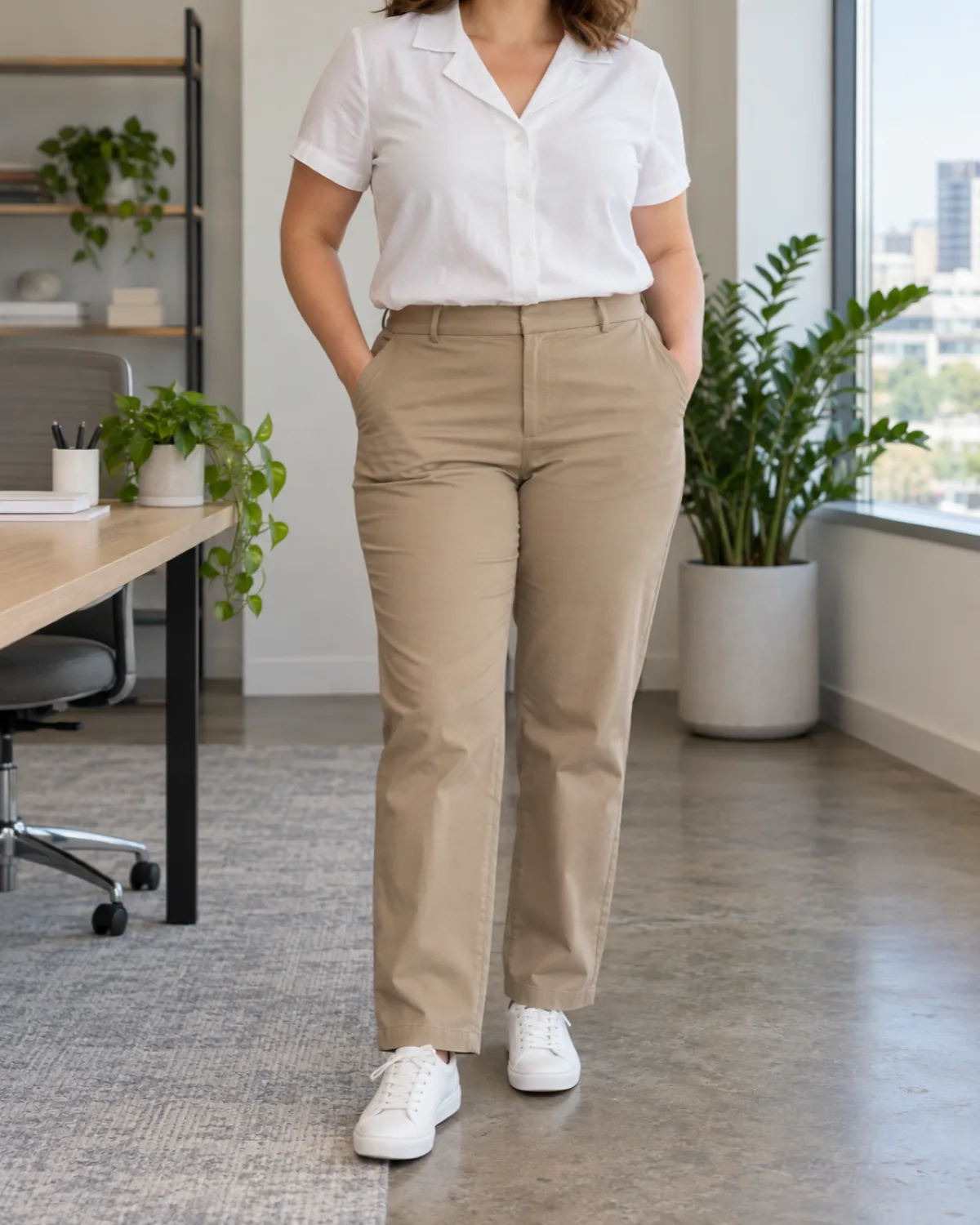
Chinos pass as business casual in most offices, though they fall below the bar in workplaces where trousers mean wool or a crease. On a curvy frame the key is the rise: a natural-waist rise keeps the waistband from digging, and a straight leg avoids the taper that draws attention to the hip-to-knee line.
- A camp collar sits open without gapping, unlike a pointed collar that can pull across the bust
- Choose chinos with a flat front and enough weight to hold a light press
- White sneakers work in casual offices; swap to loafers if the code tightens
- This is the lowest-formality outfit that still reads intentional in a business casual setting
11. A Belted Cardigan Over a Shift Dress
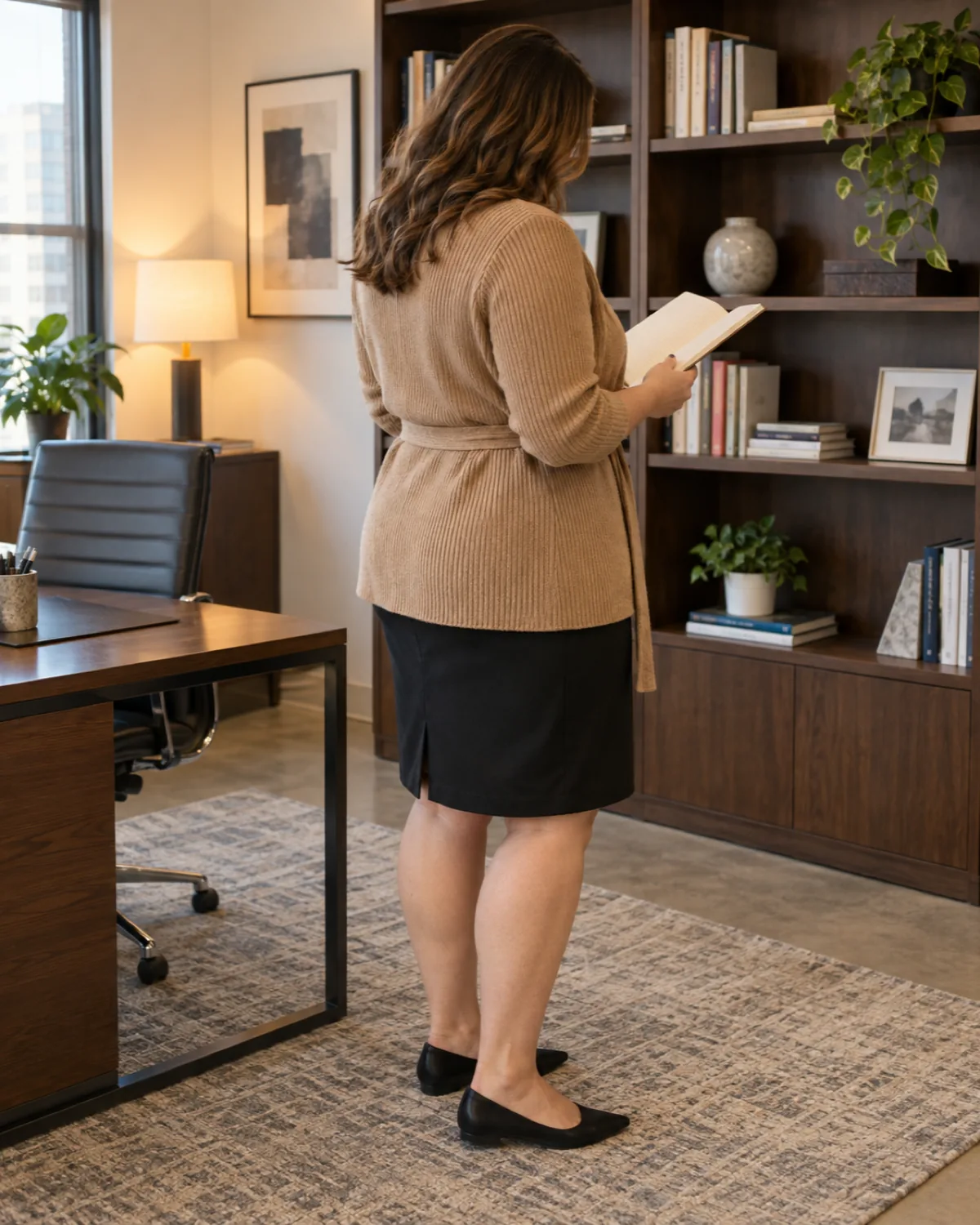
A shift dress hangs straight from the shoulder, which on a curvy body can read shapeless. Adding a belted cardigan over the top creates waist definition without switching to a fitted dress. The belt should sit at the narrowest point and the cardigan should be long enough to cover the hip.
- A self-belt (same fabric as the cardigan) reads cleaner than a contrast belt
- The shift underneath should skim, not cling; the cardigan does the shaping
- Camel over black creates enough contrast to look layered, not lumpy
- This is the warm-weather alternative to a blazer layer for offices that run cold
12. Tailored Bermuda Shorts With a Tucked Blouse
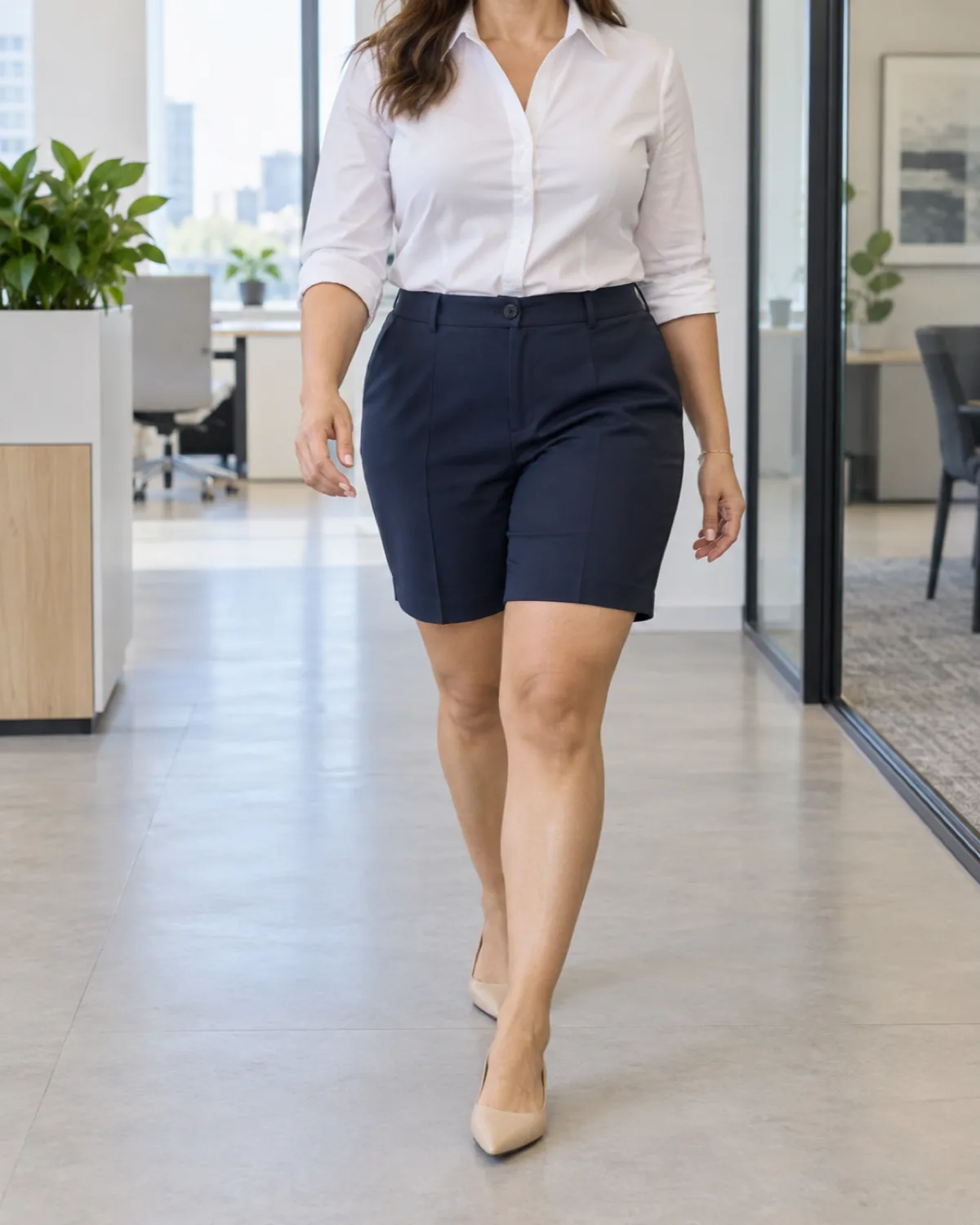
This only works where your office explicitly permits shorts. Where it does, a longer inseam and structured fabric keep bermudas office-appropriate. On a curvy frame, the shorts should hit mid-thigh or just above the knee and sit at the natural waist so the fabric does not ride up.
- Structured cotton or linen-blend reads professional; jersey reads gym
- A tucked blouse defines the waist and signals intention
- Closed-toe flats or loafers, not sandals, keep the formality above weekend
- Check what the most senior people in your office wear in summer before committing
13. A Collarless Jacket With Tapered Trousers
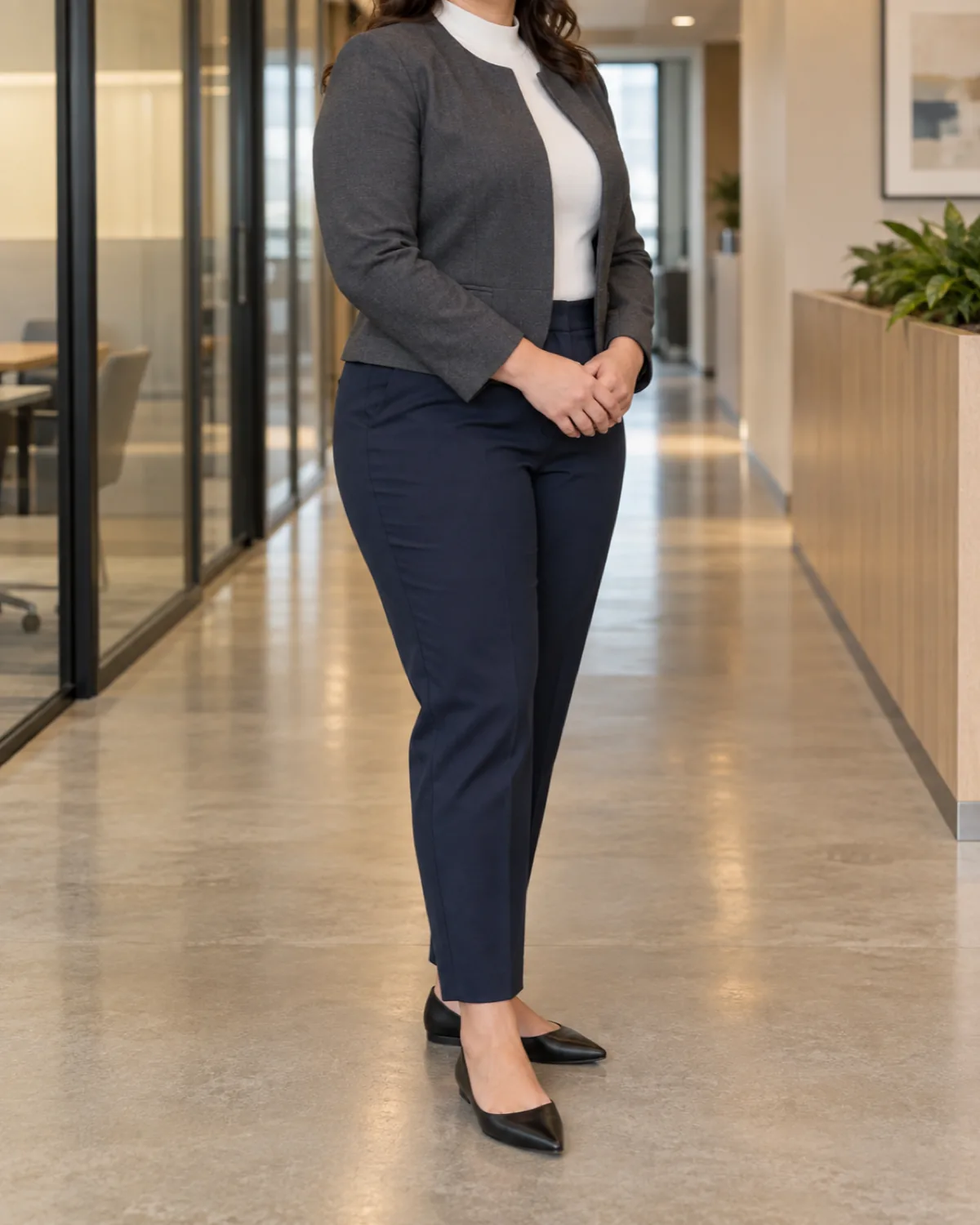
Removing the lapel simplifies the upper body line. When a traditional blazer feels crowded across the chest, a collarless jacket gives the same structure without the visual bulk of lapels sitting on top of the bust. Tapered trousers balance the clean neckline with a narrower leg.
- A collarless neckline sits closer to the body, so the fit through the shoulder matters more
- Choose a jacket that skims the bust without pulling when you lift your arms
- Navy tapered trousers and a white mock-neck top underneath keep the palette simple
- This is the office jacket for women who find blazers visually heavy across the chest
14. A Fit-and-Flare Dress With a Boat Neckline
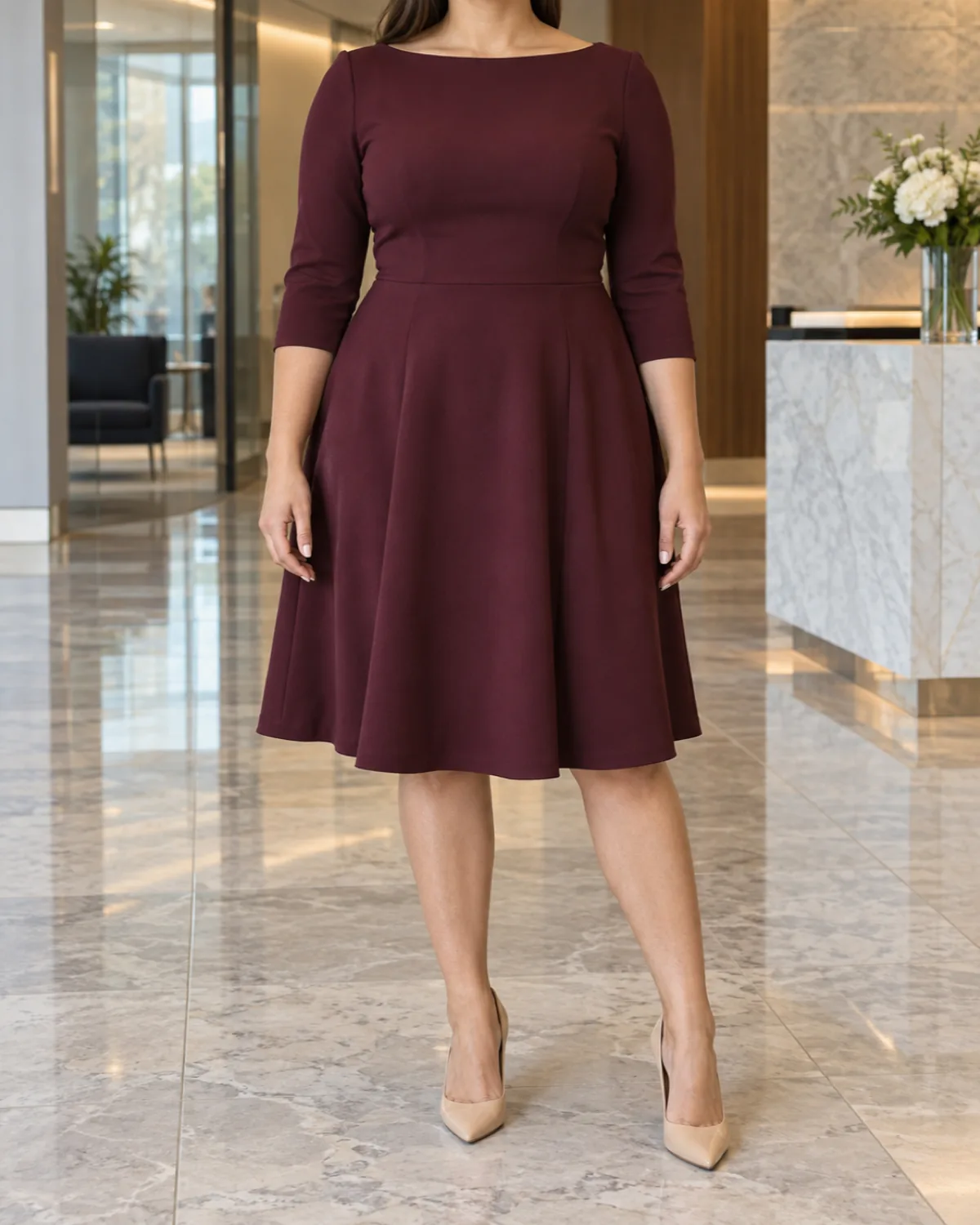
The boat neckline runs horizontally across the collarbone, which widens the shoulder line and balances a wider hip. The fitted bodice follows the waist and the flared skirt moves without clinging to the thigh. This is a single-piece outfit that reads business casual without layering.
- The bodice should be fitted but not tight; if you can see underwear lines, the fabric is too thin
- A knee-length flare keeps the proportions office-appropriate
- The boat neck works best when the shoulder seam sits exactly at the shoulder joint
- Nude pumps extend the leg line and keep the visual weight on the dress, not the shoe
15. Wide-Leg Cropped Trousers With a Long Blazer
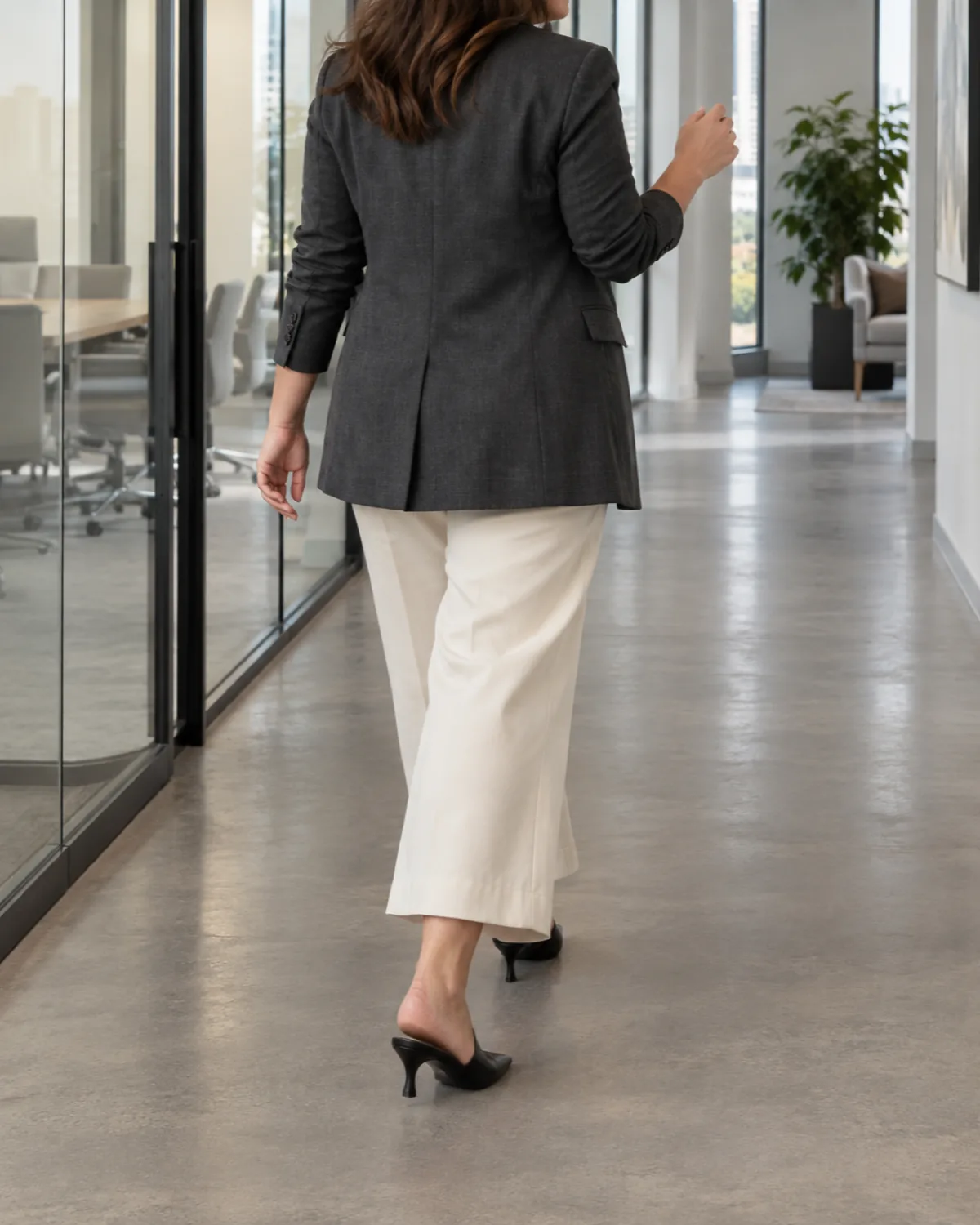
The cropped trouser breaks the vertical line at the ankle, and the long blazer re-establishes it past the hip. On a curvy frame this layered-length game is useful because it creates vertical movement without relying on a narrow silhouette. The blazer covers the hip and the wide crop gives the leg room.
- Cropped means the hem hits above the ankle, not at mid-calf
- The blazer should end below the widest point of the hip for a clean line
- A fitted tee underneath keeps the layers from adding bulk
- This works in business casual offices; add a structured bag for a more polished read
16. A Mock-Neck Sleeveless Top With High-Waisted Trousers
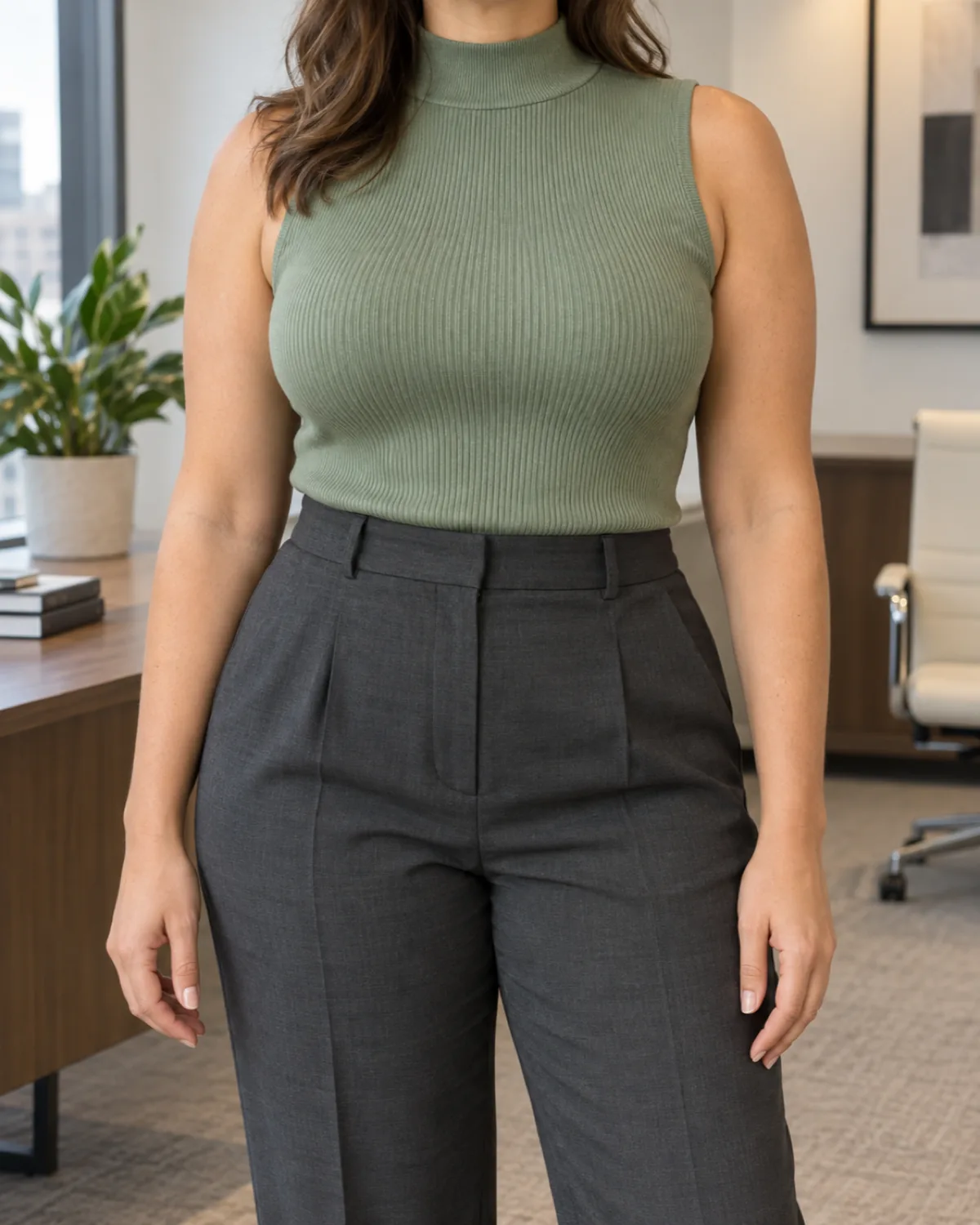
The mock neck gives a clean neckline without the collar-fit problem that button-front shirts create on a fuller bust. Sleeveless keeps the shoulder line simple, and high-waisted trousers anchor the tuck at the natural waist. This is a warm-weather base layer that works under a blazer or on its own.
- The mock neck should sit snug at the base of the throat without choking
- Choose a fabric with enough weight that the sleeveless armhole lies flat, not gaping
- Tuck fully into the trouser; a half-tuck on a sleeveless top reads undone
- Add the ponte blazer from idea 9 when the office temperature drops
17. A Knit Midi Dress With a Structured Tote
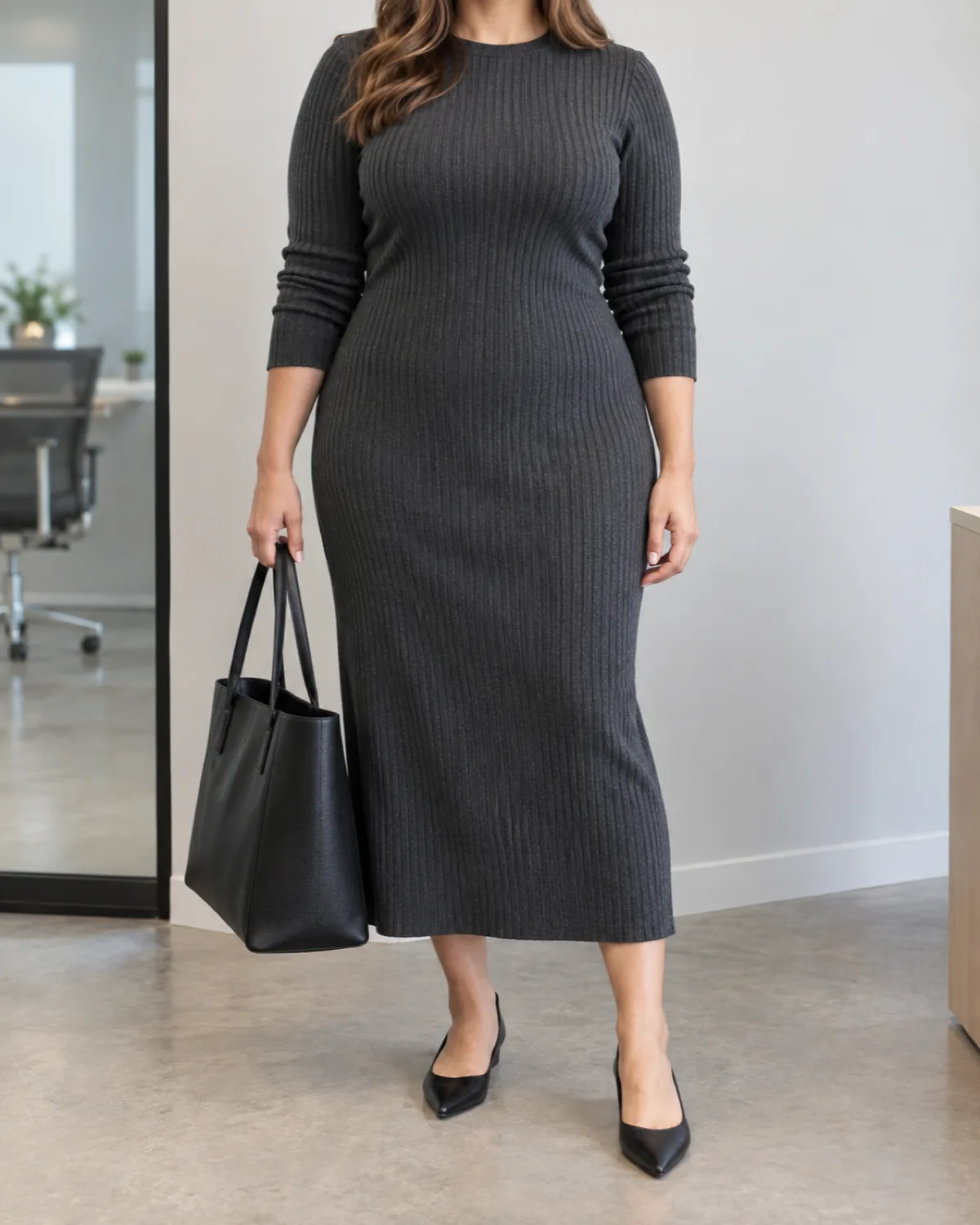
One-piece dressing with a knit midi works on a curvy frame when the knit has enough weight to skim rather than cling. Ribbing gives the fabric vertical structure that follows the body line without compression. A structured tote and pointed flats keep the overall read professional.
- The knit should have enough body that you cannot see through it when stretched
- A midi length hitting mid-calf balances the close fit of the bodice
- Avoid clingy jersey; look for ponte, ribbed knit or double-knit with recovery
- A structured bag contrasts with the soft dress and signals intention
18. A Double-Breasted Blazer Left Open
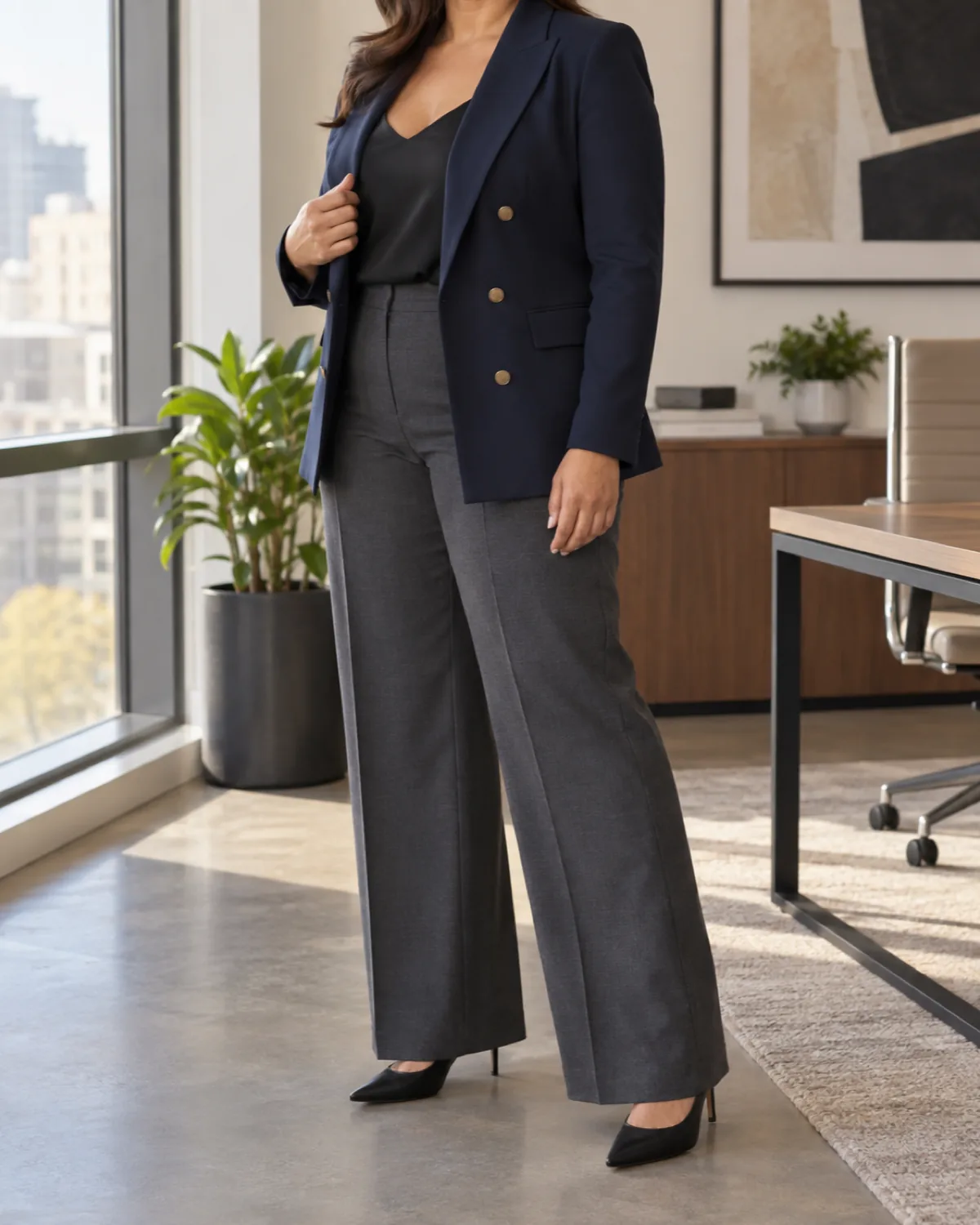
Wearing a double-breasted blazer open changes the geometry. The lapels frame the torso and the V-neckline underneath elongates the centre line. On a curvy bust, buttoning a double-breasted blazer often creates pulling across the chest; leaving it open sidesteps that entirely.
- The blazer should be structured enough to hold its shape open, not collapse inward
- A V-neck cami underneath creates a continuous vertical from neckline to waist
- Wide-leg trousers balance the width of the open blazer panels
- This is the statement layer for days when a single-breasted blazer feels too quiet
19. A Peplum Top With Straight-Leg Trousers
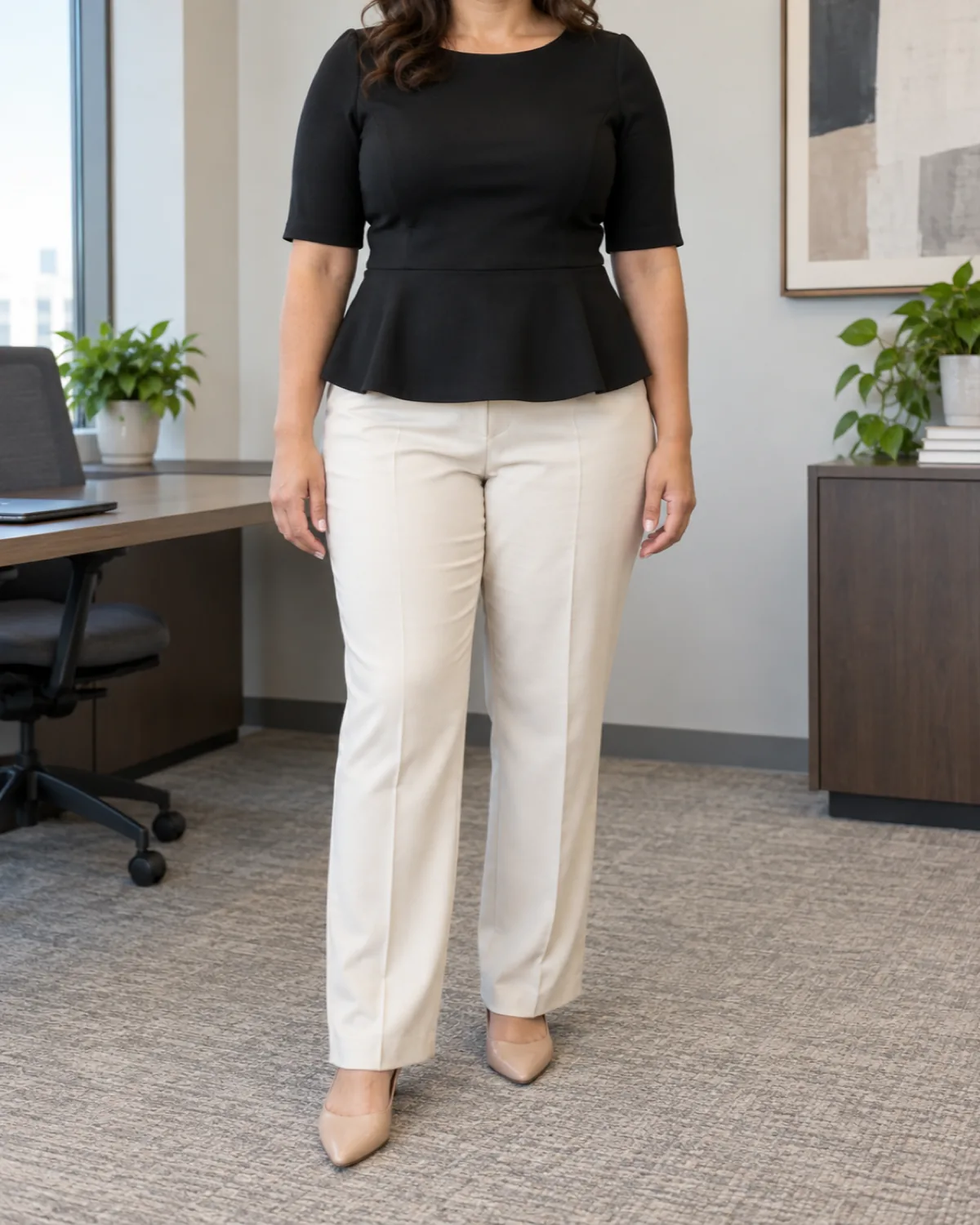
The peplum flare at the hip is small enough to read as a design detail rather than a costume piece. On a curvy frame it creates a deliberate transition from the fitted bodice to the hip, and the straight-leg trouser below keeps the silhouette grounded. The trick is proportion: too much flare and it looks like a ruffle, too little and it disappears.
- The peplum should end at the widest point of the hip, not above or below
- Straight-leg trousers, not wide-leg, keep the volume in check below the flare
- A solid colour top-to-bottom avoids breaking the body into horizontal bands
- This works best in business casual; pair with a blazer if the code moves up
20. A Longline Vest Over a Button-Front Shirt
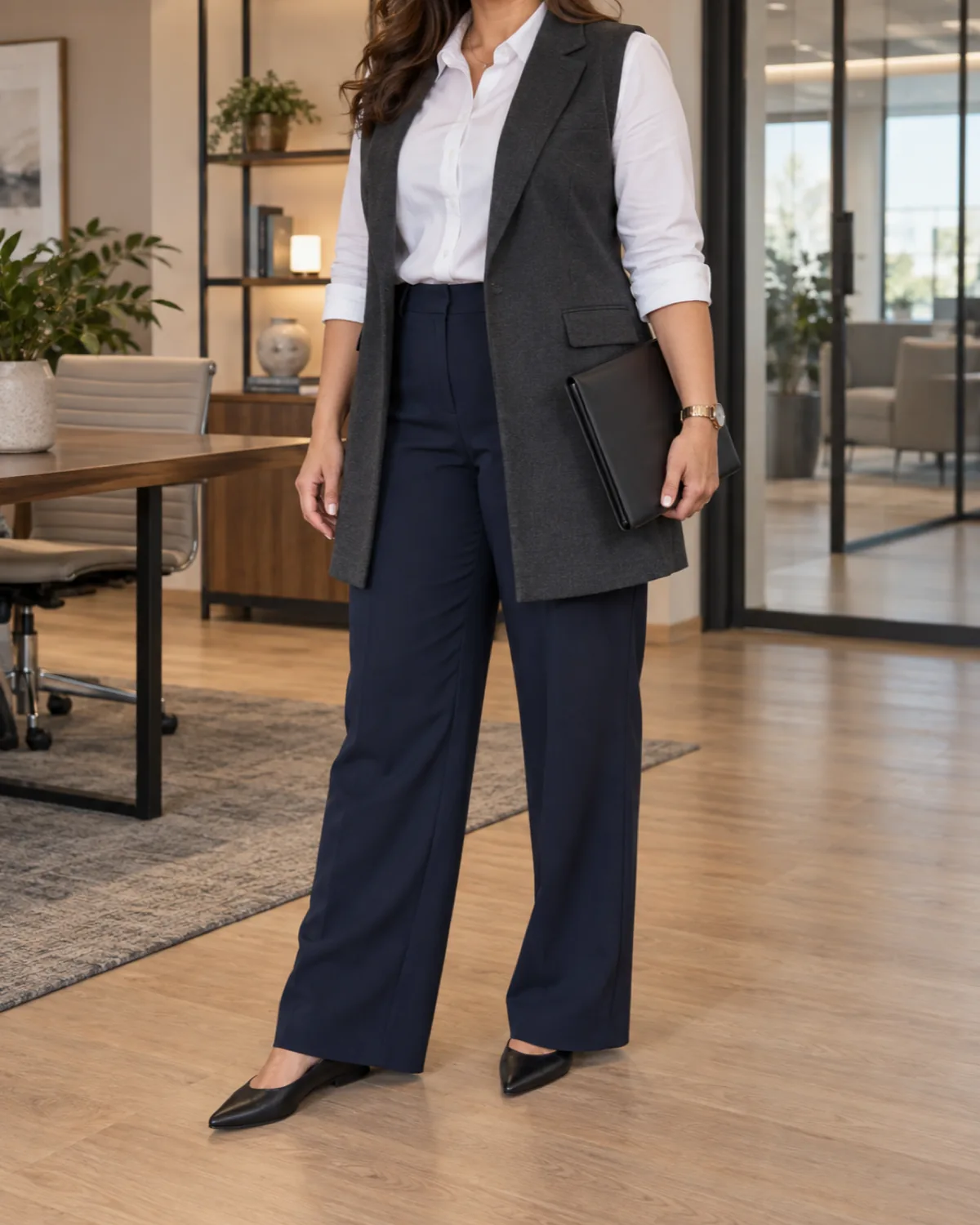
A longline vest adds a vertical layer without the sleeve bulk of a blazer. The vest falls past the hip, which covers the transition from waist to thigh, and the lack of sleeves keeps the shoulder line clean. Under the vest, a button-front shirt can gap slightly at the bust without anyone seeing it.
- The vest should end at mid-thigh or just above the knee for the vertical to work
- An open front is easier to manage on a curvy frame than a buttoned one
- Wide-leg trousers balance the narrow vest silhouette
- This is the third-layer piece for women who find blazer sleeves restrictive across the upper arm
These twenty outfits share one principle: the garment works with the body by construction, not by compromise. A suppressed waist, a princess seam, a high rise, an open blazer. The details are different but the logic is the same. Start with the combination that replaces your weakest current outfit and see whether the rest of your wardrobe works harder around it.
Where the dress-code definitions come from
- What Should Dress Codes Look Like in the Modern Workplace? — Society for Human Resource Management
- Business Casual Dress Code: What Does It Mean? — Indeed Career Guide
- How To Dress Business Casual (With Tips) — Indeed Career Guide
Keep this one
Save it where you plan outfits
Pin the image above to the board you actually check on a Sunday night. This guide is written to be re-read, not read once.
Tonight, before you close this tab
- Try on your best-fitting blazer and check whether it buttons without pulling across the bust or gapping at the waist
- Measure the rise of your current work trousers and compare it to the distance from your waist to your seat — if the rise is shorter, that is why the waistband digs
- Photograph your go-to work outfit from the front, the side and the back, then note where the fabric pulls or gaps
- Pick one outfit from this list that replaces your weakest current combination and try it with pieces you already own