10 Work Outfit Essentials Every Woman Should Own Before Buying Anything Else
Ten work outfit essentials that form the foundation of any professional wardrobe. Each piece earns its place by making three or more outfits, not just one.
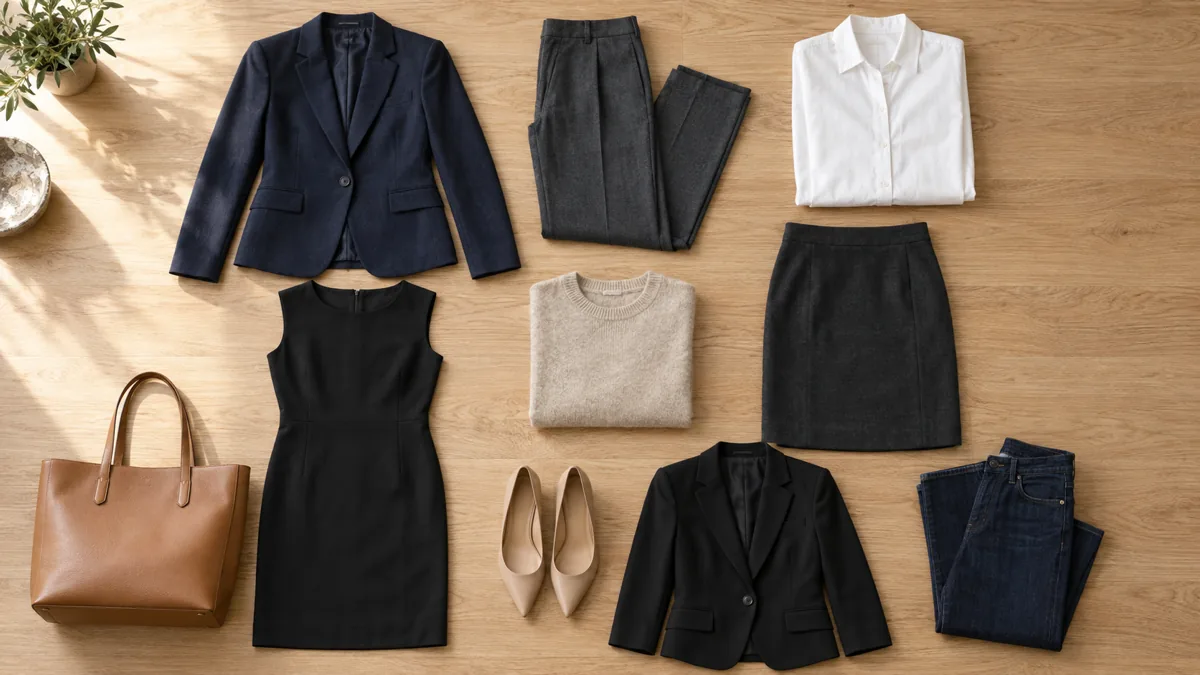
Working out an outfit for tomorrow? Save this page. It is easier to skim the night before than to remember.
At a glance
Works
- A navy blazer over a simple top, because it resets the formality of whatever is underneath
- Charcoal straight-leg trousers as your default bottom, since they pair with every top and shoe in the list
- A black sheath dress kept on standby for days when choosing an outfit feels like too much work
Depends
- A ponte blazer instead of wool, which works in relaxed offices but reads too soft where structured tailoring is expected
- Dark straight-leg jeans with a blazer, which passes in some business-casual offices but falls outside most business-professional dress codes
- Nude pumps versus black, which depends on whether your trousers and skirts run dark or neutral
Skip
- Buying two blazers before owning trousers and a shirt that work with both of them
- Replacing all structured pieces with knits, which lowers the formality floor below what most offices expect
- Starting with statement pieces before the neutral foundations are in place
A work wardrobe is not a collection of outfits. It is a set of pieces that combine into outfits, and the fewer pieces you need to cover five days, the better the set is working.
These are the ten pieces that earn their place first. Each one is here because it multiplies what you already own, not because it looks good on a hanger by itself.
If you already have a capsule system in place, use this as a diagnostic. If you are starting from zero, buy in roughly this order.
1. A Tailored Navy Blazer
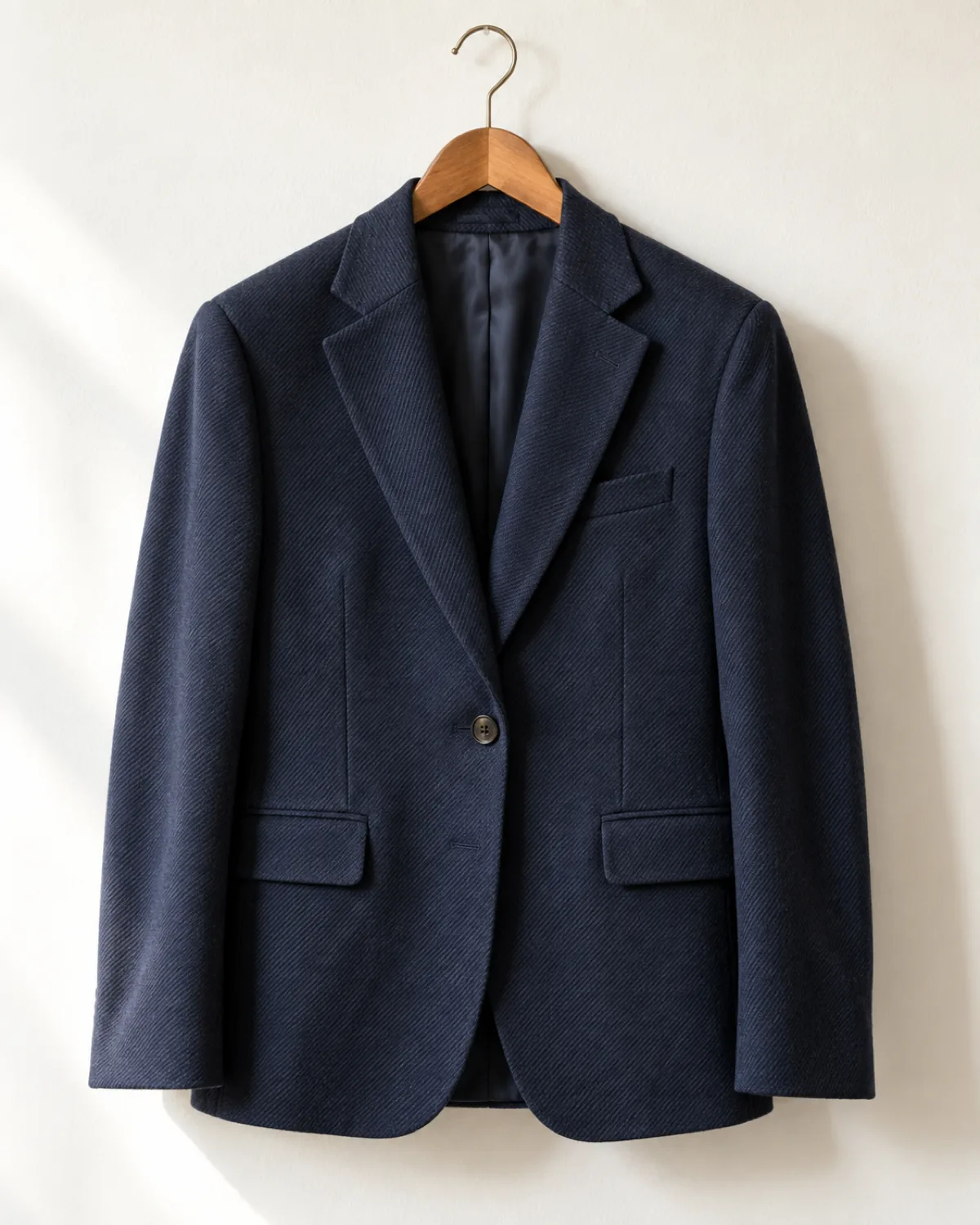
A navy blazer is the single most versatile piece in a work wardrobe because it upgrades everything underneath it. A plain white tee becomes business casual. A button-front shirt becomes business professional. Most offices that follow a business casual dress code consider a blazer with non-matching trousers an appropriate combination.
- Fit it so it buttons at the single front button without pulling across the chest
- Choose a neutral lining colour so it works open or closed
- Roll the sleeves once for desk days; leave them down for client-facing meetings
- Pair it with the trousers below for the most common combination in this list
- See ten ways to wear one blazer for the full rotation
2. Charcoal Straight-Leg Trousers
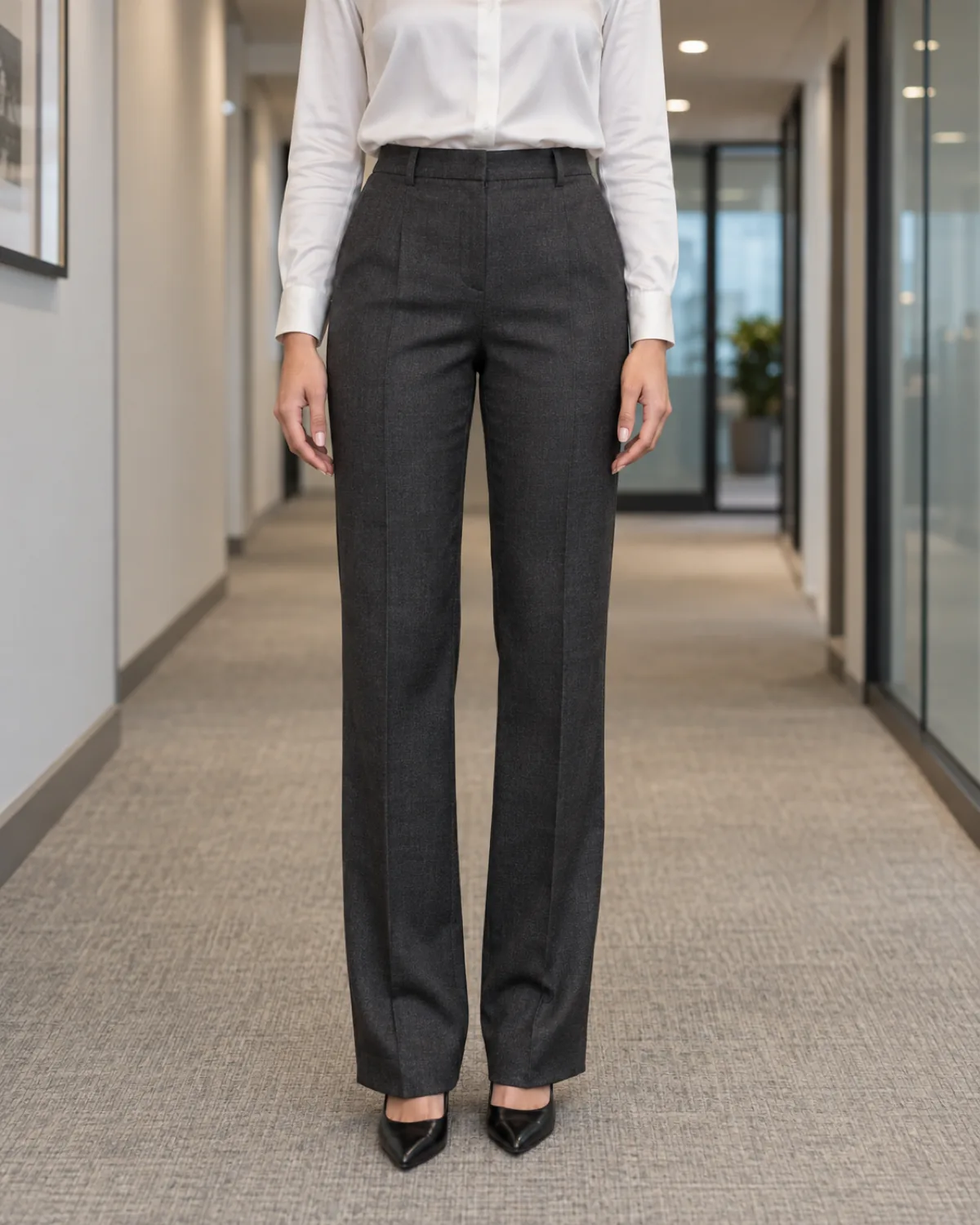
Charcoal is the workhorse neutral. It is dark enough to read as serious, light enough to look different from black, and it pairs with every top colour you are likely to own. Straight-leg trousers avoid the trend cycle that makes wide-leg or tapered cuts feel dated within a season.
- Look for a front crease that holds through a full workday without ironing
- Hem them so the trouser breaks slightly over the shoe vamp, not pooling on the floor
- Alternate with the navy pants or black pants if you want a three-trouser rotation
- These are your Monday-through-Wednesday default when paired with ideas 1, 3 and 5
3. A White Button-Front Shirt

A white shirt is the formality reset piece. Under a blazer it reads business professional. On its own with trousers it reads business casual. Untucked over a pencil skirt it reads creative-office polished. The shirt does more work than any other single item because it disappears into the outfit and lets the structure do the talking.
- Choose a spread collar that sits flat under a blazer lapel without bunching
- Cotton poplin holds its shape better than silk for daily wear; save silk for the days you skip the blazer
- A full tuck for meetings, a front-only tuck for desk work
- See twelve ways to style a white shirt for work for combinations beyond the obvious
Where to start
Find your situation, skip ahead
You are building a work wardrobe from scratch and need to cover business casual through business professional
Start with ideas 1 through 4. A blazer, trousers, a white shirt and a sheath dress cover both dress codes with four purchases.
01 A Tailored Navy Blazer02 Charcoal Straight-Leg Trousers03 A White Button-Front Shirt04 A Black Sheath Dress
You already own the basics and want to fill gaps that create new outfit combinations
Scan ideas 5 through 8. A sweater, a pencil skirt, a tote and pumps are the second tier that multiplies what you have.
05 A Fine-Gauge Crew-Neck Sweater in a Muted Neutral06 A Dark Pencil Skirt Hitting Below the Knee07 A Camel Structured Leather Tote08 Nude or Black Pointed-Toe Pumps
Your office is genuinely casual and you want essentials that match that register
Ideas 9 and 10 are the relaxed end of the scale. A ponte blazer and dark jeans work where stiffness reads overdressed.
4. A Black Sheath Dress
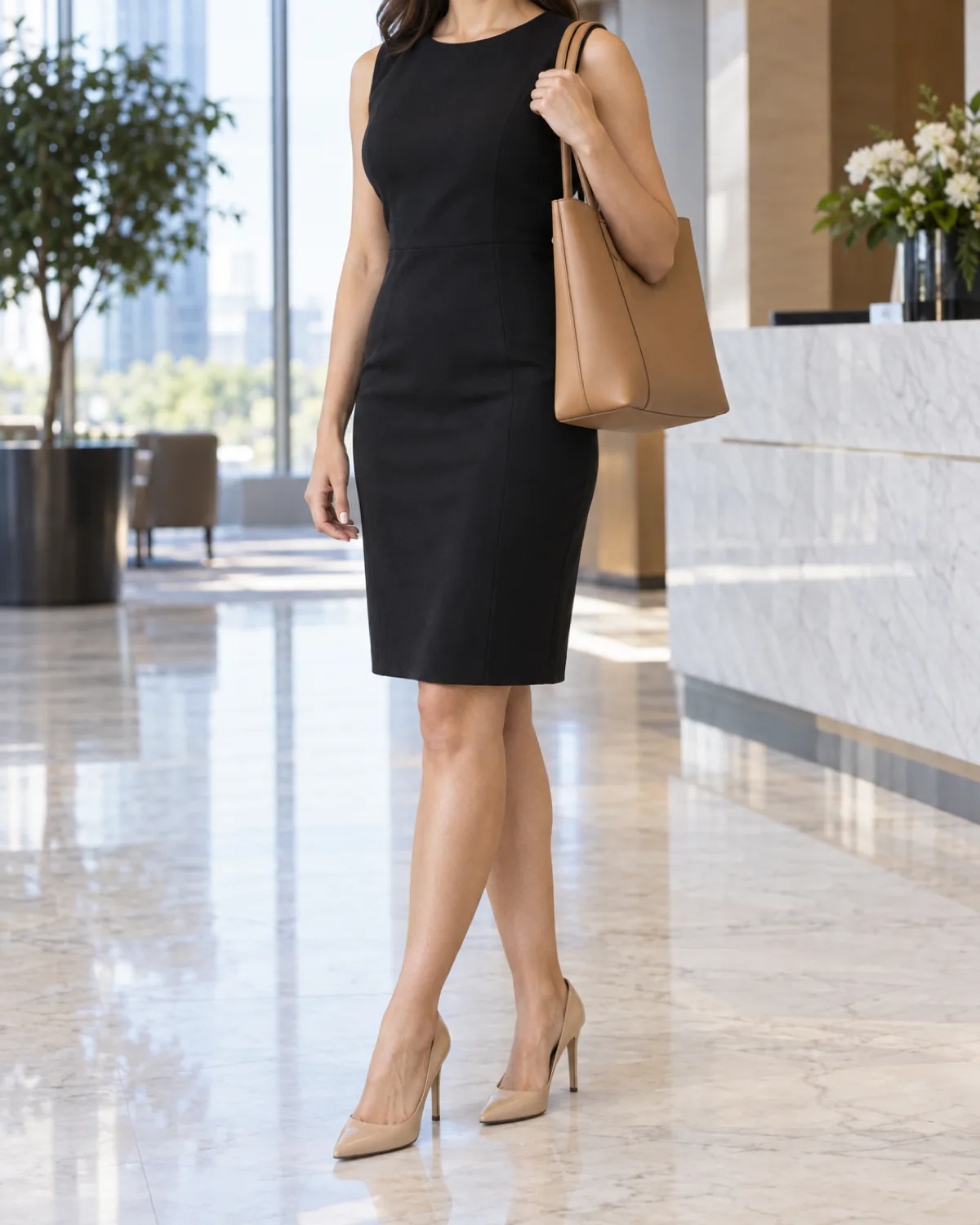
The sheath dress is the one-decision outfit. On days when you want to think about the meeting and not about what you are wearing, you reach for this. A black sheath that hits at or just below the knee is appropriate in both business professional and business casual settings.
Pencil skirts hitting at or below the knee are considered appropriate across most dress codes, and the same principle applies to a sheath dress with a similar hemline.
- The dress should skim the body through the torso without being tight enough to show underwear lines
- A round or boat neckline avoids the need for a layering piece underneath
- Add a blazer for the most formal version; wear it alone with flats for the most relaxed
- This piece covers the same ground as the work dress guide in a single purchase
5. A Fine-Gauge Crew-Neck Sweater in a Muted Neutral

The sweater covers the days when a blazer feels like too much. A fine-gauge knit in oatmeal, grey or camel looks intentional rather than casual, and it layers under a coat without adding bulk. This is the third-layer piece that keeps the rotation from depending entirely on structured tailoring.
- Fine gauge means you can see the individual knit rows; chunky cable knit reads weekend
- Crew neck sits neatly at the collarbone and works with or without a collar underneath
- Tuck the front into trousers to define the waist; leave the back untucked for ease
- Oatmeal or camel creates the most contrast against charcoal and navy bottoms
6. A Dark Pencil Skirt Hitting Below the Knee
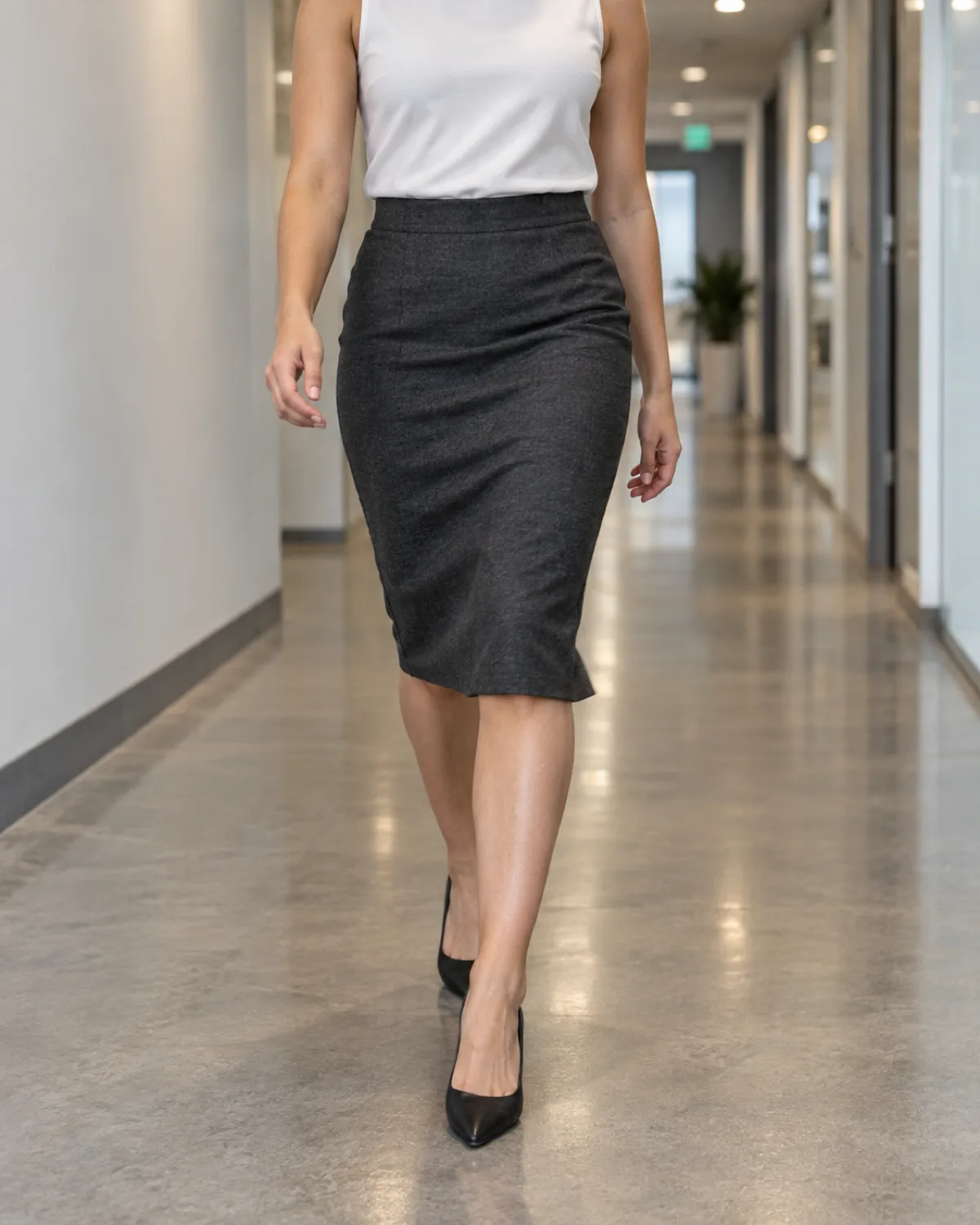
The pencil skirt is the skirt option that stays professional across the widest range of offices. A dark charcoal pencil skirt at or below the knee passes in business professional environments where a flared or midi skirt might not. It pairs with the blazer, the shirt and the sweater from the list above, which means it creates at least three new outfits the moment you add it.
- The skirt should let you walk at a normal pace without pulling at the thighs
- A back vent or kick pleat prevents the fabric from riding up with movement
- Pair with the white shirt and blazer for a look that reads one step below a full suit
- This is the skirt equivalent of the trousers in idea 2, not a replacement for them
7. A Camel Structured Leather Tote
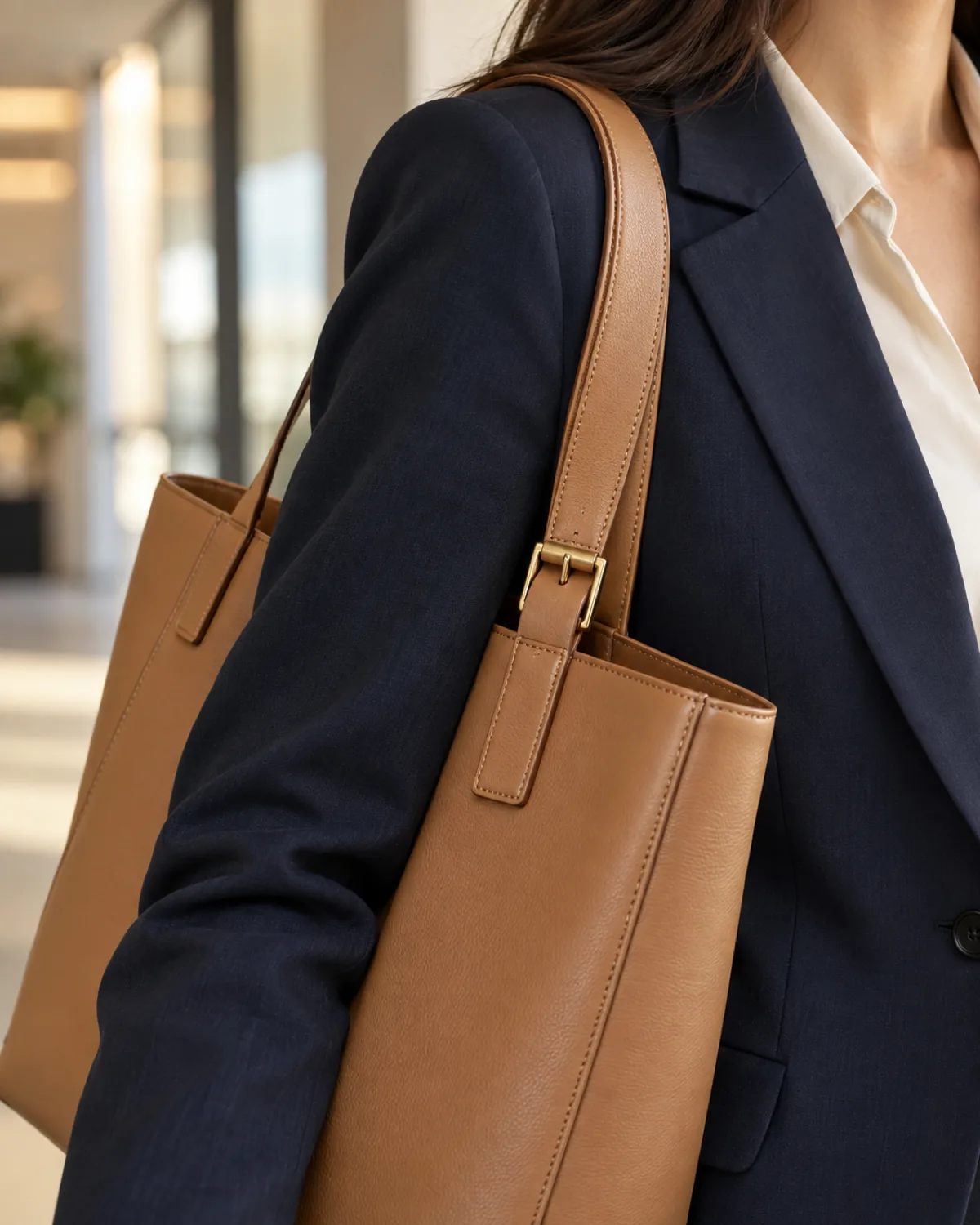
The bag is the piece most people overlook when building a work wardrobe, but it is in every outfit. A structured tote in camel or tan carries a laptop, a notebook and a lunch without looking like luggage. The warm neutral stands out just enough against navy and charcoal to look intentional.
- Structured means the bag holds its shape when empty; a slouchy tote reads weekend
- Plain hardware with no visible logos keeps it versatile across dress codes
- The strap should sit on the shoulder without sliding, and the bag should not hit below your hip
- Camel works against dark neutrals; if your wardrobe runs lighter, switch to a dark leather
8. Nude or Black Pointed-Toe Pumps
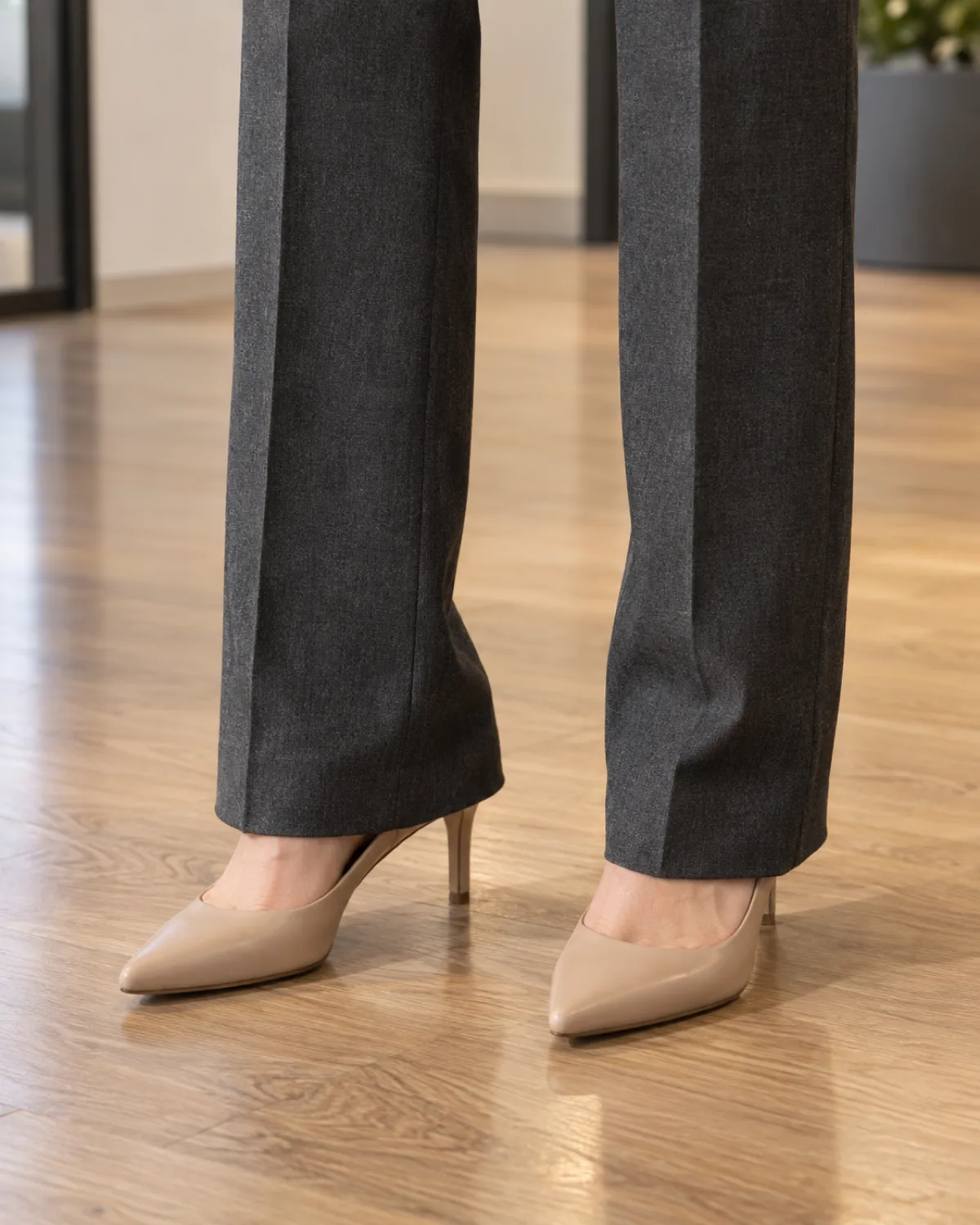
The right shoe disappears into the outfit and lets the clothes do the talking. A pointed-toe pump in nude or black is the most versatile work shoe because it works with trousers, skirts and dresses without requiring a second thought. Nude extends the leg line under cropped or ankle-length trousers. Black matches the pencil skirt and the sheath dress without competing.
- A mid-height heel between five and seven centimetres is comfortable enough for a full workday
- Pointed toe reads dressier than round toe for the same heel height
- If you buy one pair, match it to your most-worn bottom: nude for charcoal trousers, black for black
- Matte leather is more versatile than patent; save patent for the shoe you buy second
9. A Black Ponte Blazer
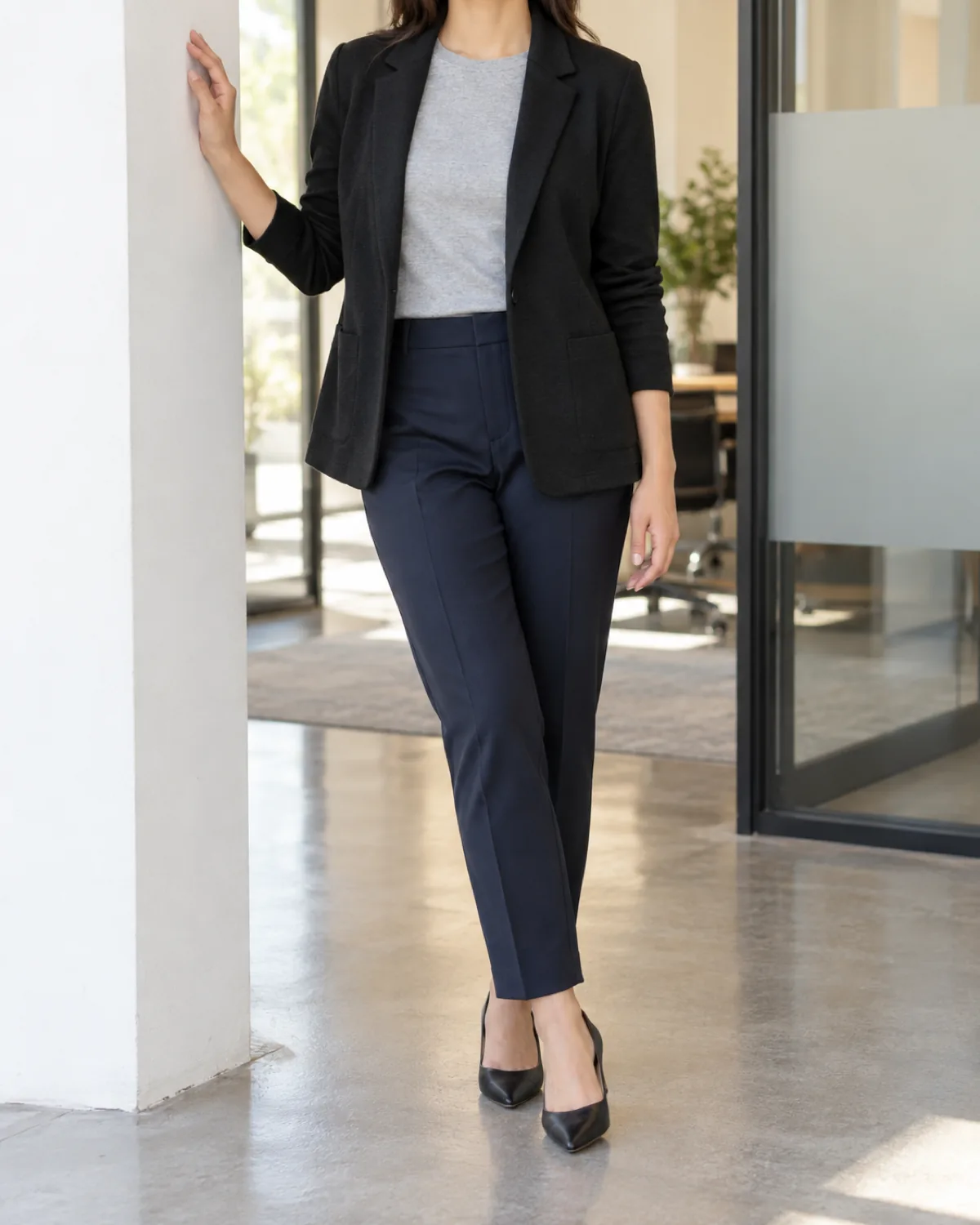
The ponte blazer is the comfortable alternative to structured wool for offices where stiffness reads overdressed. Ponte knit moves with you, does not wrinkle in a bag, and still reads as a blazer rather than a cardigan. This piece lives between the navy blazer and the sweater on the formality scale.
- Ponte should drape softly without the rigid shoulder structure of a wool blazer
- Black makes it layer invisibly over most tops and under most coats
- Wear it open over a crew-neck top for the most natural look; buttoning a ponte blazer often creates pulling
- This is the blazer for offices where the business casual dress code leans toward the casual end
10. Dark Straight-Leg Jeans

Dark jeans are the lowest-formality essential on this list, and they only earn their place if your office genuinely allows them. Dark denim is accepted in some business-casual offices but remains outside most business-professional dress codes. The blazer from idea 1 is what keeps jeans from reading as weekend clothes at work.
- Dark indigo with no distressing, no rips and no visible fading reads the most professional
- Straight leg avoids the trend risk of skinny or ultra-wide cuts
- Always pair with a blazer and closed-toe shoes; jeans without structure read as dressed down, not dressed casual
- If your office is borderline, watch what the most senior people wear on their most relaxed days
- For more combinations, see twelve work outfits with jeans
These ten pieces are not the whole wardrobe. They are the foundation that makes every future purchase more useful. Once they are in place, the next thing you add creates three outfits instead of one, and the closet starts working as a system instead of a collection.
Where the dress-code definitions come from
- What Should Dress Codes Look Like in the Modern Workplace? — Society for Human Resource Management
- Business Casual Dress Code: What Does It Mean? — Indeed Career Guide
- How To Dress Business Casual (With Tips) — Indeed Career Guide
Keep this one
Save it where you plan outfits
Pin the image above to the board you actually check on a Sunday night. This guide is written to be re-read, not read once.
Tonight, before you close this tab
- Open your closet and count how many complete work outfits you can make right now without buying anything
- Check whether you own a blazer that buttons comfortably and still lets you move your arms
- Try your darkest jeans with a blazer and closed-toe shoes, then photograph the result honestly
- Pick the one gap from this list that would create the most new combinations and write it down