5 Therapist Outfits That Are Warm, Professional, and Not Clinical
What to wear as a therapist when there is no dress code but your clothes still send a message. Five outfits that balance credibility with approachability.
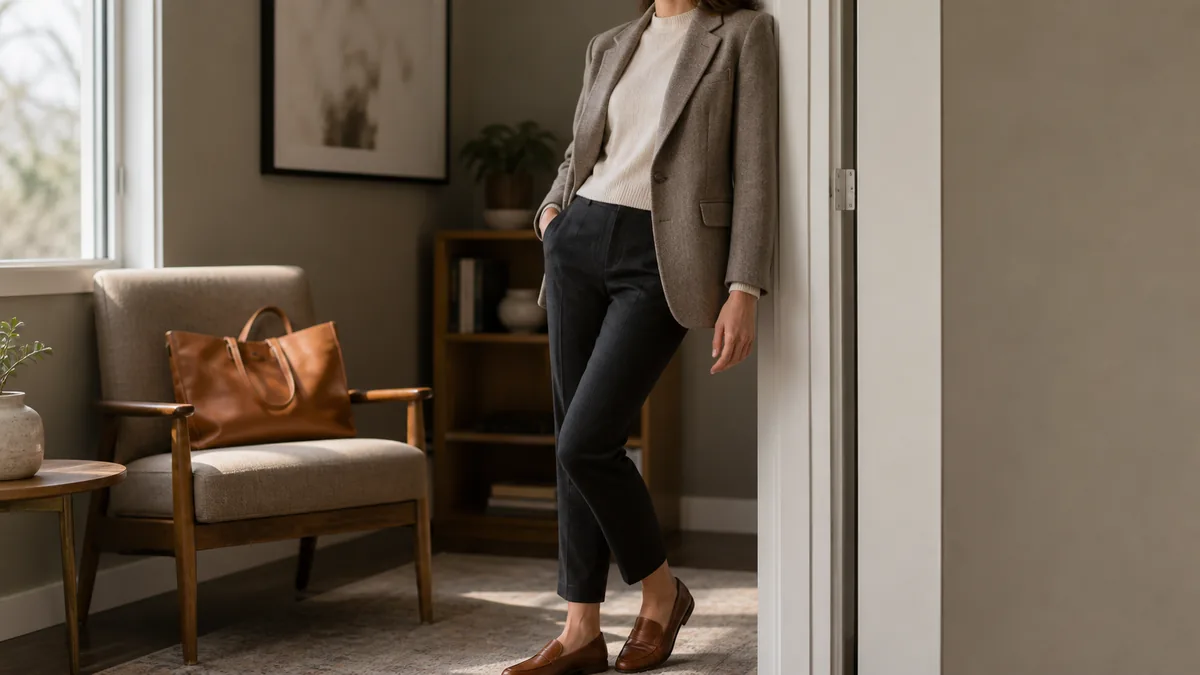
Working out an outfit for tomorrow? Save this page. It is easier to skim the night before than to remember.
At a glance
Works
- A soft-shoulder blazer with ankle trousers for sessions where you want quiet structure
- A cardigan over a blouse for the most common therapy-office baseline
- Closed-toe flats or loafers for a day of sitting, walking between rooms, and sitting again
Depends
- A knit set in a muted colour, which works in practices that lean casual but may read too relaxed in a hospital-adjacent clinic
- A shirt dress without a blazer, which holds its own in private practice but needs a cardigan layer in a cooler office
- Open-toe shoes, which Iowa's career centre rules out of business casual while Illinois allows sandals depending on weather and venue
Skip
- Loud prints or bold patterns, which pull visual attention toward you instead of keeping it neutral
- Anything that reads as a uniform or scrubs, which shifts the dynamic from conversation to clinical
- Athleisure or leggings: Texas A&M's career centre rules out leggings for business casual and athleisure even for smart casual
Most jobs have a dress code, written or unwritten. Therapy has a relationship.
Your client reads what you wear before you say a word. Too polished and you widen the gap. Too casual and the frame feels loose. These five outfits land in the middle, where professional credibility and approachability share a seat.
If your employer has a written dress code, it overrides anything here. When nothing is specified, business casual is the sensible default.
1. A soft blazer over a knit top and ankle-length trousers
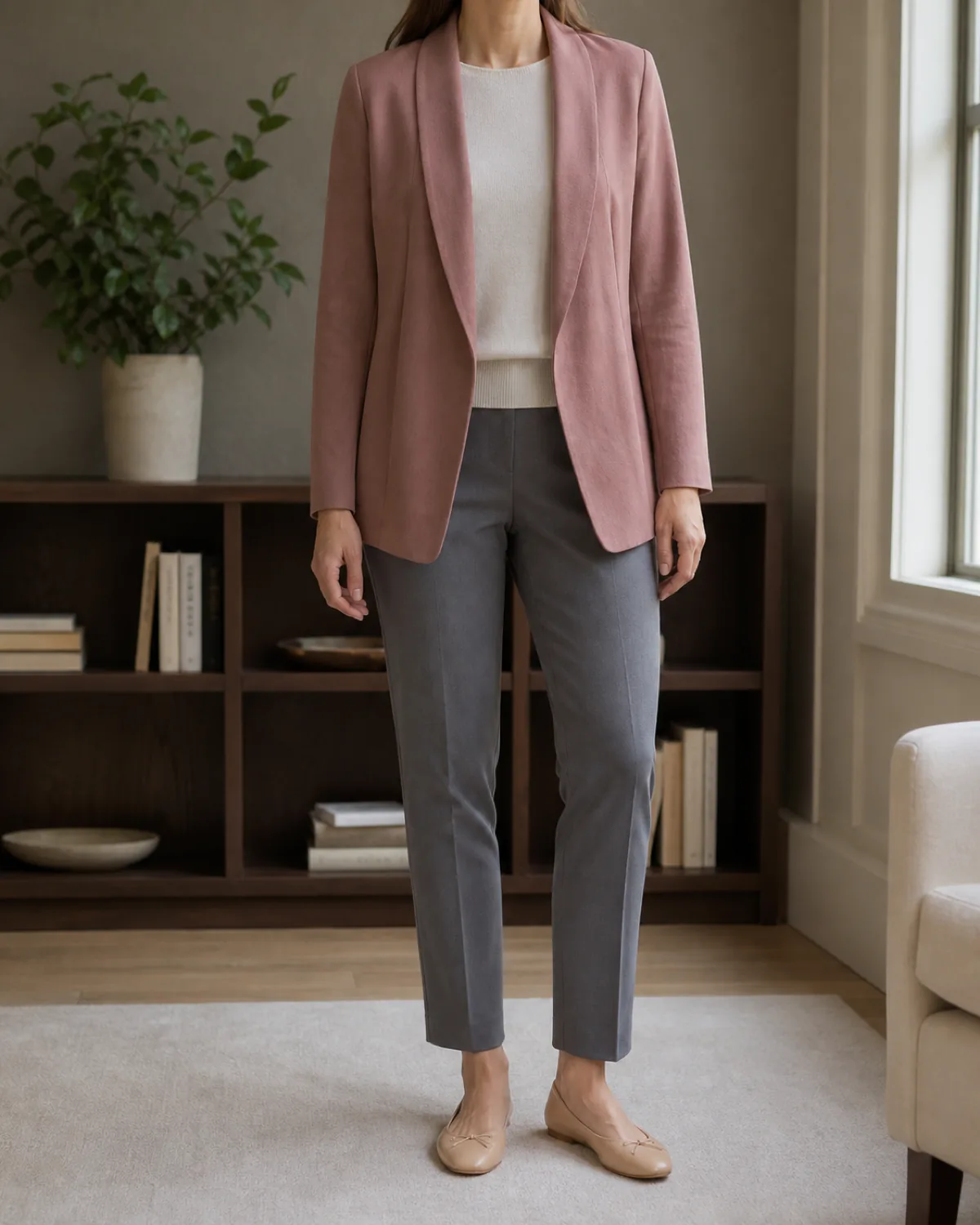
The soft blazer is the quiet workhorse of a therapy wardrobe. It reads professional without reading corporate, which is exactly the line you are trying to walk. A soft-shoulder, unlined blazer in a muted tone sits differently from a structured suiting blazer. It adds intention without stiffness.
The ankle trouser underneath keeps the silhouette clean without being tight. The knit crewneck softens the neckline. Together, the three pieces say "I thought about this" without saying "I dressed up for you."
- Choose a blazer with no shoulder padding or minimal padding so it drapes rather than holds a shape
- Keep the colour palette muted: dusty rose, oatmeal, soft grey, camel
- Ballet flats or loafers, not heels, for a day that involves sitting, crossing and uncrossing your legs, and walking between rooms
- If you run cold, this blazer layers over a thicker knit without pulling
Where to start
Find your situation, skip ahead
You work in a private practice where there is no written dress code
With no written code, business casual is the sensible default. Start with ideas 1 and 3, and add idea 4 on days the office runs more relaxed.
01 A soft blazer over a knit top and ankle-length trousers03 A fine-gauge cardigan with a blouse and straight-leg trousers04 A relaxed-fit knit set
You work in a hospital, clinic, or agency setting with other staff around
Ideas 1 and 3 hold up best in shared settings. Save 4 and 5 for days without team meetings.
01 A soft blazer over a knit top and ankle-length trousers03 A fine-gauge cardigan with a blouse and straight-leg trousers
You see clients via telehealth and occasionally in person
Idea 2 or 3 on camera. When you do go in, idea 1 or 5 covers the in-person baseline.
02 A stretch ponte dress with a draped neckline03 A fine-gauge cardigan with a blouse and straight-leg trousers01 A soft blazer over a knit top and ankle-length trousers
2. A stretch ponte dress with a draped neckline
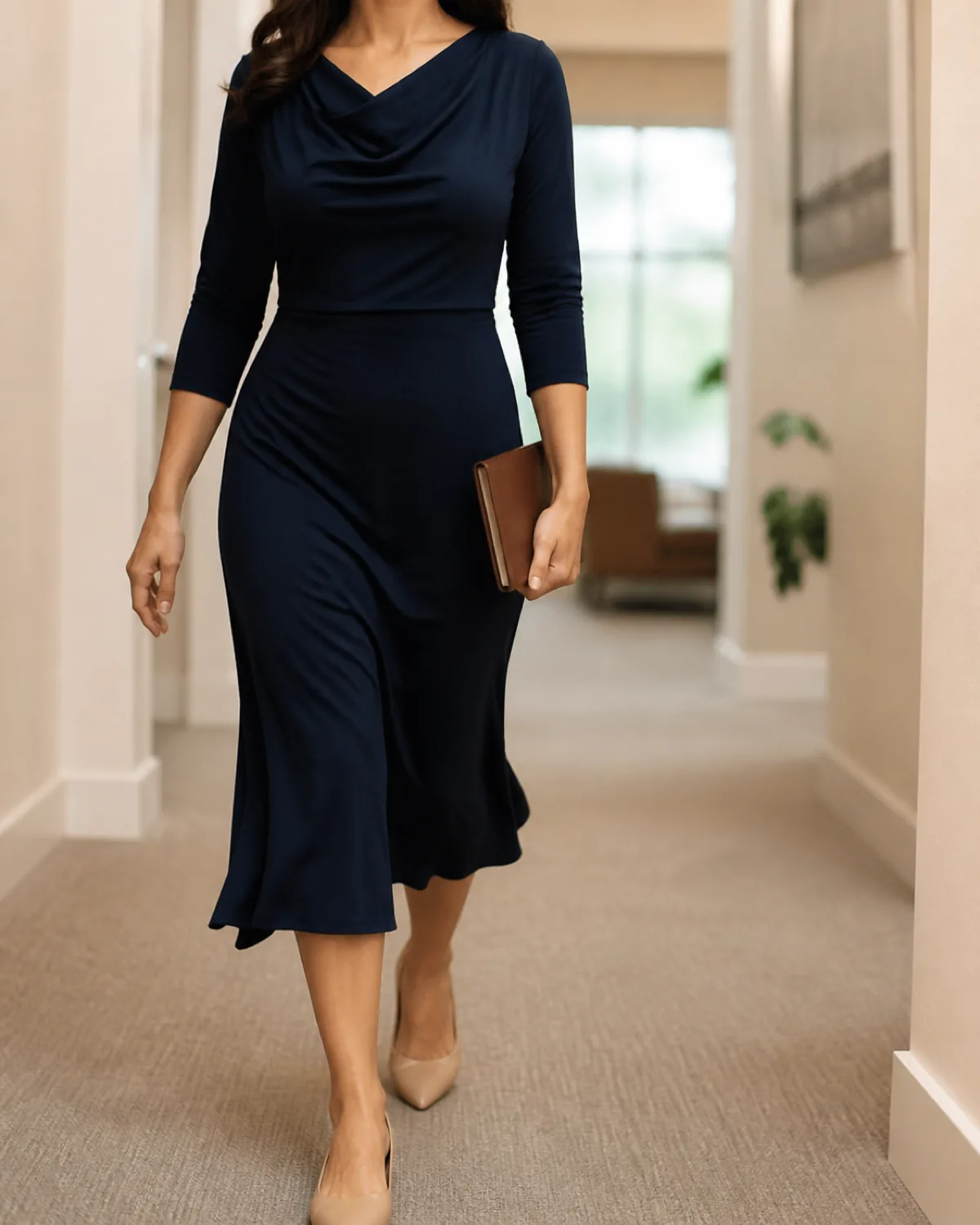
One-piece dressing removes the morning decision. A ponte dress in a solid, muted colour does the work of a blouse-and-trouser combination without the tucking, adjusting, or wondering whether the pieces match. Ponte fabric holds its shape through hours of sitting and does not wrinkle the way wovens do.
The draped cowl neckline softens the line without going low. It reads polished in a hallway and approachable in a session.
- Pick a midi length that falls below the knee so it stays in place when you cross your legs
- Navy, charcoal, or deep olive keep the look grounded without defaulting to black
- Flat or low-heeled shoes keep the whole outfit quiet
- Add a thin cardigan at the office for temperature swings between rooms
3. A fine-gauge cardigan with a blouse and straight-leg trousers
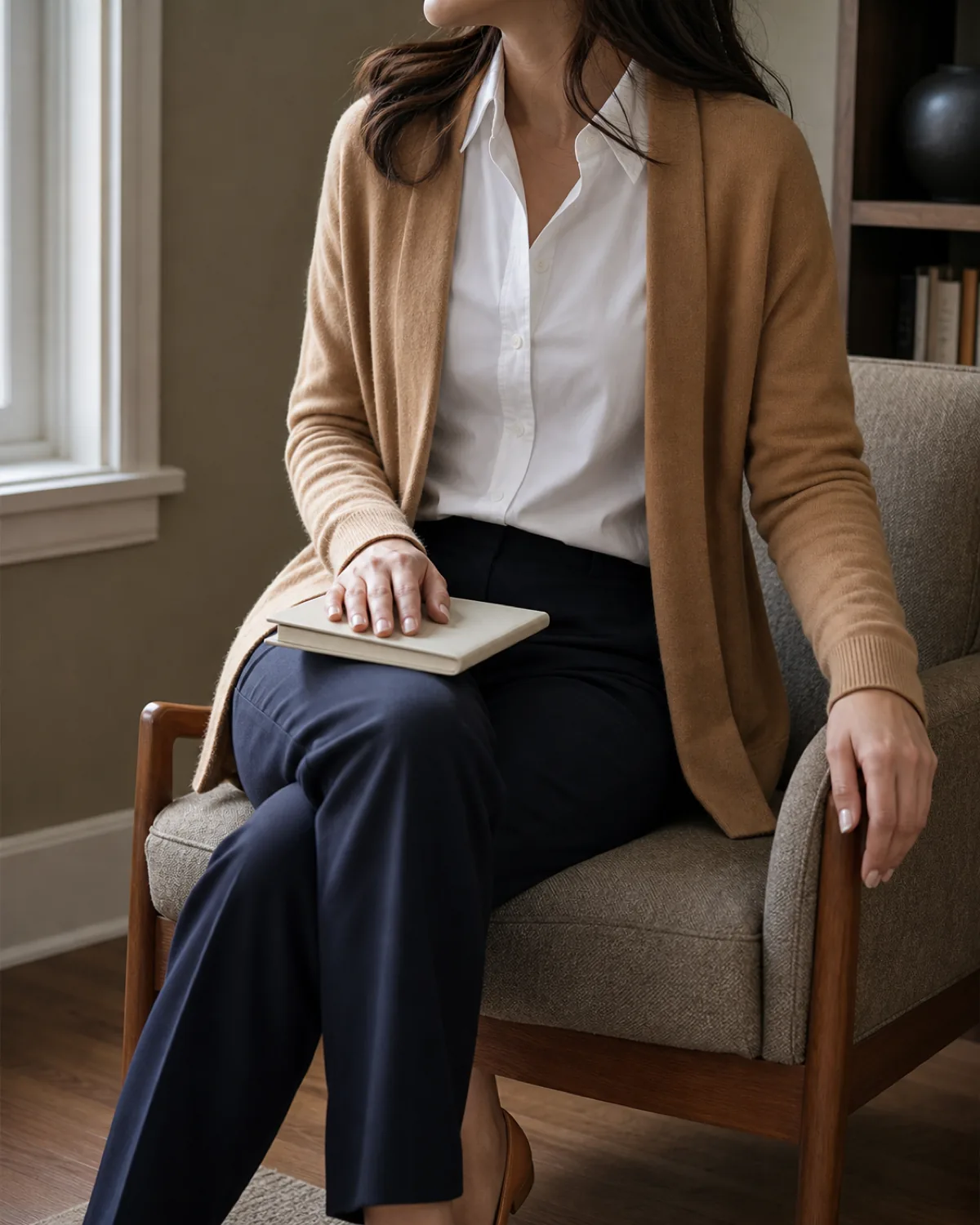
This is probably the most common outfit in therapy offices. The formula works because each piece does a specific job. The blouse sets a business-casual baseline. The cardigan softens it. The trousers ground it. The combination reads as professional without reading as dressed up.
A fine-gauge cardigan, thinner than a chunky knit but thicker than a shell, drapes without bulk. It falls open naturally and does not need to be buttoned to look finished.
- A blouse with a soft collar, not a stiff point collar, keeps the formality in check
- Straight-leg trousers in a dark neutral work better than slim fits for a seated position, because they do not pull at the knee
- This outfit sits well in a chair. The cardigan does not bunch behind you and the blouse does not untuck
- Indeed's business-casual guide lists blouses as a baseline top and cardigans as an optional layer; more in our business casual guide
4. A relaxed-fit knit set
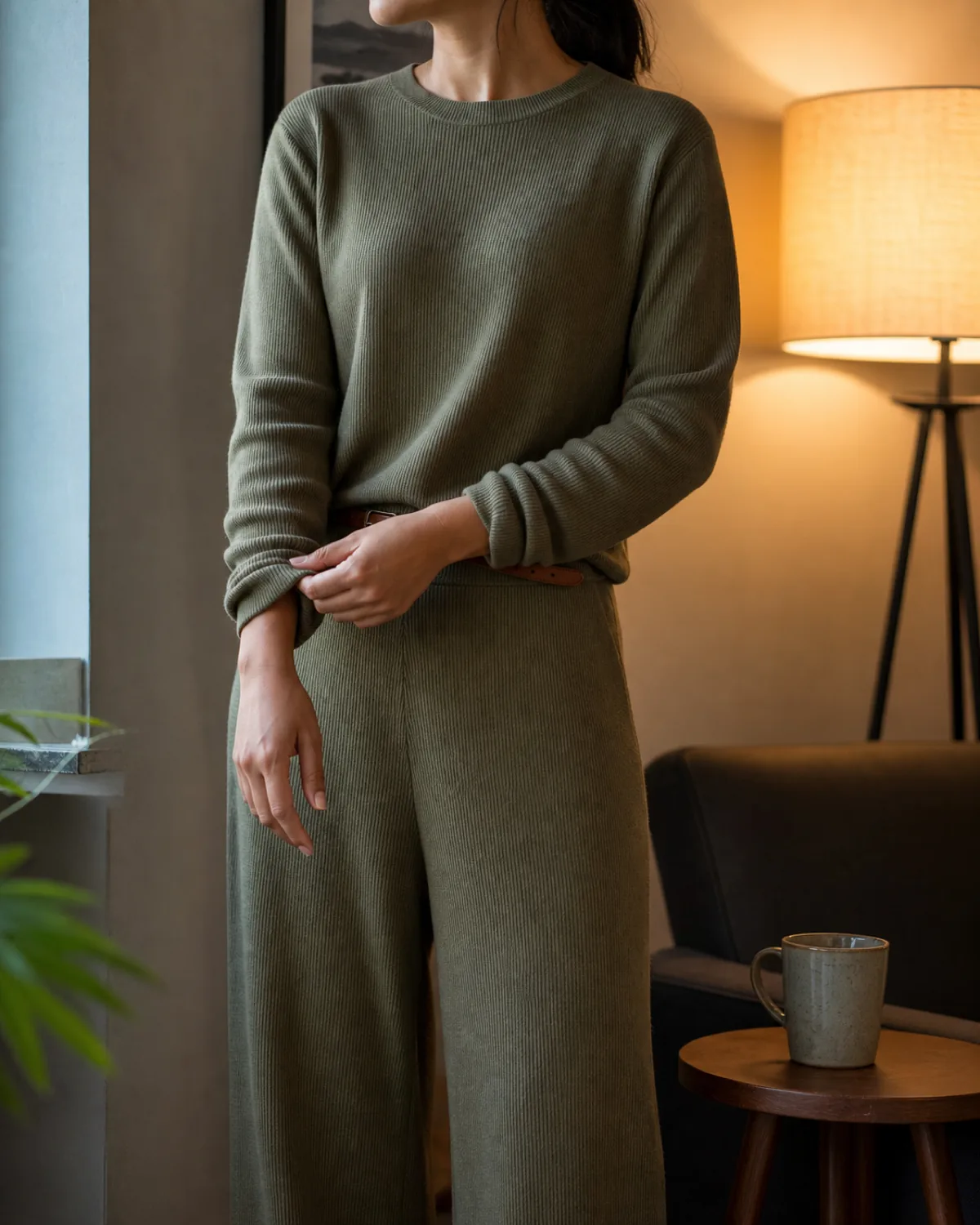
A matching knit set is a newer entry in the therapy-office rotation. The top and trousers are the same fabric and colour, so they read as a coordinated outfit rather than random separates. The effect is put-together without being formal.
This outfit works best in practices where the culture leans more casual. In a hospital-adjacent clinic or a setting where other staff wear business dress, it may read as too relaxed. Know your room.
- The set should be fine-gauge ribbed or smooth knit, not chunky or oversized
- A thin leather belt at the waist adds a line of intention
- Sage, olive, oatmeal, or slate work as neutral alternatives to the navy-and-black default
- If you are unsure whether this is dressed enough for your setting, add a blazer over the top and reassess
5. A collared shirt dress with flat loafers
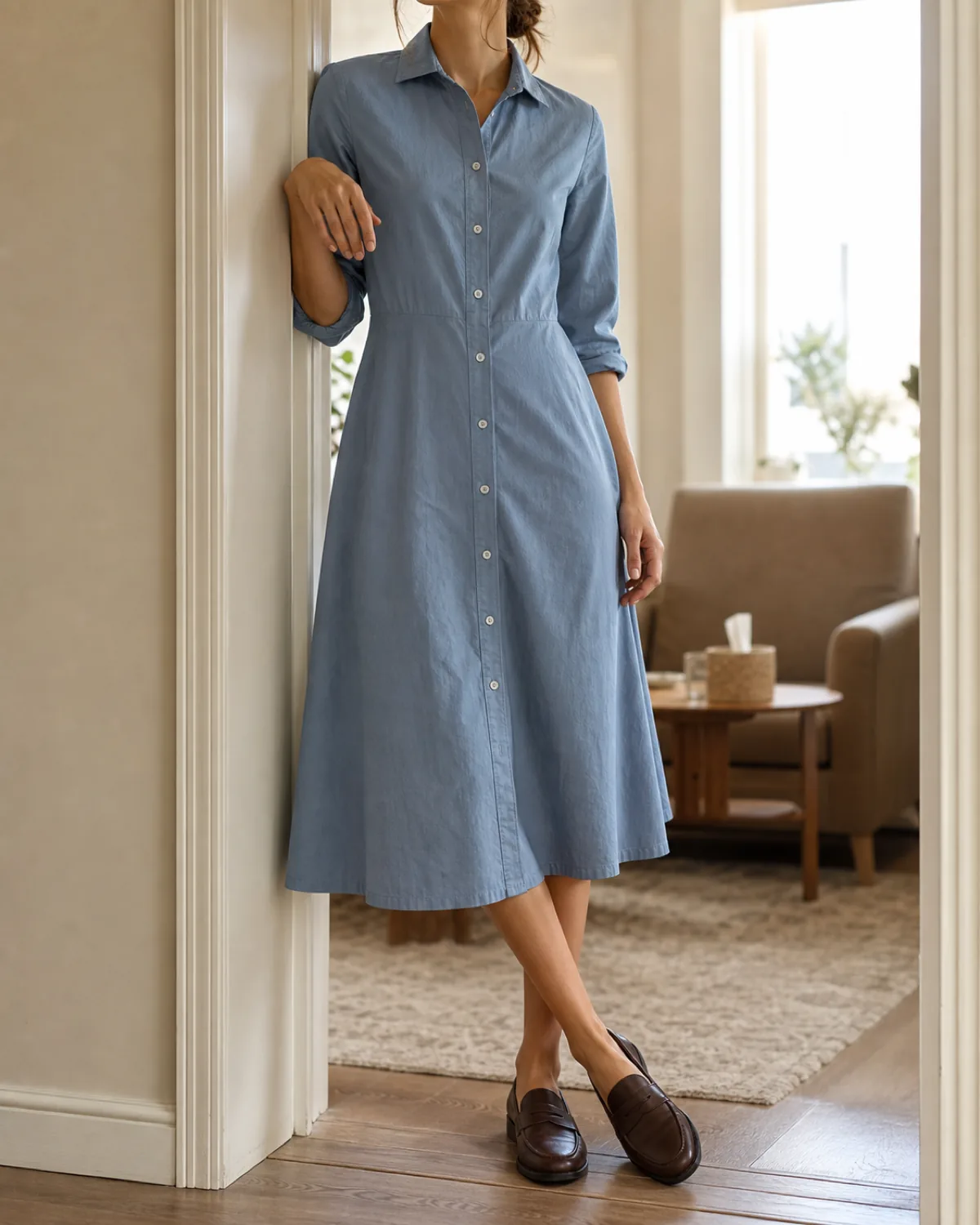
When you want dress-level polish but a blazer feels like too much, the shirt dress does the structural work on its own. The collar and button placket give it enough architecture to read as professional. The midi-length A-line skirt moves easily and stays in place when you sit.
Flat loafers anchor the outfit without adding height. They are quiet on hard floors, comfortable for a full day, and they appear on the business-professional shoe list from the University of Illinois career centre, so they pass even in stricter settings.
- Cotton or cotton-blend fabric breathes better than ponte for warm offices
- Roll the sleeves to just below the elbow for a less buttoned-up line
- A thin belt at the waist adds definition if the dress is cut straight
- This outfit works for the therapist who moves between rooms during the day and needs something that looks the same at session five as it did at session one
Where the dress-code definitions come from
- What Is Business Casual Attire? (With Examples and Tips) — Indeed Career Guide
- Dress for Success — Pomerantz Career Center, The University of Iowa
- Dress for Success — The Career Center, University of Illinois Urbana-Champaign
- Dress for Success — Career Center, Texas A&M University
Keep this one
Save it where you plan outfits
Pin the image above to the board you actually check on a Sunday night. This guide is written to be re-read, not read once.
Tonight, before you close this tab
- Check your most-worn therapy-office outfit for pilling, loose buttons, or stains you have stopped noticing
- Try sitting in your desk chair in tomorrow's outfit and confirm the waistband, neckline, and hem all stay where they should
- Set aside one blazer or cardigan that lives at the office for days you underdress by accident
- Look at your shoes and ask whether they are quiet enough that a client would not hear you walking to the door