13 Interview Dresses for Women That Read Professional Without Trying Too Hard
Interview dresses for women sorted by dress code. Thirteen options from structured sheaths to knit midis, each matched to the formality of the room.
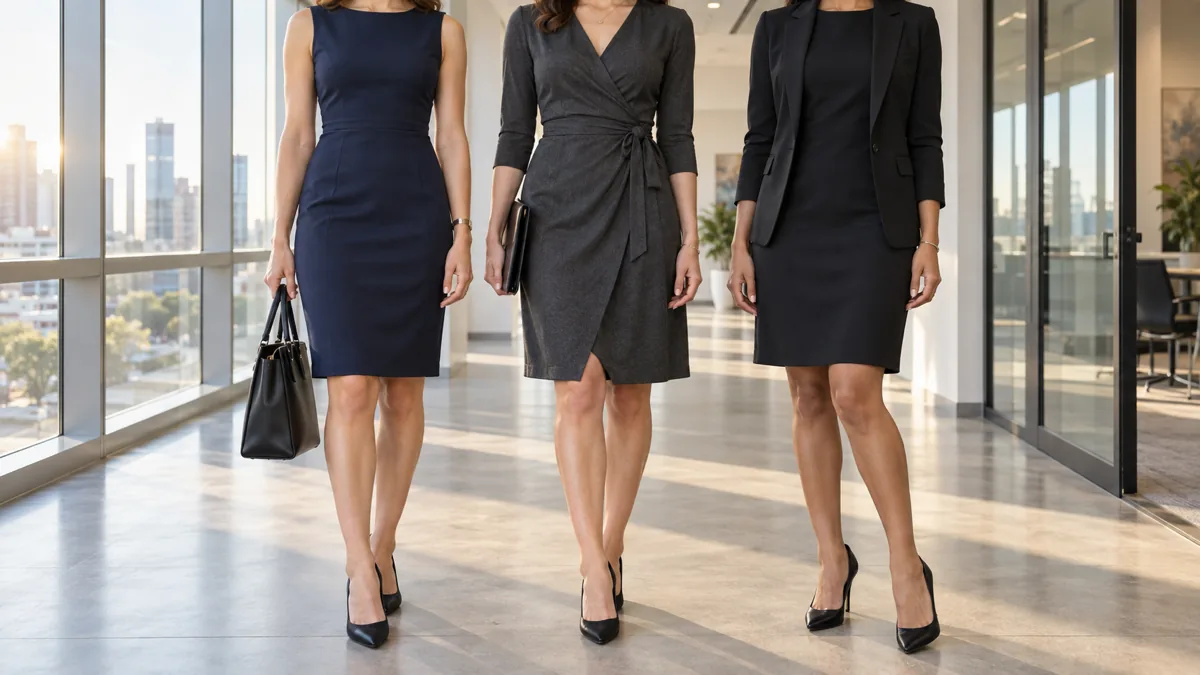
Working out an outfit for tomorrow? Save this page. It is easier to skim the night before than to remember.
At a glance
Works
- A knee-length sheath in navy, charcoal or black, because it reads professional across every dress code above casual
- A wrap dress in a solid dark colour tied firmly at the waist, because it adjusts to your shape without tailoring and keeps the neckline modest
- Closed-toe pumps or low-heeled loafers with any dress, because open toes shift the register toward casual in most interview settings
Depends
- A knit midi dress, which reads creative-office-ready but falls below the bar where the interviewer expects suiting
- A shirt dress, which works in education and nonprofit settings but reads too relaxed for finance or law
- A sleeveless sheath, which is fine with a jacket on but requires planning for buildings where you might be asked to remove the jacket
Skip
- A bodycon dress, because a tight silhouette distracts from the conversation regardless of the dress code
- A maxi dress in a print, because floor-length plus pattern reads social rather than professional in nearly every interview setting
- Any dress shorter than two inches above the knee, because hem length is the first thing interviewers notice and the easiest thing to misjudge
A dress simplifies interview dressing. One piece replaces the blouse, the trousers and the question of whether they match. The trade-off is that it has to do all the work on its own.
These thirteen dresses are sorted by formality. The first few are safe for the most conservative rooms. The last few belong in offices where a structured suit would make you look like you misread the invitation.
If your office has a written dress code, it outranks anything here.
1. Sheath Dress in Navy or Charcoal
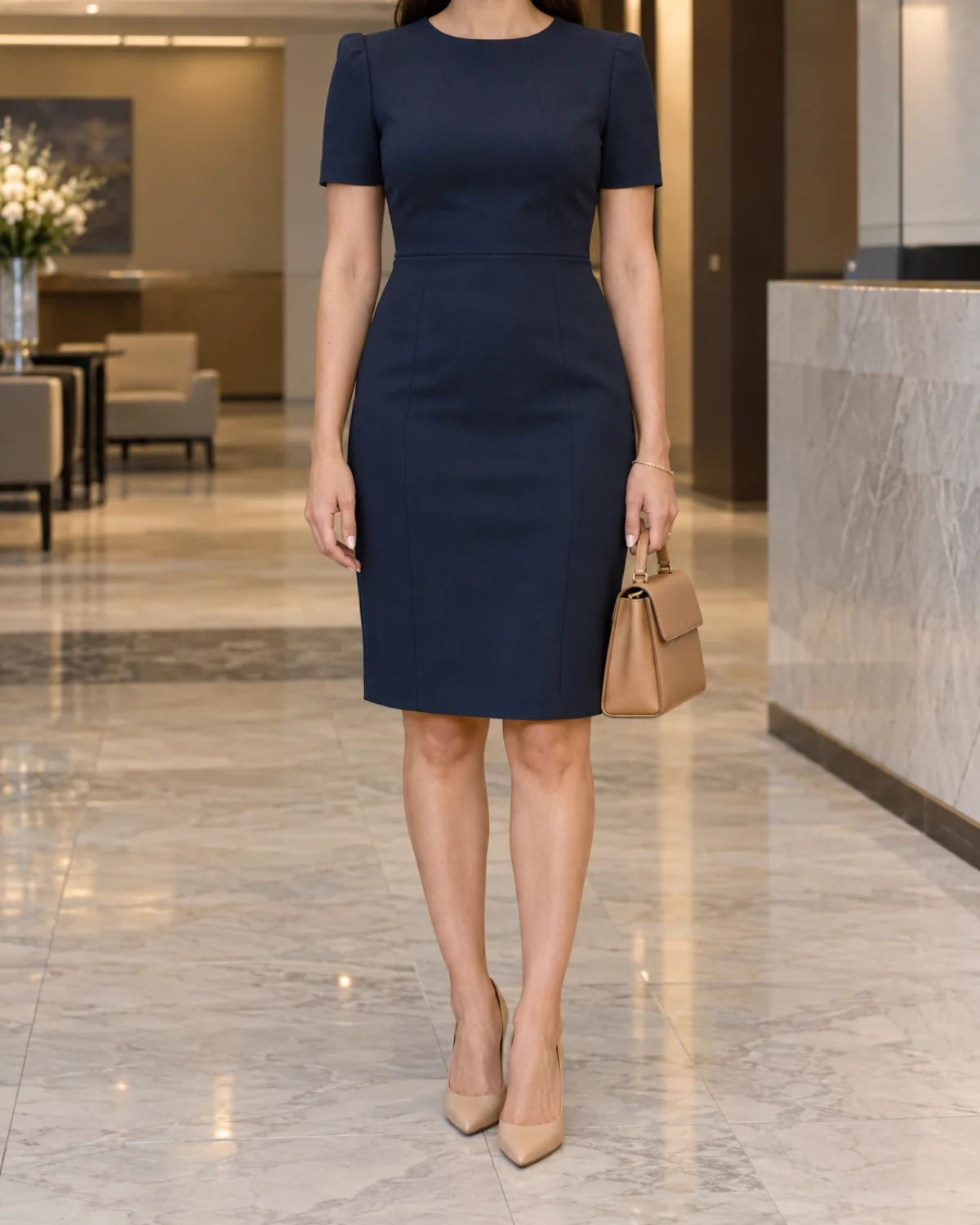
A sheath is the closest thing to a universal interview dress. The straight silhouette reads formal without looking stiff, and navy or charcoal avoids the heaviness of head-to-toe black. Most business-professional dress codes accept it without a blazer.
- Pick a sheath that hits at or just below the knee when you are standing
- Choose structured shoulders rather than dropped shoulders so the dress holds its shape through the day
- Pair it with closed-toe pumps in a nude or neutral that is close to your skin tone
- Keep jewellery to one focal point — a watch or small earrings, not both plus a necklace
- Press or steam the dress the night before, because wrinkles on a sheath show immediately
2. Wrap Dress in a Solid Dark Tone
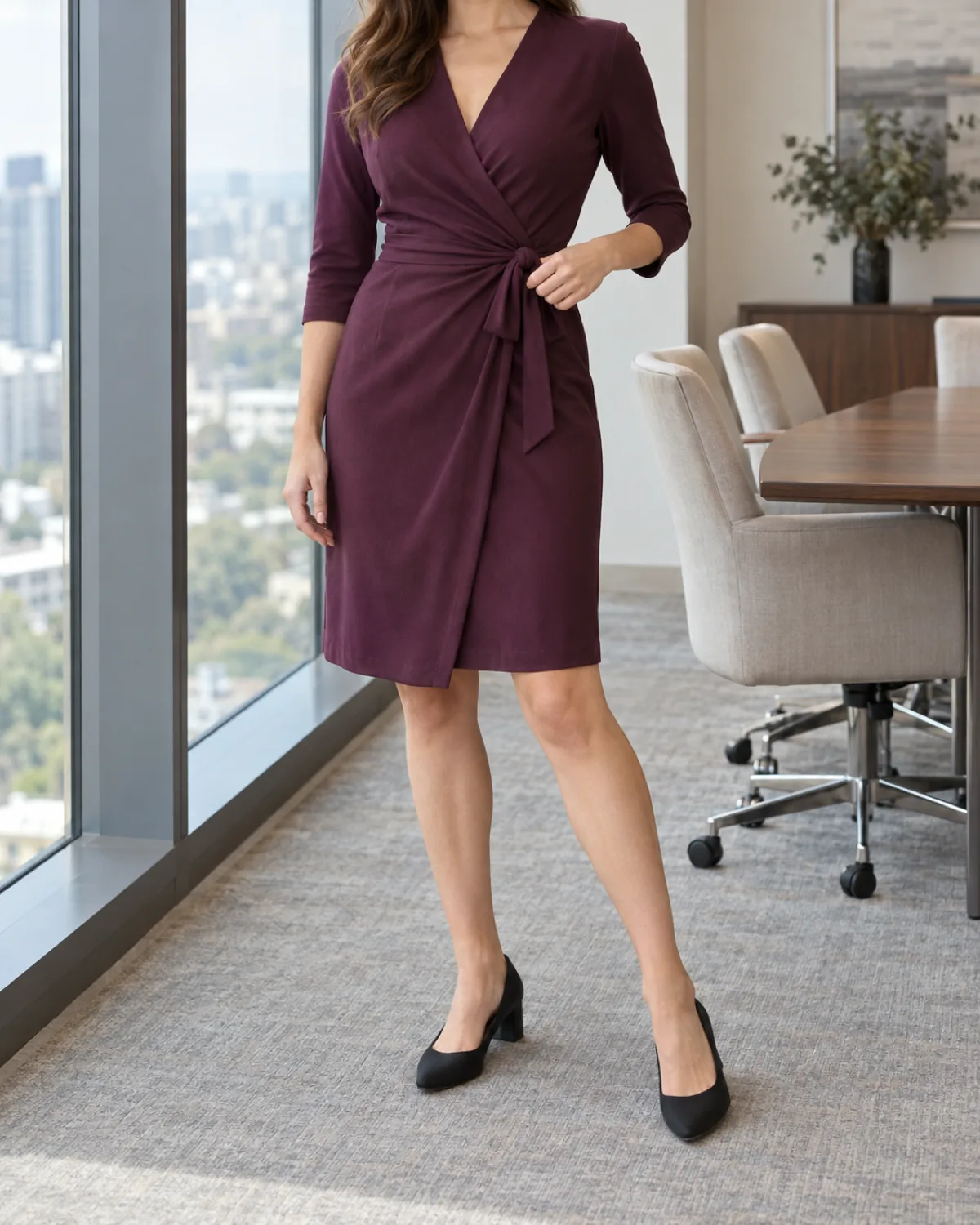
A wrap dress adjusts to different body proportions without tailoring, which makes it practical when you need something that fits well right now. The waist tie creates a defined silhouette, and a solid dark tone like deep plum or burgundy keeps it from reading as casual.
- Tie the wrap firmly at the waist so it sits flat against the body and does not shift during the interview
- Check the neckline by bending forward — if it gaps, add a camisole underneath in a matching colour
- Avoid prints for interviews because pattern draws attention to the dress rather than the conversation
- Choose a fabric with enough weight that the wrap does not cling or ride open when you sit
- Dark solids in the plum-to-burgundy range are more interesting than black without being louder
3. Shift Dress With a Blazer
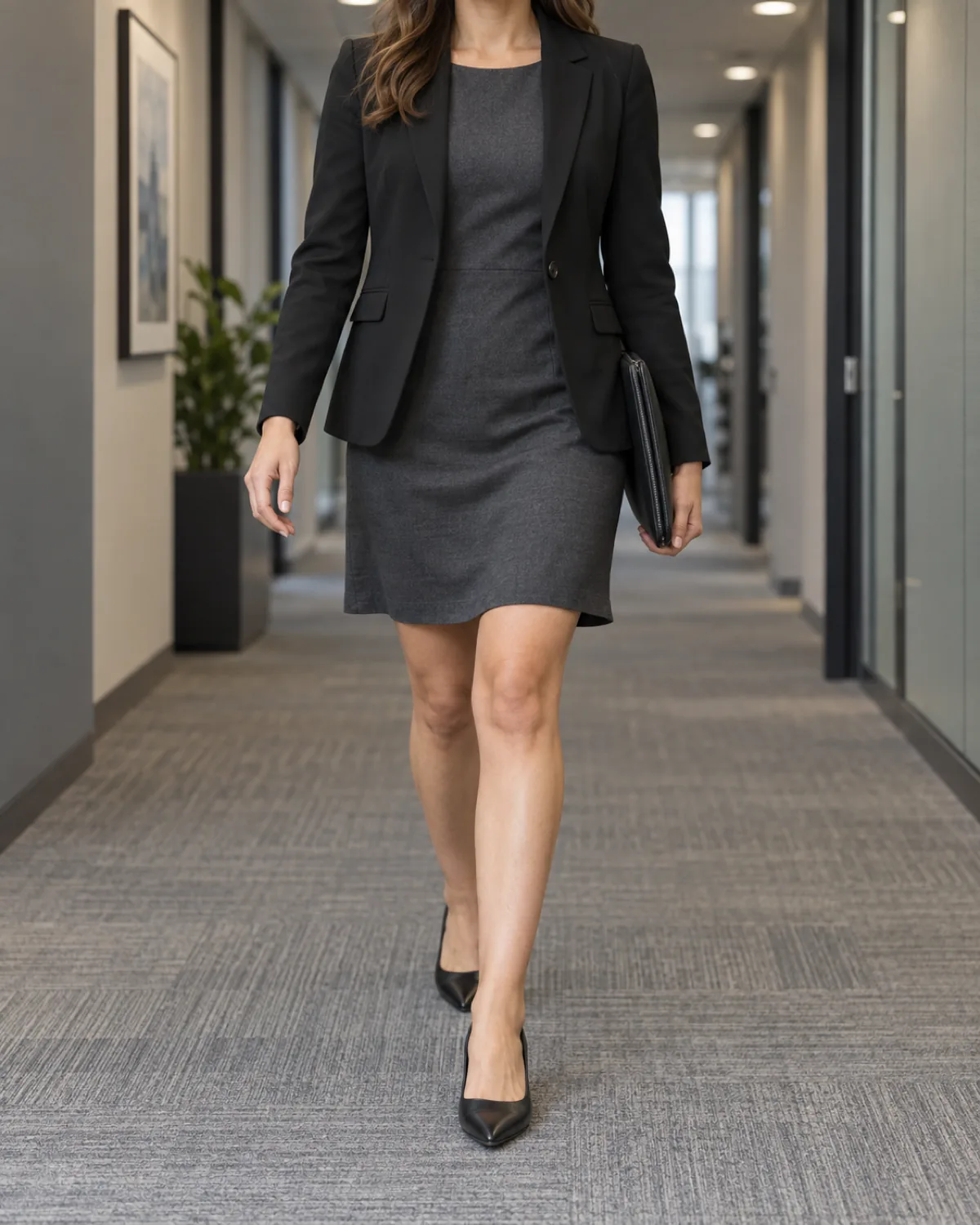
This is the most versatile combination on the list. The blazer adds the structure that a shift dress lacks on its own. Remove the blazer and it reads business casual. Keep it on and it reads business professional. That flexibility matters when you are not sure what to expect.
- Choose a shift in charcoal or grey and a blazer in black or navy so the two layers have enough contrast to read as separate pieces
- Make sure the blazer sits flat on the shoulders without bunching — the fit at the shoulders decides whether the whole outfit looks intentional or borrowed
- A leather portfolio or structured tote finishes the look better than a backpack or crossbody
- If you run warm, this combination lets you remove the blazer in the lobby and put it back on before you walk into the room
- The shift should hit just above the knee so the blazer does not make it look shorter than it is
Where to start
Find your situation, skip ahead
Your interview is at a bank, law firm or corporate office with a business-professional dress code
Start with ideas 1, 9 and 11. A structured sheath, a sleeveless sheath with a jacket, or a blazer dress all hold the formality line.
01 Sheath Dress in Navy or Charcoal09 Sleeveless Sheath With a Structured Jacket11 Blazer Dress
Your interview is at a startup, agency or company where business casual is the ceiling
Ideas 4, 6 and 10 use softer silhouettes and knits that match the room without underdressing.
04 Knit Midi Dress With a Belt06 Fit-and-Flare Dress With a Cardigan10 Mock-Neck Midi Dress in Ribbed Knit
You want one dress that works no matter what dress code you walk into
Idea 3. A shift dress with a blazer. Remove the blazer for casual, keep it on for formal. It is the most adaptable option here.
4. Knit Midi Dress With a Belt
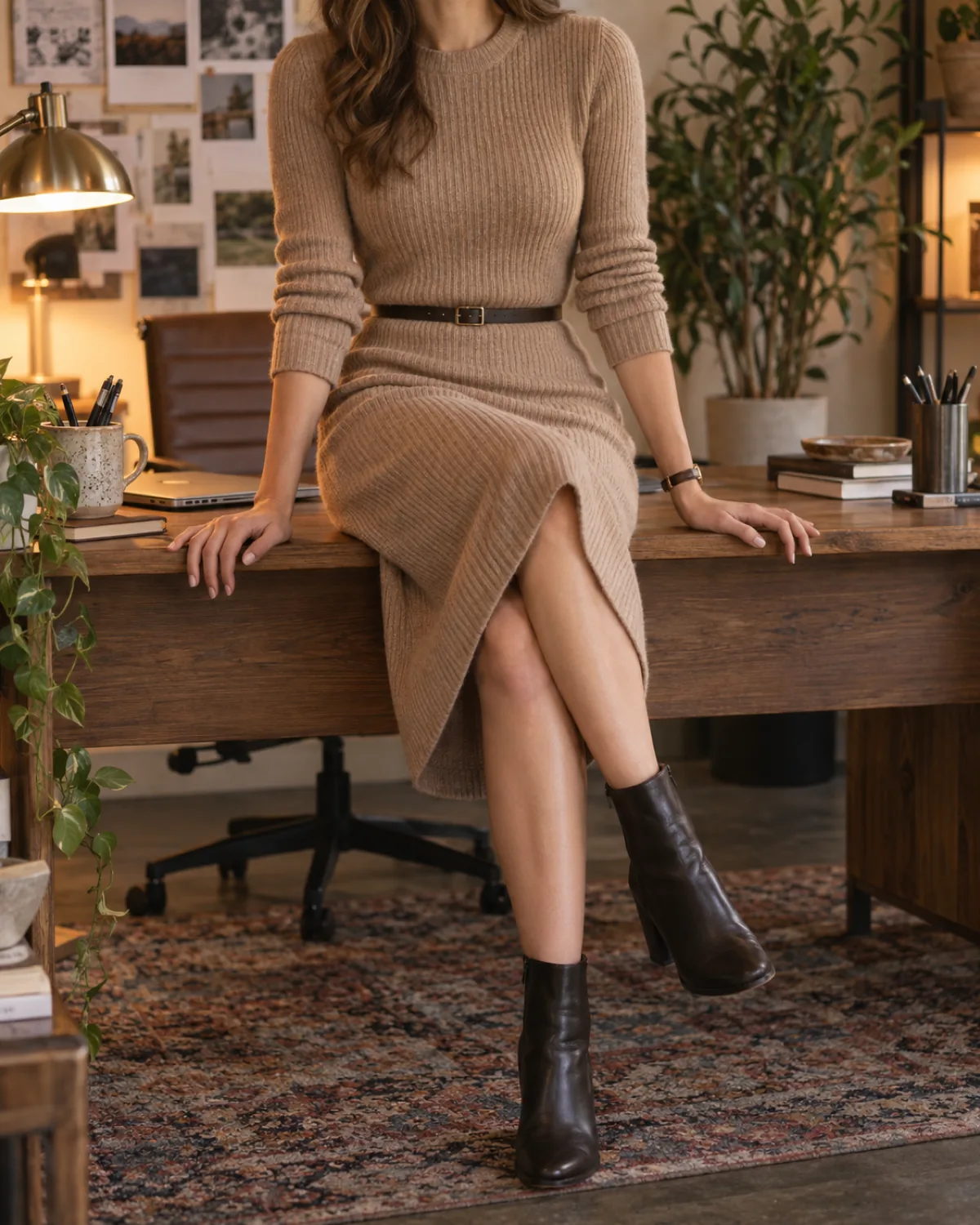
Knit midi dresses belong in interviews at creative studios, agencies and tech companies where a sheath would look overdressed. The belt is not optional — without it, the knit swallows your waistline and the dress reads like loungewear.
- Choose a fine-gauge or ribbed knit rather than a chunky cable knit, because finer knits hold a cleaner line
- A thin dark leather belt at the natural waist creates definition without competing with the fabric
- Pair it with ankle boots or clean low-heeled loafers rather than heels, which would clash with the casual register of the knit
- Camel, oatmeal and dark olive are safer than bright colours for interviews in creative fields
- Sit down in the dress before the interview to check how the belt sits when you are seated — it should not ride up or dig in
5. Shirt Dress in Cotton Poplin
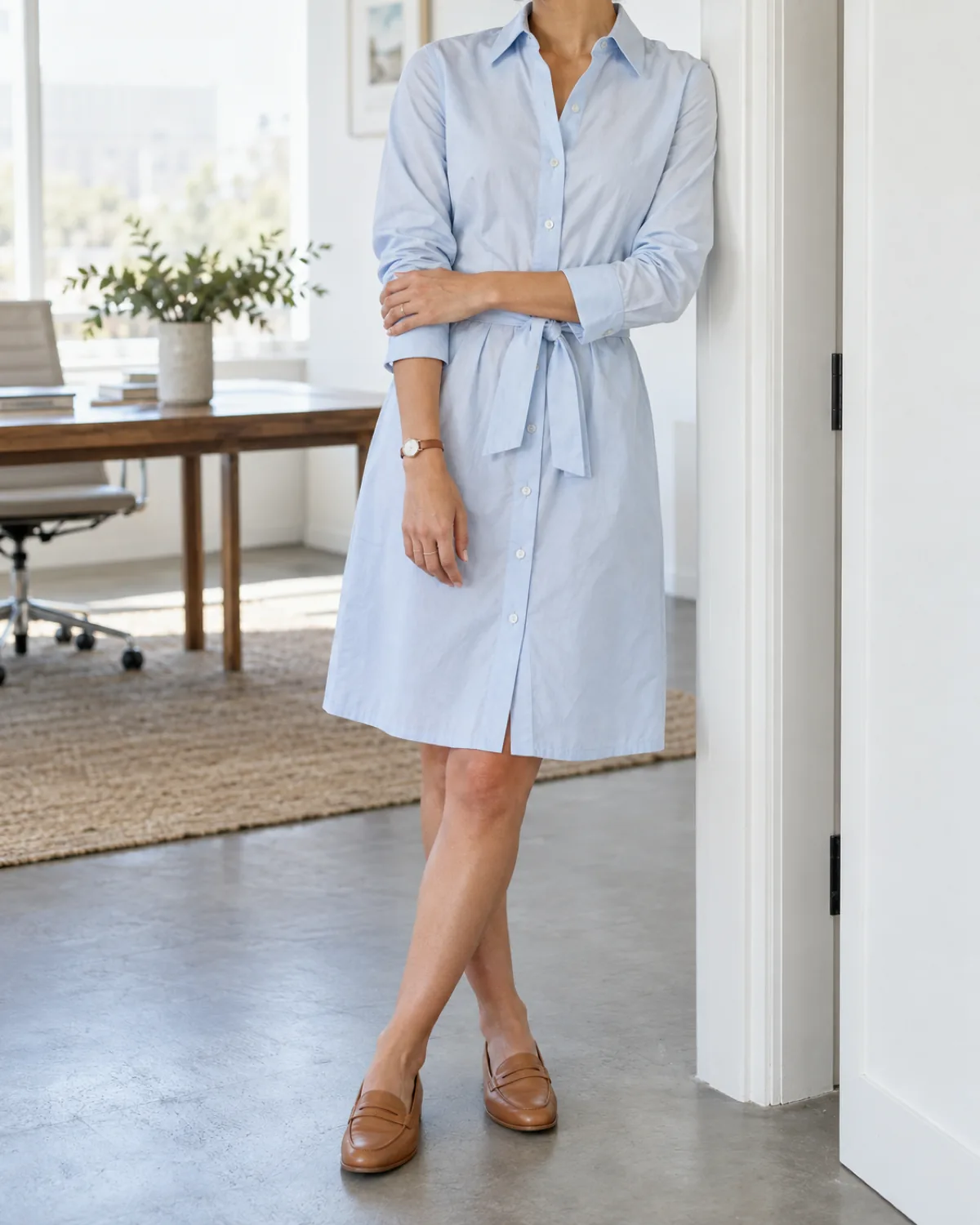
A shirt dress works for interviews in education, healthcare administration and nonprofits — settings where a suit reads too corporate and trousers-plus-blouse reads too formulaic. The built-in collar gives it formality that other casual dresses lack.
- Choose white or pale blue poplin for the crispest look — poplin holds its structure better than softer cotton
- Button the placket to one button below the collarbone so the neckline reads intentional rather than open
- The self-fabric belt at the waist keeps the silhouette from reading boxy
- Flat loafers or low block heels match the relaxed register better than pointed pumps
- Iron the collar flat the morning of the interview — a curled collar is the first thing people notice on a shirt dress
6. Fit-and-Flare Dress With a Cardigan
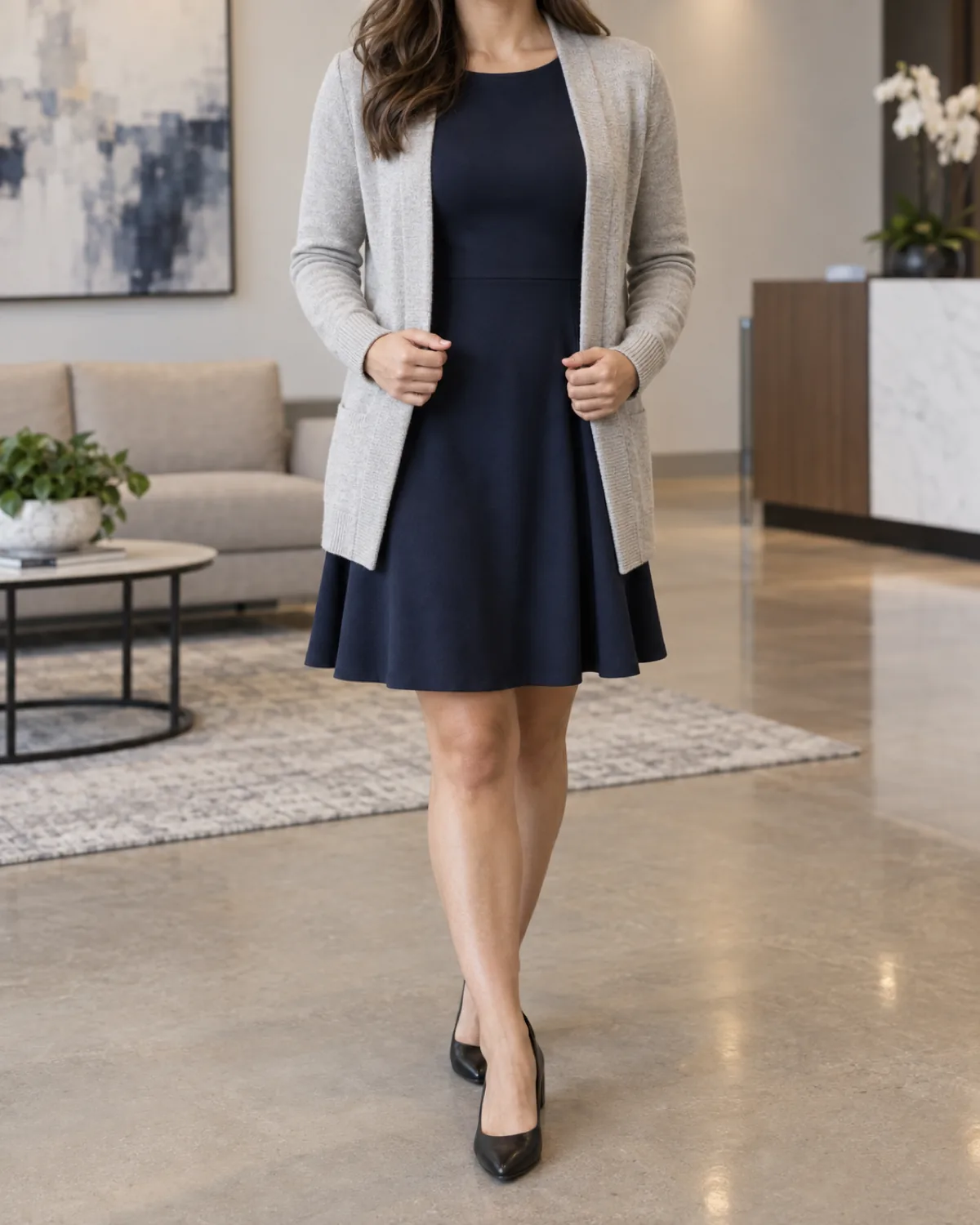
A fit-and-flare silhouette is softer than a sheath, which makes it a good match for interviews where approachability matters — startups, client-facing roles, retail management. The cardigan tames the flare and adds a layer that keeps the outfit from reading too casual.
- Choose a fitted bodice and a skirt that flares gently rather than dramatically — a wide circle skirt reads party, not interview
- A hip-length open cardigan in a neutral like oatmeal or grey adds structure without the weight of a blazer
- Keep the cardigan open so the dress silhouette is visible underneath
- Low-heeled pumps keep the formality consistent with the dress; sneakers would pull it too far casual
- The hem should hit just above the knee — a fit-and-flare that is too short will ride up when you move
7. A-Line Dress in Plaid or Glen Check
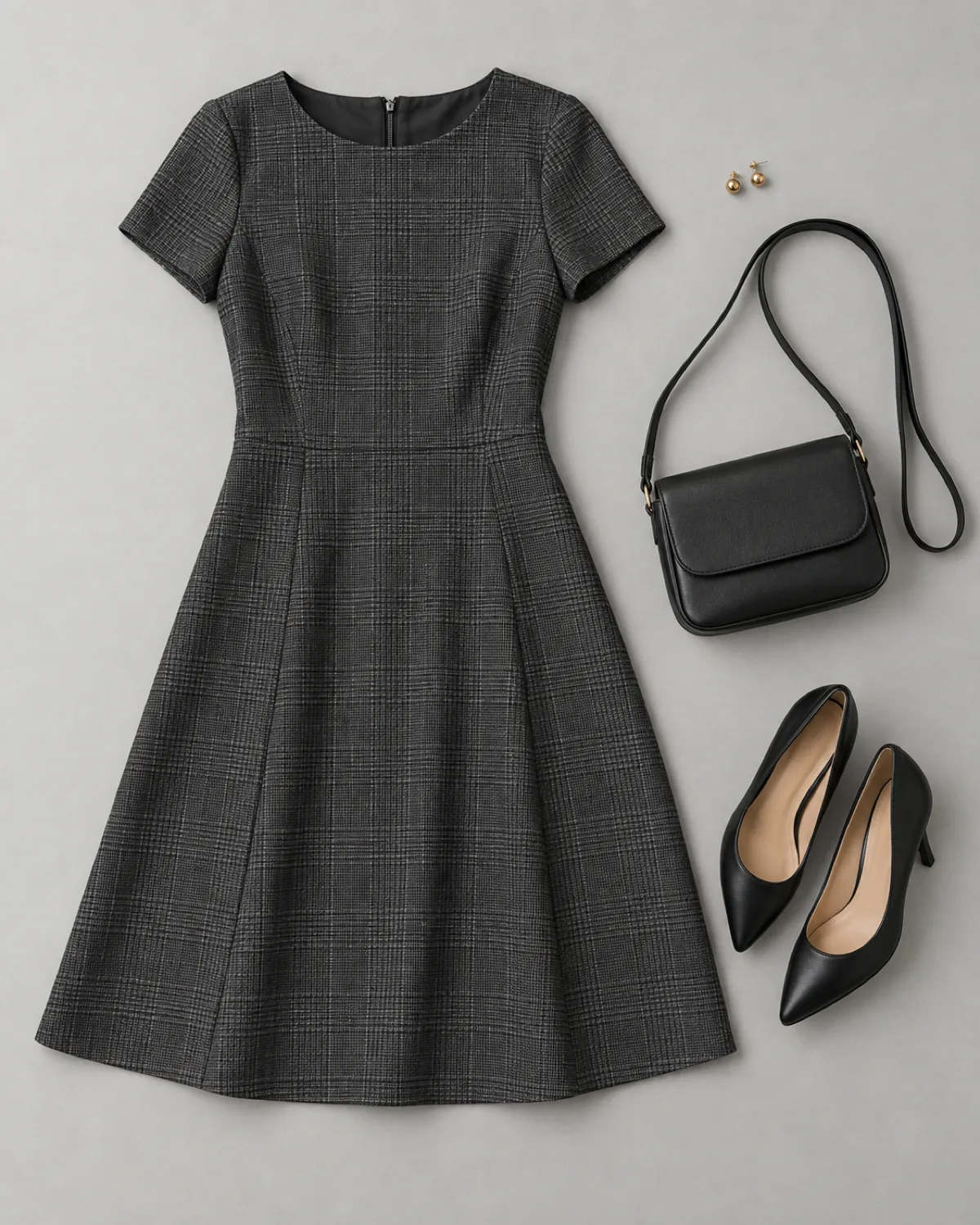
A subtle woven pattern like glen check brings texture to the dress without the volume of a print. The pattern reads intentional — someone who chose a checked fabric thought about what they were wearing, and interviewers notice that.
- Choose fine-wale patterns in grey or charcoal rather than bold tartans or bright plaids, which read costume
- The A-line shape flatters most body proportions and allows you to sit comfortably without the skirt pulling
- Keep accessories minimal — gold studs, a plain crossbody or small tote — so the pattern remains the focal point
- This works best in business-casual offices where the texture adds interest without breaking formality
- A black pump grounds the outfit and lets the check pattern do the talking
8. Wrinkle-Proof Ponte Dress for a Long Interview Day
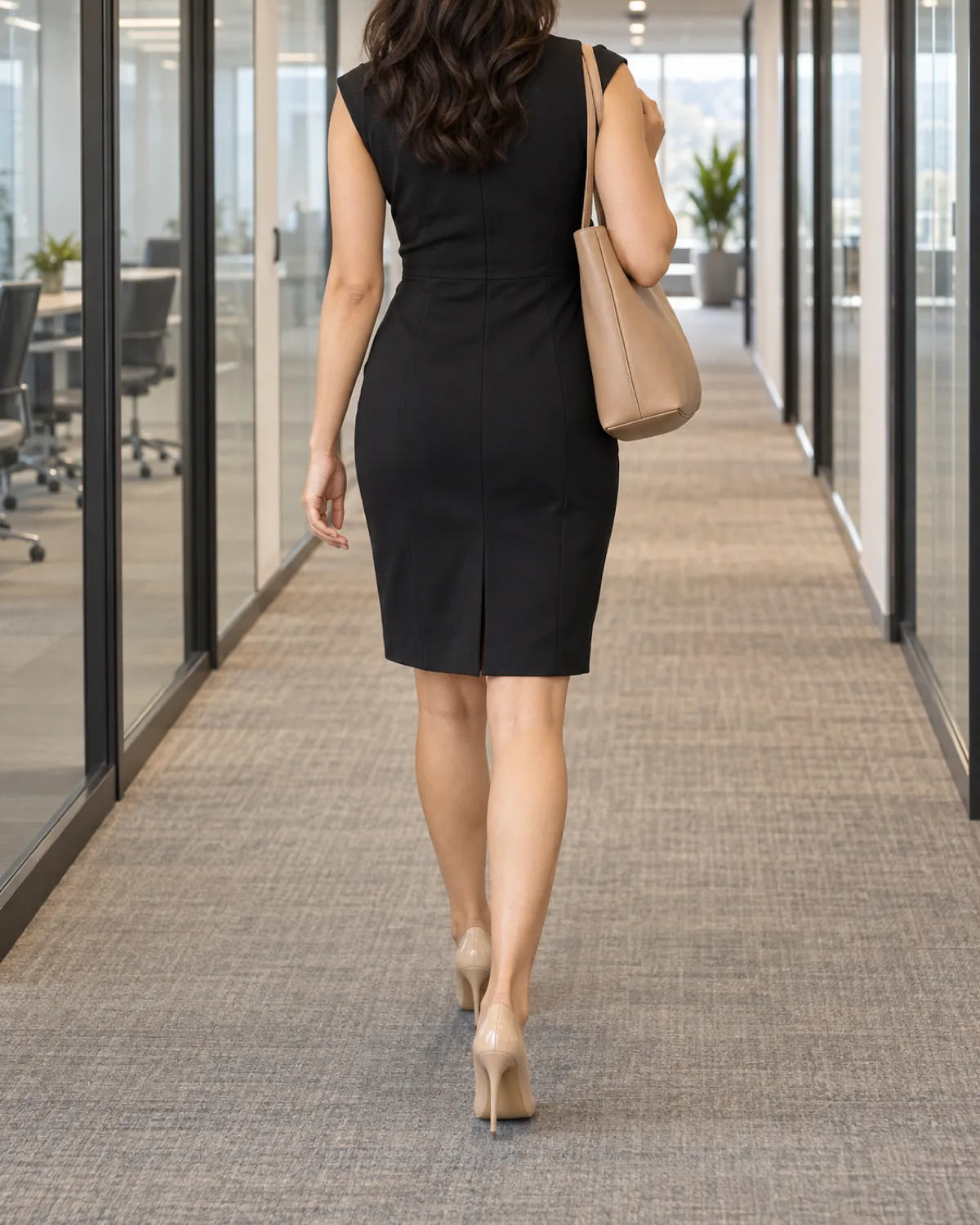
Interview days can run long — a morning panel, a lunch with the team, an afternoon walk-through. Ponte handles that better than any woven fabric because it does not wrinkle, does not shift and does not show the stress of a six-hour day. You look the same walking out as you did walking in.
- Ponte holds its shape through sitting, standing, walking and sitting again without the creasing that woven suiting picks up by noon
- Size for a close fit rather than loose — the stretch gives you room to move without the dress pulling or gapping
- Black ponte with nude pumps and a contrasting tote reads polished from the back, the front and the side
- Machine washable, which matters when you have three interviews in one week and no time for dry cleaning between them
- Check the opacity before the day — hold the fabric up to a light, and if you can see through it, add a slip in a matching colour
9. Sleeveless Sheath With a Structured Jacket
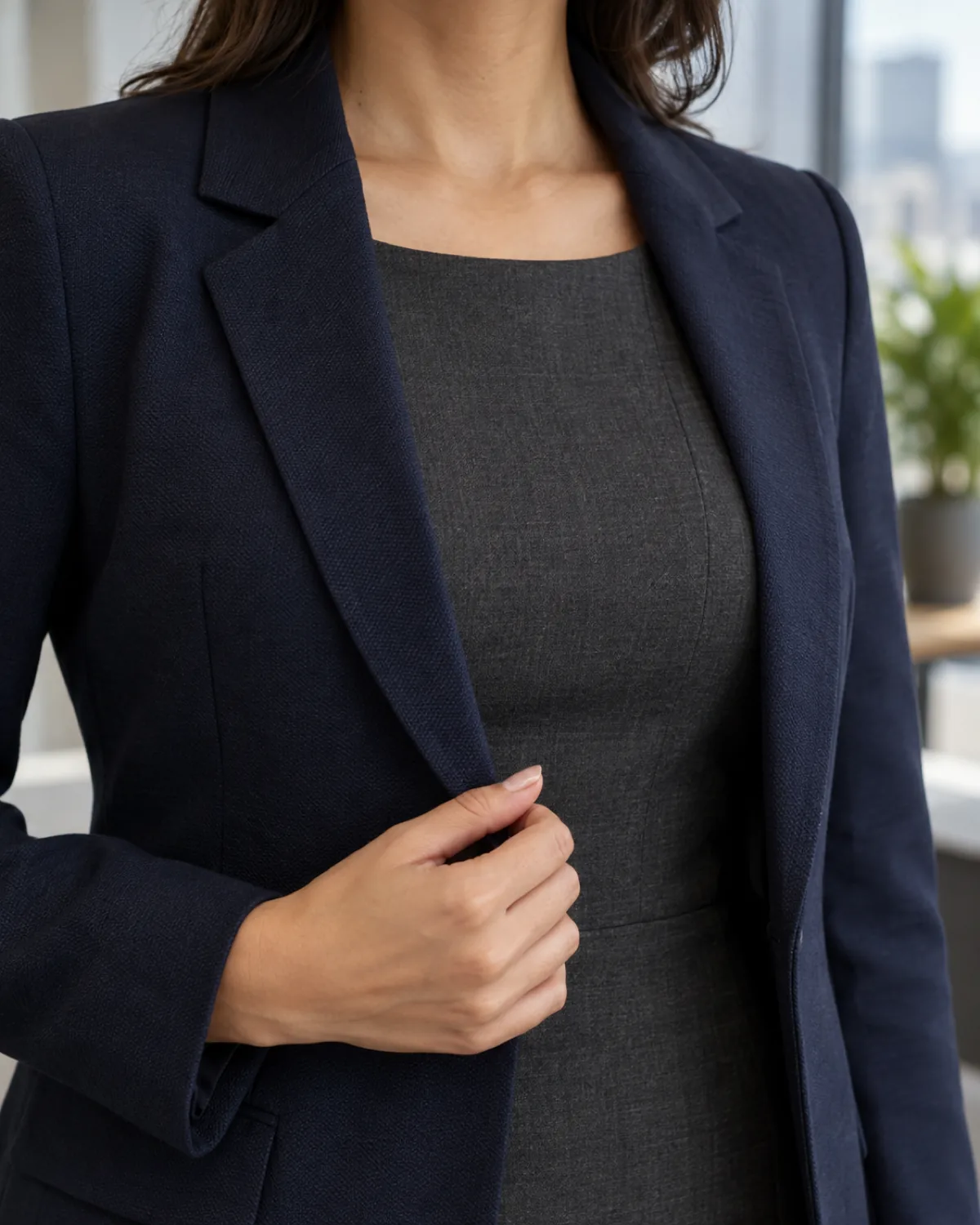
This combination handles the temperature problem. The jacket stays on during the interview. The sleeveless layer underneath handles the commute or a building that overheats. The two layers together read as polished as a suit.
- The blazer should be structured — not a soft cardigan blazer — so it holds the formality when the interviewer sees you from across the table
- Choose a sleeveless sheath in a complementary shade rather than matching, so the two pieces read as separate garments and not a mismatched suit
- Keep the jacket on for the entire interview even if the room is warm — removing it changes the formality of the outfit mid-conversation
- The neckline of the sheath should sit high enough that the blazer frames it cleanly rather than exposing too much chest
- This is one of the strongest options for business-professional environments where a full suit feels excessive
10. Mock-Neck Midi Dress in Ribbed Knit
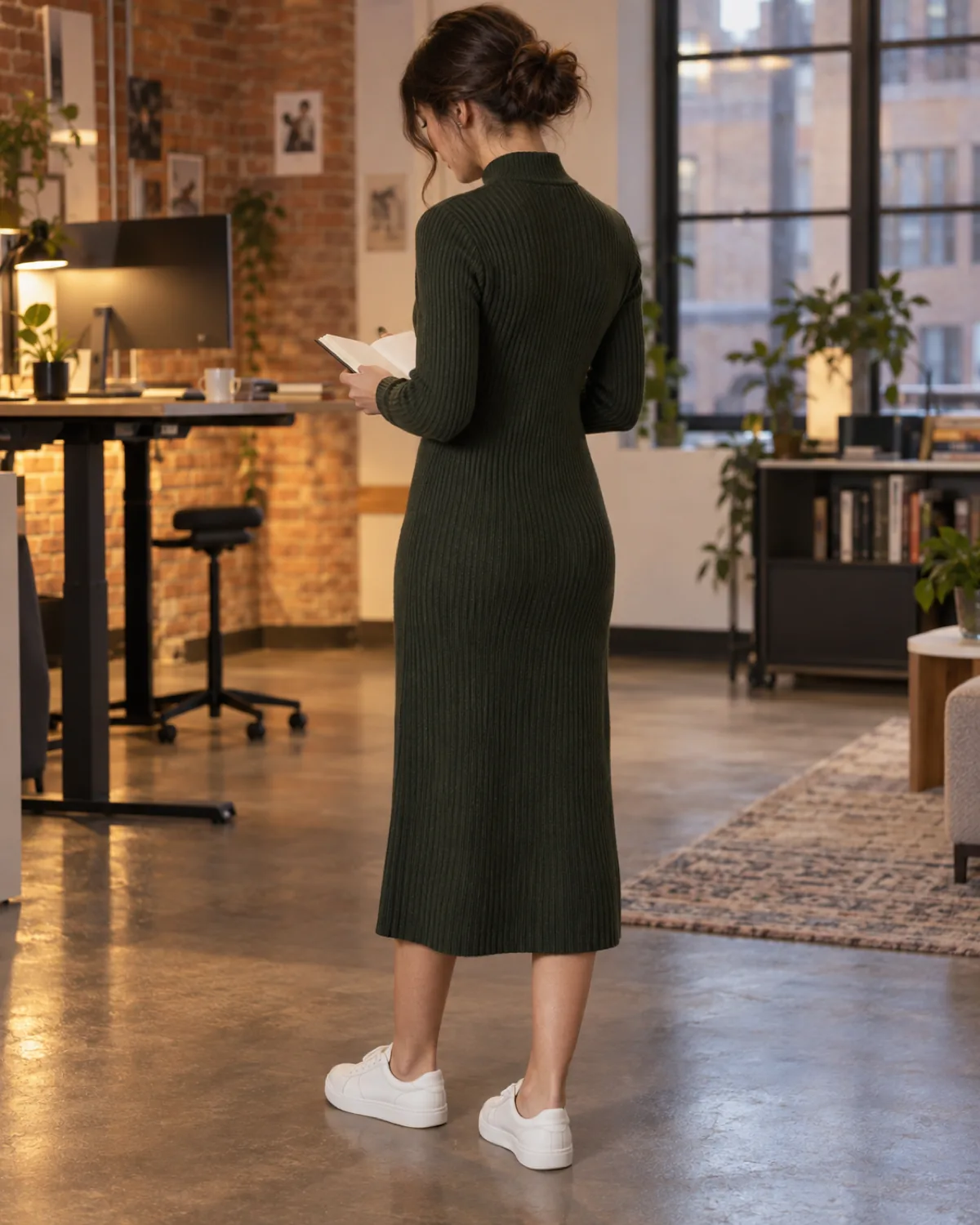
For interviews at tech companies, design studios and creative agencies, this dress replaces the blazer-and-trousers formula with something that fits the culture. The mock neck eliminates the jewellery question. The ribbed knit has enough texture to look deliberate.
- Forest green, dark olive or charcoal read more intentional than black in a creative office
- The mock neck should sit snug against the neck without a gap — a loose mock neck looks unfinished
- Clean white leather sneakers match the dress code of most creative offices better than heels would
- The midi length should fall to mid-calf, not the ankle — too long and it reads evening, not work
- Skip a belt on this one; the ribbed texture creates enough visual structure at the waist on its own
11. Blazer Dress
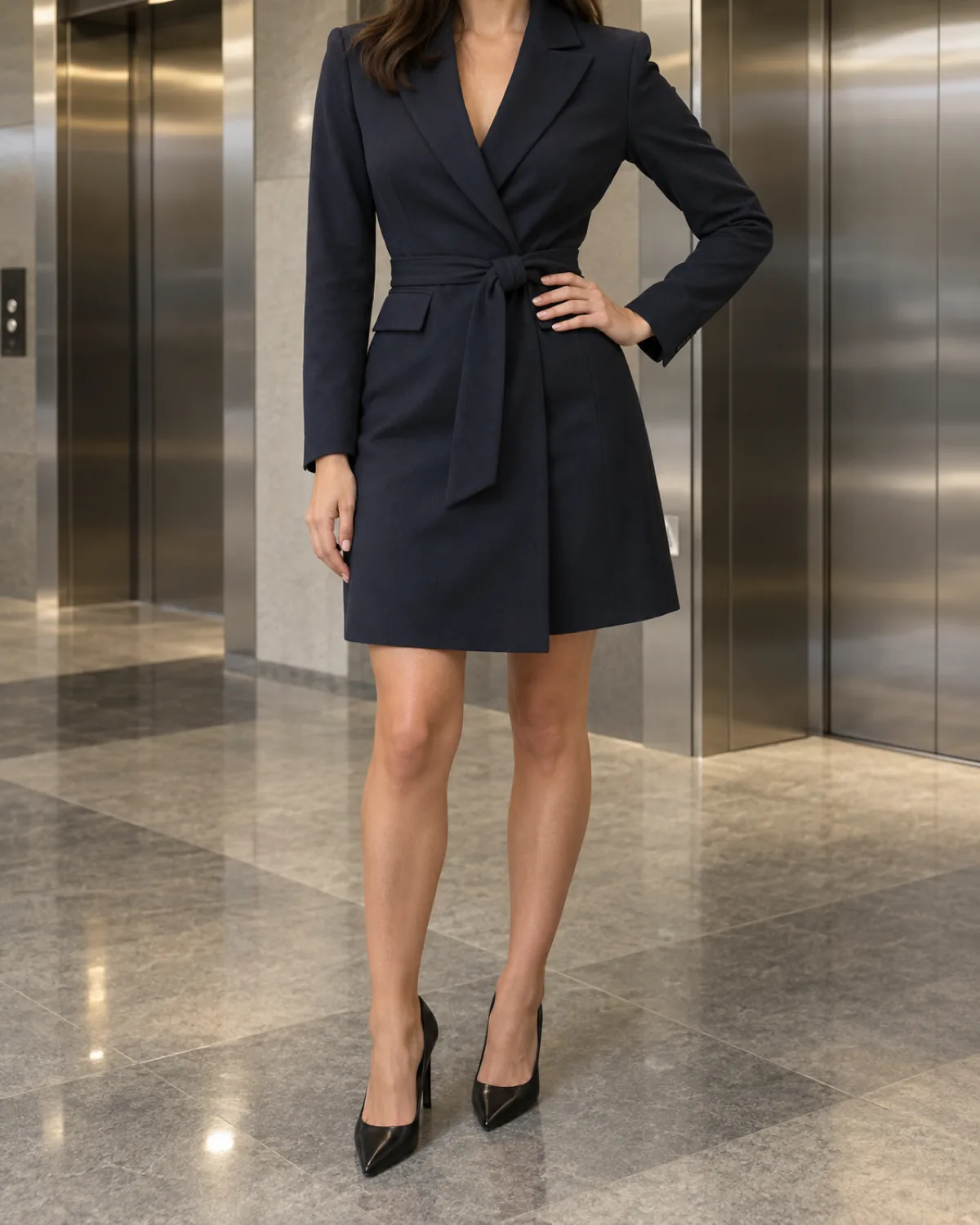
A blazer dress is a suit and a dress at the same time, which removes the layering question entirely. The notch lapels read business. The belted waist reads intentional. It is one garment that does the work of two.
- Choose a single-breasted blazer dress with notch lapels — double-breasted or peak-lapel styles read too fashion-forward for most interviews
- The hem should hit at or just above the knee; a blazer dress that is too short reads cocktail, not corporate
- Tie the belt at the waist for definition; leaving it open makes the dress look like an oversized blazer
- Navy is safer than black for interviews because it reads serious without reading severe
- This is the strongest option on the list for business-professional settings where you want the authority of a suit without the separates
12. Long-Sleeve Midi Dress in a Dark Solid
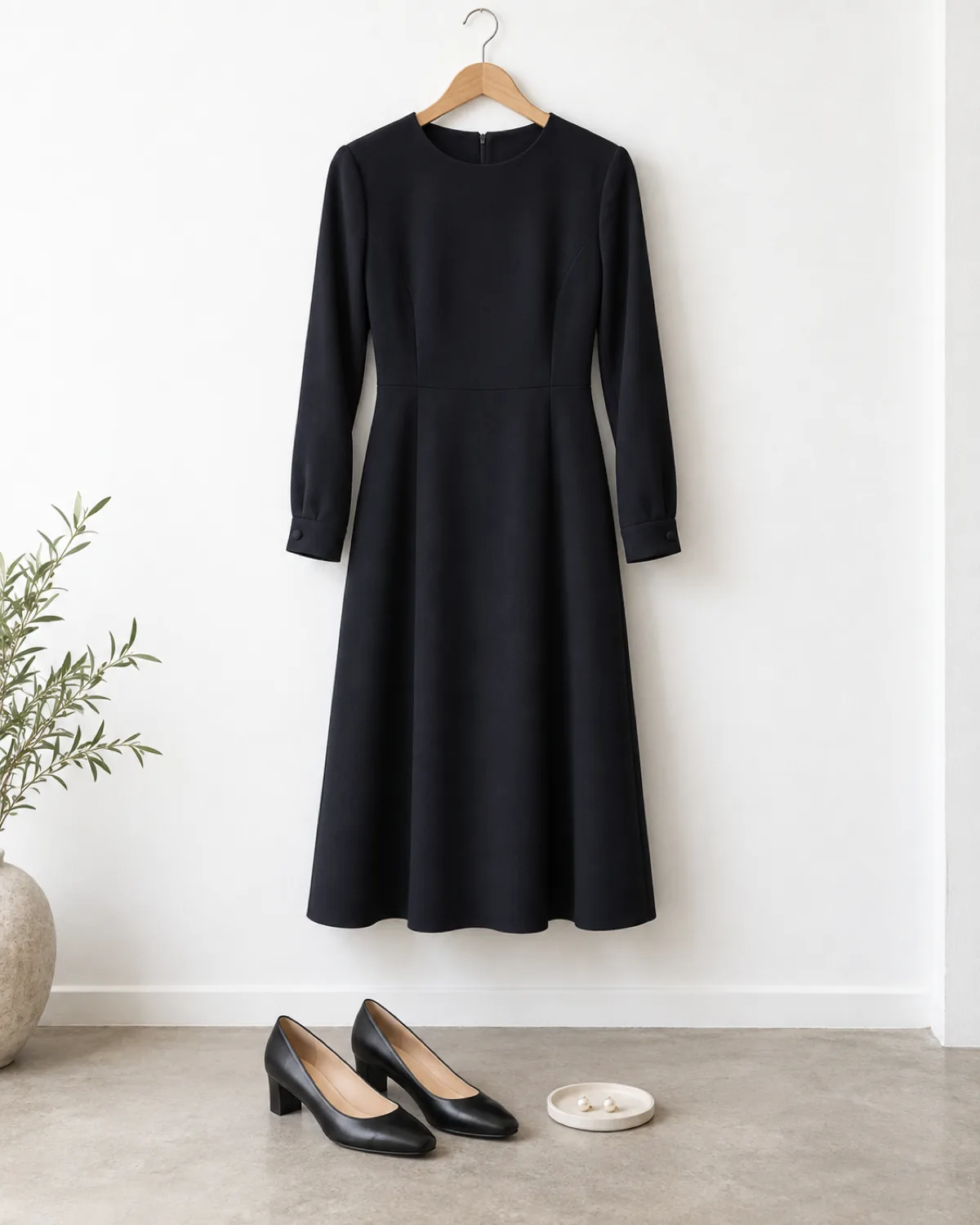
This is the most covered option on the list. Long sleeves, a modest round neckline and a mid-calf hem leave almost nothing to second-guess. It works for conservative industries, government interviews and settings where showing less skin reads as respect for the institution.
- A dark navy or black crepe fabric holds structure without looking stiff
- The round neckline eliminates the V-neck question and works with or without a necklace
- Buttoned cuffs add a tailored detail that keeps the sleeves from reading like a casual knit
- Pearl studs are the simplest accessory choice — they are formal enough for any setting and neutral enough to disappear
- Low-heeled court shoes match the covered, modest register of the dress better than pointed stilettos
13. Pleated Midi Skirt Dress
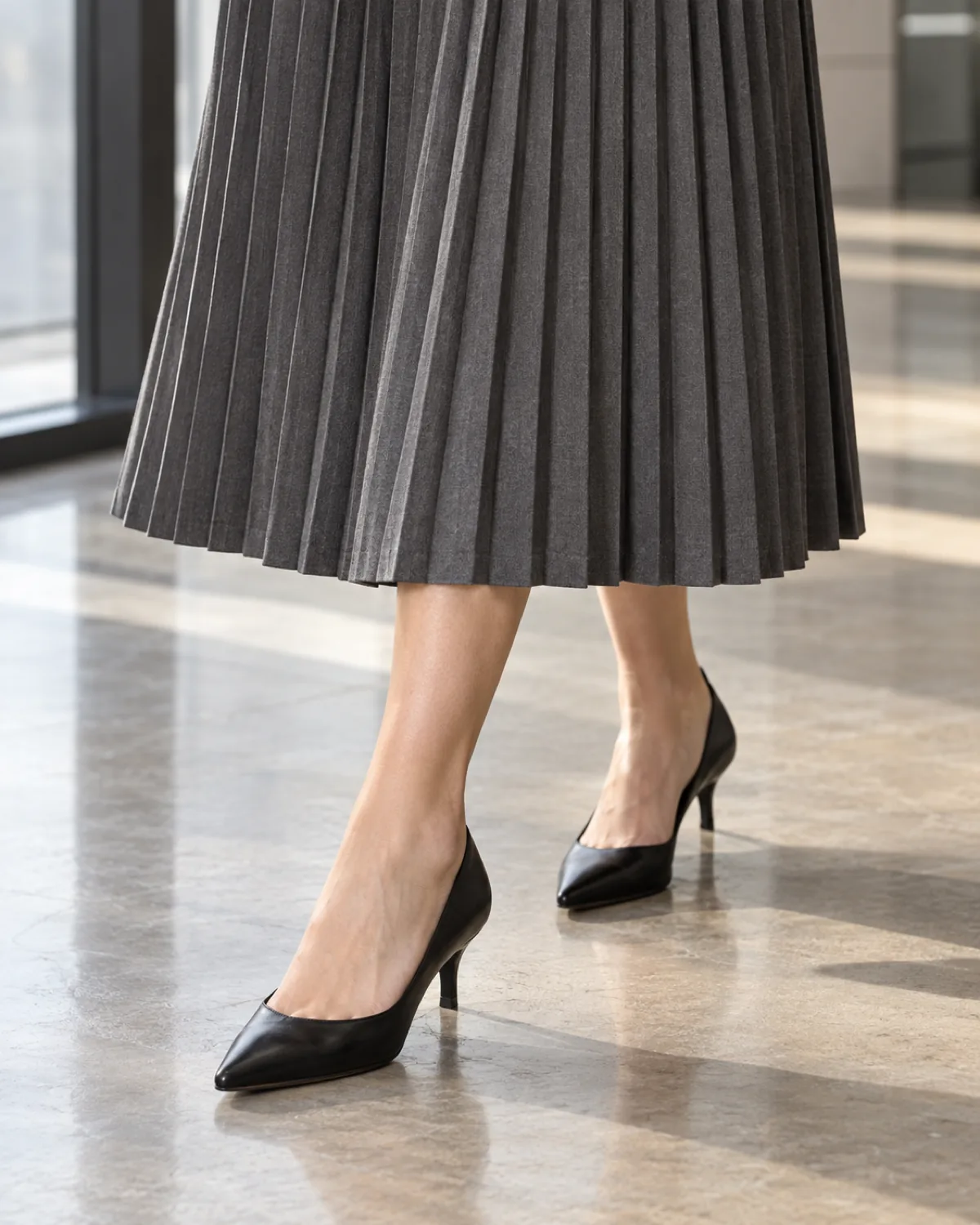
A pleated midi skirt dress gives you the visual of separates — the bodice reads like a tucked blouse, the pleated skirt adds movement — with the simplicity of a single garment. The pleats catch light and create dimension without needing a pattern.
- Choose fine knife pleats rather than wide accordion pleats, because fine pleats hold a cleaner line and read more formal
- Charcoal grey is the strongest neutral for this silhouette — it shows the pleats' shadow better than black does
- Kitten heels match the refined movement of the pleats; a heavy block heel would work against the lightness
- The bodice should be fitted, not loose, so the contrast between the structured top and the flowing skirt reads intentional
- Sit down in it before the interview to see how the pleats behave — they should fan out neatly, not bunch under you
Every dress here is built around one question: does the interviewer think about your answers or your outfit? If the dress disappears and the conversation stays, it did its job.
Where the dress-code definitions come from
- Managing Employee Dress and Grooming — Society for Human Resource Management
- Business Casual and Business Professional: What's the Difference? — Indeed Career Guide
Keep this one
Save it where you plan outfits
Pin the image above to the board you actually check on a Sunday night. This guide is written to be re-read, not read once.
Tonight, before you close this tab
- Check the company's team page or LinkedIn photos to see whether employees wear dresses or mostly separates
- Try sitting down in your chosen dress and check whether the hem rides up past two inches above the knee
- Photograph yourself in the full outfit from the front and from the side to see how the silhouette reads on camera
- Test the neckline by bending forward slightly and checking whether it gaps or shifts
- Lay out your shoes, bag and dress together the night before to confirm they are in the same formality register