7 Lawyer Outfits for Women, from the Courtroom to the Corner Office
What to wear as a woman lawyer in court, at the office and everywhere in between. Seven outfits built around what the dress code actually requires.
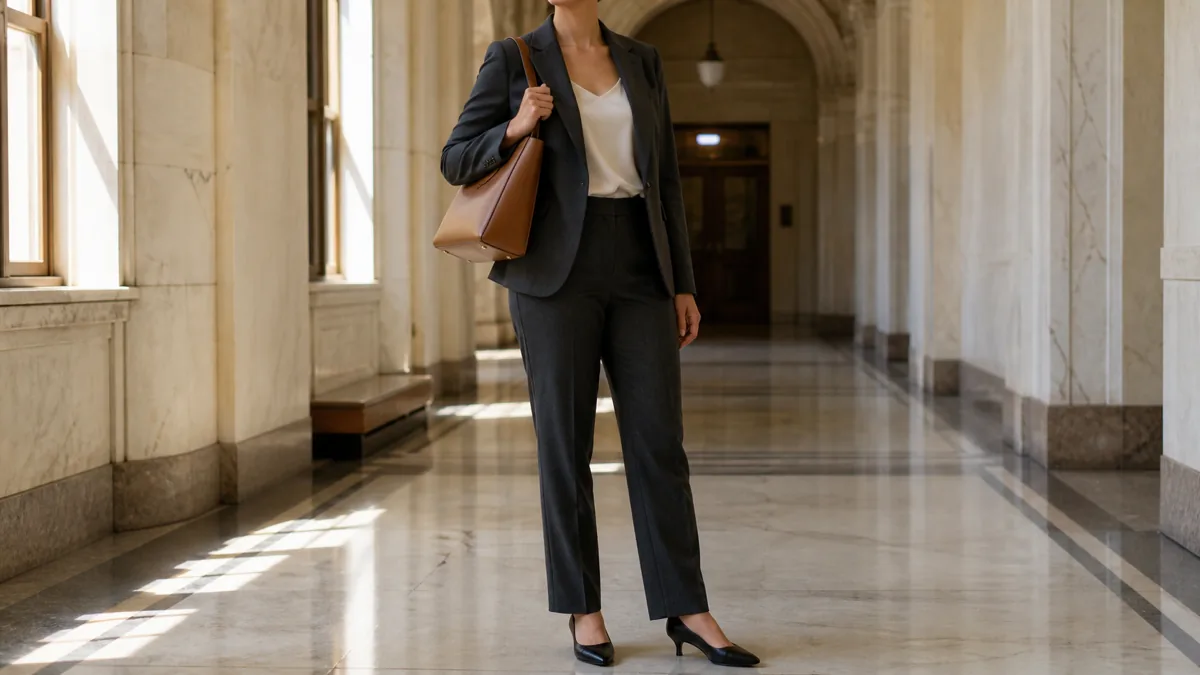
Working out an outfit for tomorrow? Save this page. It is easier to skim the night before than to remember.
At a glance
Works
- A dark pantsuit with closed-toe shoes for any courtroom appearance
- A structured blazer with separates for non-court office days
- A knee-length sheath dress for client meetings
- A fine-gauge knit with pressed trousers for depositions and mediations
Depends
- A linen-blend suit for summer, and only if you accept some wrinkling by midday
- Flats instead of heels. Berkeley Law's career office counts loafers as a classic interview shoe, but a soft ballet flat still reads casual at court
- A relaxed blazer at networking events, which works only if the rest of the outfit holds a line
Skip
- Sandals and open-toe shoes in court. One federal court lists sandals as casual attire to avoid, and Berkeley Law's interview standard is a closed toe
- Visible logos or branded hardware, which read as status-signalling in a profession that values restraint
- Athleisure knits marketed as work clothes, which lose their shape by the third meeting of the day
In most jobs, a bad outfit is an embarrassment. In law, it can undermine credibility before you say a word.
But outside the courtroom, law firms range from matched suits to jeans-on-Friday. These seven outfits map to seven real contexts, starting with the one that is non-negotiable and loosening from there.
1. A dark suit for court day
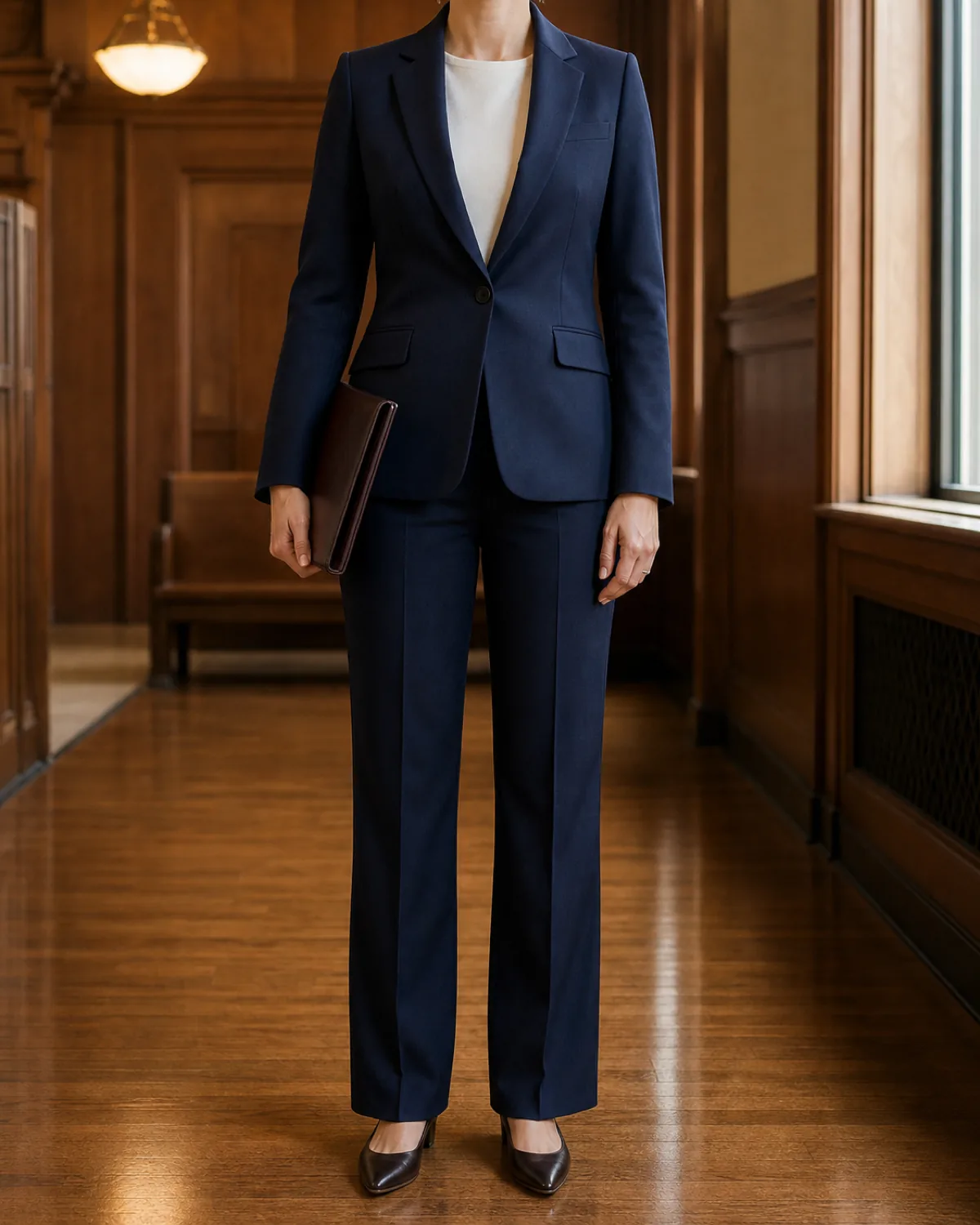
Courts write their own dress rules. The Northern District of Oklahoma, for one, asks attorneys for "proper business attire" and names sandals and flip flops among the casual wear to avoid. The Texas appeals court in Fort Worth lists a business suit, a dress, or tailored slacks with a professional blouse as business attire for courtroom participants.
Berkeley Law's career office describes the classic suit as dark and neutral, "navy, black, or charcoal," worn with a closed-toe, low-heeled shoe. This navy single-button pantsuit with an ivory shell meets that standard without looking borrowed from someone else's closet.
Fit matters more than price. A well-tailored suit at any price point will always read better than an expensive one that pulls at the buttons or bunches at the waist.
- Button the blazer when you stand, unbutton when you sit down
- Match the trouser weight to the jacket so the two pieces read as one suit
- One small earring and no bracelet, for a clean line and nothing that taps the table while you write
- Check the court's published dress code before your first appearance, if one exists
2. A blazer and separates for the firm office
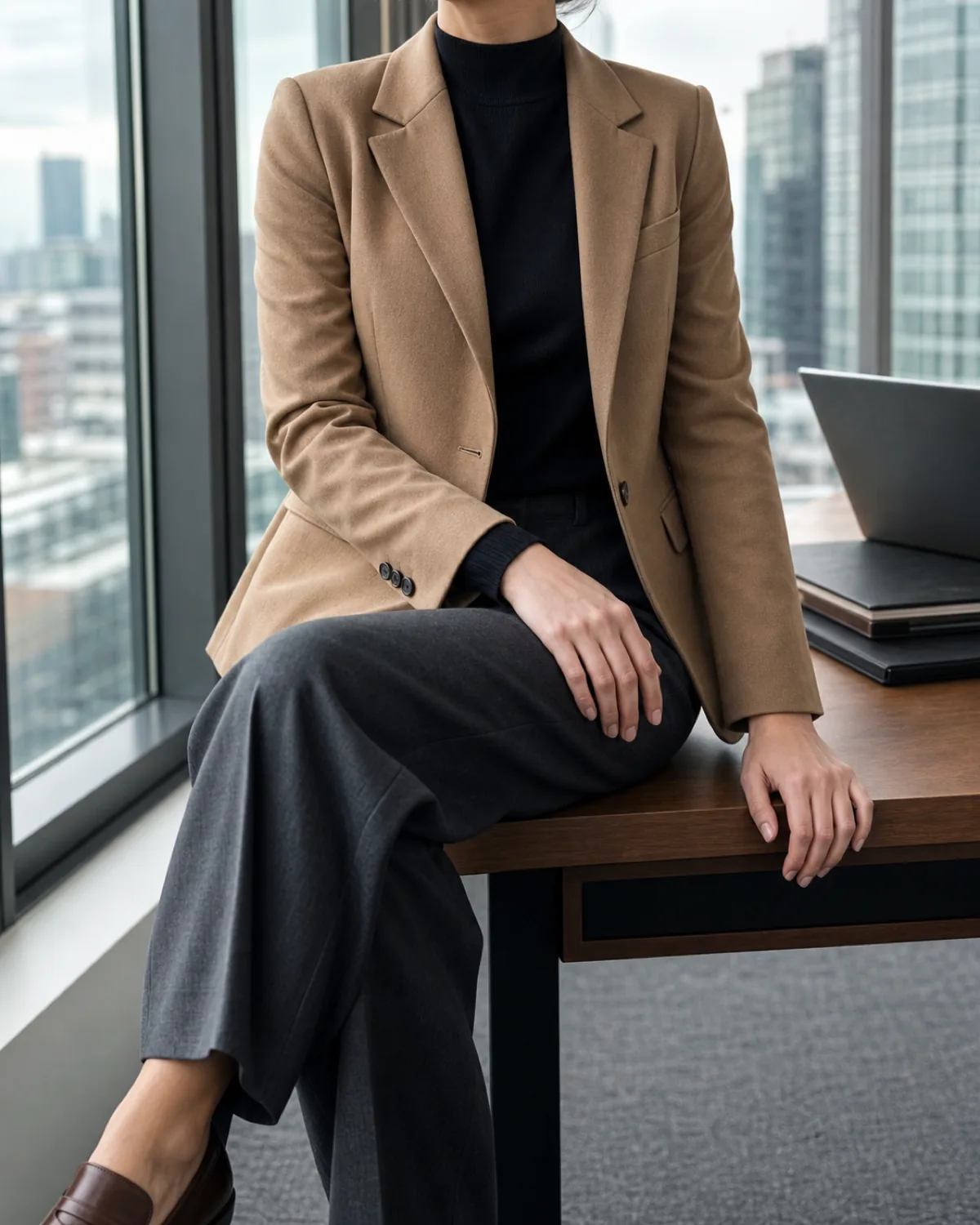
Outside court, dress is set firm by firm, somewhere between business professional and a half step below. Berkeley Law's career office tells new lawyers to follow the employer's own guide where one exists, and to lean formal for the first few days until they see what others wear.
Practice area moves the line too. I would expect a litigation team to dress more conservatively than a transactional or IP group, even on non-court days. A structured blazer with separates lands in the right zone for both.
The blazer is the switch. On, you are firm-ready. Off, you are halfway to business casual. This camel blazer over a black mock-neck knit and charcoal wide-leg trousers works for a partner meeting at nine and a working lunch at noon without changing.
- Keep a spare blazer at the office for the meeting you forgot about
- Dark brown leather loafers keep the shoe decision simple
- If your practice group leans casual, watch what the senior women actually wear before following suit
Where to start
Find your situation, skip ahead
You have a court date this week
Start with idea 1. The dark suit is the only outfit here that is truly non-negotiable.
01 A dark suit for court day04 A summer-weight suit for hot months
You work at a firm and need a daily rotation that does not require a full suit
Ideas 2, 3 and 5 are your weekday core. The blazer, the dress and the knit cover office, clients and conference rooms.
02 A blazer and separates for the firm office03 A sheath dress for client meetings05 Trousers and a knit for deposition days
You mostly work remotely or from home with occasional video hearings
Idea 6 solves the camera problem. Pair it with idea 7 for the in-person events you still attend.
06 A structured layer for the remote court appearance07 A relaxed blazer for bar events and networking
3. A sheath dress for client meetings
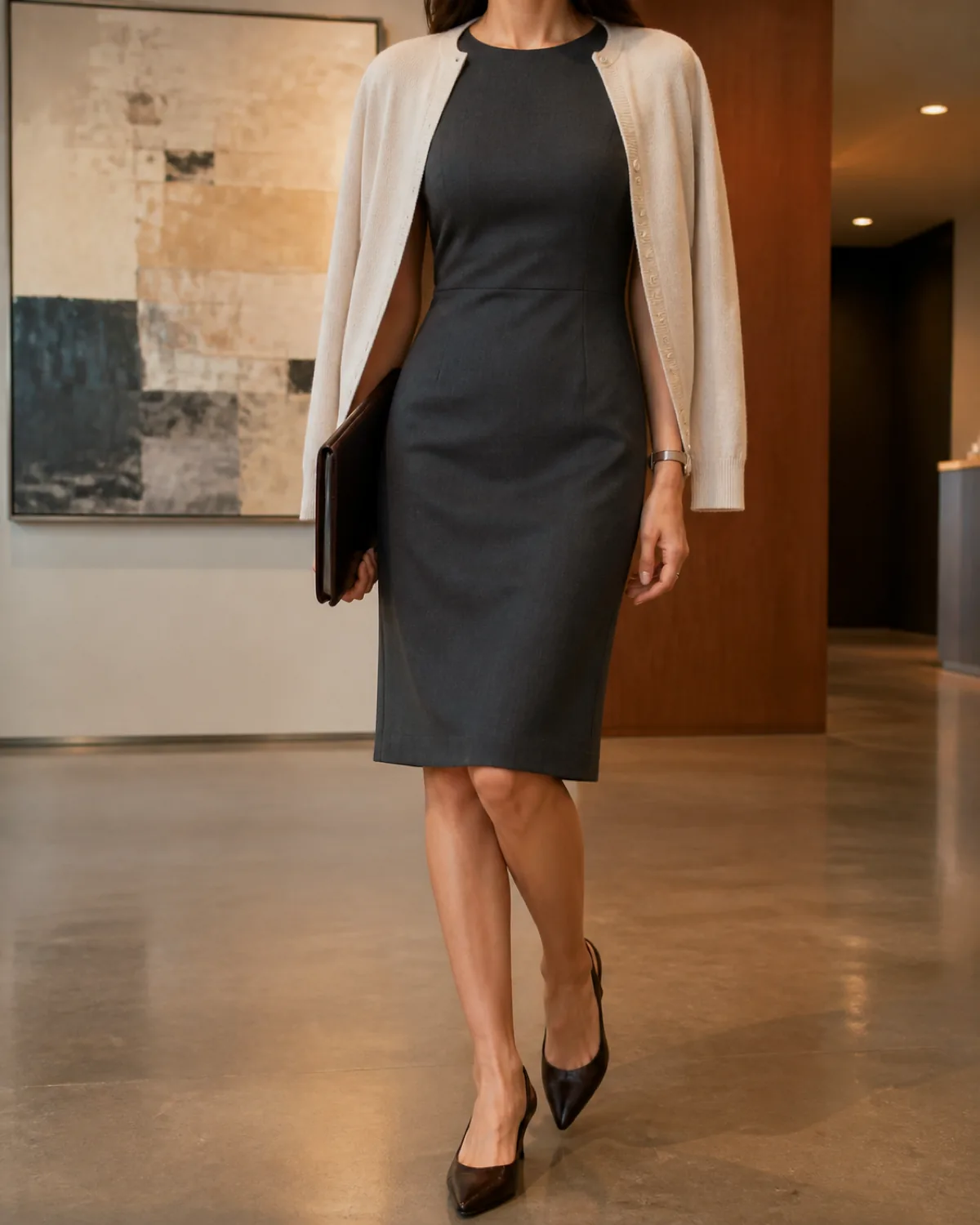
My rule for client meetings is to dress at the client's level or slightly above it. In law, that usually means structured pieces that hold a line without looking stiff. A charcoal sheath dress with a cardigan draped at the shoulders does that. It reads as intentional, which is the right signal when you are representing the firm on someone else's turf.
The dress ends just above the knee here, which I think is fine for a client meeting. It would fall short for an interview, where Berkeley Law's career office wants a sheath dress knee-length and "nothing shorter." The oatmeal cardigan adds a layer without adding bulk, and the dark slingback heels keep the line clean.
- Dress at the client's level or one step above, never two
- A slim leather portfolio reads more professional than a full tote in a conference room
- Skip patterns that compete with the conversation
4. A summer-weight suit for hot months
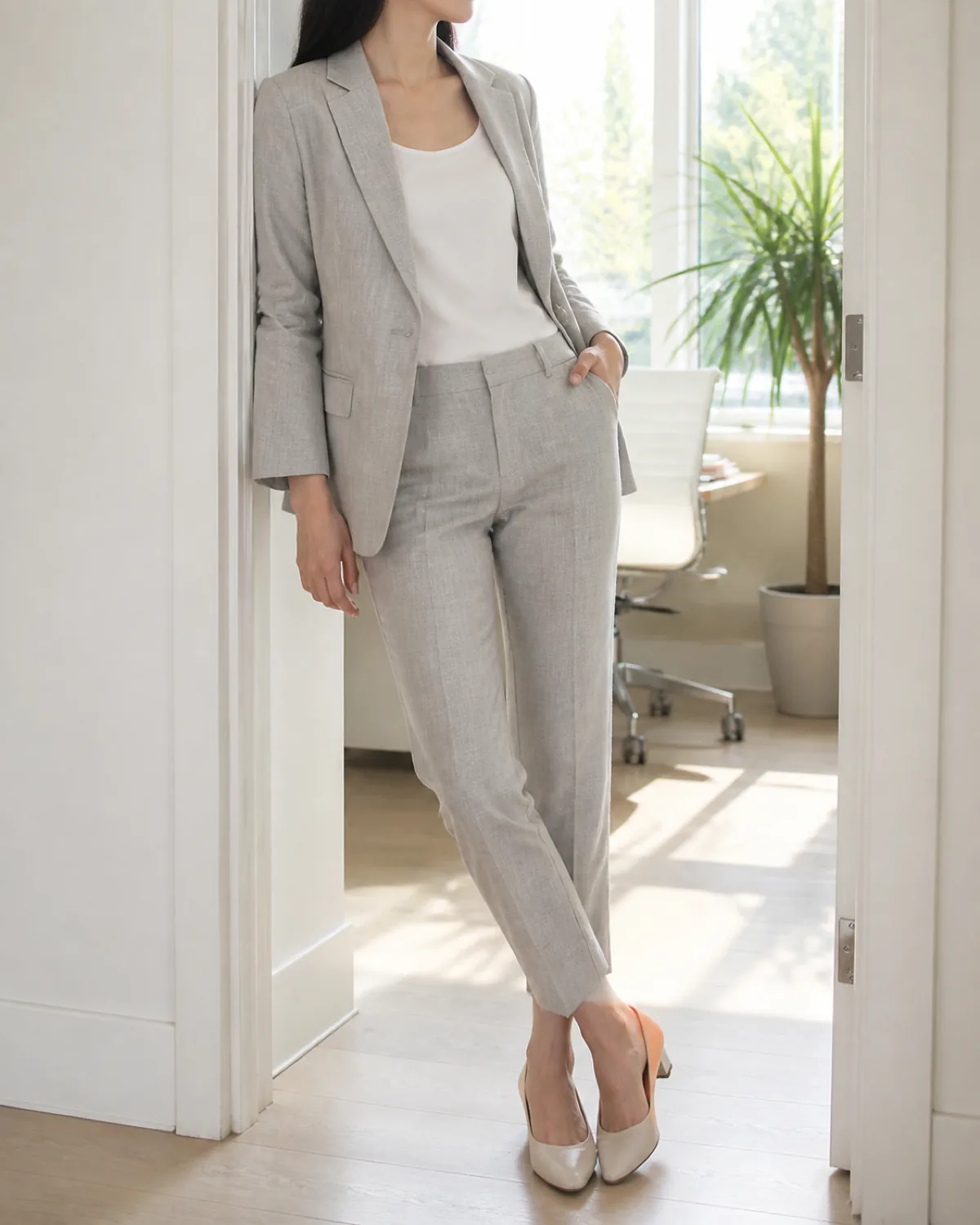
The dress code does not loosen in summer; only the fabric should. A tropical-weight wool or linen-blend suit meets the same standard as a winter-weight one. This light grey blazer and matching ankle trousers are unlined for airflow, paired with a white sleeveless shell that works alone at the office and under the jacket for court.
Linen wrinkles. If you are in court, a linen blend holds up better than pure linen through a full day of sitting and standing. If you are just at the office, the wrinkles are fine. They say fabric, not sloppy.
- Champagne or bone pumps lighten the outfit without breaking the code
- The sleeveless shell layered under the blazer solves the court AC problem, but keep the jacket on in court, where the Northern District of Oklahoma lists sleeveless shirts as casual wear
- Check the trouser crease mid-afternoon and re-press if you have a late hearing
5. Trousers and a knit for deposition days
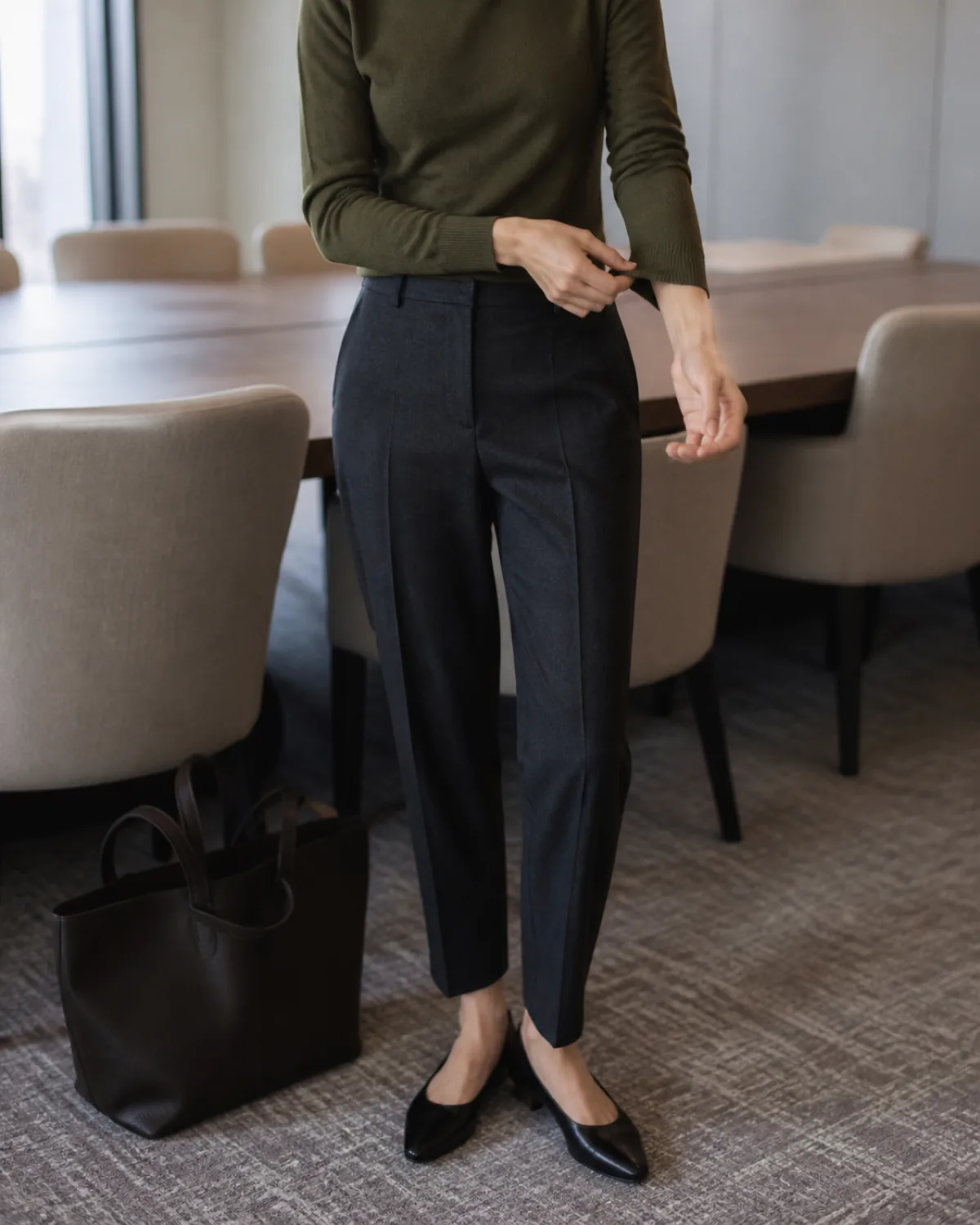
Depositions, mediations and arbitrations are formal but not courtroom-formal. You are at a conference table, not before a bench. I treat them as professional-dress settings where a full suit is optional. Separates that hold a clean line are enough.
This olive merino crewneck replaces the blazer as the structure piece. It has its own shoulder line, which is the difference between a weekend knit and a conference-room knit. The dark charcoal pressed trousers and pointed-toe flats keep the rest clean and low-maintenance.
- Pick a knit with its own shoulder line, not a floppy one
- A dark leather tote on the floor reads as professional without cluttering the table
- These settings are long days, so comfort matters more than it does at a ninety-minute hearing
6. A structured layer for the remote court appearance

Remote hearings have not gone away. Michigan's courts say remote proceedings "will continue to be held when appropriate," and remind attorneys that a remote hearing "is still a court proceeding" and that "appropriate conduct and attire is required."
Dress for the camera, but do not stop at the waist. Berkeley Law's career office warns students on video interviews that they may have to stand up to fix a cord or a light, so the bottom half should be ready too.
The camera compresses everything. A blazer that looks right in person can look heavy on screen. This navy blazer over a white collared blouse shows how the combination reads on a laptop camera: the lapels frame the face (or the neck, since the face is off-screen here), the blouse collar sits clean underneath, and the gold stud earring adds one quiet detail.
- Go one shade lighter than you would in person
- Skip patterns that strobe on video, especially fine stripes and checks
- Check your background before you log in, not after
7. A relaxed blazer for bar events and networking
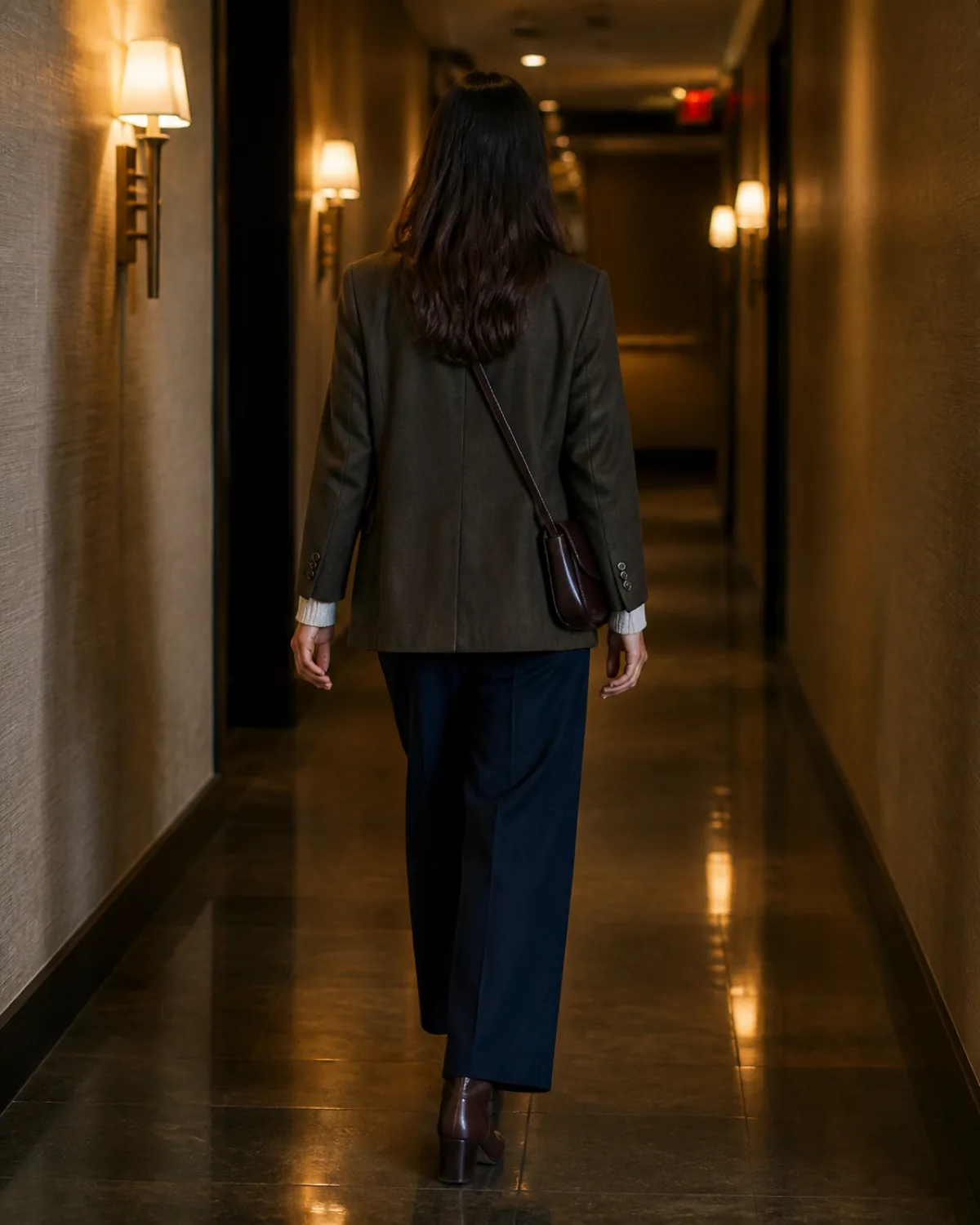
Bar association mixers, CLEs, alumni receptions. These events sit between office dress and personal style. The expectation is polished, not formal. A dark olive blazer over a cream turtleneck and navy wide-leg trousers gets you there. The crossbody bag replaces the work tote, and the brown ankle boots signal that this is not a courtroom.
This is the one context where personal style gets more room. The blazer keeps it professional. Everything else can be yours.
- Swap the work tote for a smaller bag that signals off-duty
- Leather ankle boots work here but would not work in court, which is the point
- If you are not sure whether the event leans formal or casual, the blazer covers both directions
Where the dress-code definitions come from
- Interviews: Dress and Presentation Guidelines — Career Development Office, Berkeley Law
- Proper Courtroom Attire — U.S. District Court for the Northern District of Oklahoma
- Dress Code for Courtroom Proceedings — Court of Appeals, Second Appellate District of Texas
- Zoom Tips for Attorneys and Parties — Michigan Courts
Keep this one
Save it where you plan outfits
Pin the image above to the board you actually check on a Sunday night. This guide is written to be re-read, not read once.
Tonight, before you close this tab
- Lay your court suit flat tonight and check for loose buttons, pulling seams and stains under the collar
- Try your blazer with the trousers you actually plan to wear and check the colour match under two lights
- Pack a pair of closed-toe flats in your bag for the day you forget your court shoes
- Find your firm's written dress guide if it has one, and follow it before you follow what the office seems to wear
- Steam a blouse or shell for tomorrow so you have one camera-ready top on the hanger