How to Dress a Big Bust for Work: Buttons, Necklines and Fit
Button gaps, necklines that sit too low, blazers that pull. A practical guide to the fit decisions that make workwear sit right on a fuller bust.

Working out an outfit for tomorrow? Save this page. It is easier to skim the night before than to remember.
At a glance
Works
- Wrap blouses and darted shirts that are sized to the bust first
- Single-button blazers with the closure at the natural waist
- Ponte and matte jersey tops that drape without clinging
Depends
- V-neck blouses — appropriate when the point sits between the collarbone and two inches below, too low otherwise
- Open cardigans over crew necks — clean in creative offices, too relaxed where blazers are the norm
Skip
- Standard poplin button-downs bought at shoulder size without testing the bust
- Thin jersey knits that map every seam underneath
- Crew necks that flatten and widen the chest line instead of defining it
Most workwear is cut to a standard proportion. When your bust measurement sits well above that standard, the proportion breaks at the buttons, the neckline, the blazer closure and the waist.
Duke University's attire guide puts it directly: "Selecting a cut of fabric that suits your body shape will ensure that you are choosing flattering silhouettes that show your body's proportions without clinging."
That is the goal. Not hiding anything. This guide takes the problem apart one decision at a time.
Why Standard Button-Downs Gap
A button-down shirt is cut on a flat pattern. The placket runs straight down the centre front. When the bust measurement is significantly larger than the shoulder width the pattern was drafted for, the fabric between the third and fourth buttons has nowhere to go. It pulls horizontally, the buttons strain and small diamond-shaped gaps open.
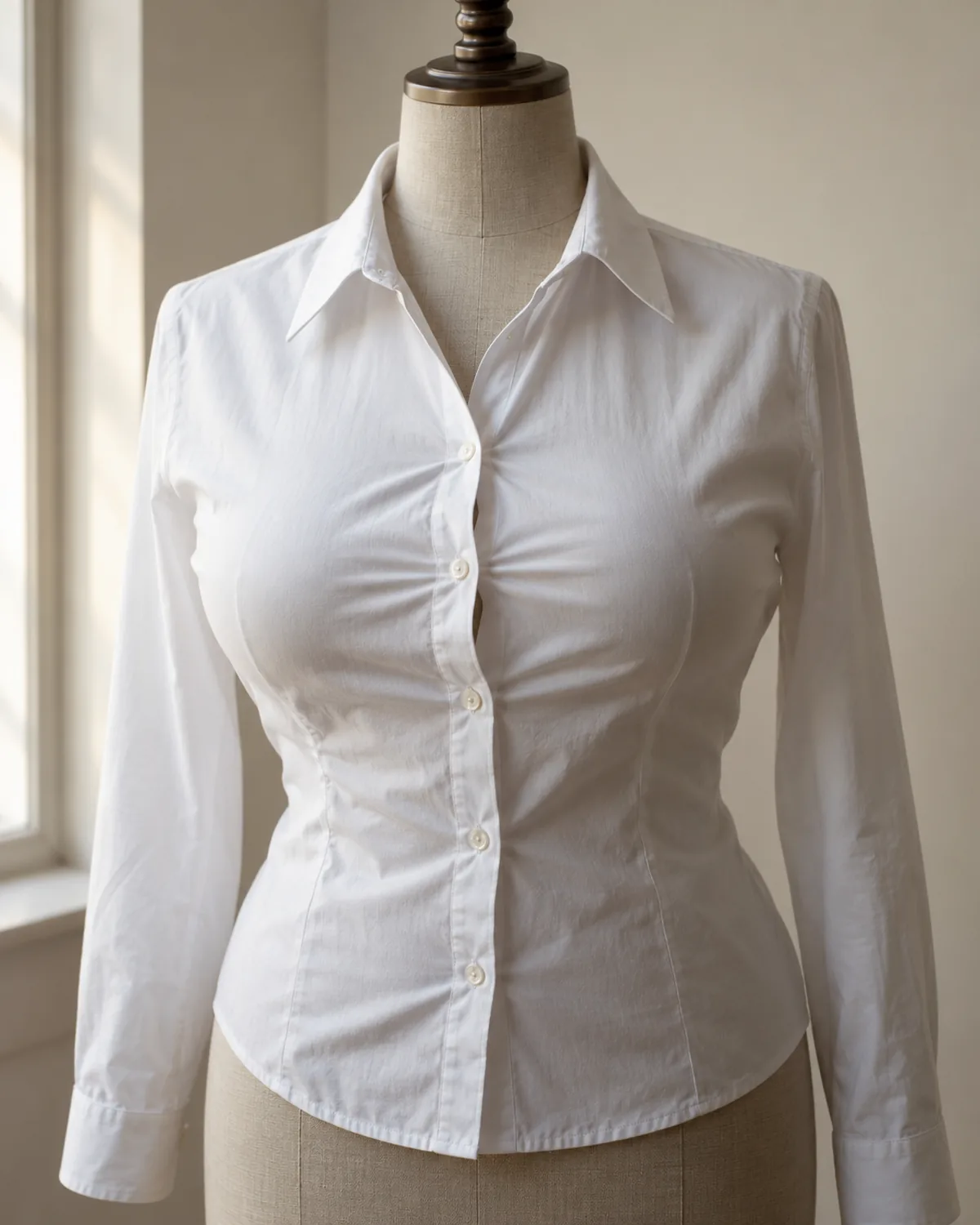
The gap is not a quality problem. It is a geometry problem. The shirt was drafted for a flatter front panel and the fabric is doing the only thing it can do when forced over a curve it was not shaped for.
- The tension is worst at the third and fourth buttons because that is where the bust apex sits on most bodies.
- Sizing up removes the gap but adds fabric at the shoulders, sleeves and waist.
- The real fix is either a shirt with bust darts or a neckline that does not close with buttons.
Test Before You Commit: The Sit-and-Reach Check
The fitting room mirror shows you the standing fit. The office shows you the sitting fit, the reaching fit and the leaning-forward fit. Those are different.

Before you buy anything with buttons or a structured closure, do this in the fitting room:
- Sit down on a bench or chair. Look at the placket. If the buttons pull or the fabric opens between them, the shirt will do that every time you sit at your desk.
- Reach both arms forward as if you were typing. If the fabric rides up at the waist or the hem pulls out of your waistband, it will do that by noon.
- If both tests pass, the fit is right. If either one fails, the shirt is too small in the bust, regardless of what the shoulder seams say.
Creighton University's career centre notes that "clothes should be clean, neatly pressed, and fit properly, neither tight nor baggy." The sit-and-reach test is how you verify that fit before the tag comes off.
Where to start
Find your situation, skip ahead
Your button-downs gap at the chest every time you sit down
The problem is geometry, not your body. Start with the button-gap section, then read about darts and the sit-and-reach test.
01 Why Standard Button-Downs Gap02 Test Before You Commit: The Sit-and-Reach Check04 How a Dart Changes Everything
Your necklines feel too low for the office but crew necks look boxy
There is a sweet spot between collarbone and two inches below. Read the neckline section, then layering.
03 Necklines That Work and Necklines That Do Not07 Layering as a Neckline Fix
You need a blazer that buttons without pulling across the chest
Size to your bust measurement, not your shoulder. Read about single-button closures and fabric weight.
06 Blazers That Button Without Pulling05 Fabric Weight and Drape: What Clings vs What Falls
Necklines That Work and Necklines That Do Not
Not every neckline reads the same way on a fuller bust. A crew neck that looks streamlined on a smaller chest can flatten and widen a larger one. A V-neck that looks conservative on one person can sit too low on another.
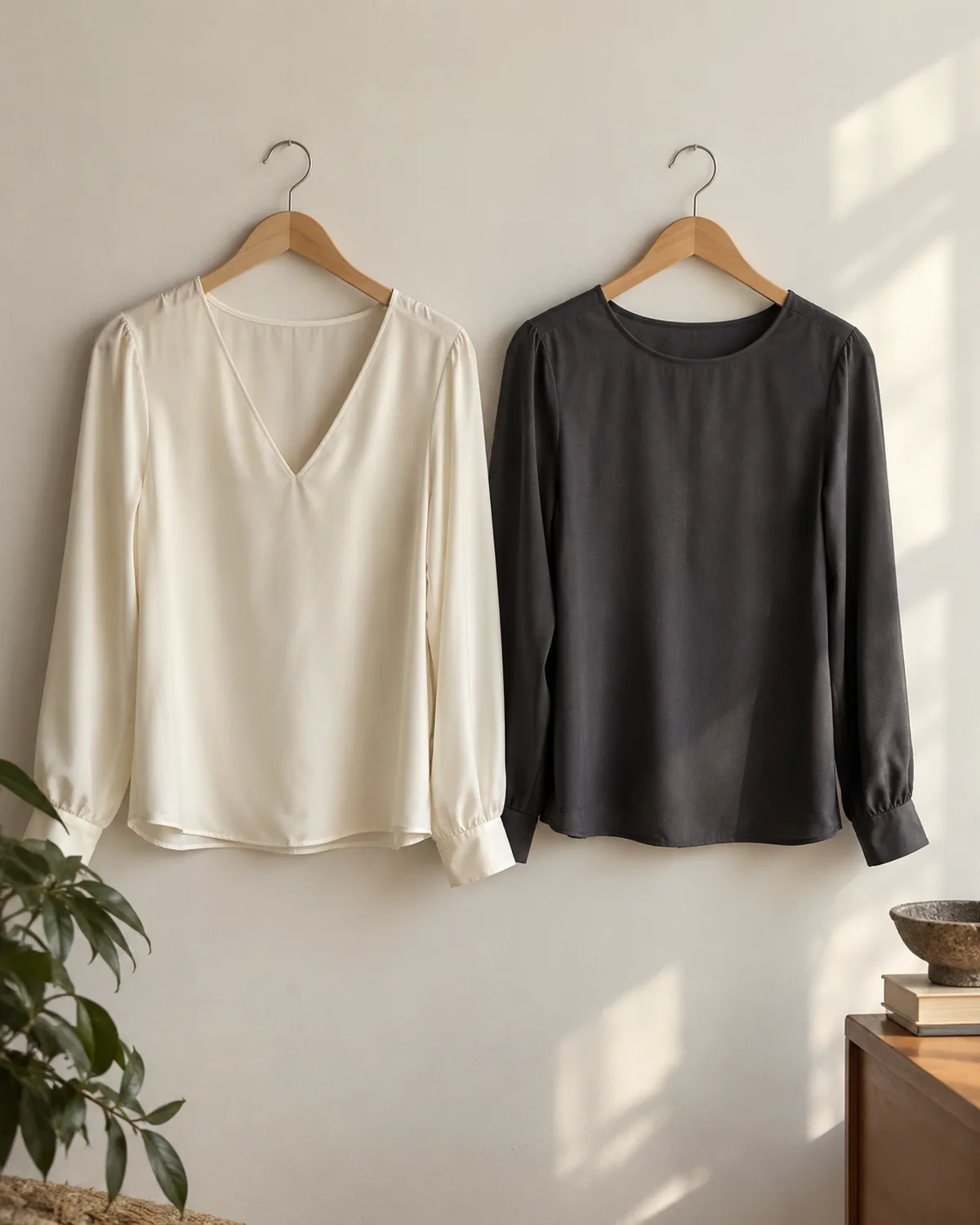
Duke's guide states plainly: "Make sure that the neckline is not too low." The question is where the line sits.
- A V-neck that ends between the collarbone and two inches below it works in most business-casual settings. It defines the neckline without exposing cleavage.
- A crew neck works when the fabric has enough structure to hold its shape. Thin jersey crews tend to stretch and flatten.
- A scoop neck falls between the two. It is forgiving on a fuller bust if the curve is shallow, but a deep scoop reads as casual.
- A wrap neckline is one of the best options because the fabric crosses and drapes rather than pulling. Secure the wrap point with a small safety pin if it shifts.
Some workplaces set explicit neckline standards. SHRM notes that "nearly one-third (32 percent) said that employees show too much skin," making fit and coverage a common concern in dress-code enforcement. If your office has a written dress code, measure against that first. Everything here is secondary to what your company actually requires.
How a Dart Changes Everything
A dart is a wedge of fabric folded and sewn into a seam to add shape. On a shirt, a bust dart curves the flat front panel outward so the fabric follows the body instead of stretching across it.
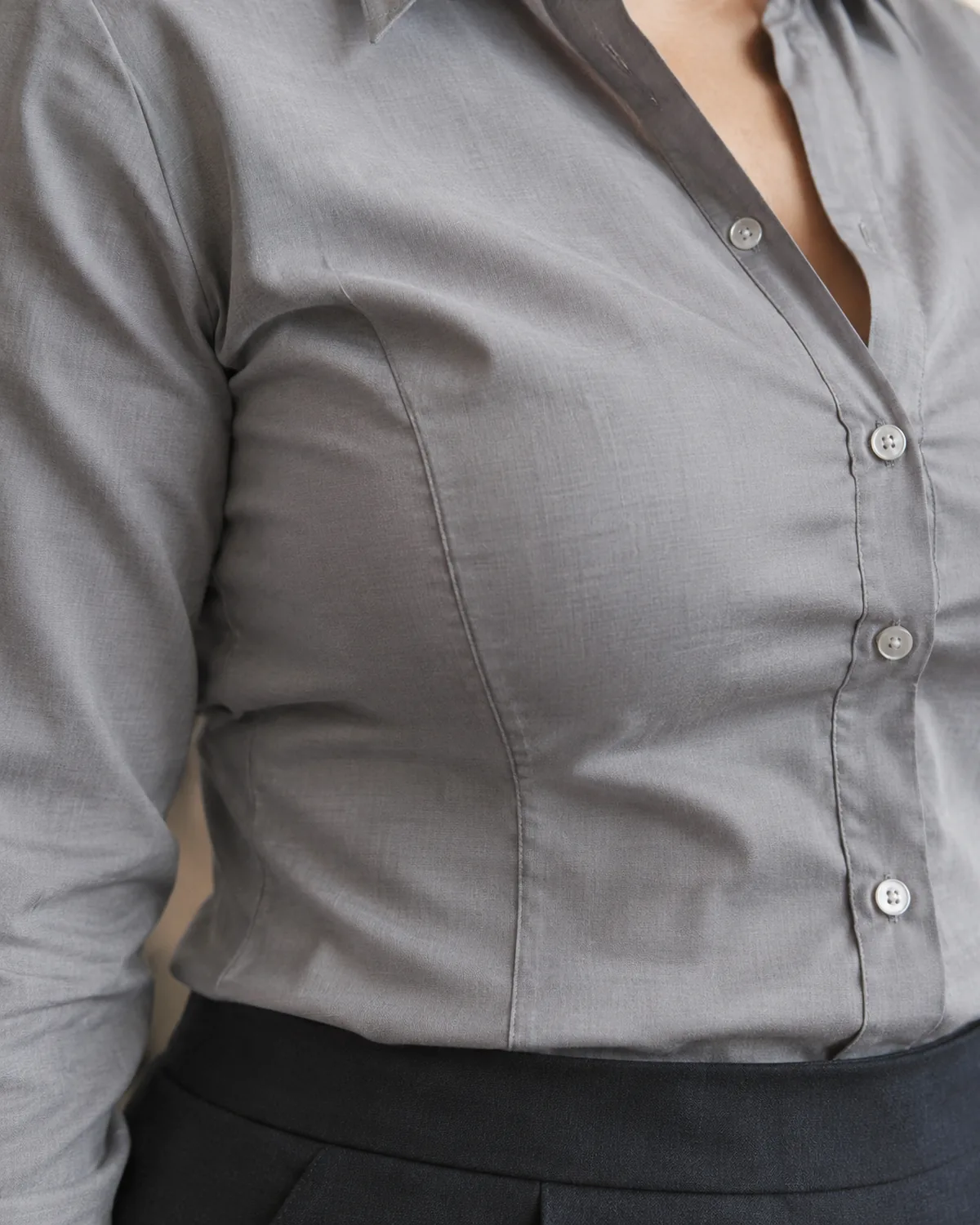
There are two common types:
- A horizontal bust dart runs from the side seam toward the bust apex. It adds room at the front without changing the shoulder or waist.
- A princess seam runs vertically from the shoulder or armhole, curving over the bust and back in at the waist. It shapes the entire front panel in one line.
Both eliminate the gap-pull cycle. A darted shirt in the right size sits flat at the buttons, follows the bust and tapers at the waist without tailoring. If you have been buying one size up and then having the waist taken in, a darted shirt in your actual bust size skips that step entirely.
- Look for "darted" or "contoured" in the product description.
- Princess seams are visible from the outside as two vertical seam lines on each side of the front panel.
- If neither is listed, the shirt is probably cut flat. Test it with the sit-and-reach check.
Fabric Weight and Drape: What Clings vs What Falls
Two tops in the same colour and cut can read completely differently depending on the fabric. One falls. The other maps.
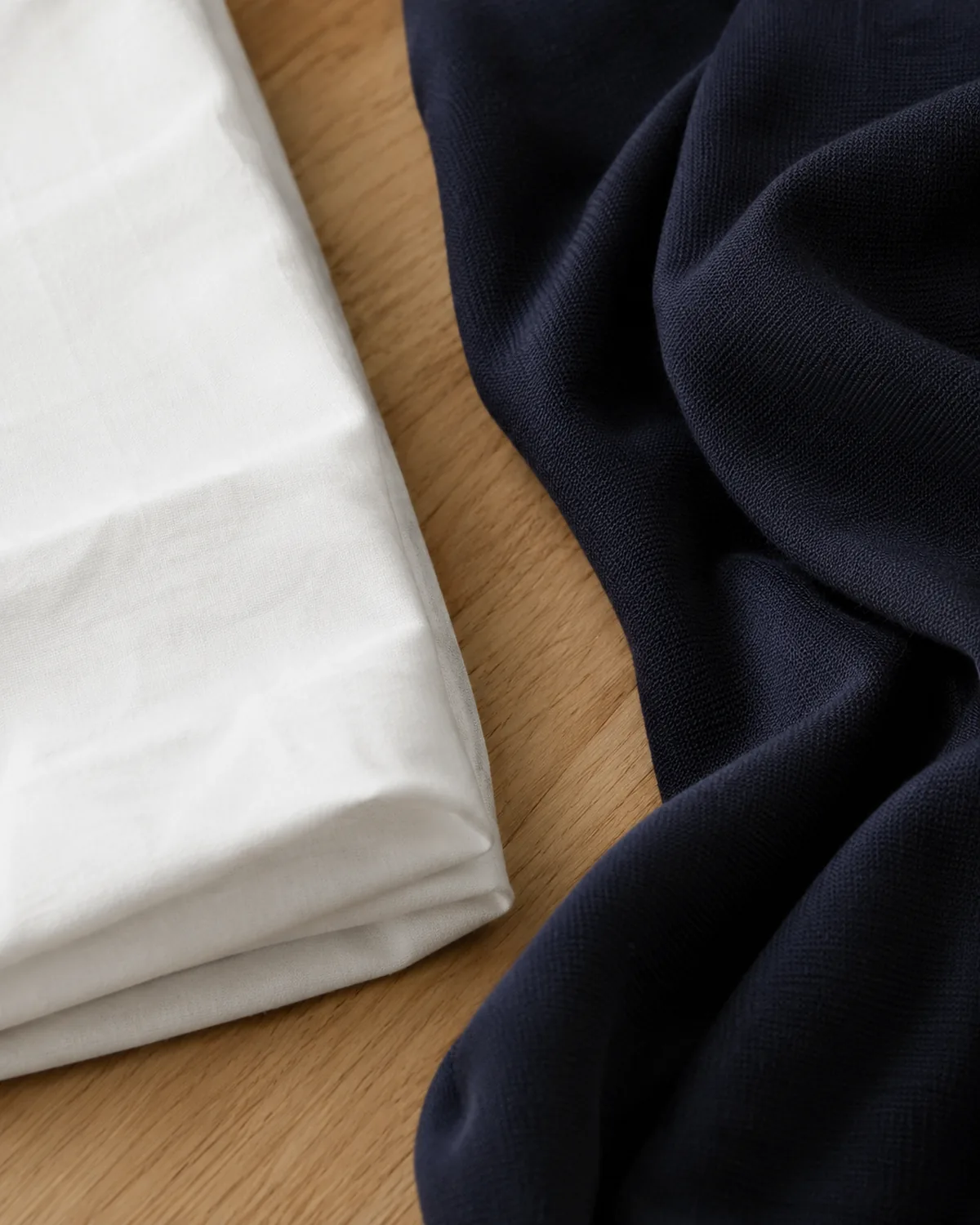
Duke's guide advises to "consider the fabric you are wearing, being mindful of the climate, the season, and the drape of the material on your body." On a fuller bust, that advice carries more weight because the bust is the first point of contact for any fabric draped from the shoulder.
- Ponte is one of the best options. It has enough weight to drape past the bust without clinging and enough structure to hold a clean line. A ponte shell or top in a dark neutral is a reliable base layer.
- Matte jersey works when it is medium-weight. Thin jersey maps every seam and bra line. Look for a jersey thick enough that you cannot see through it when stretched.
- Poplin and broadcloth are stiff. They do not drape; they tent. On a fuller bust, a poplin shirt either gaps at the buttons or tents below the bust. Darted poplin works. Flat poplin usually does not.
- Silk and crepe de chine drape beautifully but they are also the most unforgiving fabrics for showing every contour. Use them when the cut has enough room through the bust, not when the fit is tight.
Blazers That Button Without Pulling
A blazer adds structure. On a fuller bust, the structure works only if the blazer was sized to the bust, not the shoulders.
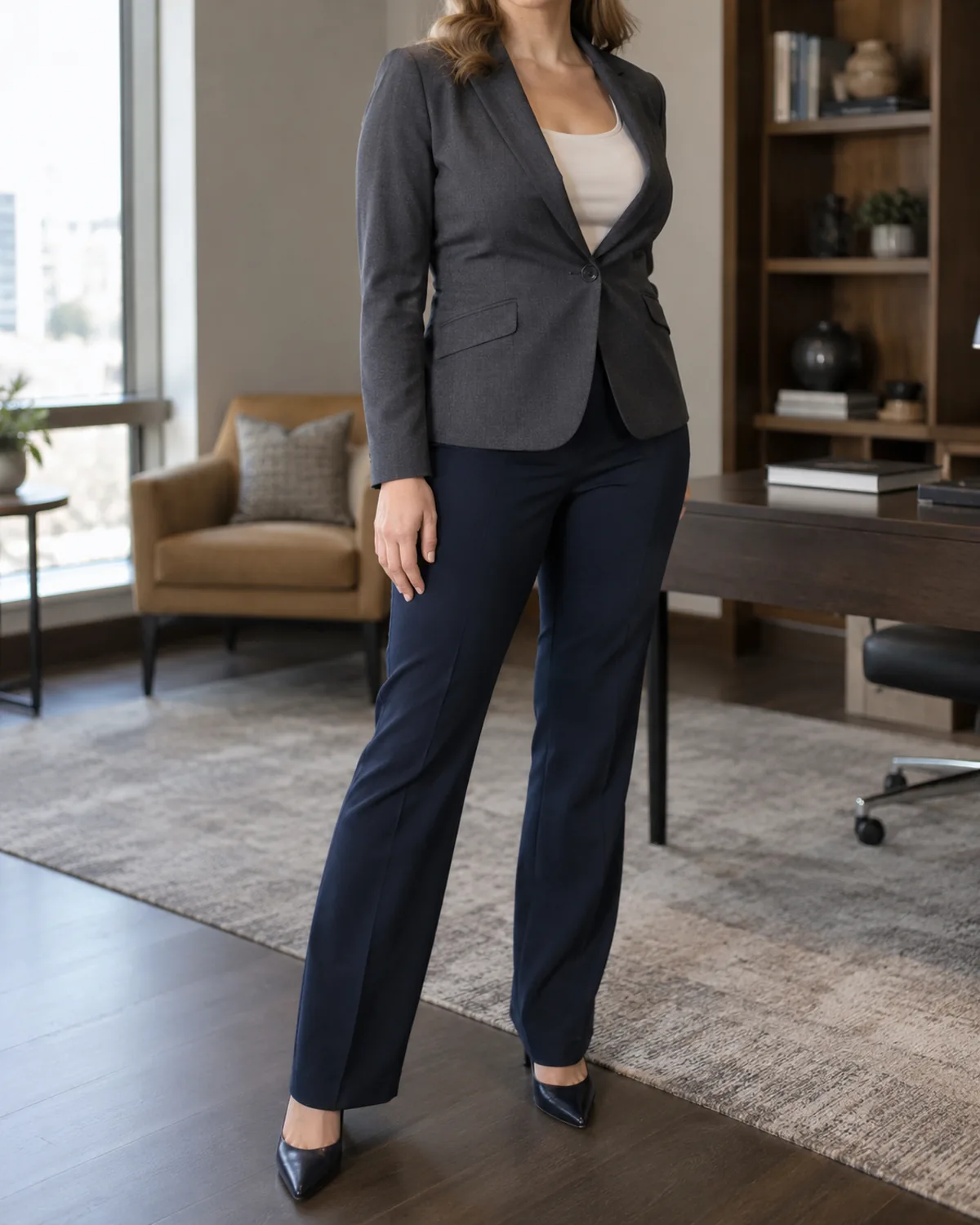
Duke notes that "it is common to need different sizes for a blazer than you would for pants/skirts/dresses." That is exactly the principle here. Size the blazer to the bust. Have the shoulders and waist adjusted if needed.
- A single-button blazer with the closure at the natural waist is the most forgiving cut. The single button sits below the bust, so the front panel does not need to close across the widest point.
- A two-button blazer closes higher. The top button often sits right at the bust line, which is where the pulling starts. If you wear two-button styles, leave the top button open.
- Check the lapels. When a blazer pulls at the chest, the lapels bow outward instead of lying flat. That bow is the first sign the chest measurement is too tight.
- Structured fabrics like wool or ponte hold the blazer shape better than unlined linen or cotton, which collapse and wrinkle where they strain.
Layering as a Neckline Fix
Sometimes the right top has a neckline that sits too low for your office. Layering solves it without replacing the top.

- A fitted camisole in a neutral shade under a V-neck blouse fills the gap without adding bulk. The cami neckline should sit about an inch above where the V-neck ends.
- A structured cardigan or a blazer worn open covers the sides and narrows the visible neckline opening.
- A lightweight scarf draped in a long loop fills a wide scoop neckline without the formality of a blazer. This works better in creative offices than in conservative ones.
Layering adds warmth and bulk. On a fuller bust, each layer adds visual volume. Keep under-layers thin and fitted. A bulky cami under a structured blouse defeats the purpose.
When the Dress Code Says Button-Down and You Cannot Wear One
Some workplaces expect a collared button-front shirt. If standard button-downs gap no matter what you try, there are alternatives that read at the same formality level.
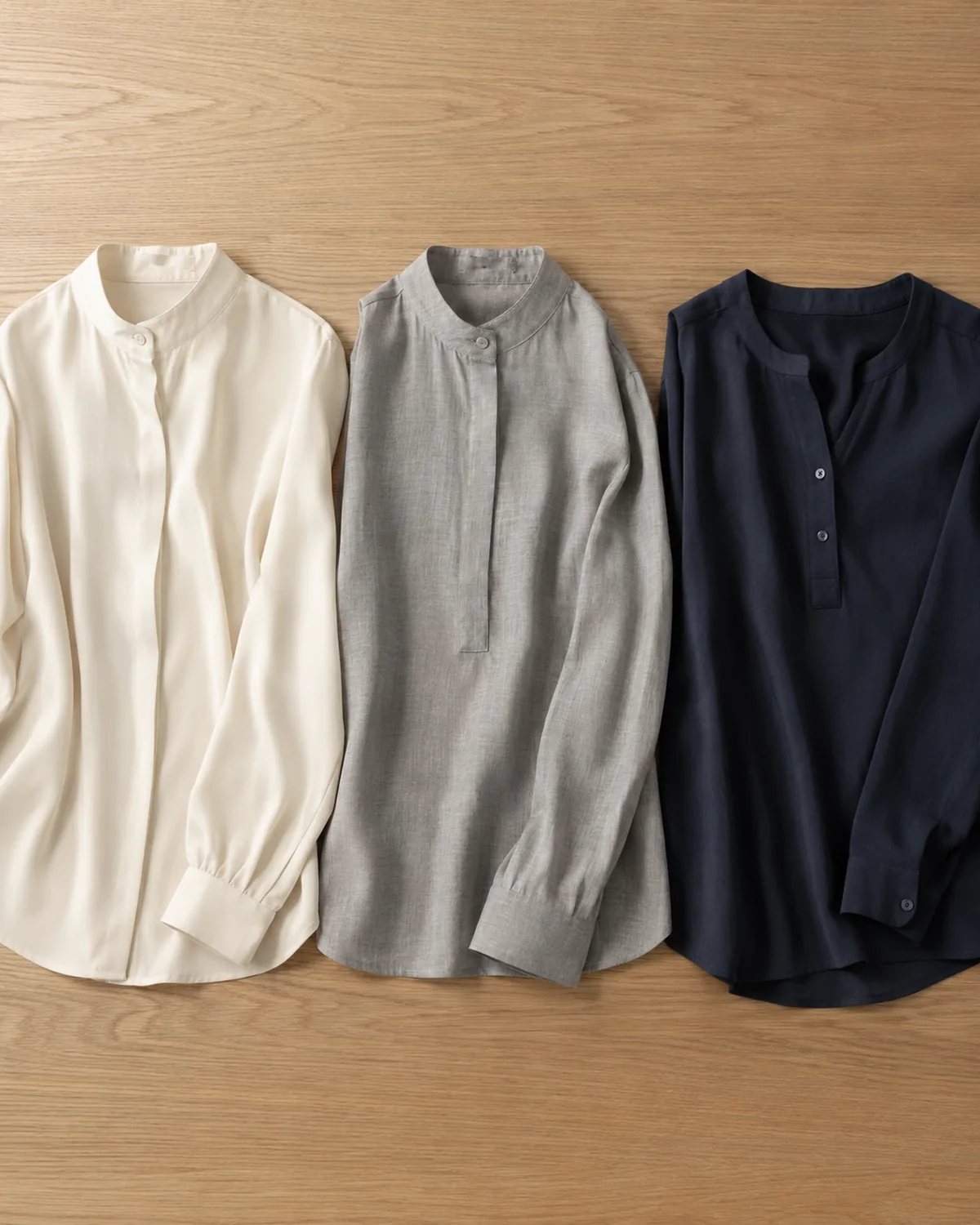
- A mandarin collar blouse has a short stand-up collar without a fold. It reads as structured and formal without a button placket running over the bust.
- A band-collar blouse is similar but the collar band is slightly taller. It looks like a dress shirt without the traditional spread collar.
- A popover or half-placket shirt buttons only partway down. The buttons stop above the bust, and the rest of the shirt pulls over the head. No gap is possible below the placket.
All three are widely available in the same fabrics and colours as standard dress shirts. They pair with the same trousers, blazers and accessories. If a colleague or a client is paying attention to whether you are wearing a collar, a mandarin or band collar meets that expectation without the structural problem a full placket creates.
Dressing a Big Bust for Work FAQ
Can you wear a wrap dress to a business-casual office?
Yes. A wrap dress works well on a fuller bust because the fabric crosses rather than pulling. Secure the wrap point with a hidden safety pin so it stays in place through the day. Make sure the wrap point sits at or above the natural waist.
Is it okay to leave the top button undone on a dress shirt?
In most business-casual offices, yes. The top button is primarily a collar-stay for tie-wearing, and leaving it open with a relaxed collar is standard in settings where ties are not expected. In business-professional settings, the expectation is that the collar button is fastened when wearing a tie or a structured collar.
Should you size up a blazer for a bigger bust?
Often, yes. Size to the bust measurement, then have the shoulders and waist taken in by a tailor. This is a common alteration and usually costs less than buying a blazer in a range specifically cut for a fuller bust.
What bra style minimises visible lines under work clothes?
A smooth-cup T-shirt bra or a seamless molded bra in a shade close to your skin tone. Avoid lace textures under fine-knit tops. A bra that fits correctly distributes weight evenly and prevents the fabric from being pulled in one direction.
Does tucking in a shirt make the bust look bigger?
Tucking defines the waist, which can make the bust-to-waist ratio more visible. Whether that reads as polished or too much depends on the top. A darted blouse with a clean tuck defines the body in a way that reads intentional. A thin jersey tee tucked tightly reads differently. The tuck itself is not the issue. The fabric and fit of the top are.
Where the dress-code definitions come from
- Attire Guide — Career Hub, Duke University
- Employees Dressing Too Casually? Clarify Your Dress Code — SHRM
- Business Casual Attire — Career Center, Creighton University
Keep this one
Save it where you plan outfits
Pin the image above to the board you actually check on a Sunday night. This guide is written to be re-read, not read once.
Tonight, before you close this tab
- Pull every button-down out of your closet and do the sit-and-reach test tonight
- Measure the V-depth on your most-worn work top and check whether it sits between the collarbone and two inches below
- Check whether your go-to blazer pulls when buttoned and note the shoulder fit if you try the next size up
- Pin a small safety pin inside any wrap top that shifts open during the day