8 Things to Wear to Work When There Is No Dress Code
No dress code does not mean no rules. Eight outfit formulas for offices where the expectations are real but unwritten, with a sourced baseline to start from.
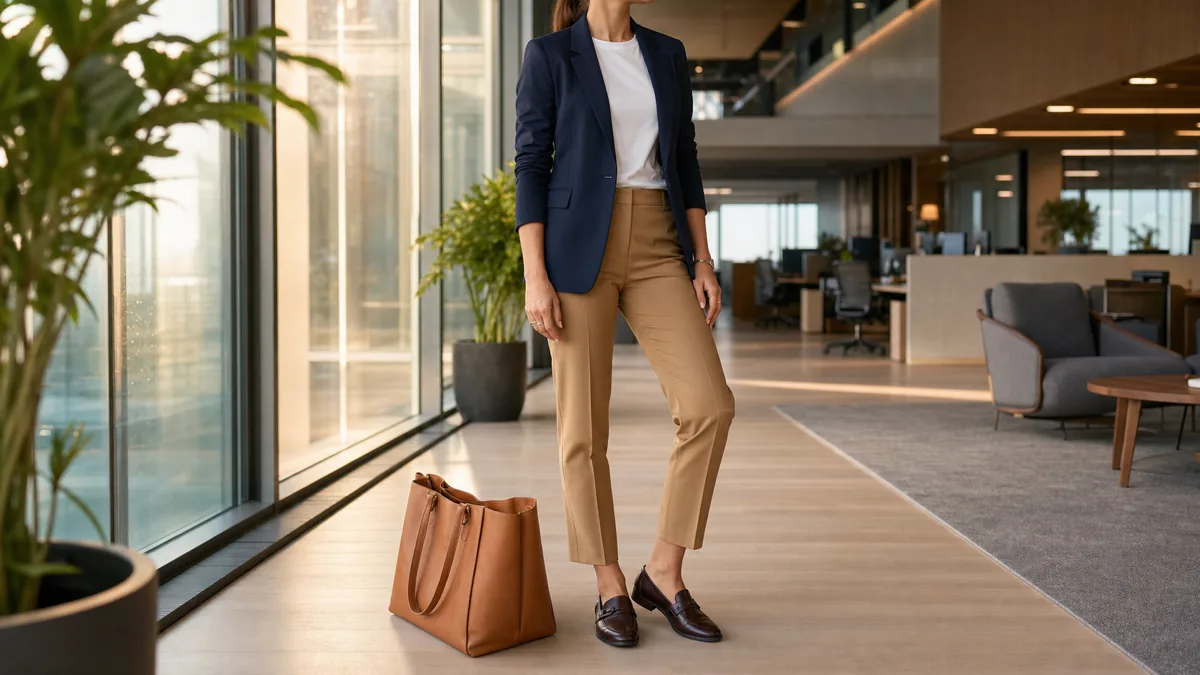
Working out an outfit for tomorrow? Save this page. It is easier to skim the night before than to remember.
At a glance
Works
- A blazer over a crew-neck tee and ankle trousers, buttoned for the lobby
- A midi shirtdress with a structured belt for one-decision days
- A matching set in a structured fabric that removes every variable except shoes
- A cardigan layered over a tucked blouse for temperature-shifting offices
Depends
- Dark straight-leg jeans — only if you have seen someone senior wear them in that office
- A knit polo — reads right in creative and tech but too casual for most client-facing floors
- A trench coat as your lobby layer — depends on whether your commute is visible to colleagues
Skip
- Athleisure or gym-adjacent fabrics worn as workwear, even in a casual office
- Open-toe sandals until you have confirmed the norm by watching what others wear
- Graphic tees or visible slogans, even layered under a blazer
"No dress code" sounds like freedom. In practice it means the rules exist but nobody wrote them down.
The penalty for misreading those rules is usually social, not disciplinary. Nobody sends you home, but people form an opinion before your first meeting starts.
These eight outfits are safe defaults. Each one can be dialled up or down once you have spent a week reading the room.
1. A blazer over a crew-neck tee and tailored trousers
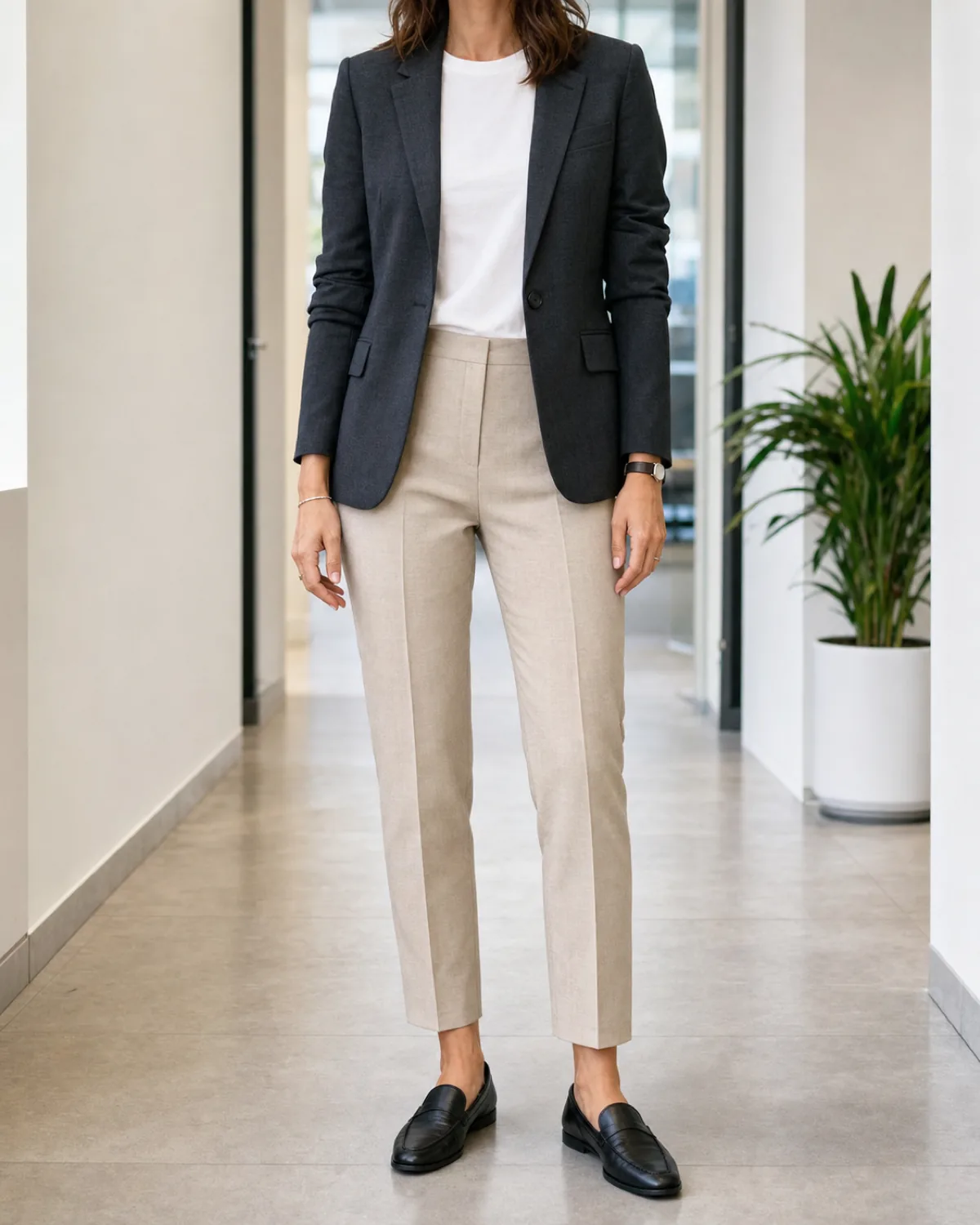
Indeed's first-day guide is blunt about it: "When in doubt, it's better to be slightly overdressed than underdressed on your first day." Its business-casual list includes blouses, trousers, blazers and sweaters.
A blazer over a crew-neck tee sits inside that list without reading as a full suit. The tee underneath keeps it from feeling corporate, and the blazer does the work of looking intentional.
This is the outfit to default to on your first week. You can always take the blazer off once you have data.
- Button the blazer in the lobby, unbutton it once you sit down
- Match the trouser weight to the jacket so the outfit reads as one piece
- Ankle trousers with a pressed crease keep the line clean without being stiff
- Keep the accessories minimal until you know the culture
2. A knit polo and pressed chinos
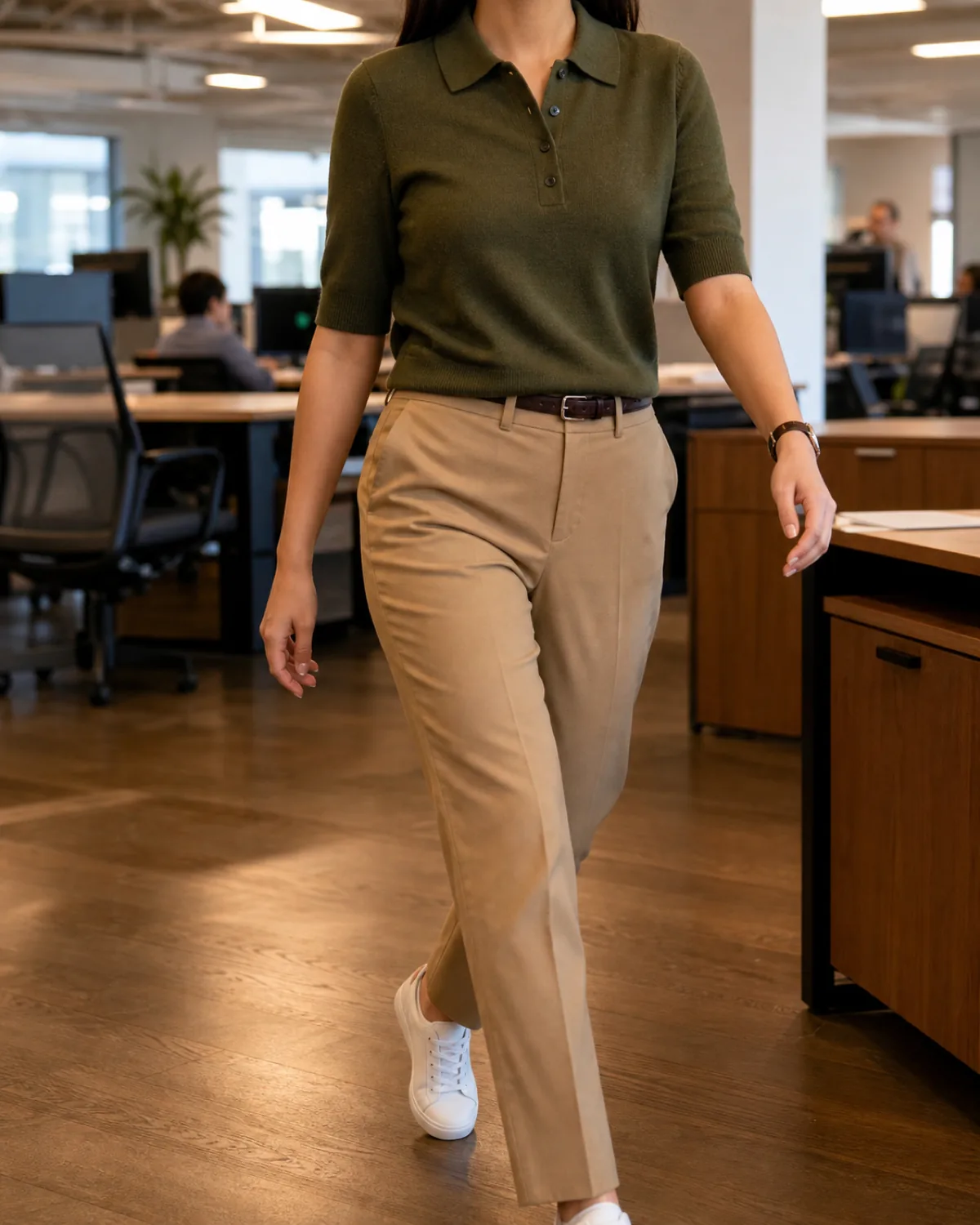
One step above a T-shirt without the formality of a collar shirt. A fine-gauge knit polo reads as deliberate but relaxed, and it works in offices where a blazer would be overdressing. The collar gives it enough structure to hold its own in a meeting.
Pressed chinos with a crease sharpen the line. A leather belt and clean sneakers finish it without trying too hard.
- Fine-gauge knit, not pique cotton, which reads more weekend than weekday
- A dark leather belt at the waist grounds the outfit
- White sneakers need to be clean to work, so wipe them before you leave
- This reads right in creative and tech offices but may be too casual for client-facing floors
Where to start
Find your situation, skip ahead
You are starting a new job and have no idea what people wear
Default to idea 1 for the first week, then observe what senior colleagues wear before you dial down.
Your office is clearly casual but you still want to look intentional
Ideas 2, 5 and 8 give you low-effort options that still read as deliberate without overdressing.
02 A knit polo and pressed chinos05 Dark straight-leg jeans with a structured top08 A matching set for the days you cannot think
You split your week between a casual office and client meetings
Idea 4 for internal days, idea 3 or 6 for client-facing ones. Keep the blazer from idea 1 at your desk.
03 A midi shirtdress with a belt04 A cardigan, blouse and straight-leg trousers06 A sweater and a midi skirt
3. A midi shirtdress with a belt
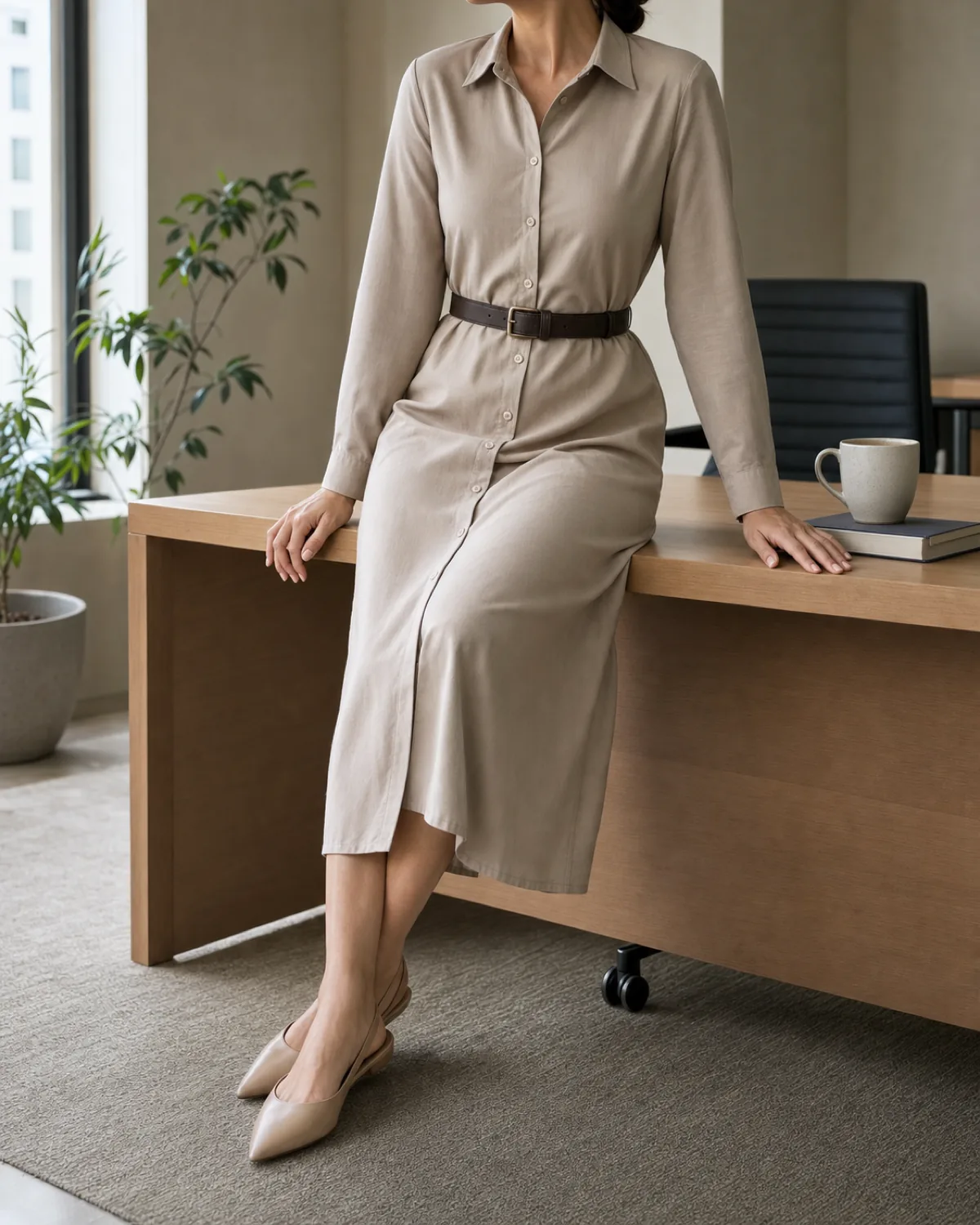
One piece, one decision. A midi shirtdress with a structured belt is the lowest-effort outfit that still reads as polished. The button-through front gives you ventilation control in offices that cannot decide on a thermostat setting. The belt keeps the waist defined so it holds its shape whether you are standing or sitting.
A midi length is safe in almost every office. It reads professional seated and does not require adjusting when you stand up.
- A solid colour is safer than a print in a no-dress-code office where you are still reading the room
- Nude or neutral flats keep the palette quiet
- Press it the night before so you are not improvising with an iron in the morning
- This works equally well with a blazer layered over it if a meeting turns more formal than expected
4. A cardigan, blouse and straight-leg trousers

Layers you can adjust through the day without losing the line. A cardigan reads professional without the rigidity of a blazer, and it comes off without disrupting your outfit the way a jacket does. The blouse underneath carries enough structure on its own.
A SHRM article on over-casual offices, citing the staffing firm OfficeTeam, lists blouses, cotton trousers and cardigans as typical business casual. It also quotes OfficeTeam's Brandi Britton: "A casual dress code doesn't mean that anything goes." This outfit sits well inside that line.
- Match the cardigan tone to the trousers for a continuous column of colour
- A tucked blouse under the cardigan defines the waist
- Choose a mid-weight knit that does not pill after a few wears
- Ballet flats keep it comfortable for all-day desk-to-meeting transitions
5. Dark straight-leg jeans with a structured top
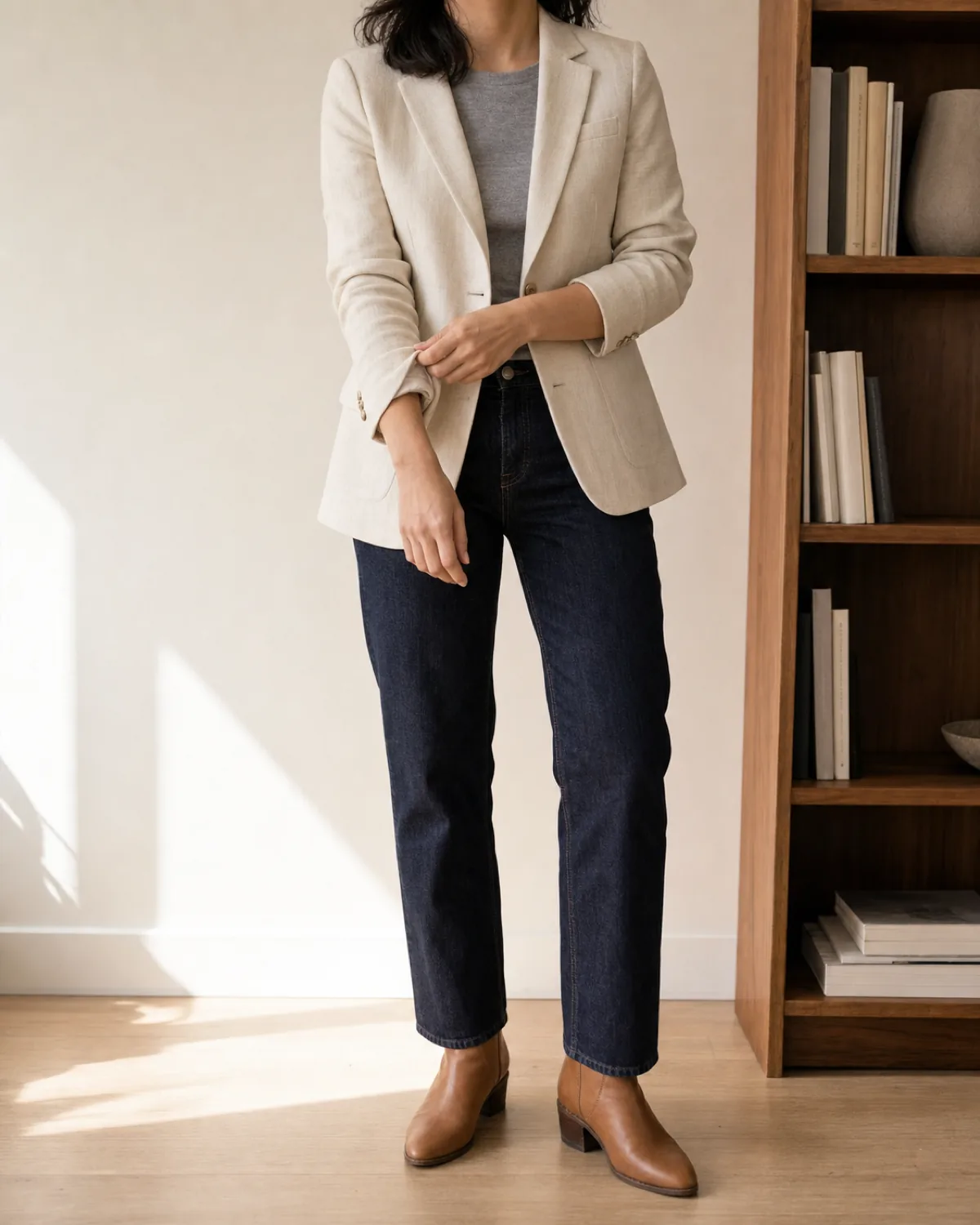
Jeans are the litmus test. They work in some no-dress-code offices and fail in others, and nobody will tell you which one yours is. The rule: only wear them if you have seen someone senior wear them in that office on a normal weekday, not a Friday.
The same SHRM piece notes that in some places business casual stretches to jeans, and an HR specialist it quotes says the dress code "definitely is defined by your culture." Jeans sit right on the line where those norms matter most.
A structured top offsets the denim. A linen blazer or a stiff blouse keeps the upper half polished enough that the jeans read as intentional, not accidental.
- Dark wash, no distressing, no rips
- A blazer or structured jacket on top is non-negotiable for the first few weeks
- Watch what senior people wear before you commit to jeans
- Ankle boots with a clean shape ground the outfit without being formal
6. A sweater and a midi skirt
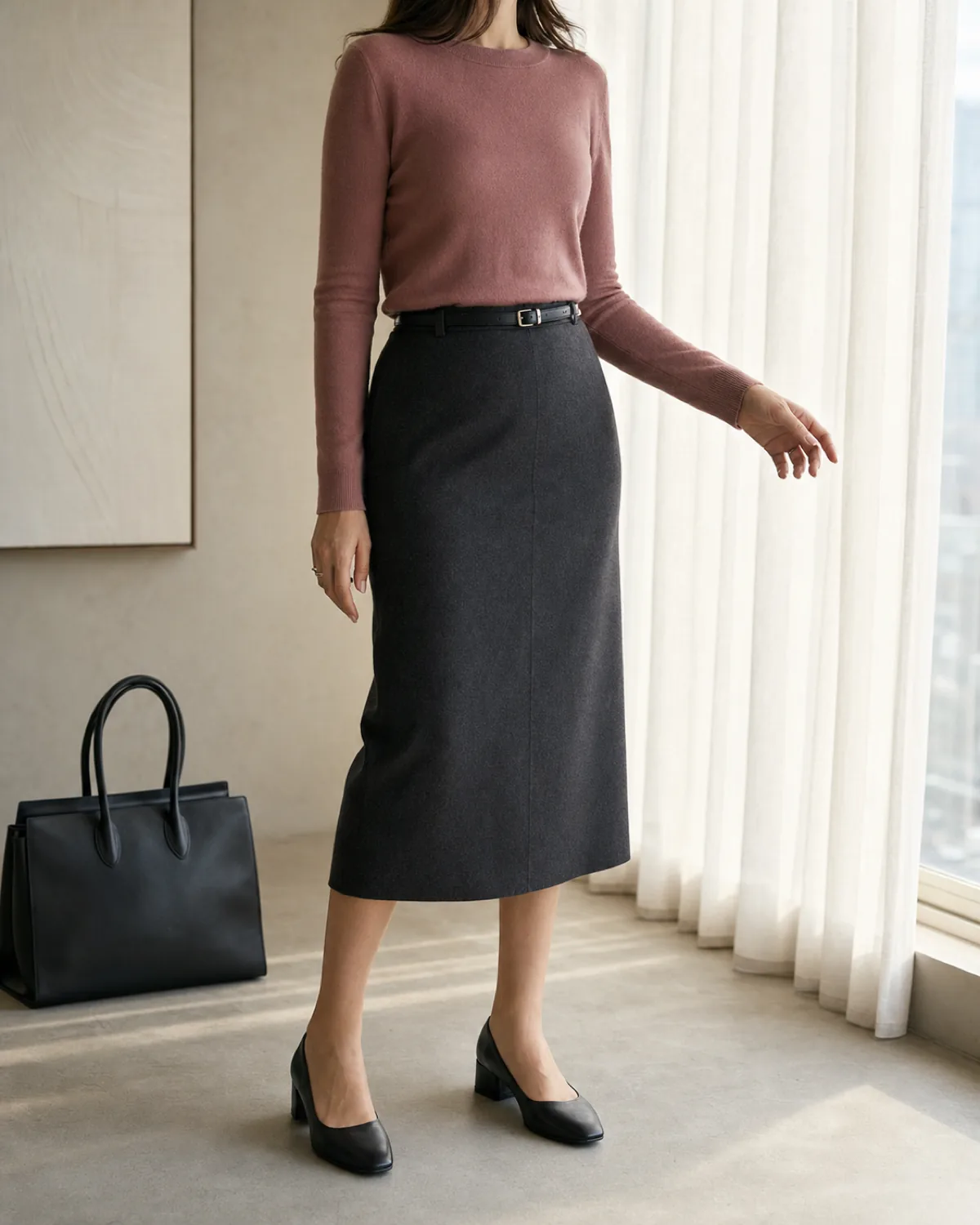
A midi skirt keeps you in safe territory in nearly every office. A fine-knit sweater tucked in keeps the silhouette clean without being corporate. The combination reads as polished and intentional, and it works just as well on a Tuesday as it does for a meeting you did not know was on your calendar.
The pencil shape holds a more structured line than an A-line, which helps when you want the outfit to read as office rather than weekend.
- A pencil or straight midi, not a maxi that drags on the floor
- Tuck the sweater cleanly to define the waist
- A thin belt keeps the tuck sharp and the proportions grounded
- A flat or low block heel keeps it walkable all day
7. A trench coat as the anchor piece
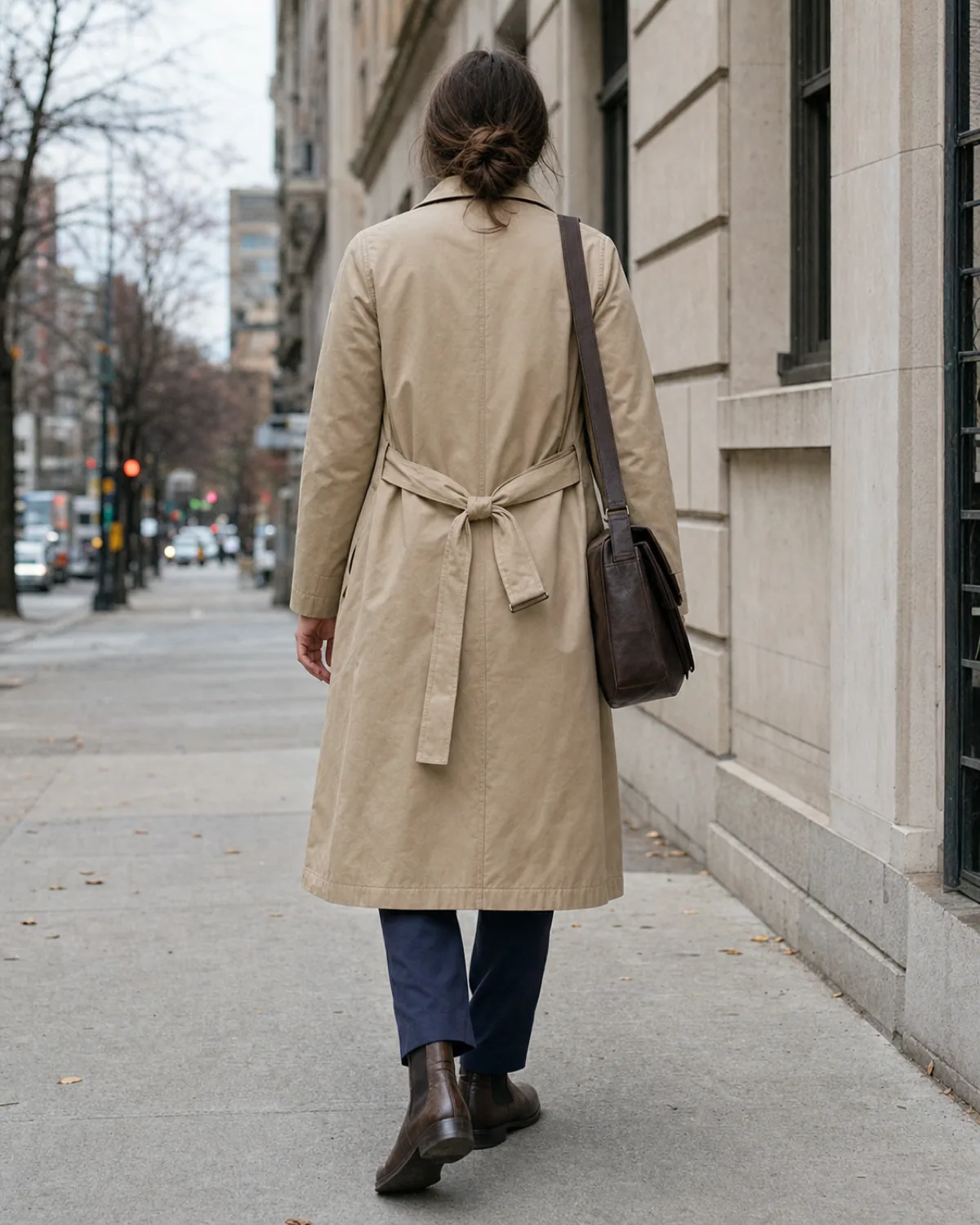
In offices without a locker room, the commute is part of the outfit. A trench coat over even a simple base reads composed when you walk through the lobby. It tells the room that you thought about this, even if the layers underneath are minimal.
The trench is the one piece that does real work both inside and outside the building. It works over jeans, over a dress, over trousers and a knit. The belt tied at the back keeps the silhouette clean from any angle.
- Knee-length, not floor-length, which reads too formal for most offices
- A structured shoulder, not a soft drape that collapses under a bag strap
- Belt it or leave it open, both work
- Stick to a plain cotton trench without check linings or branded hardware
8. A matching set for the days you cannot think
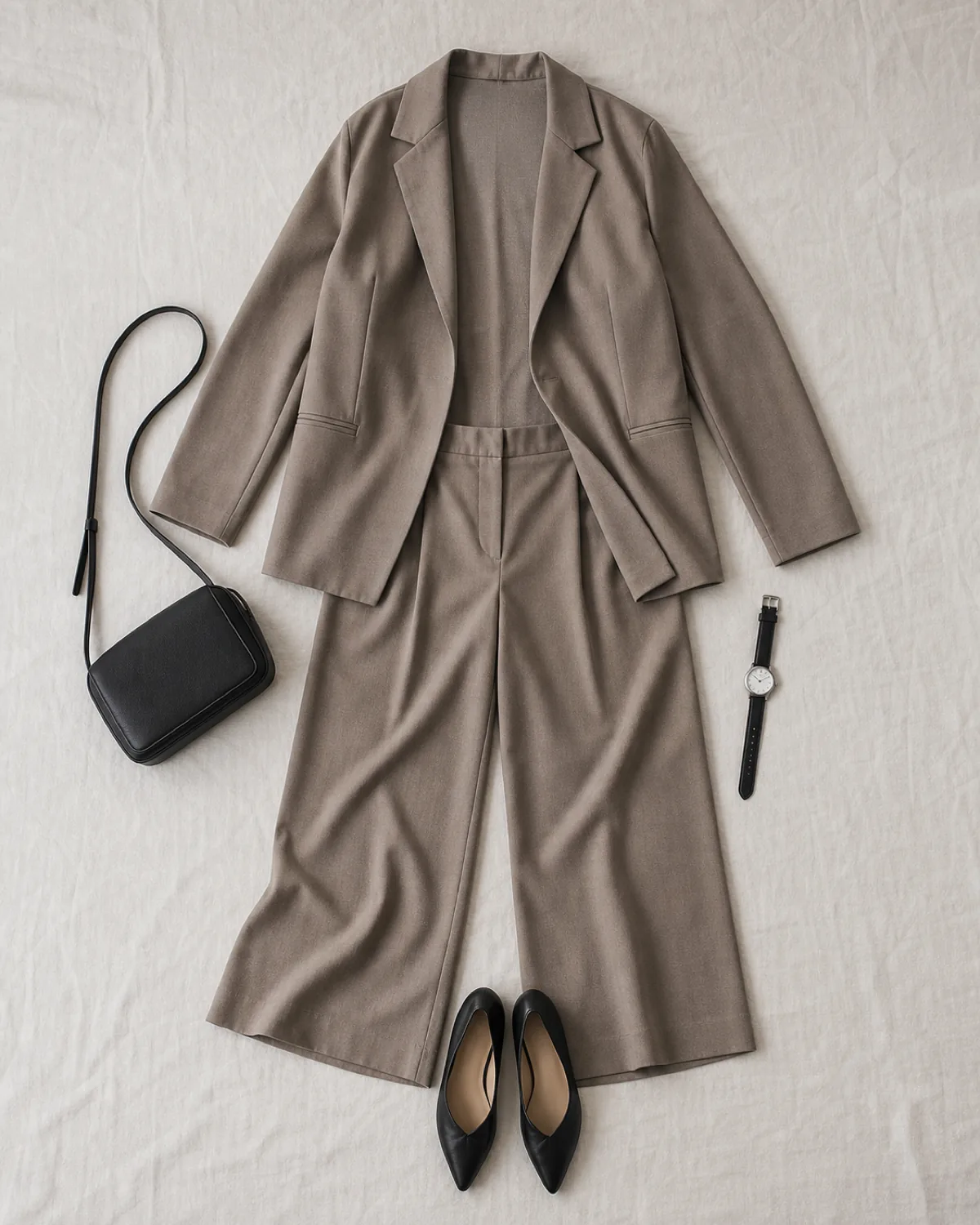
Decision fatigue is real, and it hits hardest on mornings when you have more important things to think about than clothes. A co-ord set in a structured fabric removes every variable except shoes. The top and bottom match, the proportions are settled, and you can get dressed in two minutes.
A neutral tone means any shoe in your rotation works. A structured fabric keeps it from reading as loungewear. And because both pieces share the same fabric and colour, the outfit automatically reads as more intentional than it took to assemble.
- A neutral tone that works with any shoe you already own
- Structured fabric, not jersey, which reads too casual for most offices
- Wide-leg trousers keep the bottom half from looking like leggings
- Pack it when travelling for the same reason it works on tired mornings
Where the dress-code definitions come from
- What To Wear on Your First Day of Work — Indeed Career Guide
- Employees Dressing Too Casually? Clarify Your Dress Code — SHRM (Society for Human Resource Management)
- Attire Guide — Career Hub, Duke University
- Dress for Success — Career Center, Texas A&M University
- Dress for Success — Pomerantz Career Center, The University of Iowa
Keep this one
Save it where you plan outfits
Pin the image above to the board you actually check on a Sunday night. This guide is written to be re-read, not read once.
Tonight, before you close this tab
- Lay out tomorrow's outfit tonight so you are not deciding at seven in the morning
- Check whether your office has a written dress code buried in the employee handbook
- Observe what three senior colleagues wear on a regular weekday this week
- Try the blazer with the trousers you actually plan to wear, not a stand-in pair
- Steam or iron one outfit for Monday so you start the week with a clean line