7 Interview Outfits That Get the Dress Code Right Before You Walk In
What to wear to an interview, sorted by industry. Seven outfits matched to real dress codes, from the corporate suit to the creative midi.
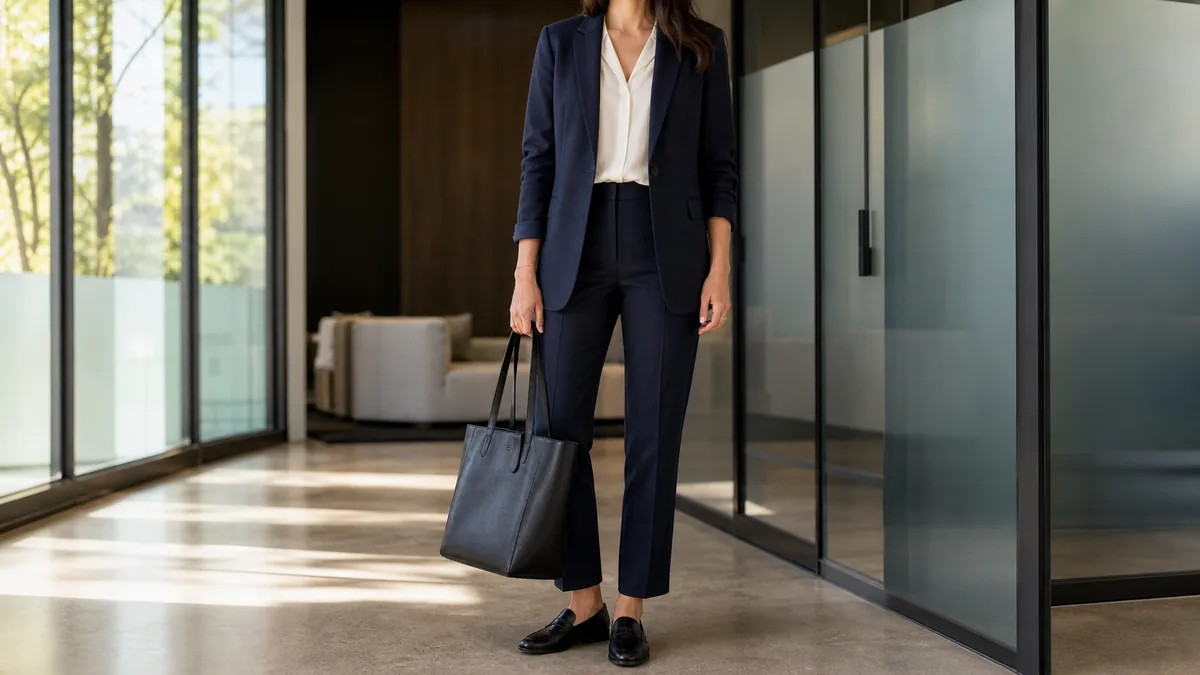
Working out an outfit for tomorrow? Save this page. It is easier to skim the night before than to remember.
At a glance
Works
- A matched suit in charcoal or navy for any corporate or government interview
- A blazer over a fine knit and tailored trousers when the listing says business casual
- Closed-toe shoes in leather, whatever the outfit above them
Depends
- A midi skirt instead of trousers, only where you have already confirmed the office wears them
- A sheath dress under a blazer, solid for panels and safe for most industries
- Ankle boots with a block heel, fine for a creative office in my experience but out of place at a suit interview
Skip
- Open-toe sandals, since Iowa's career centre and Berkeley Law both call for closed-toe shoes at interviews
- Athleisure or fashion sneakers, even if the daily office allows them
- Anything you have never worn before and cannot test-sit in tonight
Most interview advice starts with the outfit. The better starting point is the room you are walking into.
A corporate law firm and a design studio both conduct interviews. They do not expect the same clothes. Duke's career hub puts the principle directly: work out what the office wears on a normal day, then dress "up one level" for the interview.
These seven outfits are seven calibrations of that idea, sorted from the most formal to the least.
1. A matched suit in a quiet colour for the corporate interview
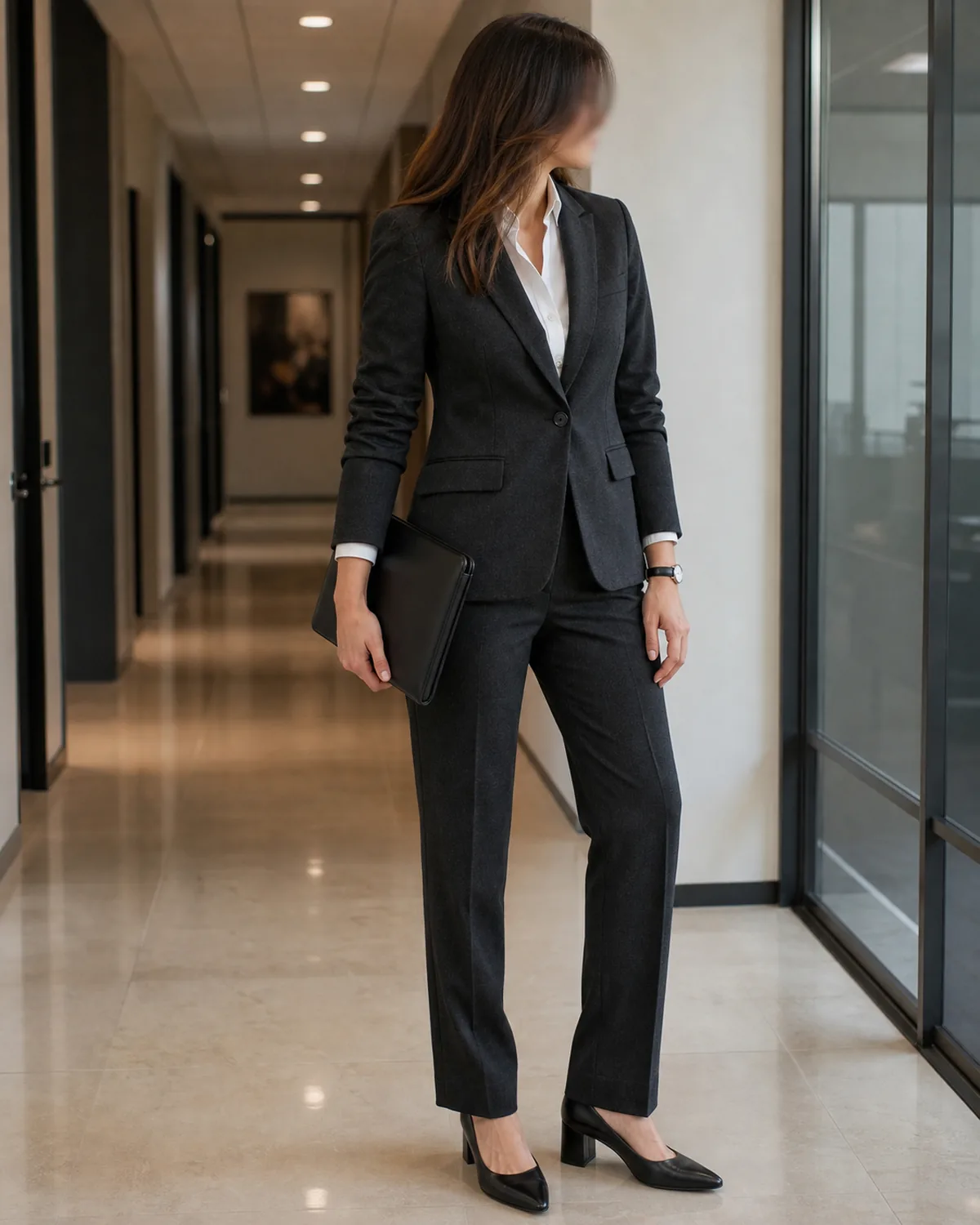
The matched suit is not the only option for a corporate interview, but it is the safest one. Iowa's career centre calls it out directly: a conservative, well-pressed pant or skirt suit in black, navy, gray or brown.
Berkeley Law's interview guide asks for "a two-piece suit where both pieces match in fabric and color." If the office runs business professional, this is your outfit.
- Choose charcoal or navy wool over black, which reads more formal than most offices require
- Button the blazer once and check that the blouse collar sits flat underneath
- Match the trouser length to your shoe height so the hem grazes the top of the shoe without pooling
- Press the front crease the night before and hang the suit on a wooden hanger, not a wire one
- Keep accessories quiet: a plain leather-strap watch, small studs, no stacking rings
2. A blazer and trousers for the business-casual interview
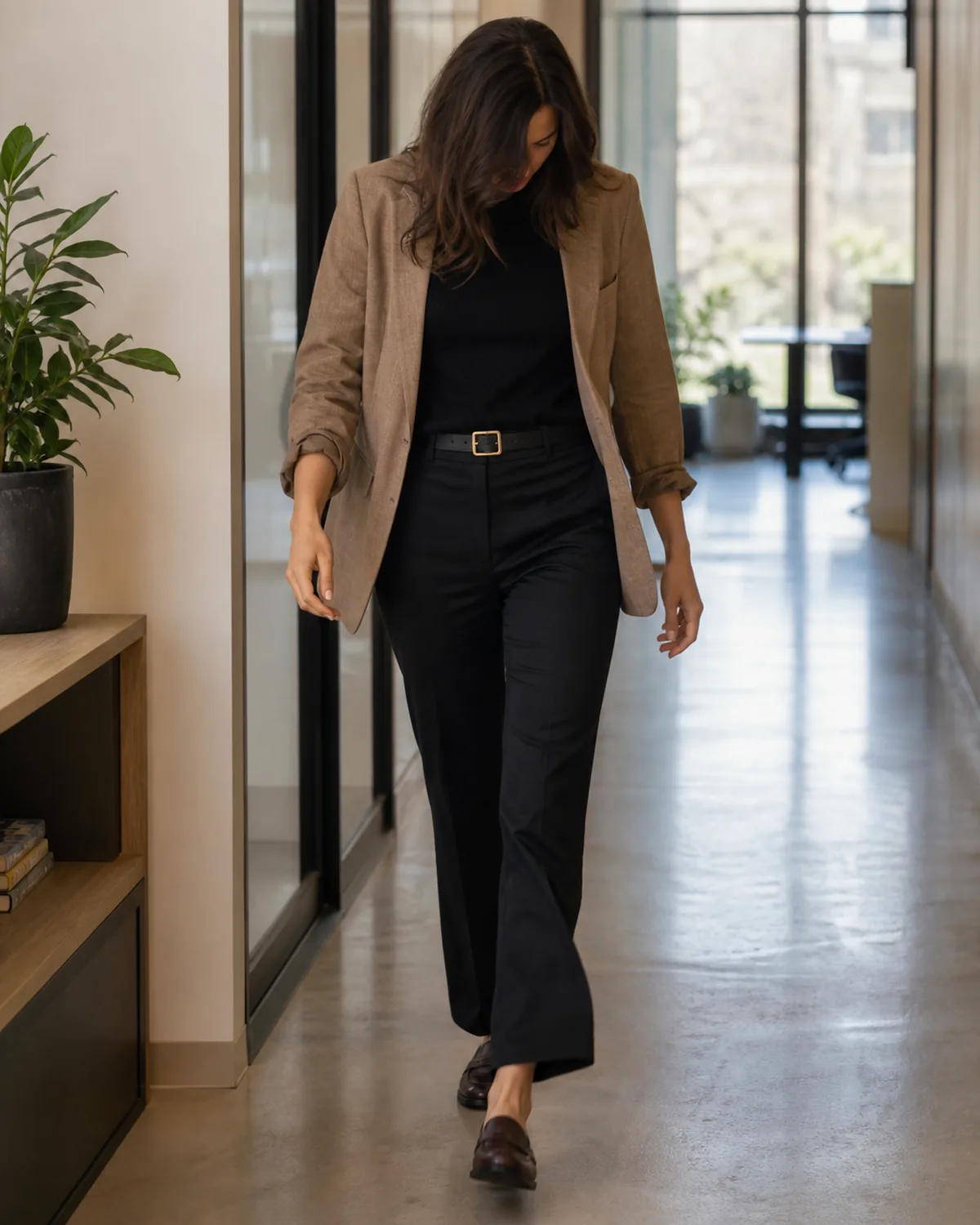
When the listing mentions a business casual environment, a full suit can read as though you missed the memo. Iowa's career centre describes business casual as collared shirts, blouses, sweaters or blazers over pressed pants or skirts, with more room to mix and match than a suit gives you.
The sources split on whether to wear the suit anyway. Florida's career centre says, "If they say business casual, wear business casual," and business professional if the employer specifies nothing.
Indeed's business-casual guide suggests a full suit for your first in-person interview even at a business-casual company. I side with Florida when the listing is explicit and with Indeed when it is vague.
- Pair a structured blazer in camel or navy with trousers in a different weight or colour
- Choose a fine-gauge knit over a button-down for a less stiff feel under the jacket
- Leather penny loafers anchor the look without the height of pumps
- Make sure the belt (if any) is leather and the buckle is plain, not decorative
- The blazer does the heavy lifting here, so fit matters more than fabric
Where to start
Find your situation, skip ahead
The job listing says business professional or corporate
Start with the matched suit. It is the floor, not the ceiling, and you can soften it with a knit instead of a button-down.
01 A matched suit in a quiet colour for the corporate interview07 The one adjustment that matters more than the outfit: shoes
The listing says business casual and you are unsure how casual
A blazer and trousers without a matched suit. Err one step more formal than you think the office runs.
02 A blazer and trousers for the business-casual interview03 A sheath dress under a blazer for panels and group interviews
The interview is at a school, clinic, studio or agency
Match the setting: move-friendly for teaching, clean and practical for clinical, polished but less stiff for creative.
04 A blouse and midi skirt for creative-adjacent offices05 Smart separates for a teaching or education interview06 Clean separates for healthcare and clinical interviews
3. A sheath dress under a blazer for panels and group interviews
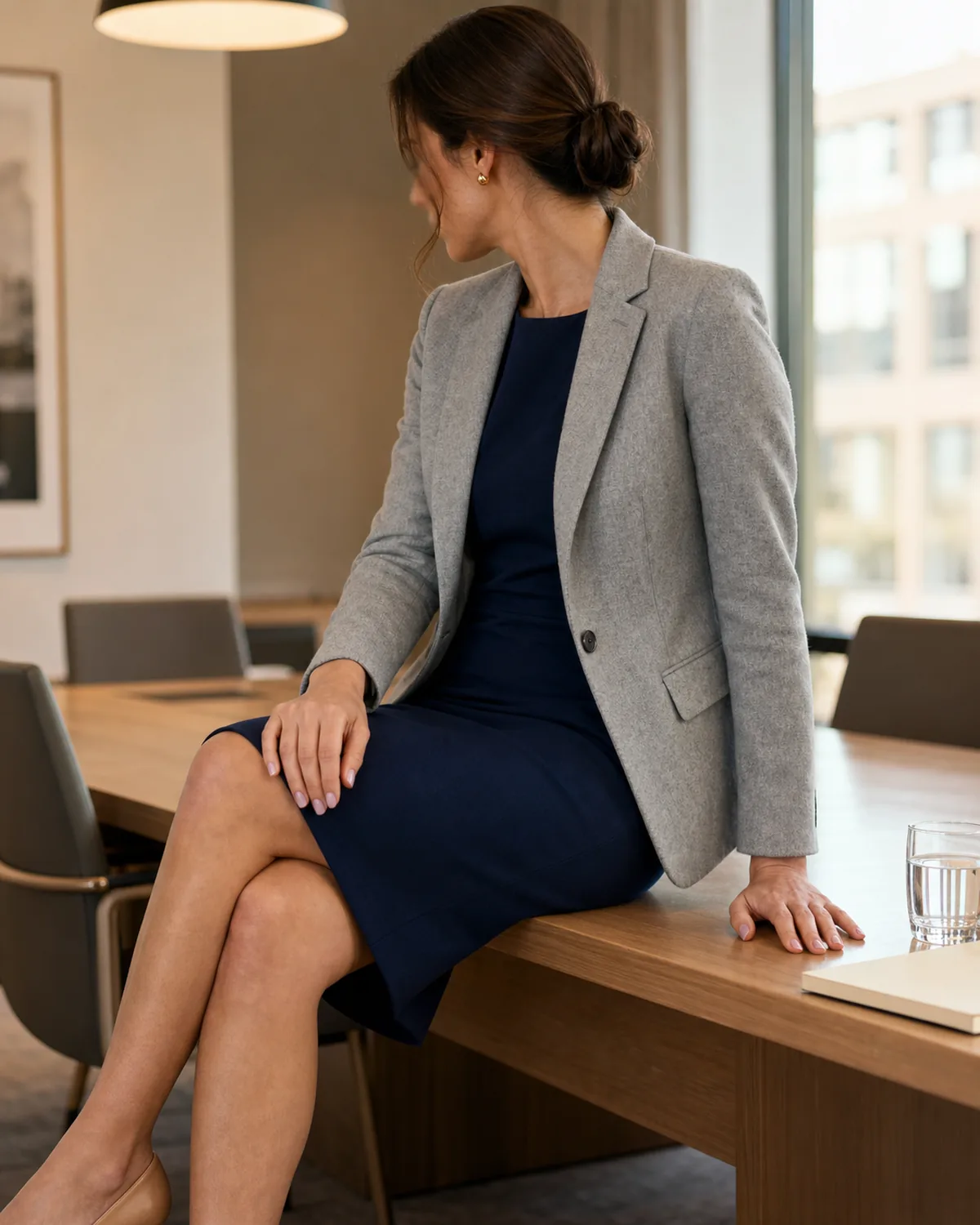
A panel interview means standing, sitting and walking between rooms, sometimes in front of five people. A sheath dress eliminates the tuck, the waistband and the belt, which reduces the number of things that can shift. Berkeley Law's interview guide counts a jacket and sheath dress as a suit combination, knee-length and "nothing shorter," and for good reason: one decision instead of three.
Berkeley's version keeps the jacket and dress in matching fabric and color. A contrast blazer, as here, reads one notch softer, which in my experience suits a business-casual panel better than a law firm.
- Pick a solid colour in ponte or heavy jersey so it holds its shape seated
- Check the hem while sitting: if it rides above mid-knee, it is too short for an interview
- Layer a wool or cotton blazer in a lighter tone so the dress and jacket read as separate pieces
- Nude or black low-heel court shoes keep the eye on the outfit, not the floor
- One pair of stud earrings and no necklace is enough
4. A blouse and midi skirt for creative-adjacent offices
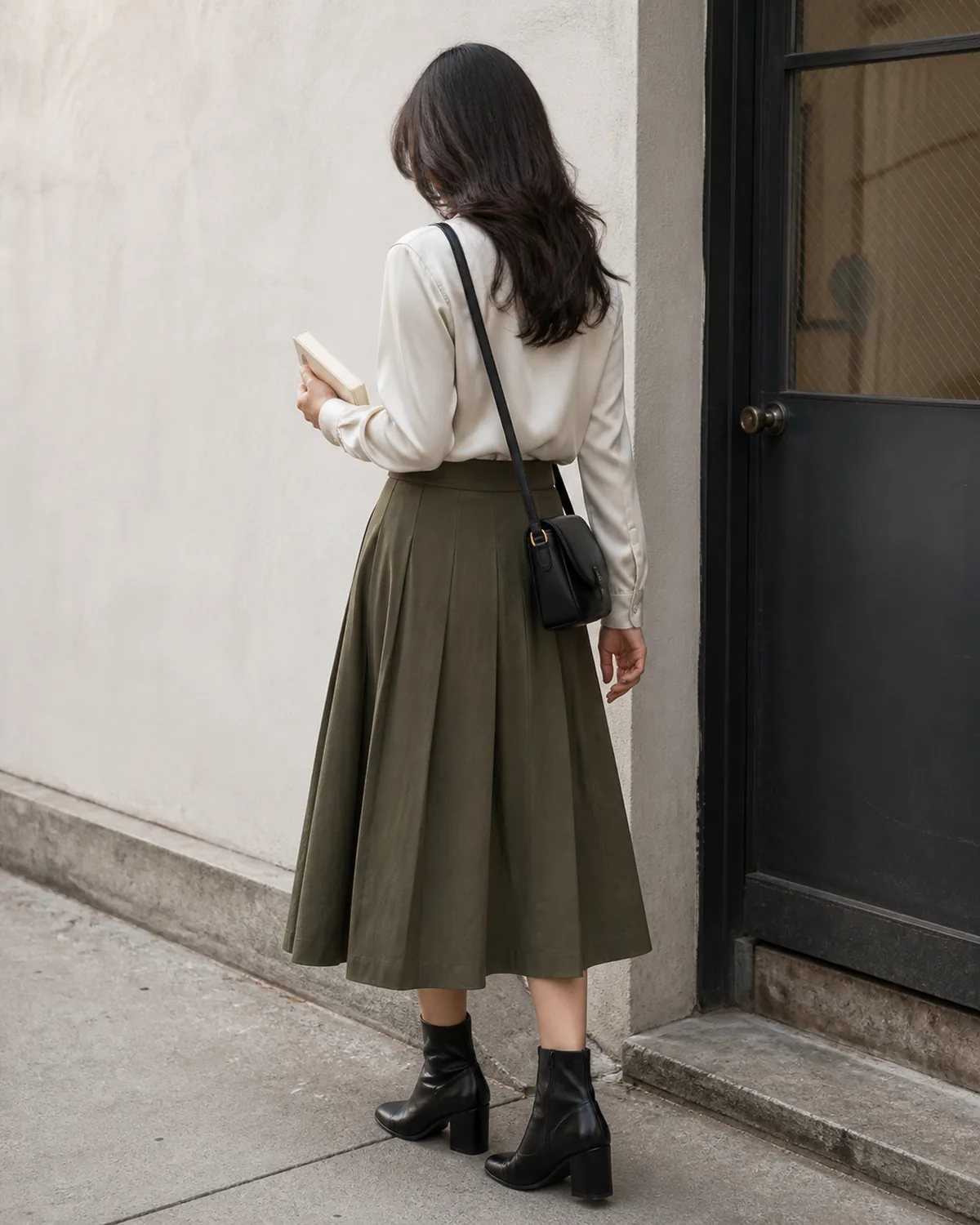
Design studios, marketing agencies and media offices tend to sit closer to smart casual than business professional. Duke's attire guide files creative firms and arts and entertainment under a creative-casual level that allows for color and print "but still keeps an air of professionalism." Its interview rule still applies: go up one level from there.
A tucked blouse and a pleated midi skirt split the difference. The skirt's movement signals that you understand the room without sacrificing formality.
- Tuck the blouse all the way in and smooth the waistband so the tuck looks intentional
- An A-line or box-pleat midi in a muted colour reads calmer than a printed one
- Block-heel ankle boots work here where they would not in a law firm
- A small crossbody bag keeps your hands free and signals you are there to work, not to carry a catalogue
- Skip jewellery that clinks or catches light across a conference table
5. Smart separates for a teaching or education interview
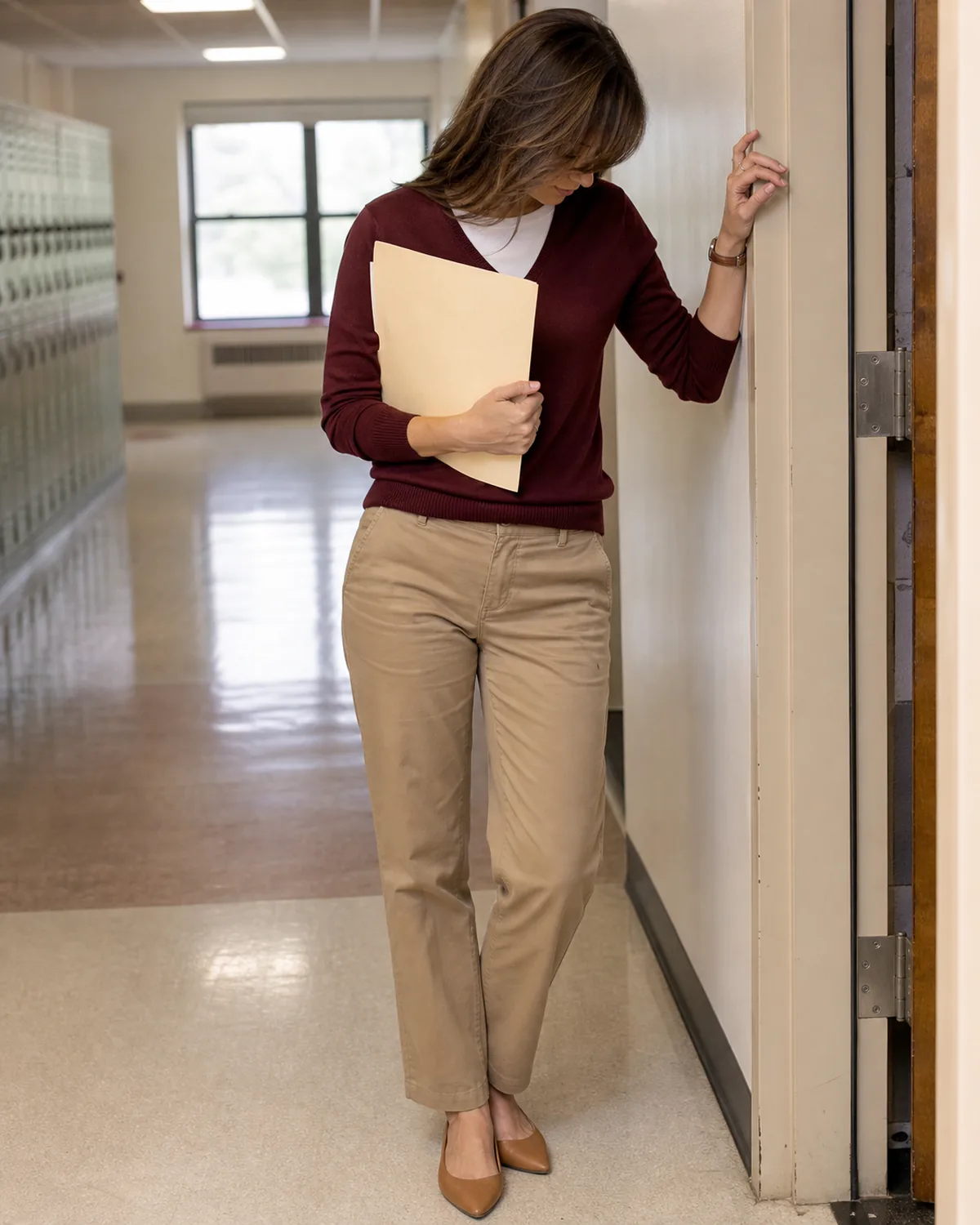
A teaching interview is not a desk meeting. You may sit in a low chair, write on a board, walk a hallway tour and crouch to talk to a student. Georgia Southern's guide for new teachers puts it plainly: "Teachers often bend, kneel, reach and pull." That means the outfit must survive movement without pulling, riding or restricting.
- A fine-gauge V-neck knit over a crew-neck tee layers without bulk
- Straight-leg cotton chinos in khaki or dark navy sit between trouser and jean
- Flat leather shoes are non-negotiable here: you may walk for an hour
- If you already have teacher outfits that work, audit them against the interview by asking whether you would wear them to a parent-teacher night
- Skip the blazer unless the school is private or the role is administrative
6. Clean separates for healthcare and clinical interviews
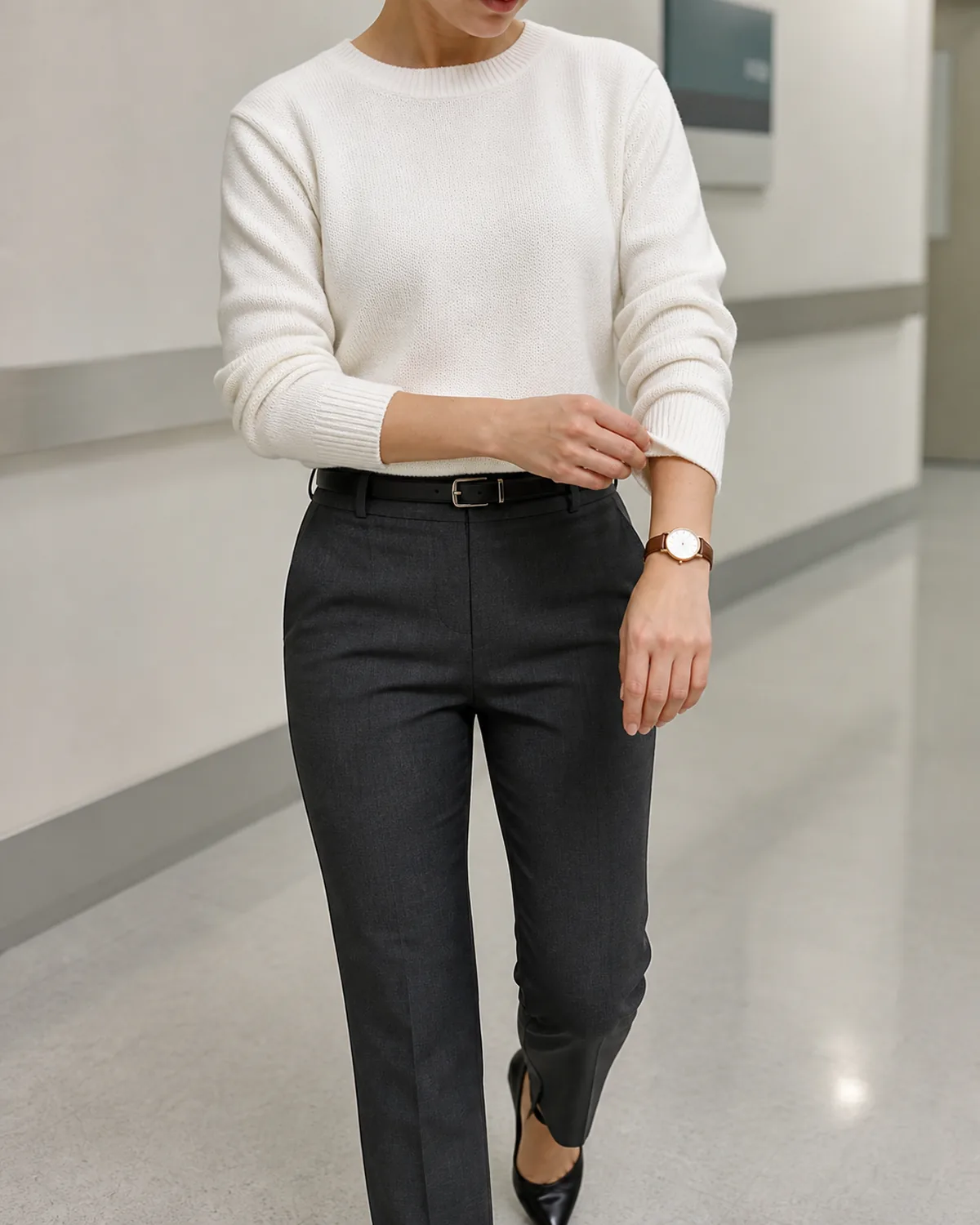
When the interview is on a unit or inside a clinic, the outfit needs to look professional to patients, families and hiring managers in the same hallway. Scrubs are for the job, not the interview. Neat dark trousers, a structured knit in white or cream, and clean leather flats put you close to the ward's visual register without copying it.
- White or cream on top reads clinical without mimicking a lab coat
- Charcoal or dark navy trousers in a slim straight cut look neat and stay clean
- Flat leather shoes that can handle hospital flooring without slipping
- A plain leather-strap watch replaces the phone for time checks during the interview
- No dangling earrings, no bracelets, nothing that could snag on equipment or distract a patient
7. The one adjustment that matters more than the outfit: shoes
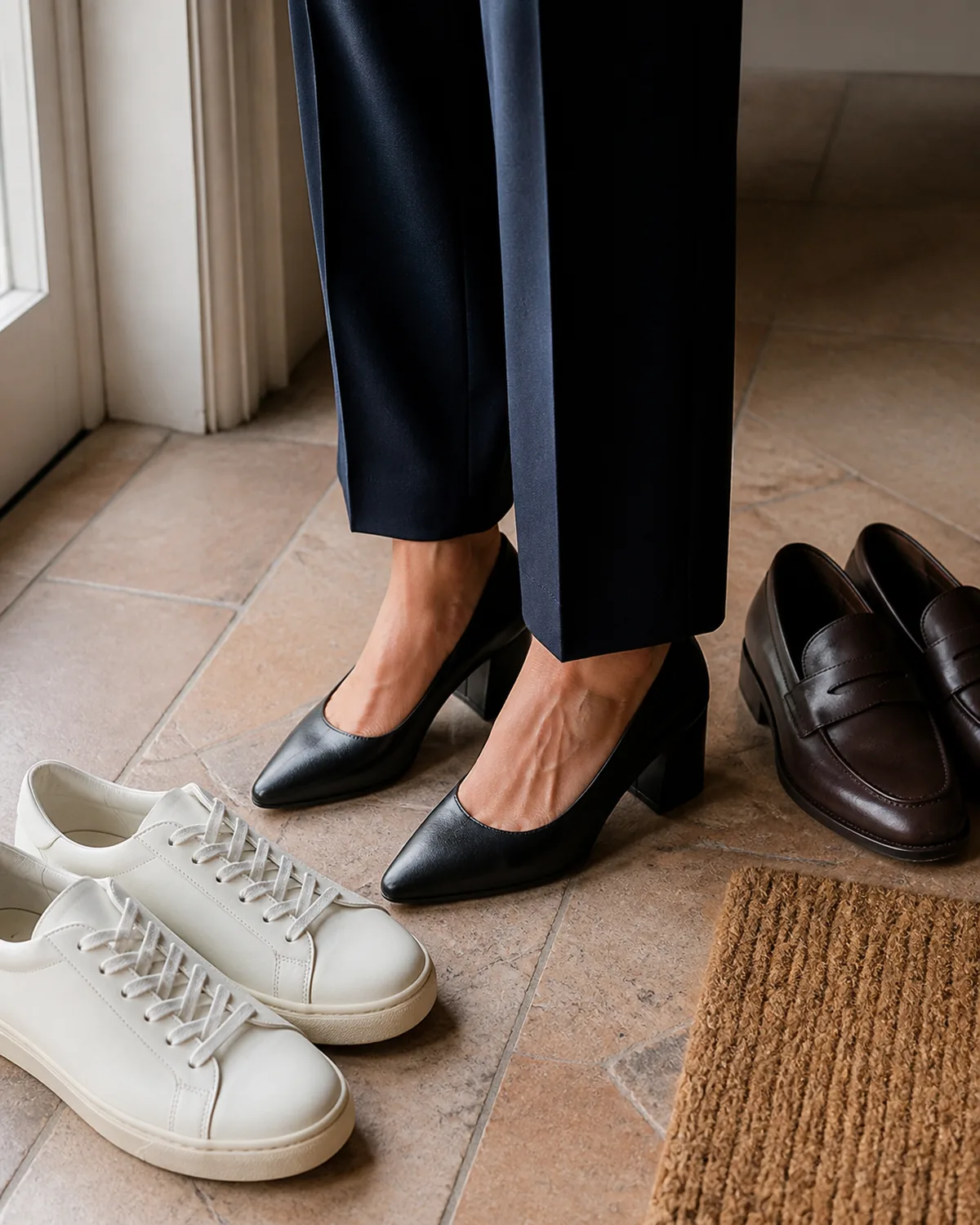
Every outfit in this guide can shift up or down a full formality notch by changing the shoes. Iowa's career centre asks for solid colored, closed-toed shoes that are "clean and shined," and Berkeley Law's guide wants a closed toe and a low heel. The shoe is the fastest lever you have the morning of.
- Black leather pumps with a low block heel push any outfit toward business professional
- Dark leather loafers sit right in business casual territory without the height of a heel
- Clean white leather sneakers pull the formality down two notches and belong only in truly casual creative offices, if at all
- Check the heel tips and sole edges: scuffed shoes undo a pressed suit faster than anything else
- When in doubt between two pairs, choose the more formal one and walk in them for ten minutes tonight
Where the dress-code definitions come from
- Attire Guide — Career Hub, Duke University
- Dress for Success — Pomerantz Career Center, The University of Iowa
- Interviews: Dress and Presentation Guidelines (PDF, 2023) — Career Development Office, Berkeley Law
- So What Exactly Is Business Casual? - Career Connections Center — Career Connections Center, University of Florida
- What Is Business Casual Attire? (With Examples and Tips) — Indeed Career Guide
- Professional Appearance for Educators (KEYS to Teaching Success guide) — Georgia Southern University Libraries (KEYS to Teaching Success guide)
Keep this one
Save it where you plan outfits
Pin the image above to the board you actually check on a Sunday night. This guide is written to be re-read, not read once.
Tonight, before you close this tab
- Look up the company on LinkedIn and screenshot three recent employee photos for reference
- Try on the full outfit tonight, sit down in it and check the hem, waistband and collar
- Wipe the shoes you plan to wear and look at the heel tips while you are down there
- Iron or steam the top layer and hang it on the door for the morning
- Pack a plain leather or fabric tote large enough for a portfolio and a water bottle