How to Style Wide Leg Pants for Work Without Looking Overdressed or Underdone
Wide leg pants read casual at work when the hem, shoe and top are mismatched. This guide covers the proportion adjustments that keep the silhouette office-ready.
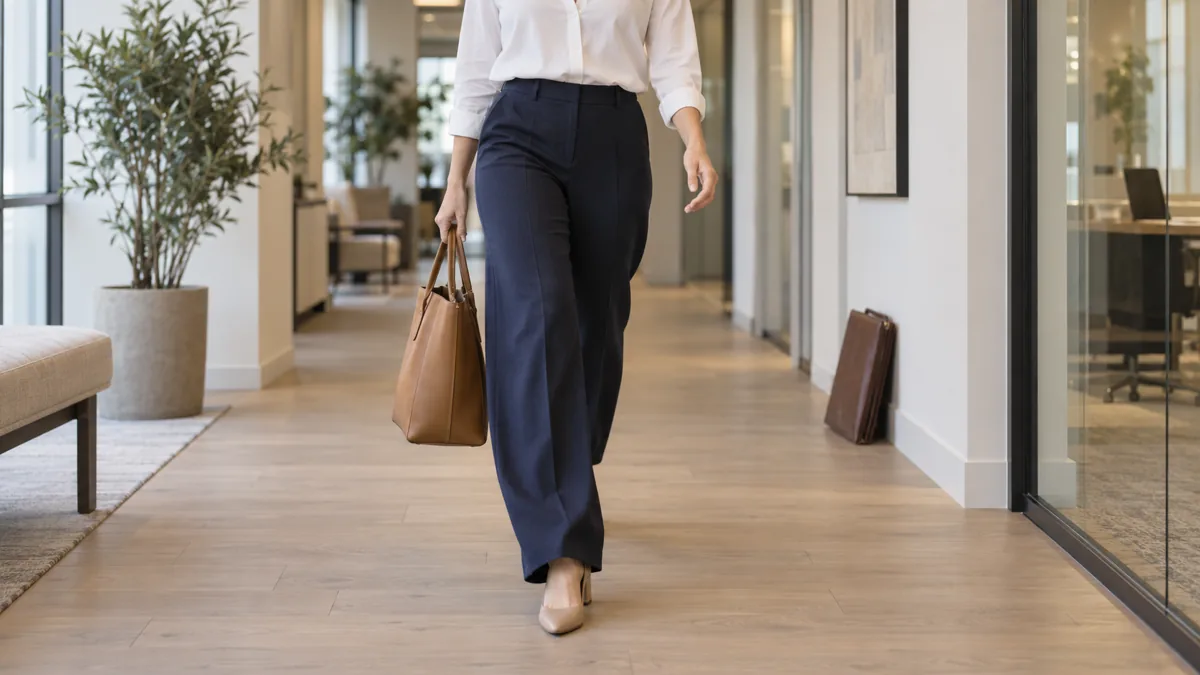
Working out an outfit for tomorrow? Save this page. It is easier to skim the night before than to remember.
At a glance
Works
- A wool crepe or tropical-weight wide leg trouser with a pressed front crease and a clean one-inch break above the shoe
- A fitted or tucked top that defines the waist before the volume of the trouser begins
- Pointed-toe flats or block heels that hold a slim line under the wide hem
Depends
- Linen wide leg pants — only if pressed before each wear and paired with a structured top, because wrinkled linen reads weekend
- A hip-length blazer over wide leg trousers — works if the blazer is fitted at the waist, not if it adds a second layer of volume
Skip
- A boxy, untucked top that hides the waistband and turns the entire silhouette into one shapeless column
- A hem that drags on the floor or puddles around the shoe
- Platform sneakers or chunky slides under wide leg trousers at work
Wide leg trousers belong in an office. WSU's 2023 business-casual guidance lists "flowy, wide-legged pants" as acceptable attire.
The reason they sometimes read as too casual has nothing to do with the cut. It is the hem dragging, the shoe competing with the fabric width, or the top hiding the waist.
Fix those three proportions and the same pair of trousers reads as sharp as a slim cut.
Why Wide Leg Pants Read Casual at Work
Volume is the variable. A slim trouser keeps fabric close to the leg, which reads as structured by default. A wide leg trouser lets fabric fall away from the body, and that drape signals relaxation before you say a word.
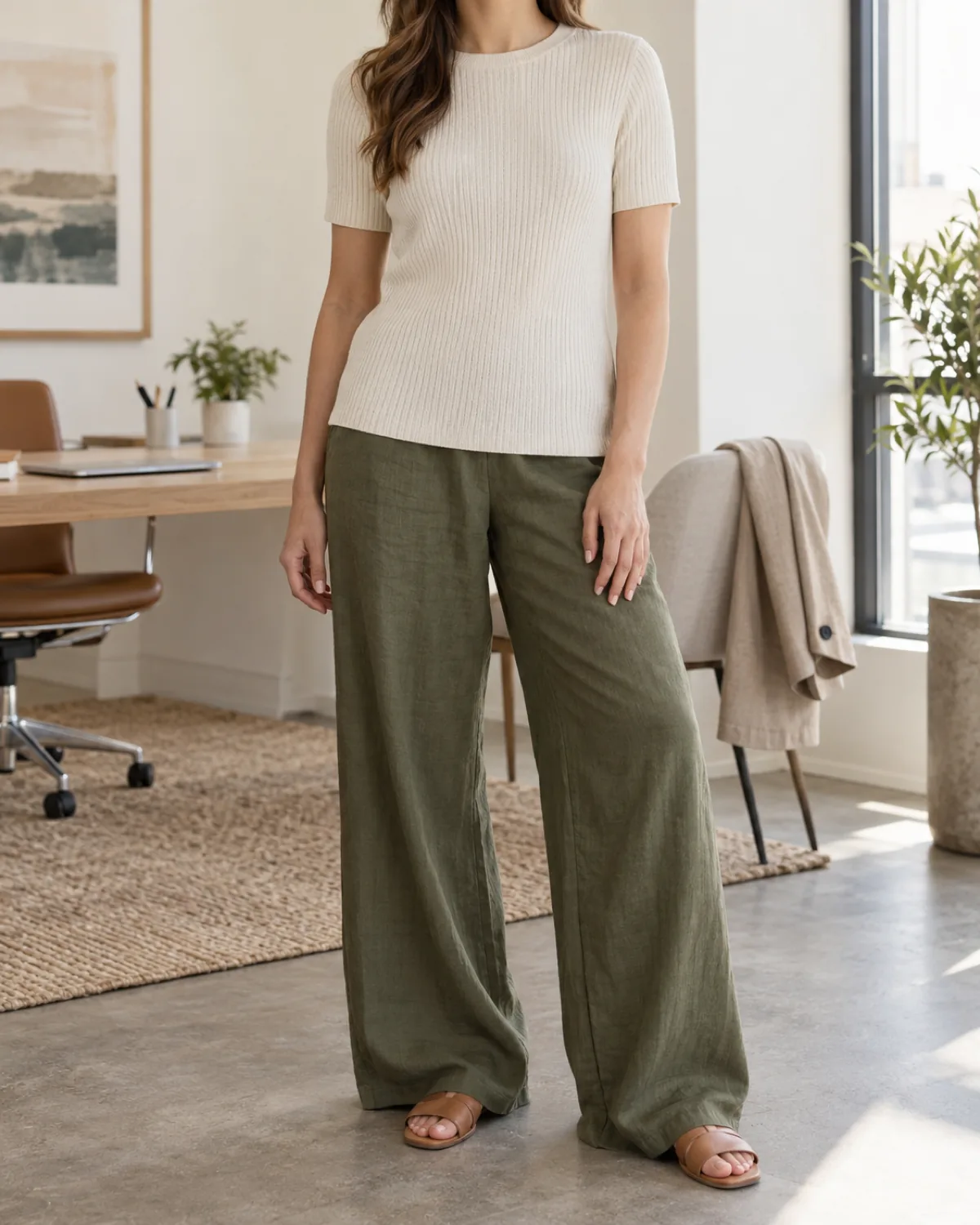
Duke University's attire guide advises to "generally, do not wear oversized items or clothing that is too tight" and to choose "a cut of fabric that suits your body shape." Wide leg pants are not oversized by definition, but they become oversized in effect when the rest of the outfit adds volume instead of containing it.
- The fabric width itself is not the problem. A pressed wool crepe wide leg trouser with a front crease reads as tailored.
- The problem appears when the top, the hem and the shoe all fail to anchor the silhouette.
- One loose element can work. Two loose elements start to read as a weekend outfit. Three and the proportions collapse.
Set the Hem Length First
The hem decides the shoe. The shoe decides the formality. So the hem is where the chain starts.
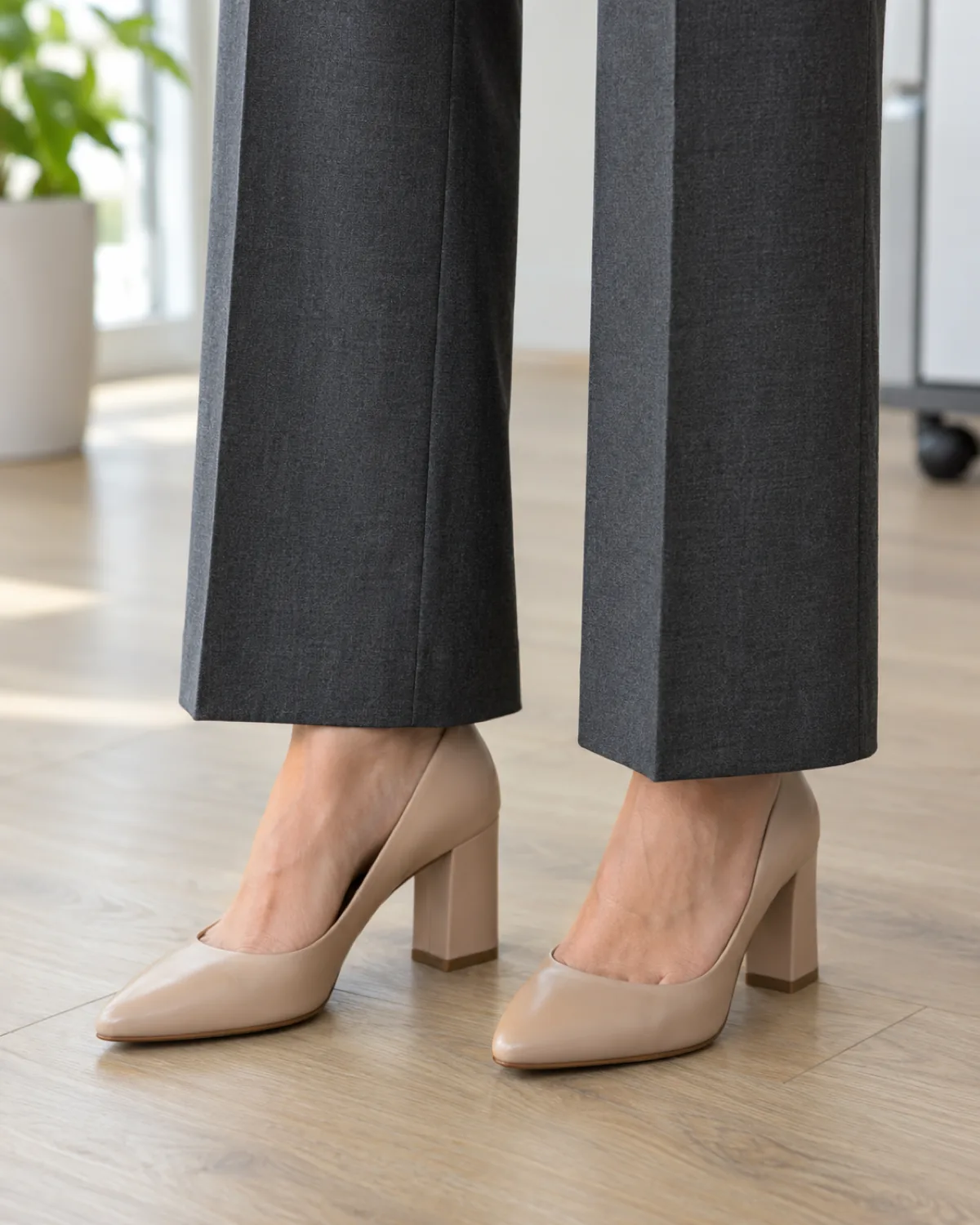
A hem that touches the floor catches dust, frays at the back and makes the trouser look like it was bought for someone taller. A hem that sits too high above the ankle exposes a gap that breaks the vertical line. The target for most work environments is a clean break — the hem just brushes the top of the shoe without folding over it.
- One inch above the shoe vamp is the standard starting point. This works with both flats and low block heels.
- Floor-grazing hems suit very formal settings where you wear one heel height consistently. They are harder to maintain and collect dirt.
- An ankle-break hem that hits just above the ankle bone reads more casual and works best in creative or summer business casual offices.
- Buy the trousers long and have a tailor set the hem to your most-worn work shoe. A five-minute alteration prevents every proportion problem that follows.
Where to start
Find your situation, skip ahead
You already own wide leg trousers but they look too casual at the office
Start with the hem. A one-inch break above the shoe is the single change that shifts the read from weekend to office.
You want to add wide leg pants to a business casual wardrobe but are not sure what to pair them with
Anchor the waist first, then balance the volume with a fitted top half.
You sit at a desk most of the day and wide leg fabric pools when you cross your legs
Consider whether a different trouser cut solves the problem more simply.
07 What Makes Wide Leg Pants Look Sloppy at Work08 When to Pick a Different Silhouette Instead
Match the Shoe to the Hem
The shoe underneath a wide leg trouser needs to hold a clean line. The wider the hem opening, the more the shoe shape matters.
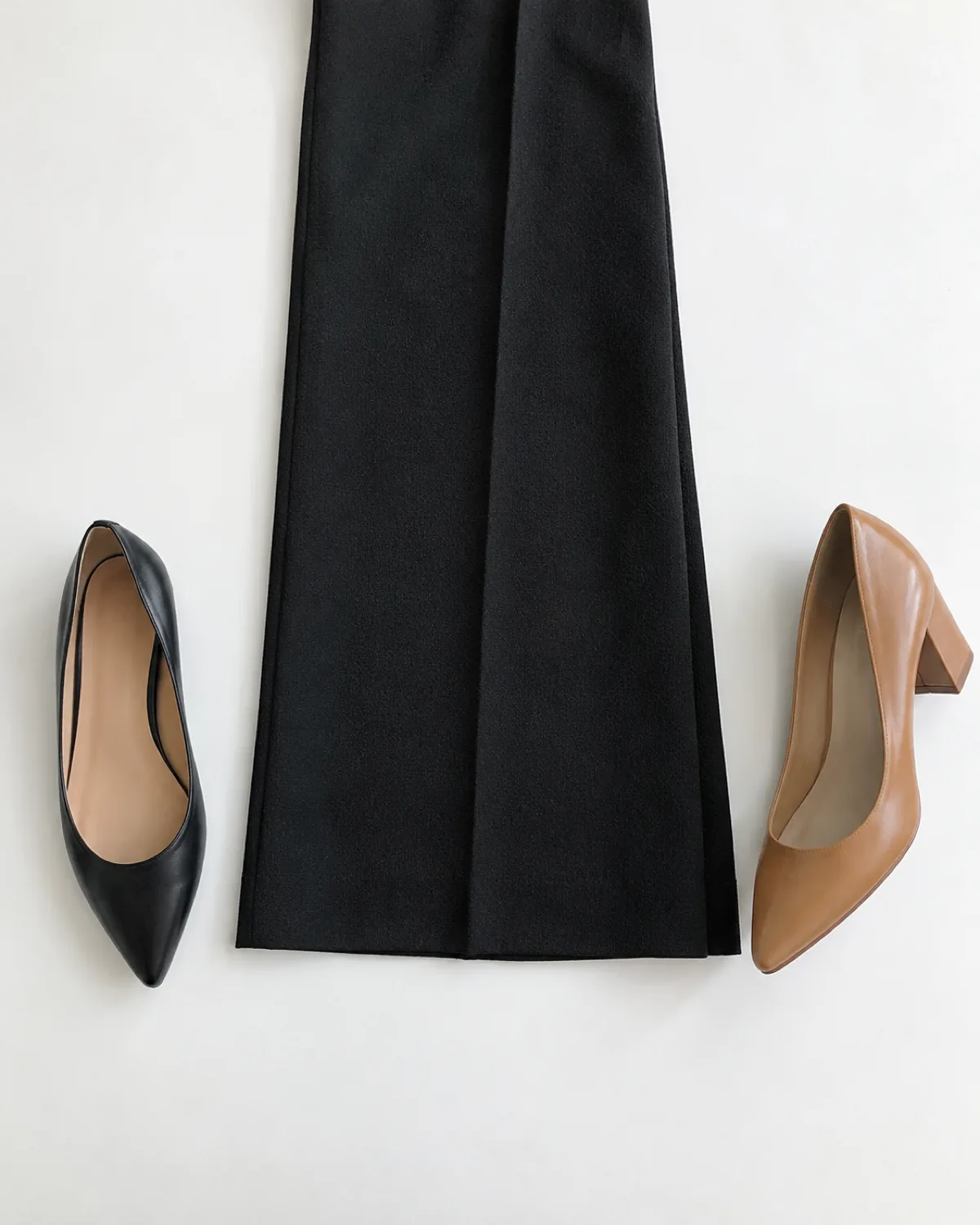
A pointed-toe flat narrows the foot and extends the leg line under the fabric. A block heel adds enough height to keep the hem off the ground without competing with the trouser width. Both disappear under the drape, which is the point.
- Pointed-toe flats and block heels are the two safest shoe shapes for wide leg trousers at work.
- Stilettos work but are harder to walk in when the hem catches the heel — a lower block heel avoids that.
- Platform sneakers, chunky slides and open-toe sandals add bulk that competes with the fabric width. The bottom of the outfit becomes all volume.
- If the hem is wide enough to see the full shoe from the front, the trouser may be too wide for that shoe height. Go to a tailor or switch to a higher heel.
Choose the Right Top Length
A top that ends at the hip hides the waistband. When the waistband disappears, the trouser and the top merge into one continuous shape, and the eye has no reference point for where the torso ends and the legs begin.
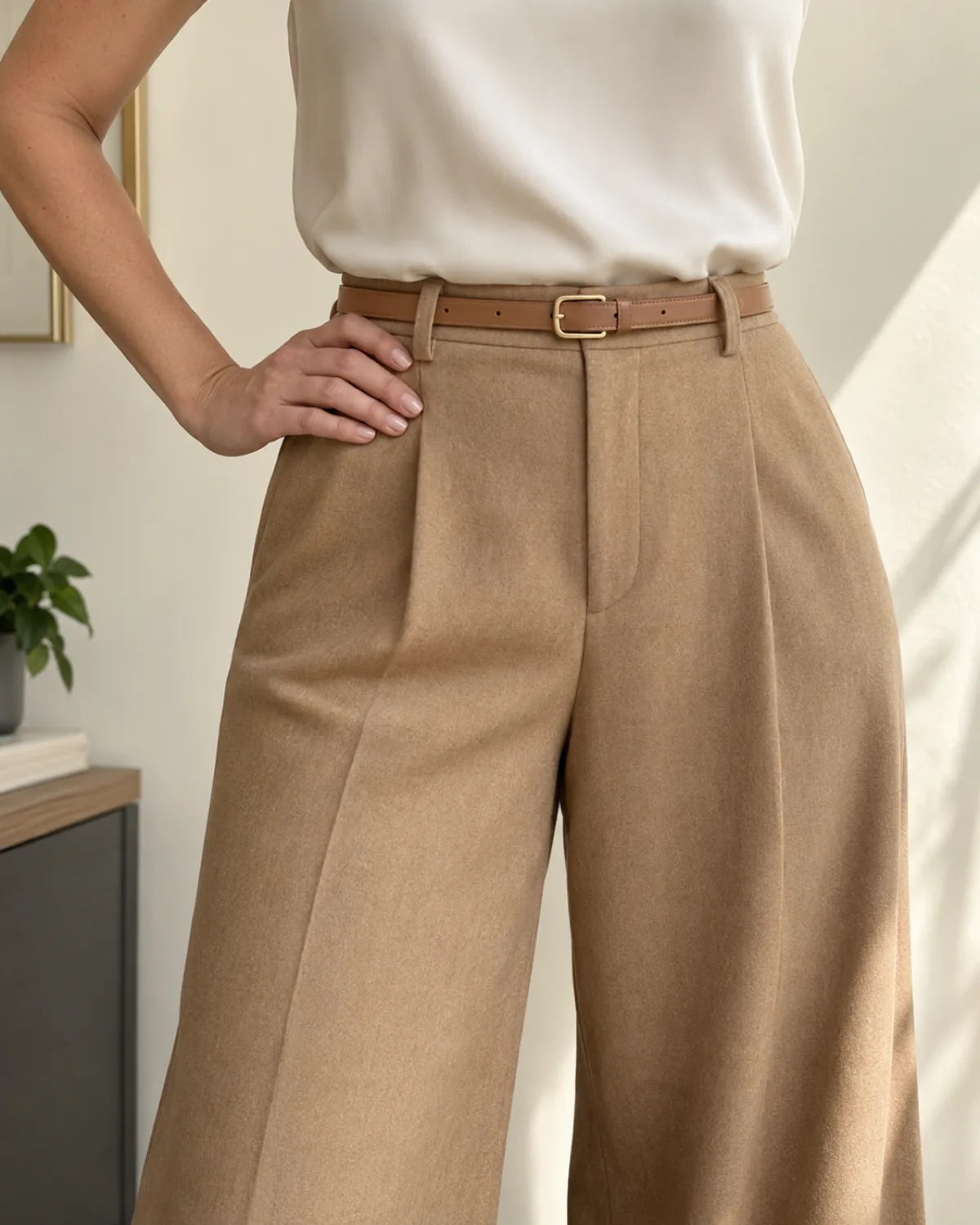
Duke's attire guide says to avoid oversized items and to select cuts that show your proportions without clinging. A tucked-in shell or a top that ends at or just above the waistband follows that principle. It lets the trouser volume begin from a defined point rather than from nowhere.
- A top that ends at the natural waist or just below it is the clearest proportion. Tuck it in or choose one that is cut to end there.
- A hip-length blouse can work if you tuck the front in so the waistband is visible from the front.
- A cropped blazer that ends at the waist accomplishes the same thing as a tuck without requiring one.
- The wider the trouser leg, the more important this becomes. Ultra-wide palazzo pants with an untucked tunic will read as a jumpsuit or loungewear.
When and How to Tuck
Tucking is the fastest way to define the waist, but not every tuck suits every rise.
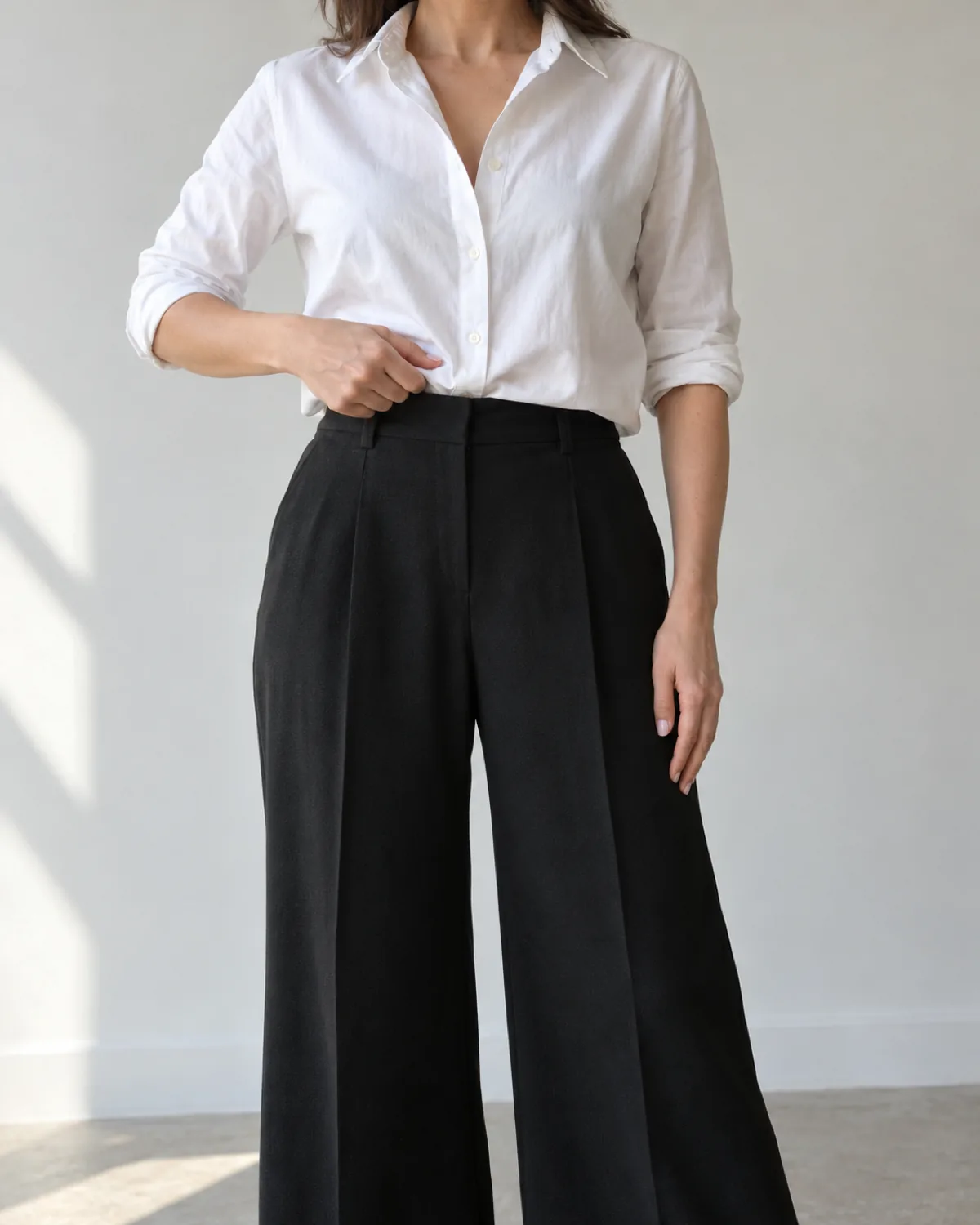
Creighton University's business casual guide says clothes should "fit properly, neither tight nor baggy." A tuck that pulls the fabric taut across the stomach is too tight. A tuck that leaves fabric ballooning above the belt is too loose. The goal is a smooth surface from bust to waistband.
- A full tuck works with high-rise wide leg trousers. Push the entire shirt hem inside the waistband, smooth it flat, and add a belt.
- A front tuck works with mid-rise wide legs. Tuck only the front center of the shirt and let the sides hang, which hides the lower rise.
- Do not tuck a long blouse into low-rise wide leg pants. The fabric bunches above a waistband that sits too low to hold it, and it comes untucked within an hour.
- A belt is not optional with a tuck. It compresses the waistband against the fabric and keeps the shirt from creeping out.
Layer Without Adding Bulk
A blazer over wide leg trousers is one of the most reliable office combinations, but only if the blazer is fitted.
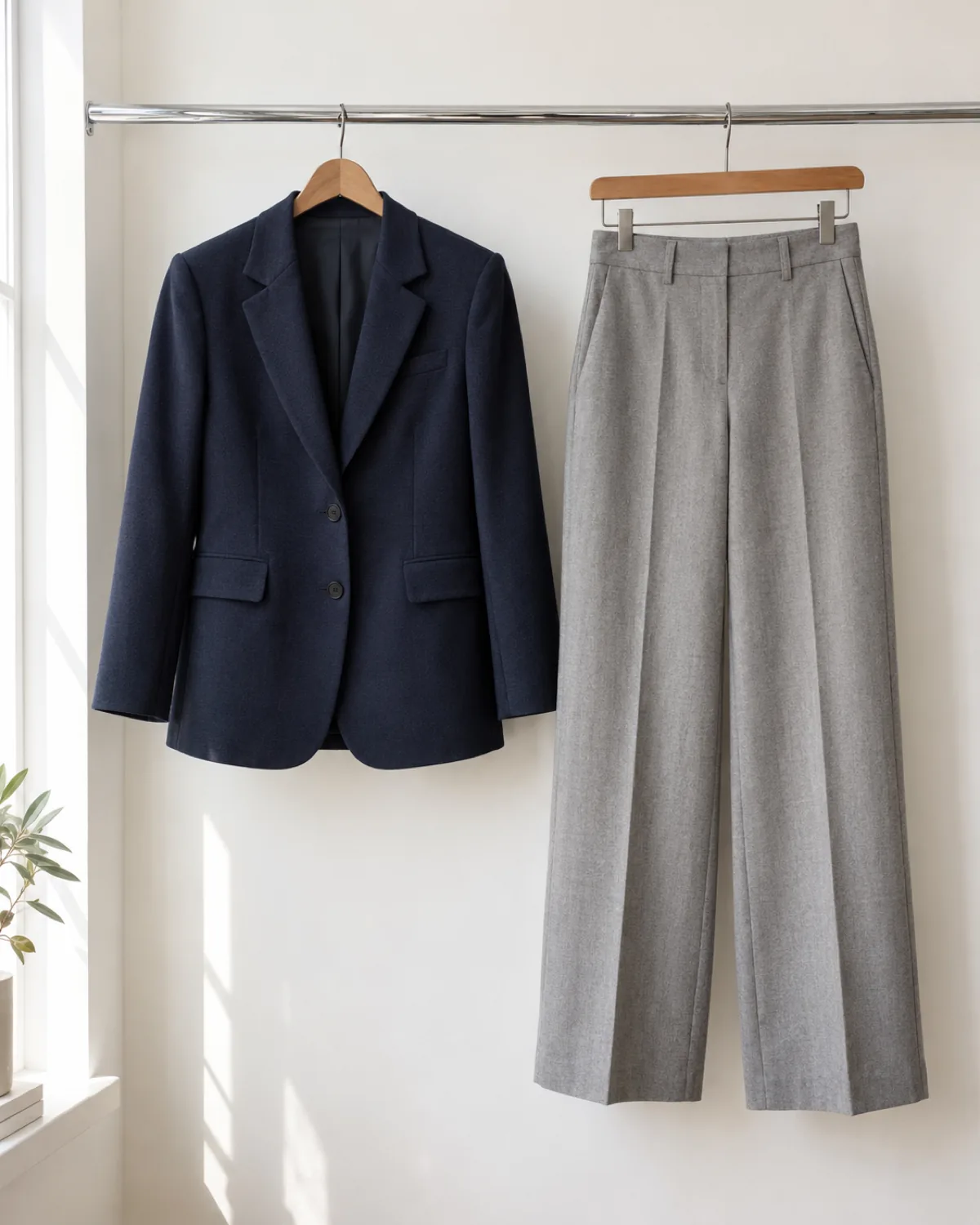
The principle is that the top half stays narrow while the bottom half carries the volume. A structured blazer with defined shoulders narrows the torso line, which makes the wide trouser look intentional rather than oversized. An oversized coat or a boxy cardigan doubles the volume and makes the whole outfit read as too large.
- A fitted single-breasted blazer that buttons at the waist is the safest layer. It mirrors the tuck principle — define the narrowest point.
- A long cardigan can work if it is thin and follows the body rather than standing away from it.
- Avoid puffer vests, oversized trench coats and any outerwear that adds width at the shoulder or hip over wide leg trousers.
- If you wear a blazer regularly, keep the trouser and blazer in the same weight of fabric. A heavy tweed blazer over lightweight linen trousers fights visually.
What Makes Wide Leg Pants Look Sloppy at Work
The line between relaxed and sloppy is narrower with wide leg trousers than with slim cuts because the extra fabric amplifies every imperfection.
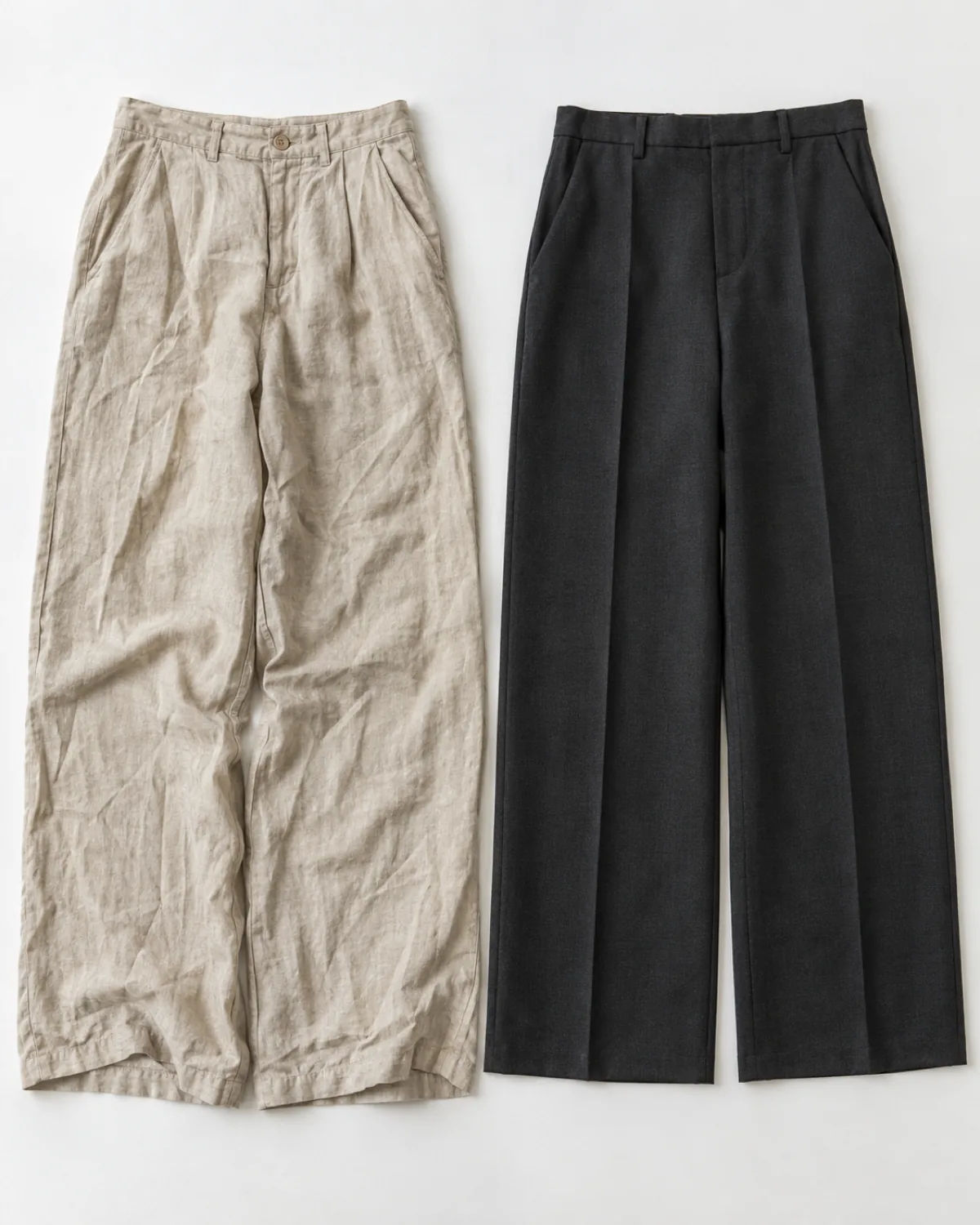
Creighton's guide says clothes should be "clean, neatly pressed, and fit properly." That advice matters more with wide leg pants because wrinkles, lint and a dragging hem all show more on a wider surface.
- Wrinkled fabric is the most common offender. Linen wide legs need to be pressed before every wear or they read as pyjamas. Wool crepe holds a crease naturally and requires less maintenance.
- A hem that drags collects dust and frays. If you hear the fabric brushing the floor, the trousers are too long for those shoes.
- A boxy, untucked top removes the waist. This is the single mistake that turns a tailored wide leg trouser into a shapeless outfit.
- Pilling, lint and pet hair show more on wide flat surfaces than on slim, textured ones. A lint roller in the desk drawer is not optional if you wear wide leg trousers regularly.
When to Pick a Different Silhouette Instead
Wide leg trousers are not the answer to every work wardrobe question. Some situations are genuinely better served by a different cut.

If your dress code requires a matched suit and the suit jacket is cut for slim trousers, forcing wide leg trousers into the combination changes the suit's proportions. If you sit at a desk for most of the day and the fabric pools every time you cross your legs, you spend more time adjusting than working.
- A matched suit with slim or straight-leg trousers reads as one piece. Swapping in wide legs changes the silhouette balance and may look like you mixed two suits.
- If you sit most of the day, straight-leg or tapered trousers stay cleaner in the chair. Wide legs pool at the knee and crease where they fold.
- If the office is small and you commute on foot or by bike, wide hems catch in escalators, puddles and bike chains. A straight leg is more practical.
- If you are building a capsule wardrobe, one pair of wide leg trousers and one pair of straight-leg trousers covers more ground than two pairs of the same cut.
Wide Leg Pants at Work FAQ
Are wide leg pants business casual?
Yes. Washington State University's 2023 business-casual guidance lists "flowy, wide-legged pants" as an acceptable business casual option. The fabric and construction matter more than the cut — a wool crepe wide leg trouser with a pressed crease reads as polished, while a wrinkled linen palazzo reads as too casual for most offices.
Do wide leg pants need to be hemmed?
Almost always. The proportion rules in this guide change with shoe height, and most wide leg trousers are sold long enough to accommodate heels. If you wear flats, the standard off-the-rack length will drag. A tailor can set the hem to your most-worn work shoe in one visit.
What shoes should you avoid with wide leg pants at work?
Platform sneakers, chunky slides and any shoe that adds bulk beneath an already wide hem. The shoe needs to hold a slim line so the trouser drape stays clean. Pointed-toe flats and block heels are the two most reliable options.
Can you wear wide leg pants to a business professional office?
It depends on the trouser. A wool crepe wide leg trouser with a matching blazer, a pressed crease and a pointed-toe heel passes most business professional dress codes. A linen palazzo pant does not. The construction, the fabric weight and the overall outfit determine whether the cut reads as professional.
How do you keep wide leg pants from looking frumpy?
Anchor the waist with a tuck or a belt so the eye finds the narrowest point before the volume starts. Keep the hem off the floor. Balance the wide bottom with a fitted top half. Press the front crease before each wear. Those four adjustments handle most of the frumpy risk.
Where the dress-code definitions come from
- What Does Business Casual Really Mean in 2023? — Academic Success & Career Center, Washington State University
- Attire Guide — Career Hub, Duke University
- Business Casual Attire — Career Center, Creighton University
Keep this one
Save it where you plan outfits
Pin the image above to the board you actually check on a Sunday night. This guide is written to be re-read, not read once.
Tonight, before you close this tab
- Try your wide leg trousers with a tucked-in top tonight and check whether the waistband is visible
- Stand in front of a mirror in your work shoes and check where the hem falls — if it touches the floor, pin it one inch above the shoe vamp
- Press the front crease with an iron or steamer before hanging them up for tomorrow
- Lay a pointed-toe flat or a block heel next to the trouser hem and confirm the shoe line is narrower than the hem opening