8 Teacher Outfits for Plus Size Women That Actually Survive the Day
Plus size teacher outfits built for standing, bending and parent meetings. Eight combinations that pass dress codes and hold their shape from first bell to dismissal
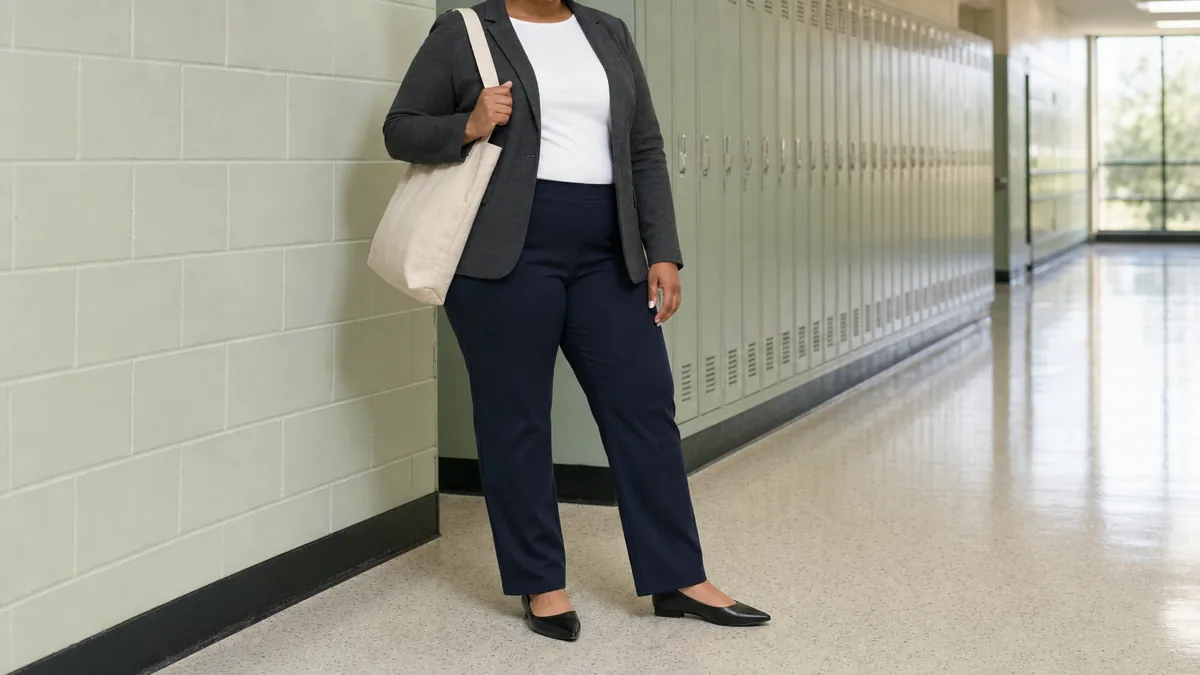
Working out an outfit for tomorrow? Save this page. It is easier to skim the night before than to remember.
At a glance
Works
- A ponte blazer with pull-on straight trousers, structured enough for any school
- A wrap dress in a stable knit, belted at the natural waist
- High-waisted wide-leg trousers with a tucked shell, no clinging
- A structured cardigan over a jersey sheath for parent-facing days
Depends
- Paper-bag waist trousers, comfortable but read casual in some high schools
- A-line midi skirts, easy on the hip but check your school on skirt length rules
- Joggers with a blazer, only on PE days and field days where athletic wear is permitted
Skip
- Pencil skirts that restrict crouching and stair-climbing
- Stiff waistbands that roll or dig after six hours seated and standing
- Sizing down into a smaller number, the fit at the widest point is what matters
The dress code rules for teachers do not change by size. Collared shirts, closed-toe shoes, skirts below the knee.
The cuts that hold their shape on a size 18 body through six hours of standing and crouching are not always the same as the ones in a standard guide. These eight outfits are built for plus size women who teach.
The dress code facts come from published sources, listed at the bottom. Fit and fabric choices are judgment. For the baseline, see the full teacher outfits guide.
1. Ponte blazer and pull-on straight trousers, the starter kit
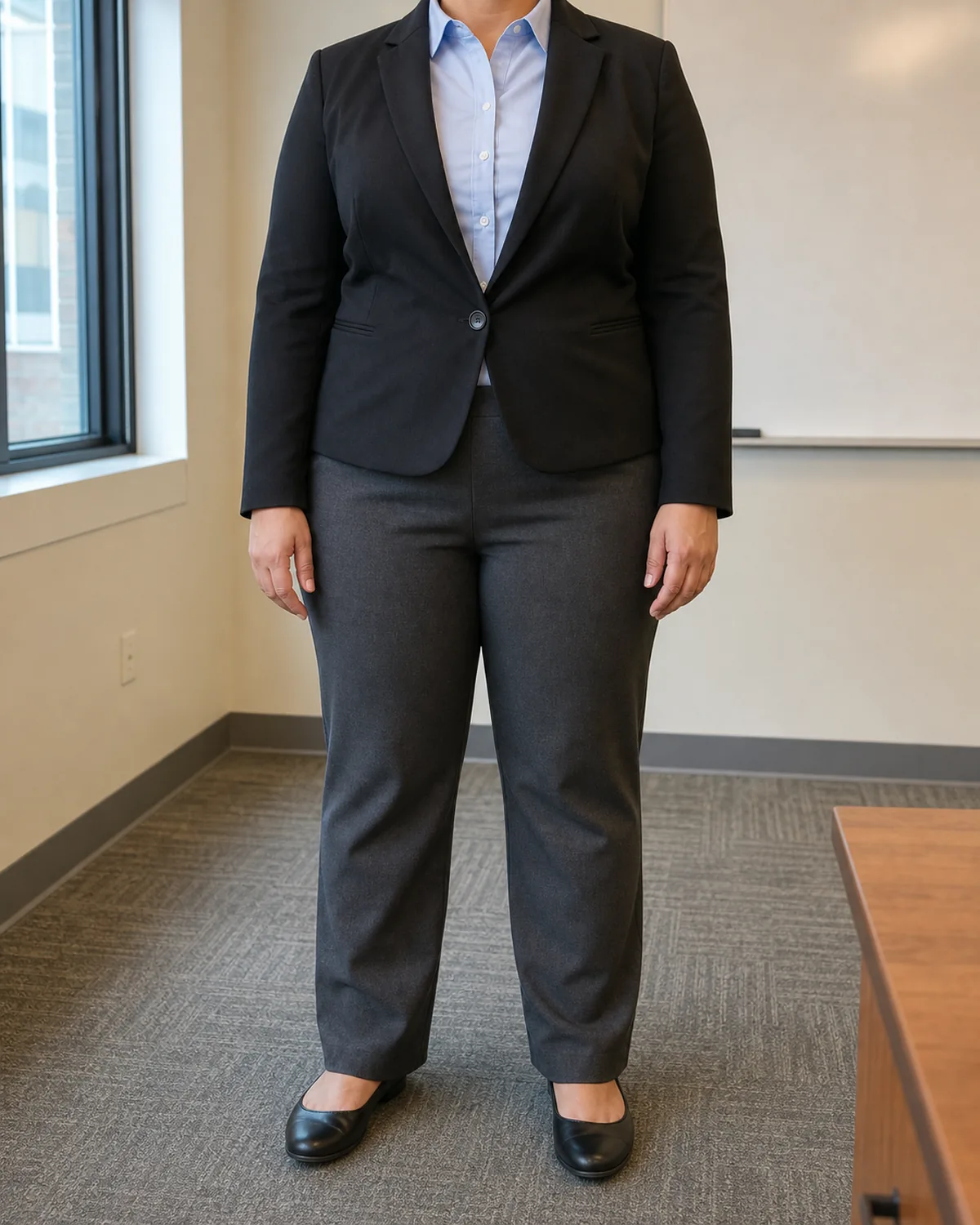
Collared shirts and slacks appear on nearly every published list of acceptable teacher attire. This version uses ponte for the blazer and a pull-on waist for the trousers because both solve problems that show up at larger sizes. Ponte holds structure without constricting. A flat elastic waistband does not roll or gap the way a fitted button waist does after repeated sitting and standing.
The blazer should sit flat across the upper back without pulling at the button. If it pulls, size up and have the sleeves shortened instead. That single detail is the difference between looking structured and looking squeezed.
- Press the shirt the night before; published guidance names wrinkle-free specifically
- Keep the trousers straight-leg, not slim; straight gives the thigh room without adding volume at the ankle
- The pull-on waist eliminates the gap problem at the back of a fitted waistband
- A single-button blazer in ponte stays buttoned through bending without pulling open
2. A wrap dress in ponte, belted at the real waist
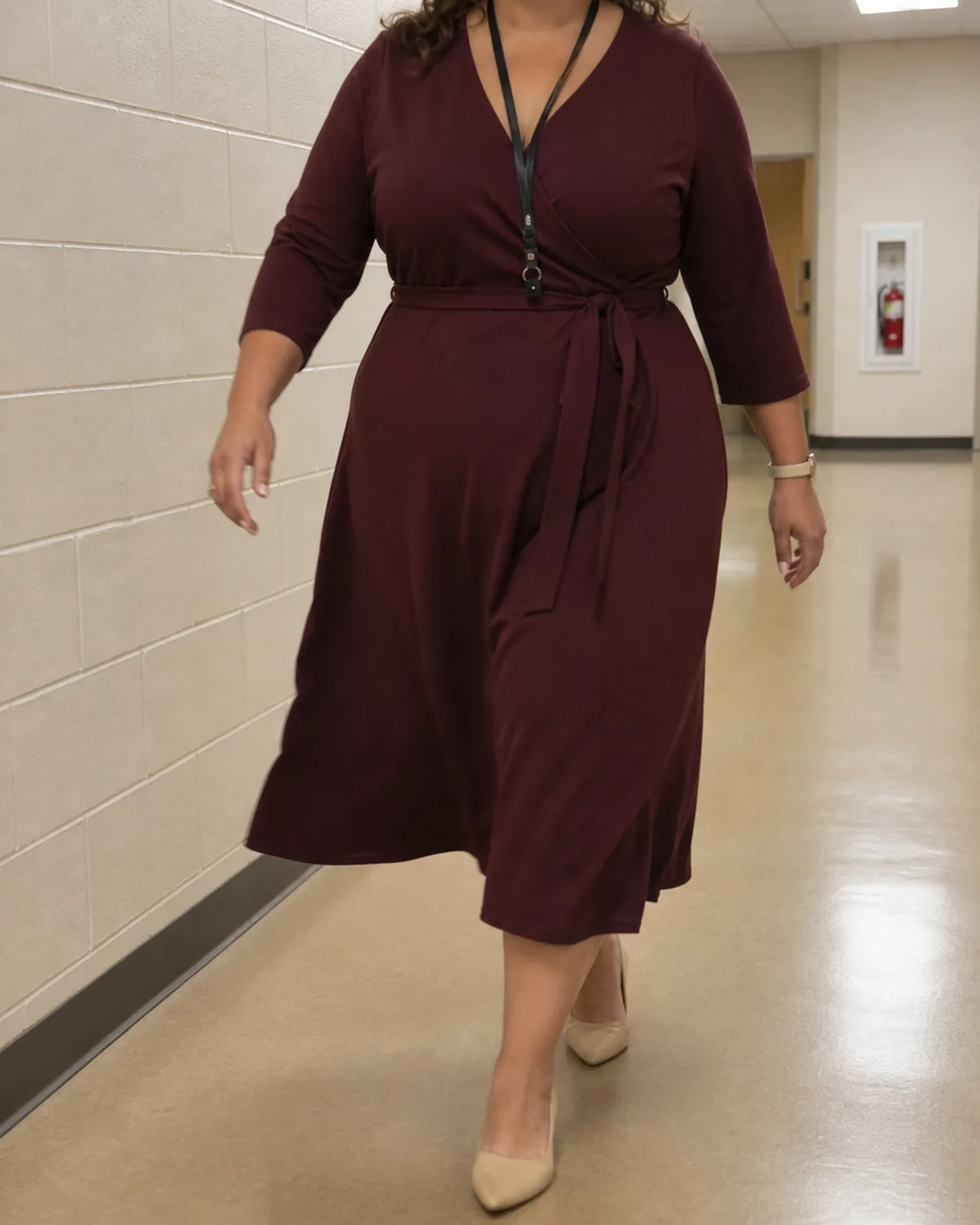
A wrap dress draws its line at whatever waist you actually have. The crossover neckline adjusts to a fuller bust without pulling at buttons, and the self-fabric belt sits at the natural waist rather than where a size chart decided your waist should be. Published dress code guidance requires dresses to fall below the knee, so check the hem seated before wearing it to school.
Ponte or a heavy jersey holds the wrap line in place through movement. A thin rayon wrap will shift and gap by mid-morning.
- Test the crossover seated and bending forward before wearing it to school
- A safety pin at the inner crossover point keeps the neckline secure during crouching
- Choose a mid-calf length to stay well below the knee even when seated
- A lanyard sits naturally in the V-neckline without bunching
Where to start
Find your situation, skip ahead
You are starting at a new school and cannot read the dress code culture yet
Wear the ponte blazer and pull-on trousers for two weeks, then adjust based on what your department wears on an ordinary Wednesday.
01 Ponte blazer and pull-on straight trousers, the starter kit08 What to look for before you try it on
You have a parent-teacher conference this week
Layer a structured cardigan over a sheath dress; the shoulder line reads one notch more formal without restricting your arms.
You need to build a teaching wardrobe and the budget is tight
Start with idea 1 and idea 3. Two bottoms, two tops and one blazer make a repeating week before anything else does.
01 Ponte blazer and pull-on straight trousers, the starter kit03 High-waisted wide-leg trousers and a tucked shell05 Paper-bag waist trousers and a clean crew neck
3. High-waisted wide-leg trousers and a tucked shell
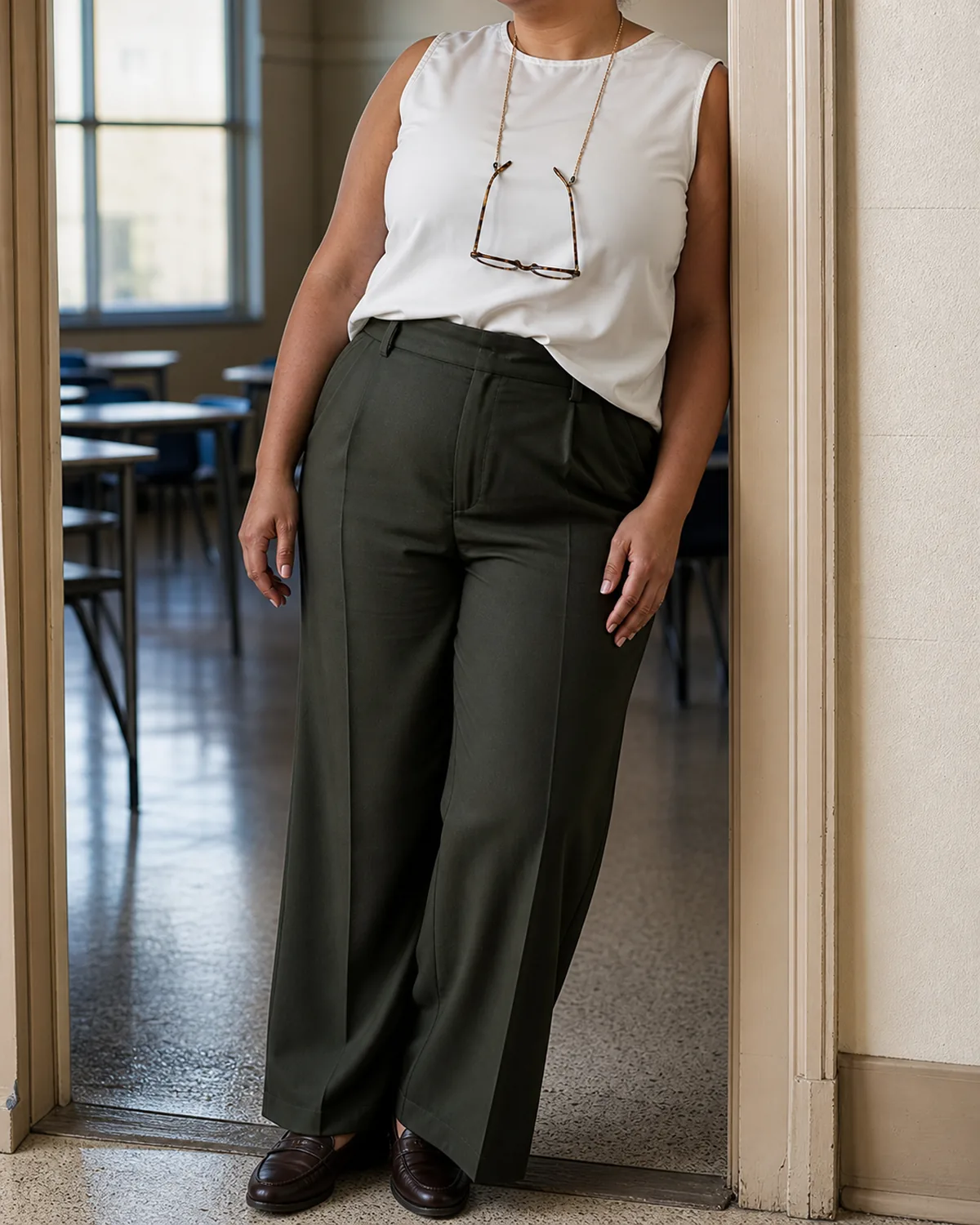
Wide-leg trousers give the hip and thigh room to move without clinging, which matters when your day involves walking corridors, climbing stairs and crouching beside desks. A high waist anchors the trouser above the hip, creating a long line from any proportion. Georgia Southern's guide lists long pants or slacks as compliant regardless of cut.
The tucked shell keeps the waistband visible and the silhouette intentional. A half-tuck works if a full tuck pulls out during the day.
- The trouser should skim rather than pool heavy fabric around the ankle
- A front pleat gives the hip room without adding bulk at the waist
- Wide-leg reads differently in elementary school (more casual) and high school (more professional); look at what your department wears
- Loafers or structured flats ground the silhouette; avoid shoes that disappear under the wide hem
4. A structured cardigan over a jersey sheath
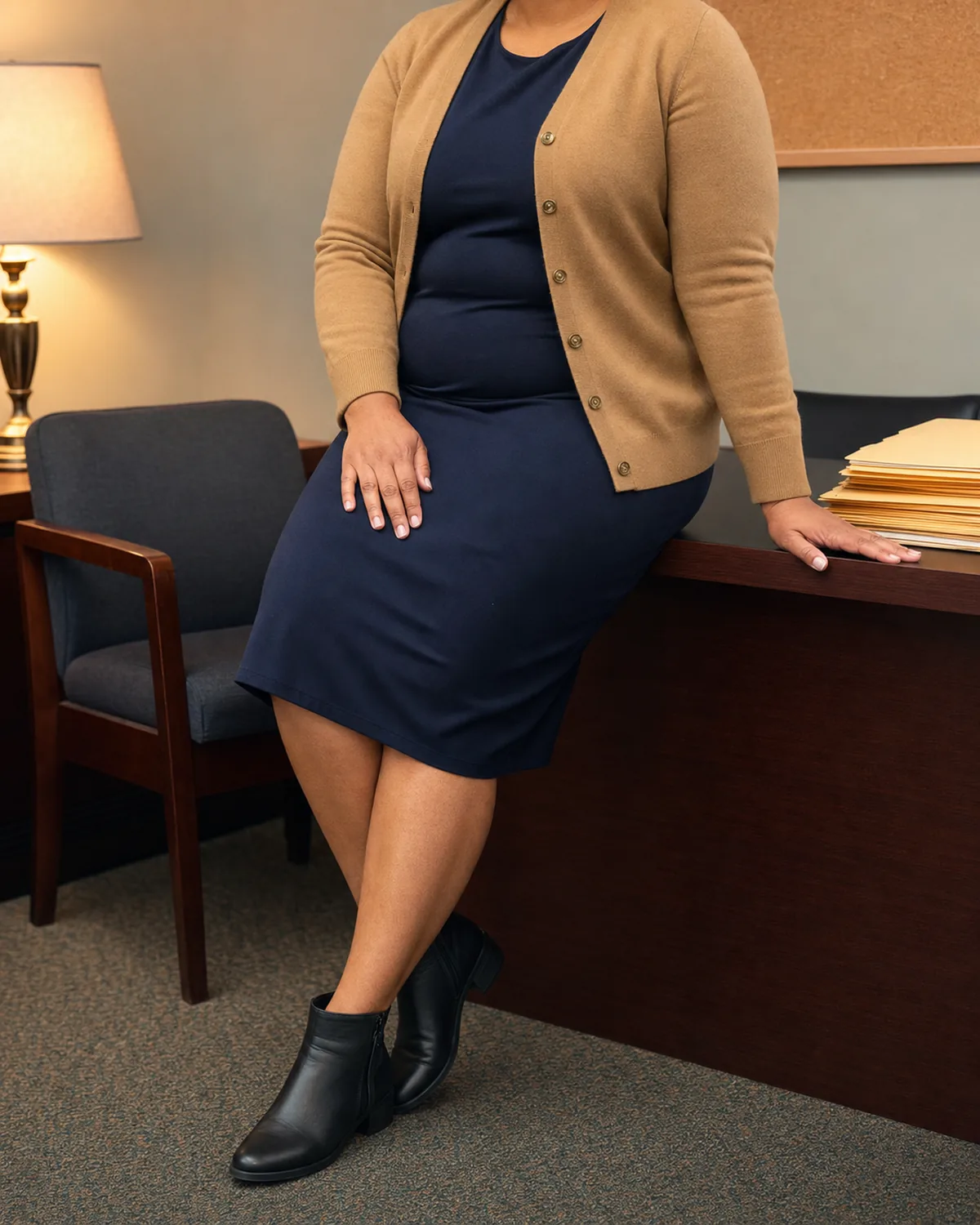
Parent-teacher night and open-house days call for one notch more formal without sacrificing the ability to move. A structured cardigan with set-in shoulders adds a professional layer over a jersey sheath that stretches with you. Students quoted by Education Week describe teachers as role models, and these slightly dressed-up days carry that weight.
Pick a cardigan with actual shoulder seams, not a drapey open front. The shoulder line is what reads as structured from across a room. The sheath underneath should hit below the knee and not ride up when you sit.
- A button-front cardigan in a heavier knit holds its shape better than a fine-gauge one
- Check the sheath seated; it should still cover the knee
- Dark solids are the safest choice for sheath dresses in professional settings
- Ankle boots with a low block heel dress the combination up without the instability of a thin heel
5. Paper-bag waist trousers and a clean crew neck
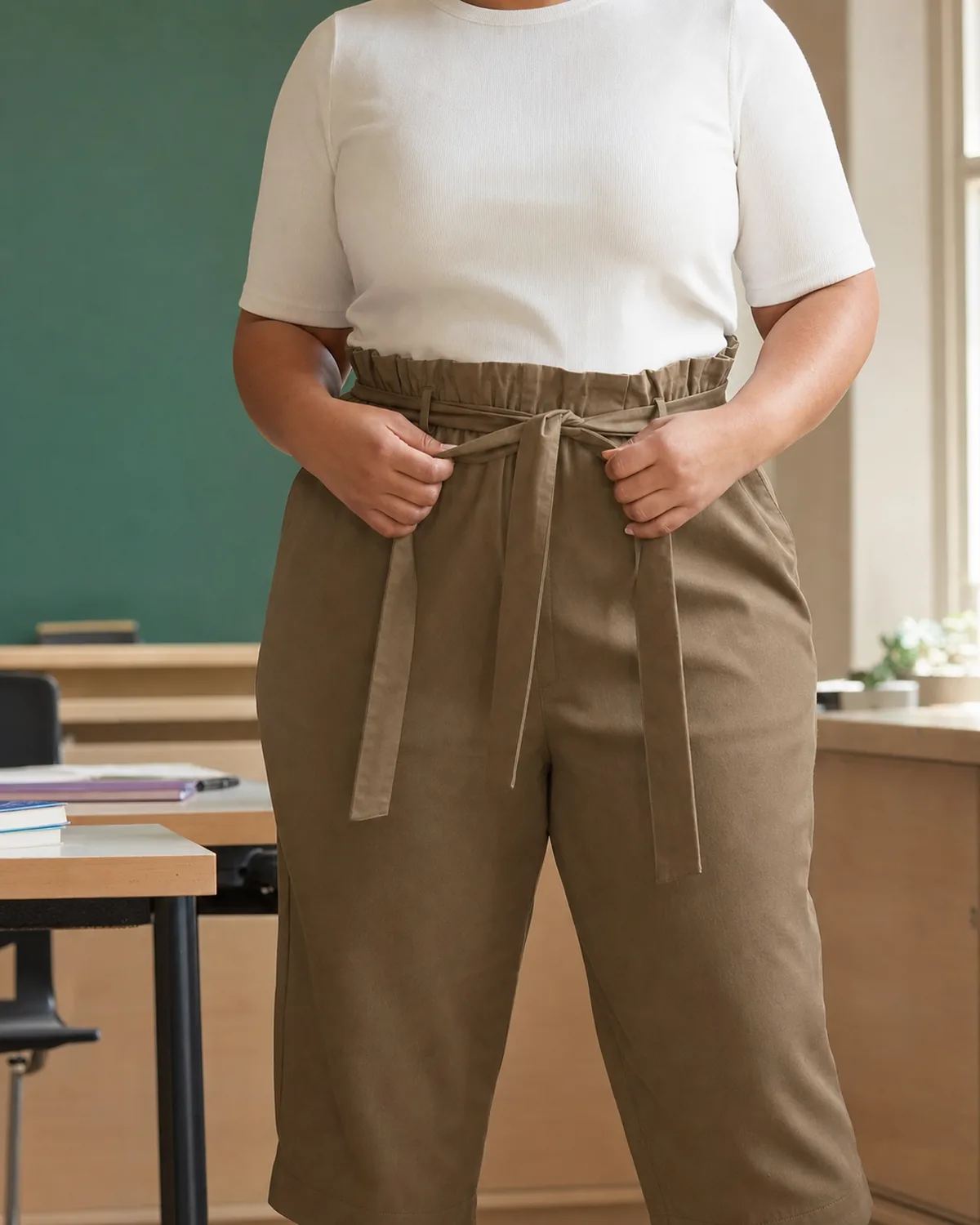
Paper-bag waist trousers gather at the narrowest point and give room below, which is comfortable for the sit-stand cycle of a teaching day. The gathered waistband accommodates a range without digging, and the self-fabric belt tie keeps it from reading as pyjamas. Published guidance requires all clothing to be freshly pressed and wrinkle-free, so choose a cotton-blend that holds a crease.
A crew neck in a structured knit tucked into the gathered waist keeps the top half clean. Avoid an oversized tee here; the paper-bag waist needs a fitted top to balance the volume.
- Avoid overly crinkled paper-bag trousers that read as pyjamas from a distance
- A structured crew neck reads more professional than a thin jersey tee
- The belt tie should sit at the natural waist, not below it
- These read more casual than straight-leg trousers; some high schools may not accept them as professional
6. A-line midi skirt and a fitted knit top
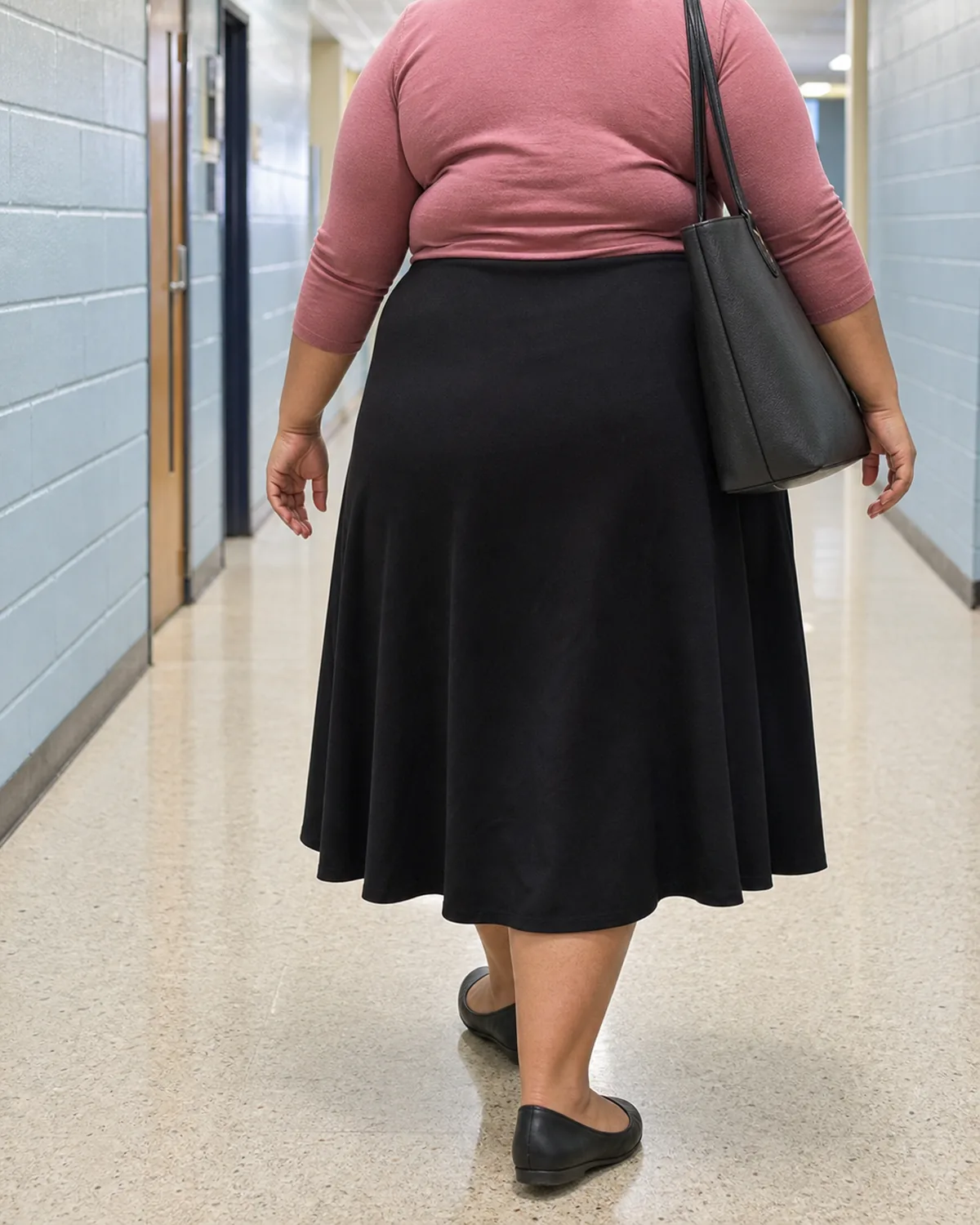
A-line skirts flare from the waist, which clears the hip and thigh without any fitting issues. A midi length lands below the knee, the line Indeed's overview of traditional teacher dress codes uses; Georgia's school policies allow up to 2 inches above it. The fitted knit top creates contrast with the full skirt shape and keeps the upper half structured.
Closed-toe flats are the safest school shoe choice per published guidance. Georgia Southern's guide explicitly excludes running shoes, flip-flops and plastic sandals. Check the midi length seated; it should still cover the knee.
- A midi A-line in a ponte or heavy jersey holds its shape through a full day without wrinkling
- A three-quarter sleeve knit top works in schools where sleeveless is not permitted
- A belt at the waist is optional and depends on whether your school considers it too casual
- The skirt should flare enough to step freely but not so much that it catches on student desks
7. The jogger-and-blazer pivot for PE and field days
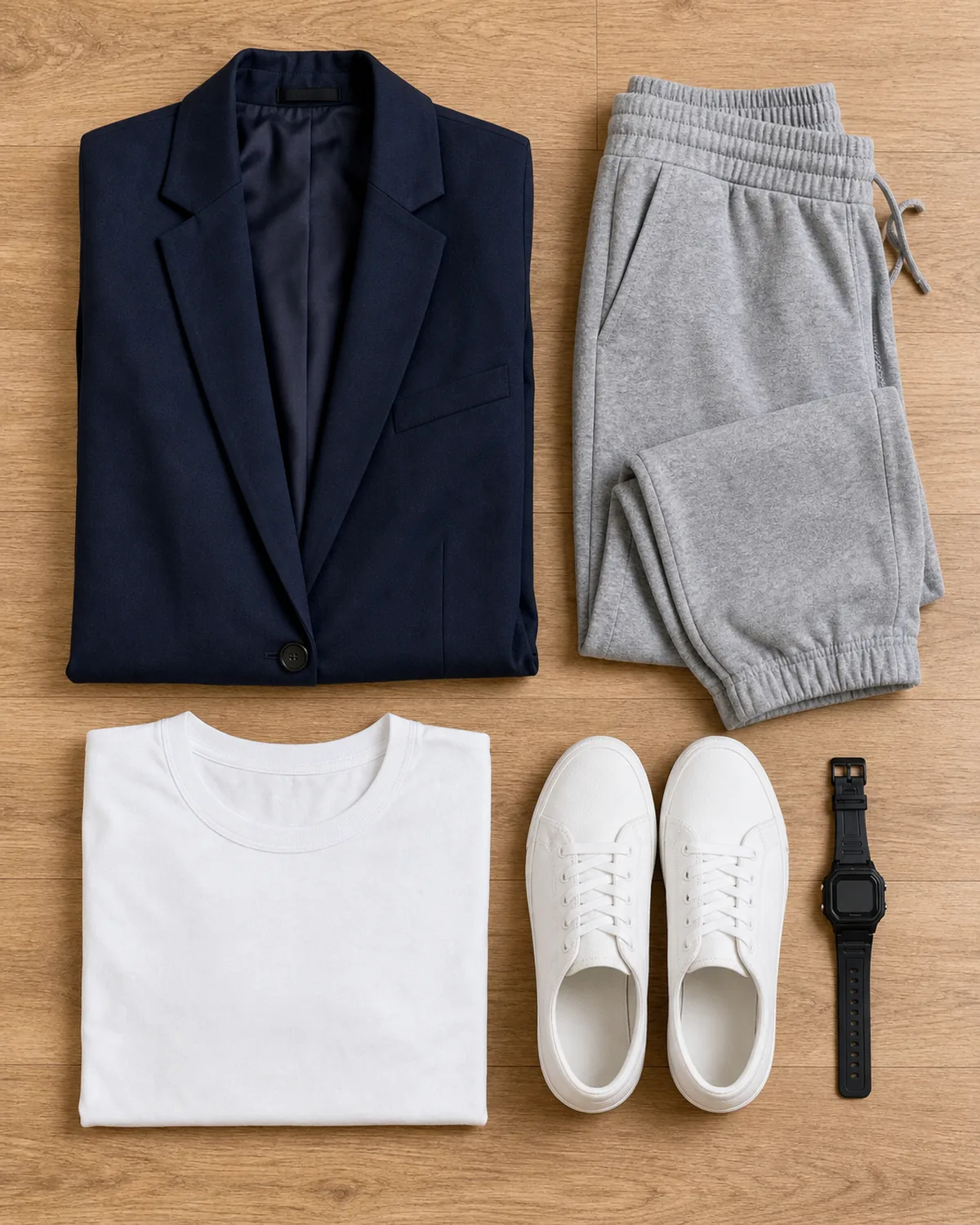
Georgia Southern's educator guide rules out athletic shoes "unless athletic activity is appropriate for instruction," which is the opening for PE and field days. A tapered jogger paired with a structured blazer gives you the exception without looking like you gave up. The blazer comes off for the field and goes back on for the hallway.
This is the only outfit on this page where athletic shoes are appropriate. Published guidance excludes running shoes on ordinary teaching days. The same goes for graphic tees, even under a blazer. A plain crew neck is the line.
- Joggers and tees are normal in elementary settings but out of place in most high schools
- Athletic shoes are fine for this day only; switch back to closed-toe flats tomorrow
- Spirit-day tee shirts are a separate exception in most guides and do not extend to regular days
- A tapered jogger in a clean fabric reads as intentional; a baggy sweatpant does not
8. What to look for before you try it on
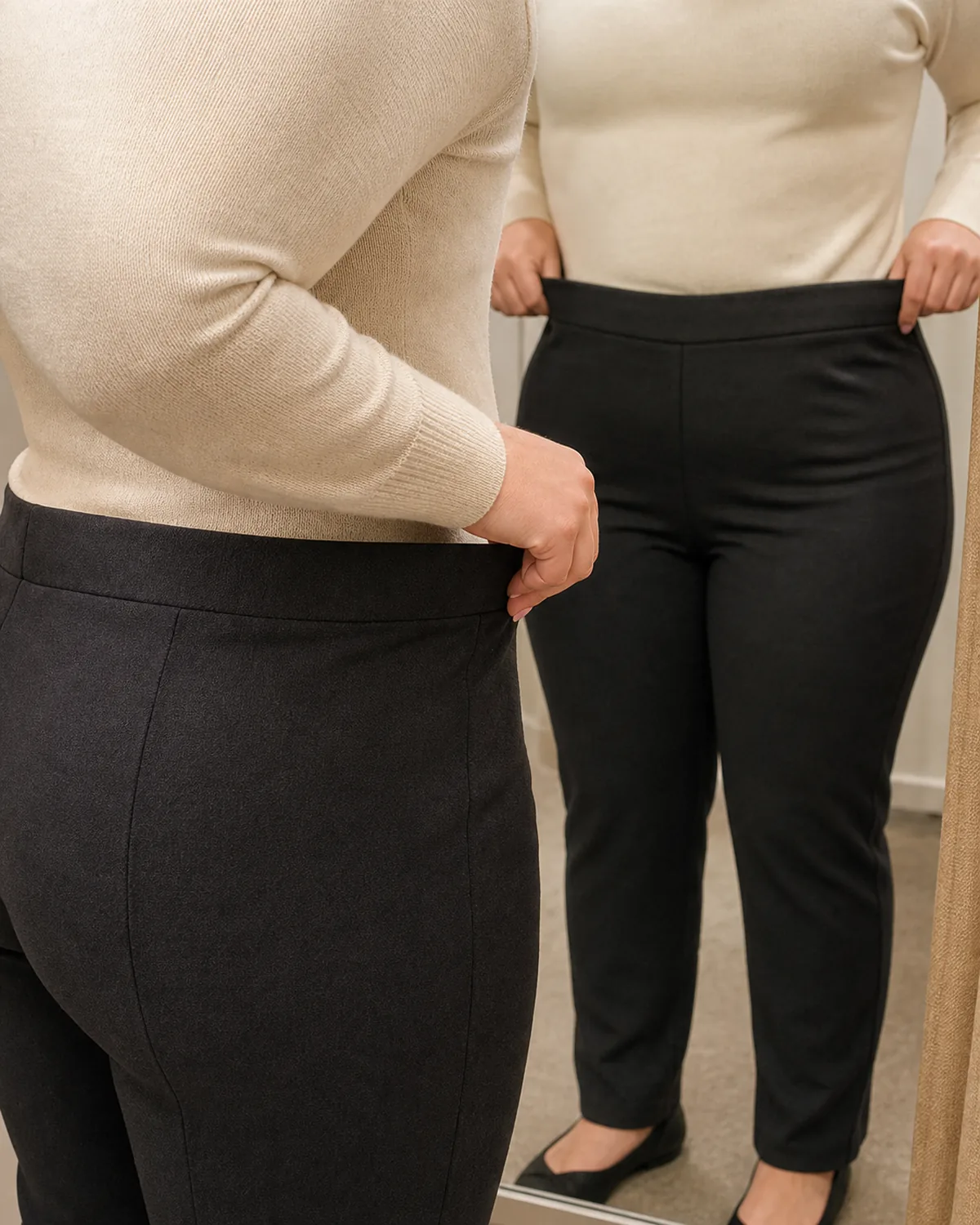
This is not an outfit. It is the shopping method that makes the outfits above work. The dress code rules are the same regardless of size, but the way you check whether a garment will survive a teaching day changes when the fabric has more body to cover and more movement to accommodate.
Stretch test: pull the fabric at the widest point and watch whether it springs back. If it stays stretched, it will bag out by lunch. Bend test: crouch fully in the fitting room and check that nothing rides, gaps or reveals.
Size chart: measure your actual hip and compare it to the brand's chart. Do not buy by the number on your current clothes. Sizing varies by brand, and a number that works at one store may not work at another.
- Sit in the fitting room chair for twenty minutes if they let you, and check that nothing shifts
- If your school has a written dress code, read it before you shop; it outranks anything on this page
- Buy one complete outfit first and wear it for a full school day before buying more of the same cut
- Ponte, heavy jersey and structured cotton blends hold up to daily wear better than thin polyester
Where the dress-code definitions come from
- The Evolution of Teacher Dress Codes: Adapting to Online Learning — Indeed
- What Does It Mean for Teachers to Dress 'Professionally'? — Education Week
- Professional Appearance for Educators — Georgia Southern University Libraries
Keep this one
Save it where you plan outfits
Pin the image above to the board you actually check on a Sunday night. This guide is written to be re-read, not read once.
Tonight, before you close this tab
- Pull tomorrow's outfit from the hanger tonight and check that nothing gaps or pulls when you sit
- Crouch and reach once in tomorrow's outfit, in front of no one, and watch for riding or shifting
- Measure your actual hip and compare it to the size chart before ordering anything new
- Check that the trouser waistband stays flat after sitting for twenty minutes