18 Lawyer Outfits for Plus Size Women That Meet the Dress Code and the Body
Plus size lawyer outfits for women sorted by courtroom, client meeting, and office day, each checked against published dress code guidance.
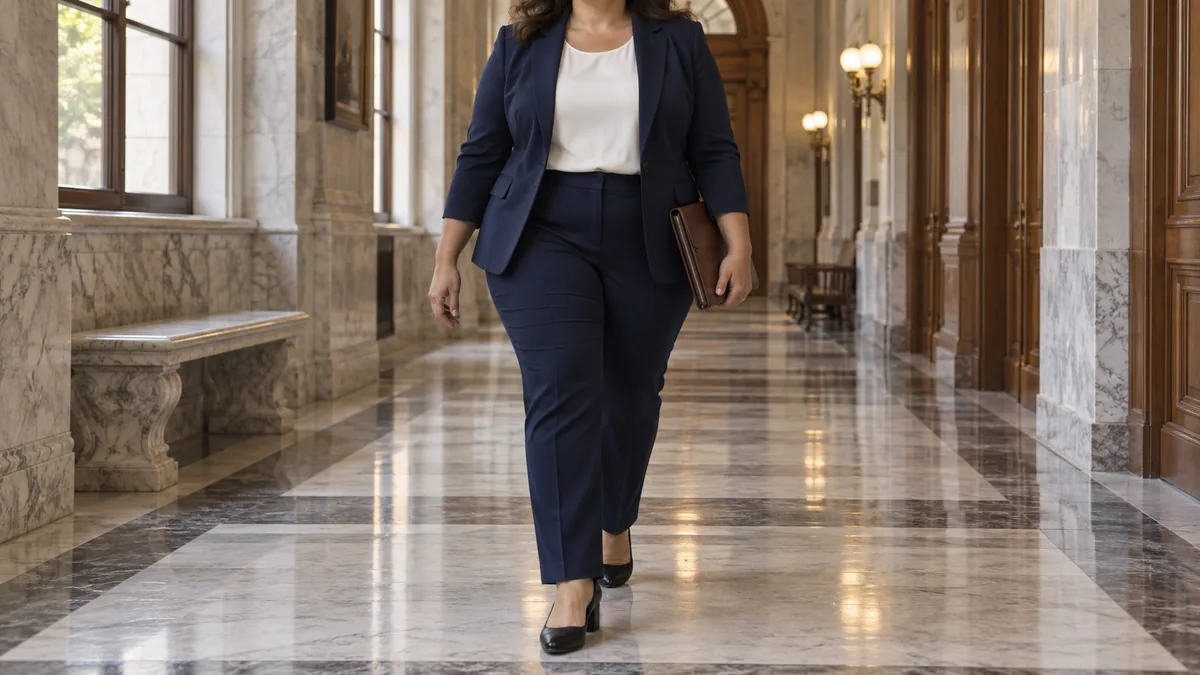
Working out an outfit for tomorrow? Save this page. It is easier to skim the night before than to remember.
At a glance
Works
- A matched two-piece suit in navy or charcoal with closed-toe pumps
- A knee-length A-line or straight skirt with a tucked blouse
- Block-heel pumps in black or dark neutral for all-day standing
Depends
- Dark tailored jeans, but only where your office handbook explicitly allows denim
- A collarless blazer that clears most office dress codes, but check your court's local rules before wearing it to a hearing
Skip
- Sleeveless or collarless shirts without a layer on top
- Sandals, flip flops, or athletic shoes
- Bold patterns or ornaments that draw attention in the courtroom
Law is one of the few professions where the dress code is partly written down and partly enforced by the people in the room. For a plus size woman, the rules do not change, but the fit does.
Berkeley Law's career office recommends suits in a dark, neutral colour with closed-toe, low-heel shoes. The Northern District of Oklahoma lists sandals, sleeveless shirts, and athletic wear as items to avoid. These are the baselines.
Each outfit here is sorted by the setting it serves: courtroom, client meeting, or internal office day. Where a claim can be judged right or wrong, the source is cited at the bottom of this page.
1. Navy Two-Piece Suit With a White Shell
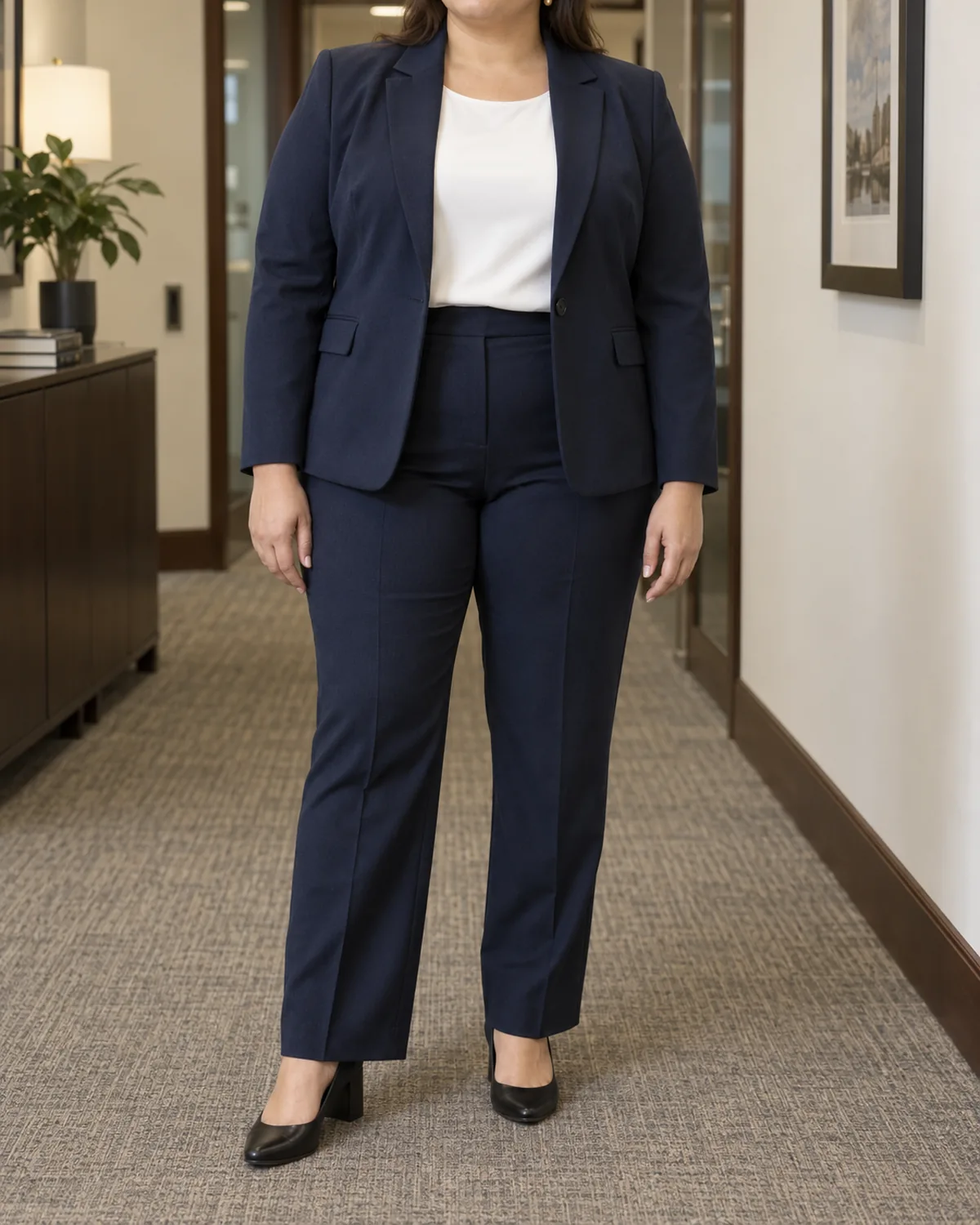
The matched suit is the courtroom baseline. Berkeley Law's guidelines call for "a two-piece suit where both pieces match in fabric and color" in a dark neutral like navy, black, or charcoal. A white shell keeps the neckline simple. For a plus size frame, the key fit points are the shoulder seam sitting on the actual shoulder and the jacket closing flat across the stomach.
- Try the jacket buttoned while sitting before you wear it to court
- Check that the trouser hem breaks once at the top of the shoe, not pooling
- Keep the shell high enough that leaning forward does not expose anything
- Match the trouser fabric and shade to the jacket under office lighting, not just daylight
2. Relaxed-Shoulder Blazer With a Ponte Midi Skirt
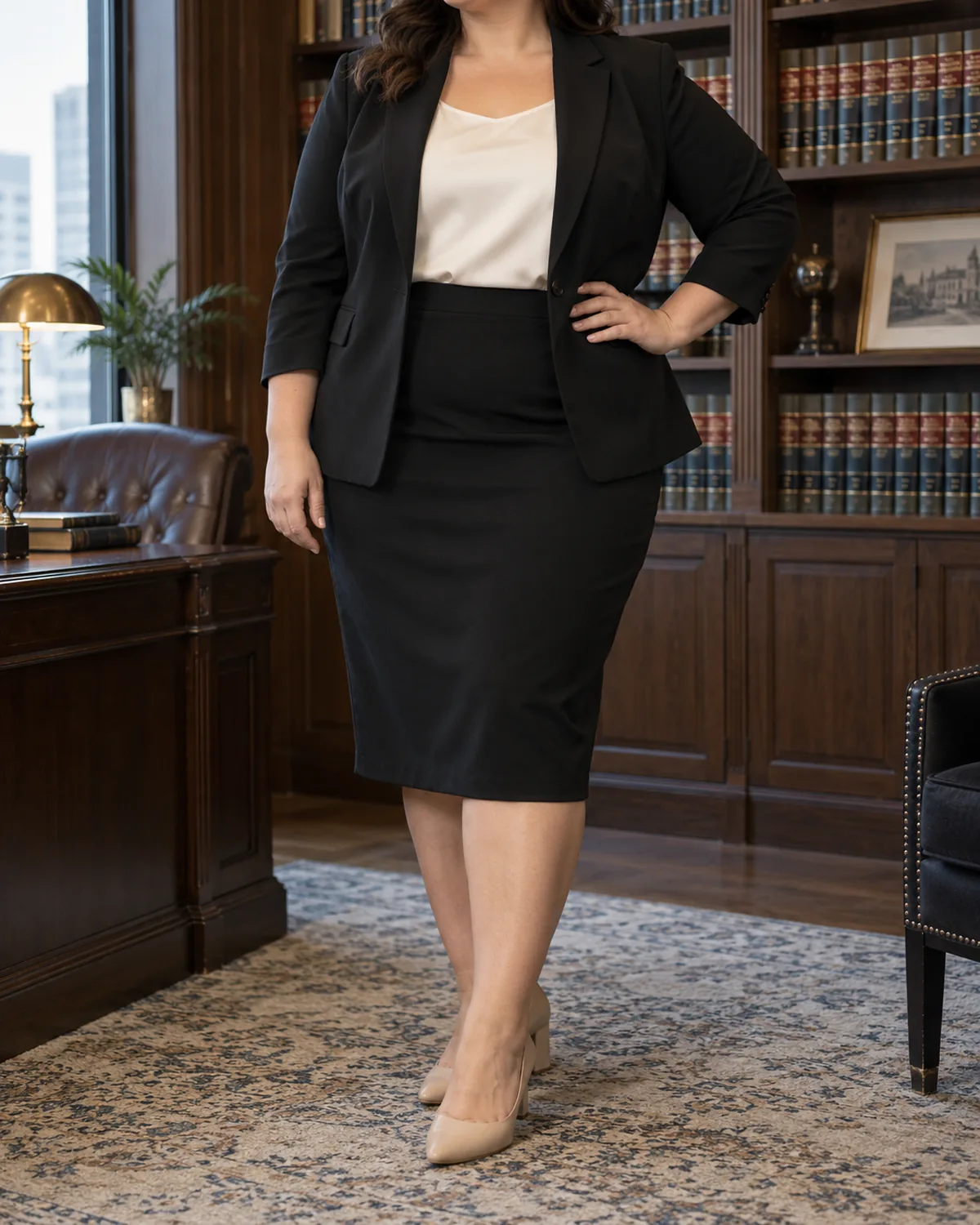
When the full suit feels too stiff for an internal meeting or a document-heavy office day, a single-button blazer with a softened shoulder reads professional without the rigidity. Pair it with a pull-on ponte midi skirt in the same dark shade so the pieces read as a set without actually being one. The ponte fabric moves with a fuller hip without riding up through the day.
- Pick the blazer and skirt in the same shade of black or charcoal so they read as a matched set from a distance
- Make sure the skirt falls at or below the knee when standing. Berkeley Law's guideline is knee-length at minimum
- Choose a ponte weight heavy enough to hold its shape without clinging
- Swap the shell for a crew-neck if the neckline is already covered by the blazer's lapel
3. Charcoal Trouser Suit With a French-Cuff Blouse
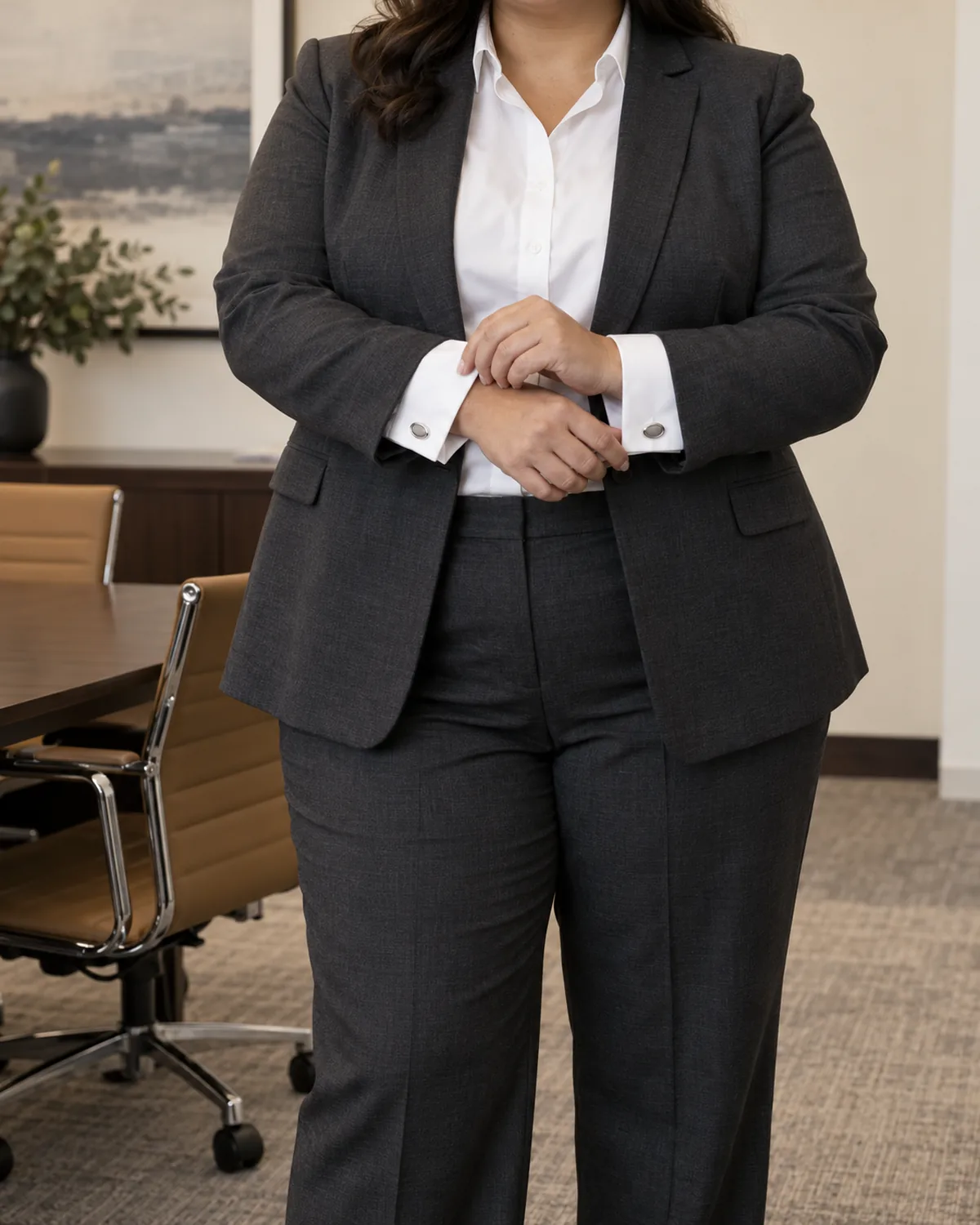
A second suit option in charcoal gives your rotation a visual shift from idea 1 without stepping outside the dress code. The French-cuff blouse is the differentiator: the cuff link adds a single point of visual interest without competing with the suit's line. This is the suit to wear on days when the navy one is at the cleaners or when the setting calls for a slightly different register.
- Keep cuff links small and flat. Anything dangling reads as jewellery, not hardware
- Make sure the blouse cuff extends about one centimetre past the jacket sleeve
- Press the jacket the night before, paying attention to the collar roll and the lapels
- A charcoal suit reads slightly less formal than navy; save the navy for the courtroom if you only have one hearing that week
4. Block-Heel Pumps With Every Courtroom Look
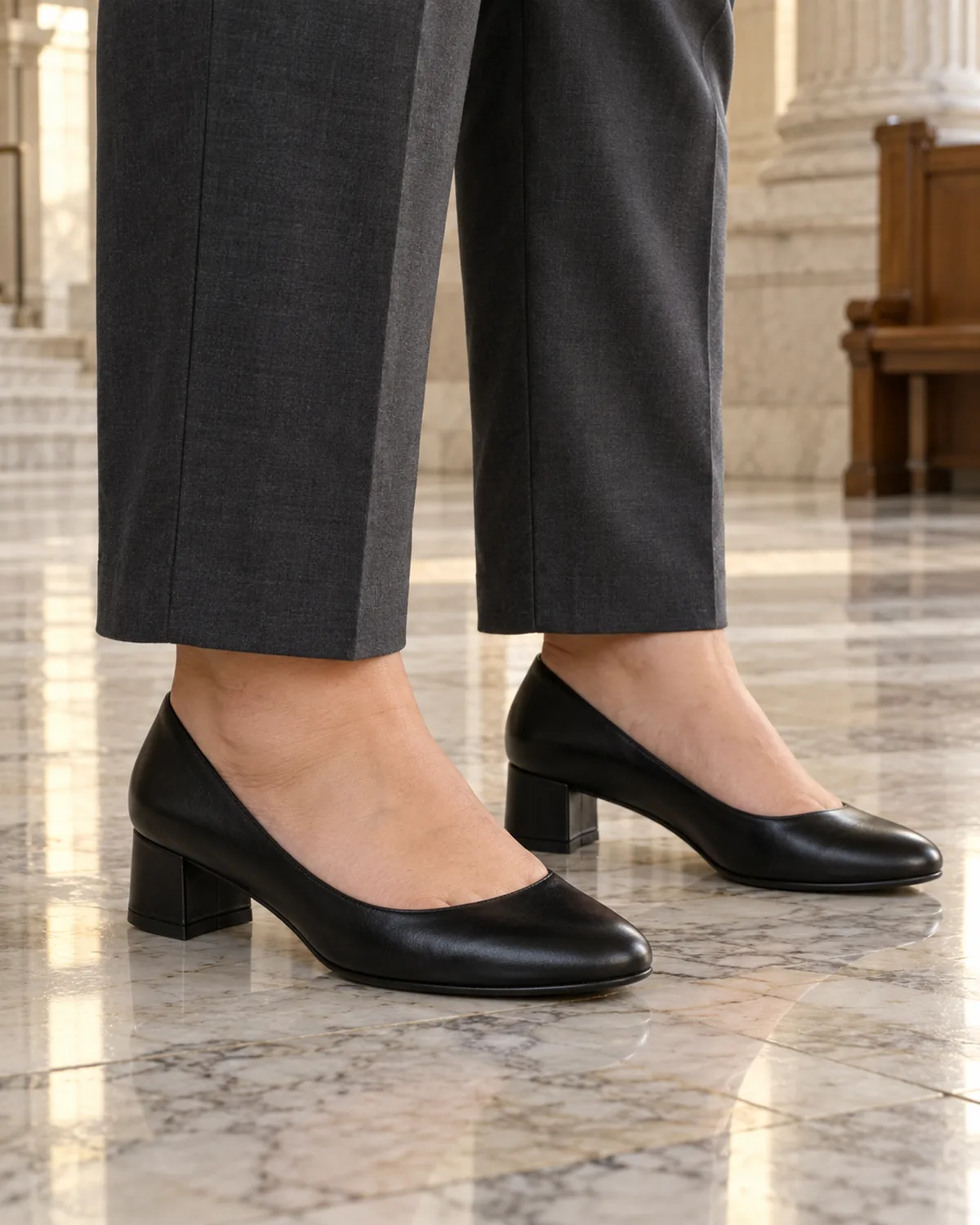
Berkeley Law's interview guidelines recommend "closed toe and low heel" such as "loafers, oxfords, low-heeled pumps or slingbacks." The Northern District of Oklahoma counts sandals as casual attire to avoid. For a plus size woman who may stand for extended periods in court, a block heel gives more ground contact and stability than a stiletto without looking flat.
- Choose a heel height between two and four centimetres, tall enough to read as a pump, short enough to stand in
- Stick to black or a dark neutral that disappears into the trouser hem
- Break the shoes in before a court date, not during one
- Keep a second pair in your bag in case the first pair fails midday
5. Dark Ponte Trousers and a Collarless Blazer
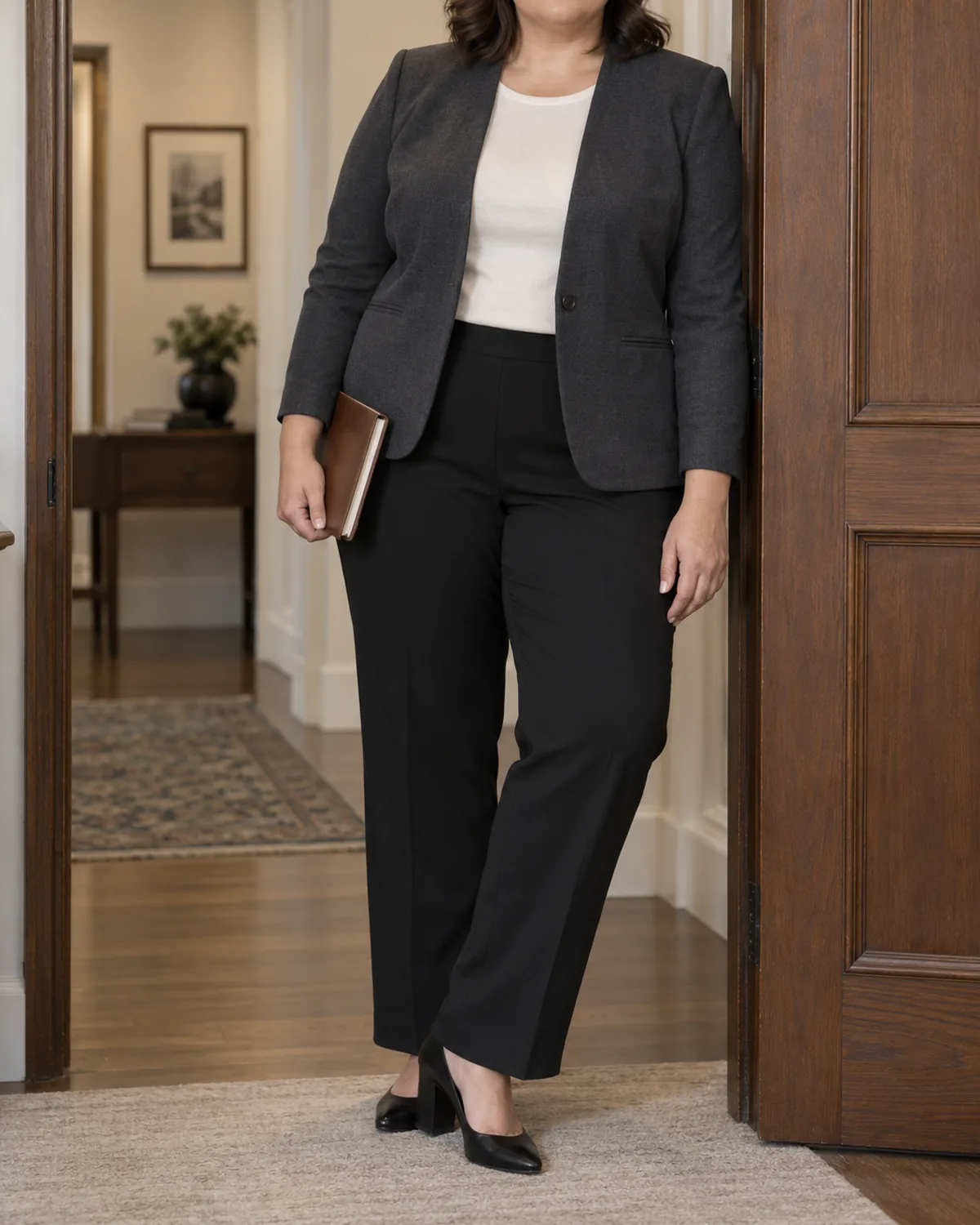
For offices where the full suit reads overdressed on non-court days, dark separates bridge the gap. The collarless blazer still carries structure but without the formality of a notched lapel. Ponte trousers give stretch and recovery through a long sitting day without the wrinkle risk of wool. The outfit clears the "no collarless shirts" line because the blazer is the outer layer, not the shirt.
- Pair with a crew-neck or mock-neck top underneath, not a button-front
- Keep the trouser and blazer in the same colour family so they read as one piece from across the room
- Avoid ponte so thin that it shows underwear lines. Hold the fabric up to light before buying
- This is an office-day outfit, not a courtroom one; swap in a matched suit if a hearing comes up
Where to start
Find your situation, skip ahead
You are heading into court
Start with a matched two-piece suit in navy, black, or charcoal. No separates, no patterns.
01 Navy Two-Piece Suit With a White Shell03 Charcoal Trouser Suit With a French-Cuff Blouse04 Block-Heel Pumps With Every Courtroom Look14 Minimal Jewellery as a Rule
You have an internal office day with no hearings
Drop the full suit for dark separates with a structured blazer or cardigan.
05 Dark Ponte Trousers and a Collarless Blazer07 Structured Cardigan Over a Collared Shirt and Trousers09 High-Waist Wide-Leg Trousers and a Fitted Shell10 Navy Blazer, White Tee and Dark Tailored Jeans
You are meeting a client outside the office
A dress or suit that covers the courtroom baseline while moving easily through a restaurant or lobby.
08 Draped-Front Blouse Tucked Into a Straight Skirt12 Longline Blazer Over a Column Dress15 Camel Blazer, Black Shell and Dark Trousers16 Fit-and-Flare Dress Under a Structured Jacket
6. Knee-Length A-Line Skirt and a Tucked Blouse
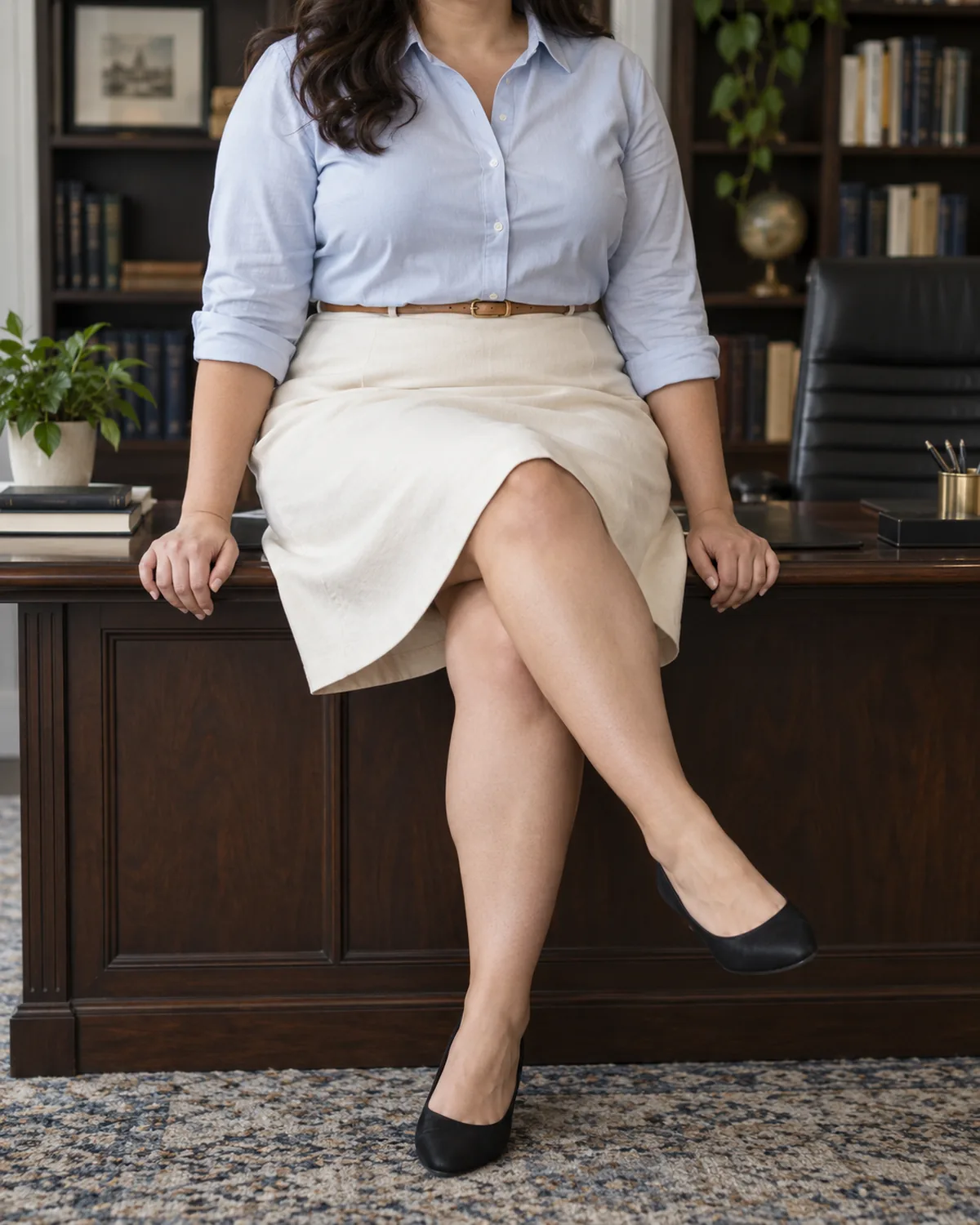
The A-line silhouette sits at the knee when standing and does not ride up when sitting. Those are the two positions that matter most in a courtroom or conference room. A tucked blouse defines the waist without a belt. Berkeley Law recommends knee-length for skirts; the A-line gets there without clinging to the hip.
- Check the skirt length sitting, not just standing. If it rises more than five centimetres above the knee, size up
- Tuck the blouse all the way around, not just in front
- Choose a skirt with a flat waistband or a concealed elastic that sits under the blouse
- Pair with opaque tights in a cooler courtroom or bare legs in summer if the office allows it
7. Structured Cardigan Over a Collared Shirt and Trousers
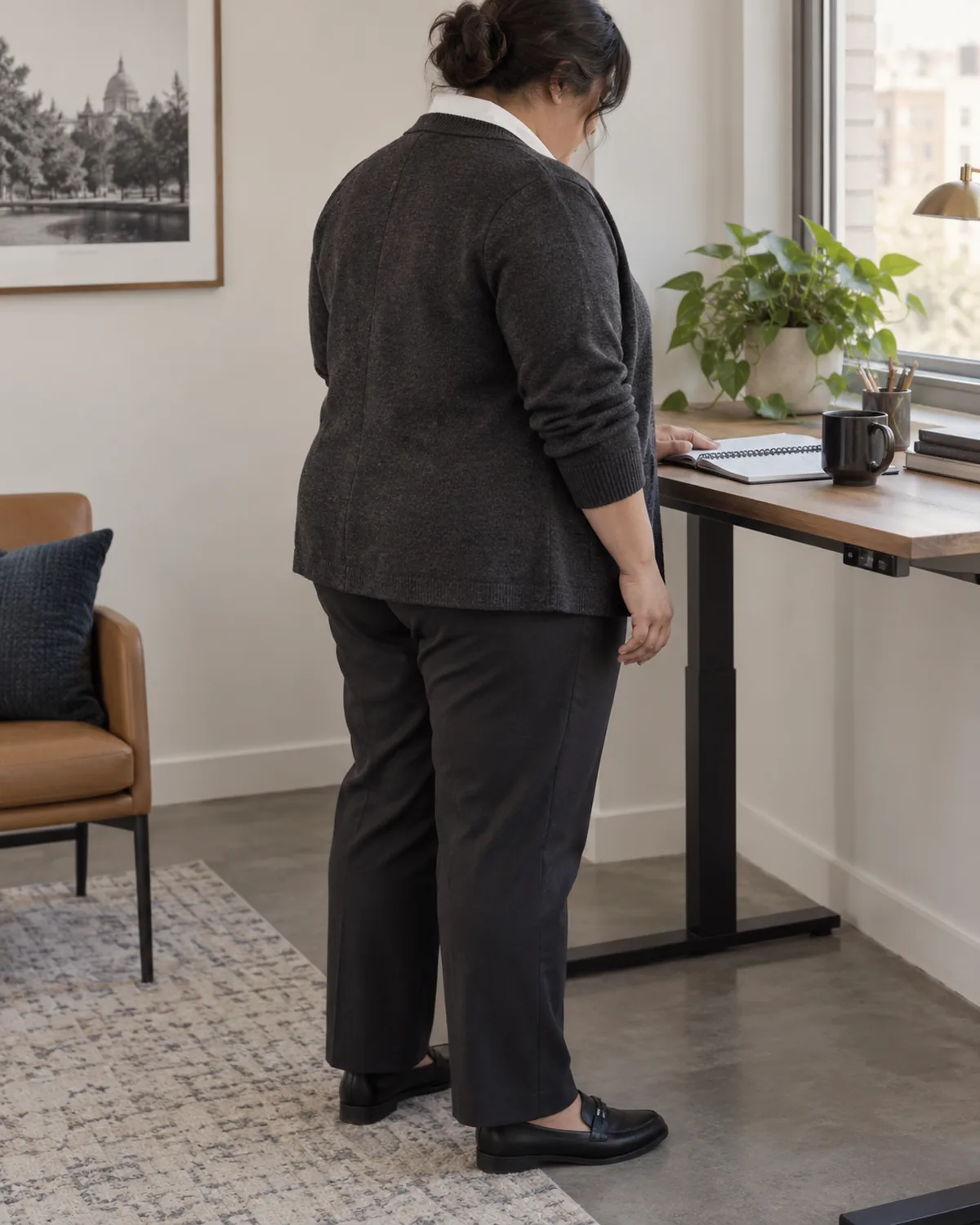
A cardigan replaces the blazer on days when the office thermostat wins. The structured version, with a defined shoulder seam, heavier knit, and no stretch-out, reads as a layer, not loungewear. The collared shirt underneath does the work of looking court-adjacent without the full suit. This is for internal days, depositions, and mediations where the blazer feels like too much.
- Pick a cardigan that ends at or below the hip. Cropped cardigans read casual
- The collar from the shirt underneath should sit flat above the cardigan's neckline
- Avoid any cardigan with visible pilling, stretched cuffs, or a drooping hem
- If a hearing gets added to your calendar last-minute, swap the cardigan for a blazer from your desk drawer
8. Draped-Front Blouse Tucked Into a Straight Skirt
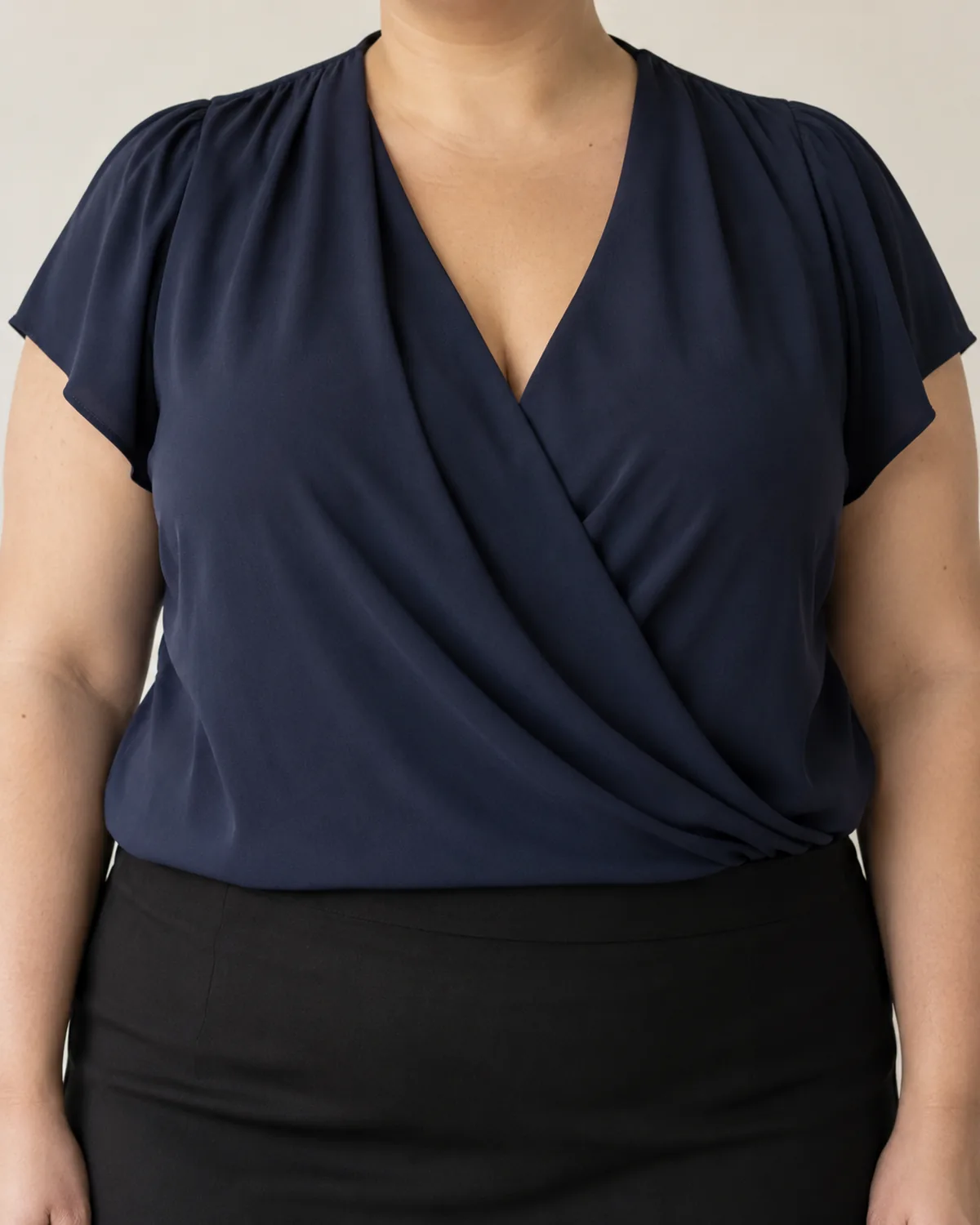
The mock-wrap neckline gives the V shape without a tie, a belt, or a closure that needs adjusting. Paired with a knee-length straight skirt, the drape sits flat under a blazer for court days or stands alone on office days. For a plus size frame, the drape falls best when the blouse has enough ease through the bust that the fabric is not pulled taut.
- Look for a blouse where the drape crosses at or above the bust, not below it
- The straight skirt should have a back vent or a slight slit so you can walk without the hem pulling
- Tuck the blouse into the skirt at the natural waist, not the hip
- Layer a blazer on top for hearings. The drape disappears cleanly under a lapel
9. High-Waist Wide-Leg Trousers and a Fitted Shell
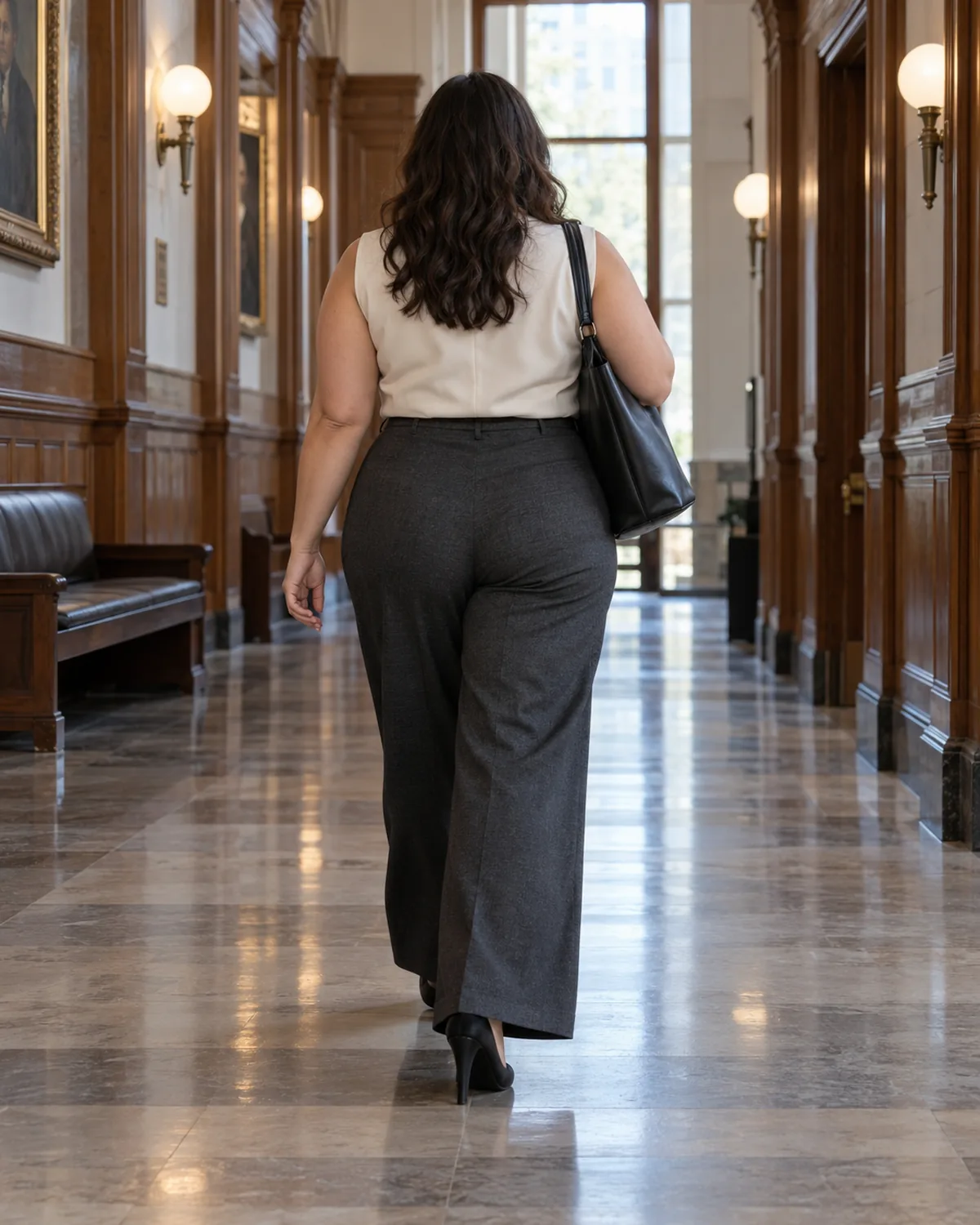
High-waist, wide-leg trousers balance a fuller hip by widening the line from the knee down. The fitted shell on top anchors the waist and keeps the silhouette from reading shapeless. Berkeley Law notes that each piece "should fit comfortably and lie well when standing, sitting, crossing and uncrossing legs." The wide leg accommodates all of those positions.
- The rise should hit at or just above the natural waist. Low-rise wide-legs read like palazzo pants
- Hem the trousers to just graze the top of the shoe when standing
- A shell that ends at the waistband, not below it, keeps the tuck clean
- Pair with a blazer draped over the chair for meetings and pulled on for hallway encounters
10. Navy Blazer, White Tee and Dark Tailored Jeans
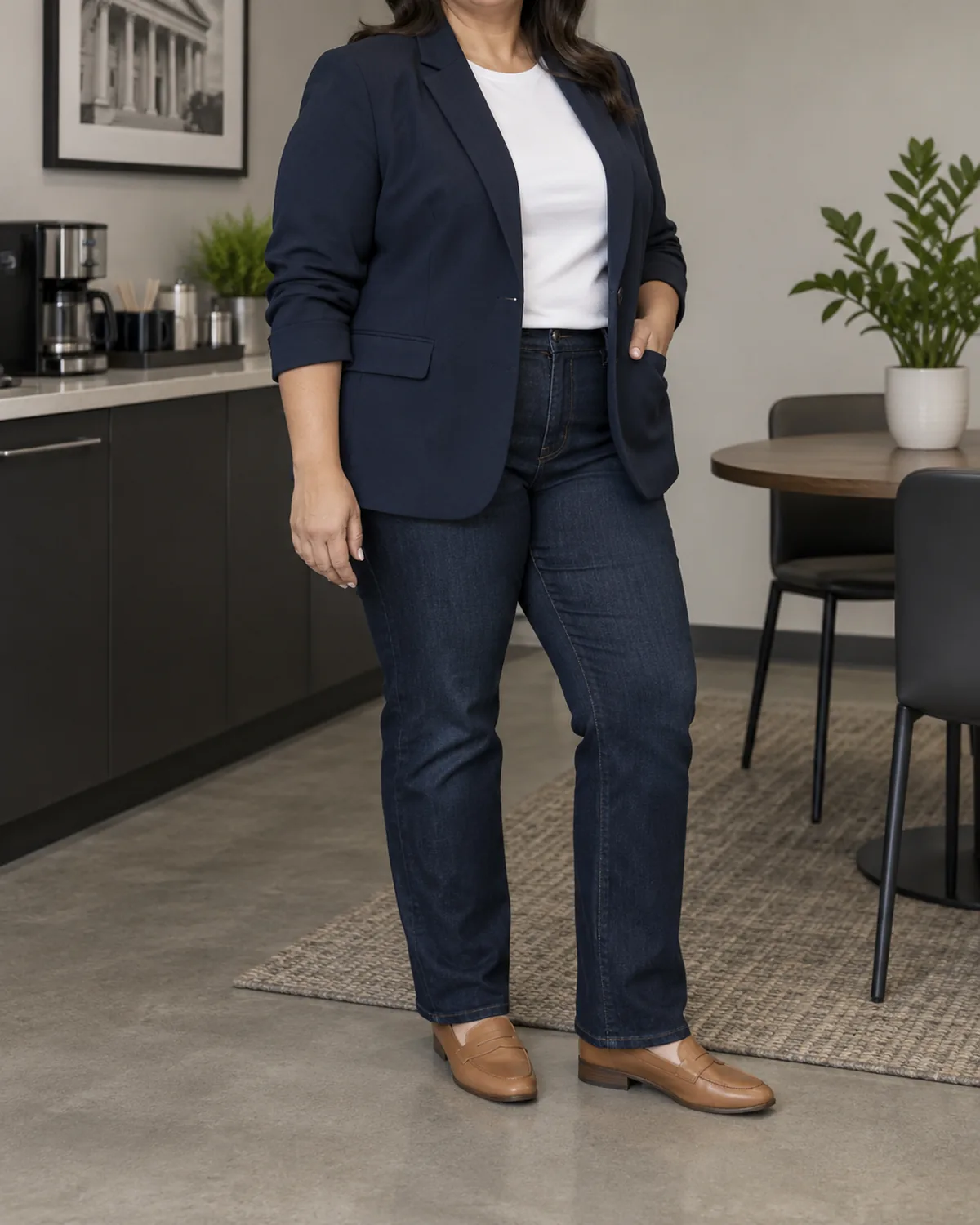
The Friday or casual-day option, and only where the office handbook explicitly allows denim. The Northern District of Oklahoma lists jeans as casual attire to avoid in court, and this outfit does not go to a hearing. The blazer elevates the jeans from weekend to weekday. The white tee keeps the palette clean and the look intentional.
- Read your firm's dress code on denim before wearing this. "Casual Friday" does not always include jeans
- Choose dark, non-distressed denim with a straight or slim leg
- The blazer must be structured enough to read as a blazer, not a knit jacket
- Swap the tee for a button-front if you have even one client-facing meeting on your calendar
11. Midi Pencil Skirt and a Silk Blouse
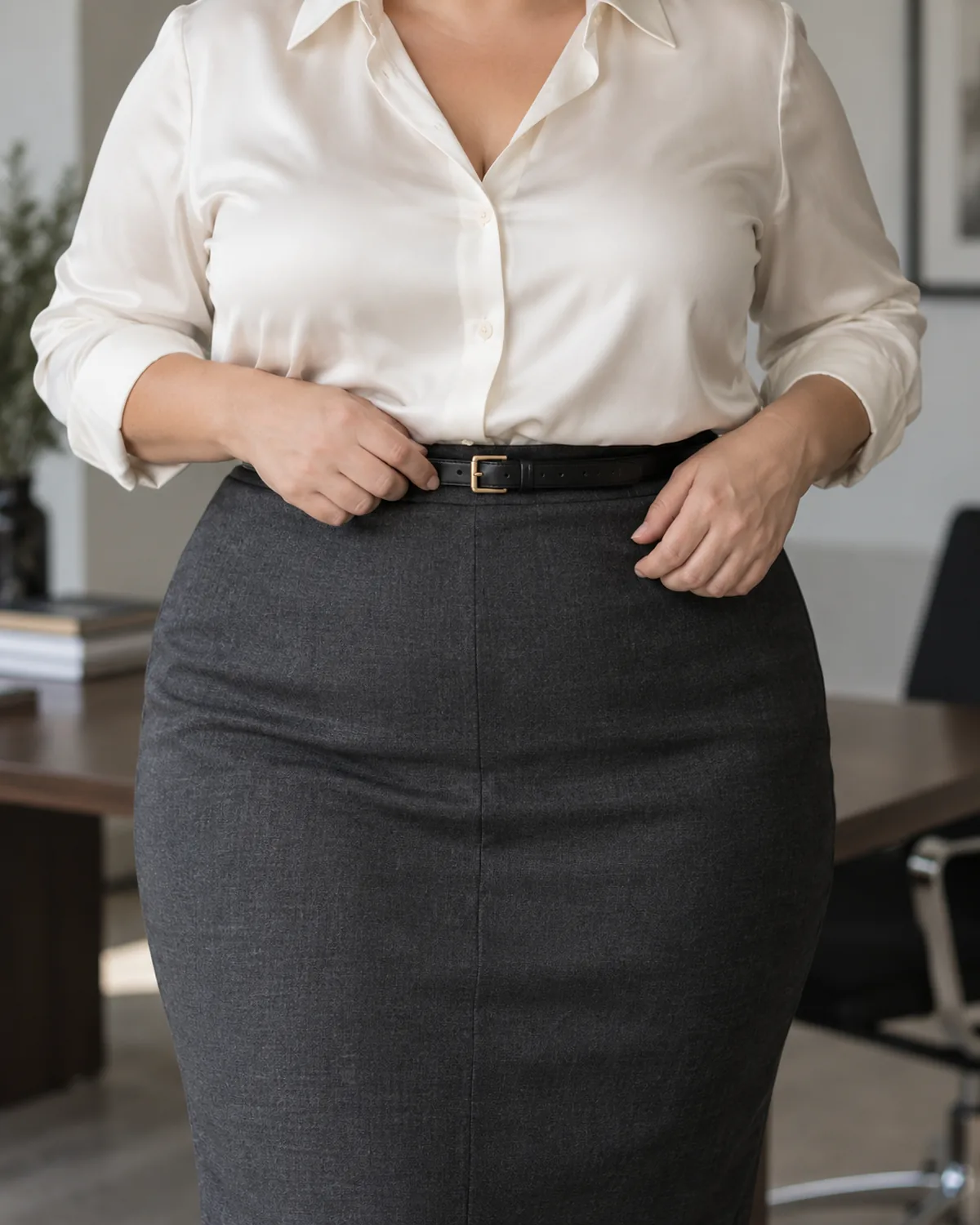
A below-the-knee pencil skirt with a strategic seam line lengthens the leg line. The seam draws the eye vertically instead of horizontally. A silk blouse adds texture without weight. For a plus size frame, the pencil skirt works best with a back vent that lets you walk at a normal stride and a waistband that sits flat under the tuck.
- Sit down in the skirt before buying. If the seams pull across the widest point, size up
- The silk blouse should be opaque enough that a camisole underneath is a choice, not a necessity
- Tuck the blouse and smooth it flat before standing; silk migrates
- Pair with the block-heel pumps from idea 4 for a client meeting
12. Longline Blazer Over a Column Dress
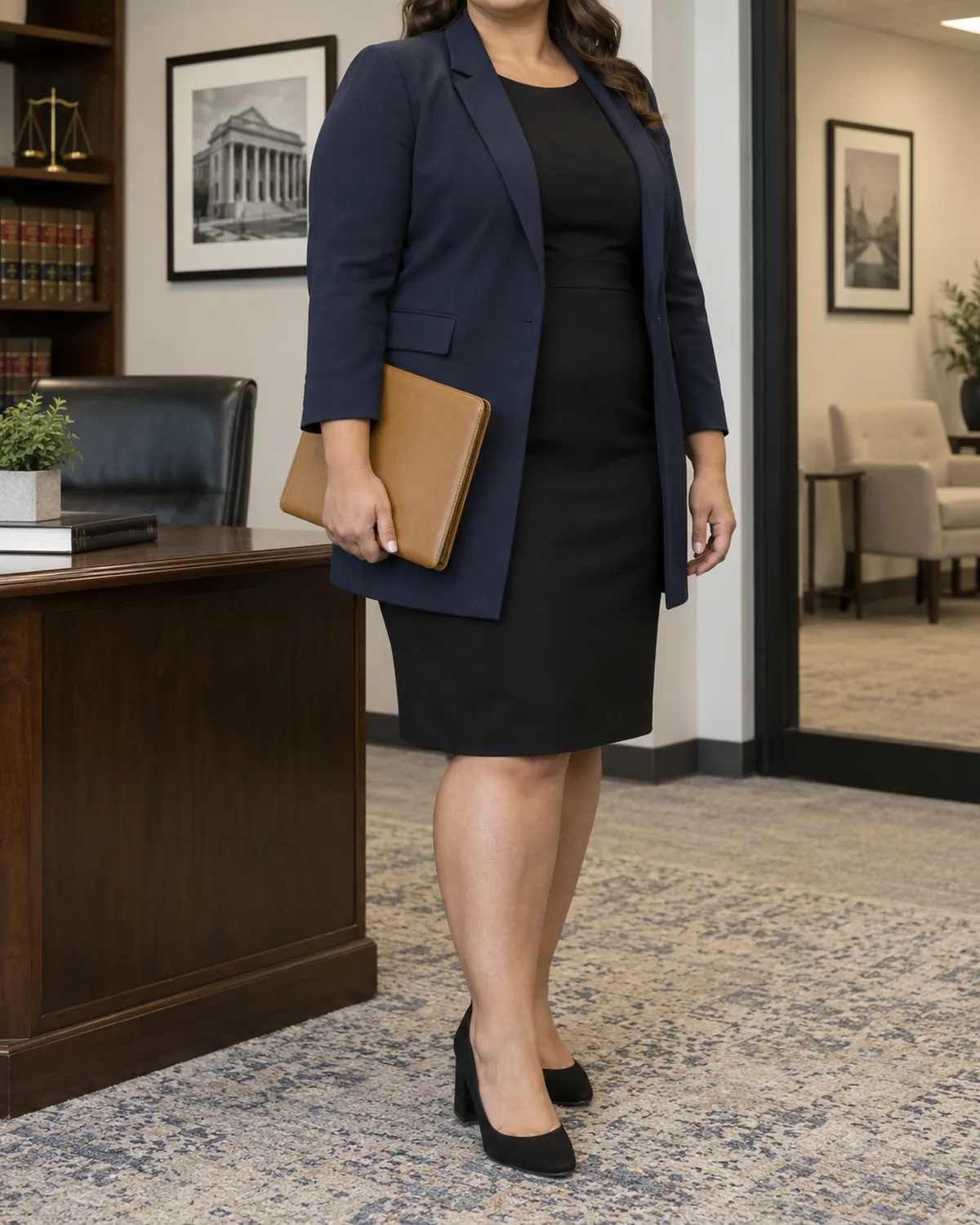
For the lawyer who prefers dresses but wants the coverage and authority of a blazer, the longline version ends below the hip and covers the widest part of the body without cutting the silhouette in half. The column dress underneath gives a single, unbroken vertical line. This reads as a suit equivalent in most offices and many courtrooms.
- The blazer should end at least ten centimetres below the natural waist to count as longline
- Choose a column dress with minimal seaming so it hangs without pulling
- The dress hem should sit at or below the knee. The blazer does not change the hem rule
- Carry a structured bag or folio in one hand to complete the silhouette
13. Ponte Jumpsuit With a Belt
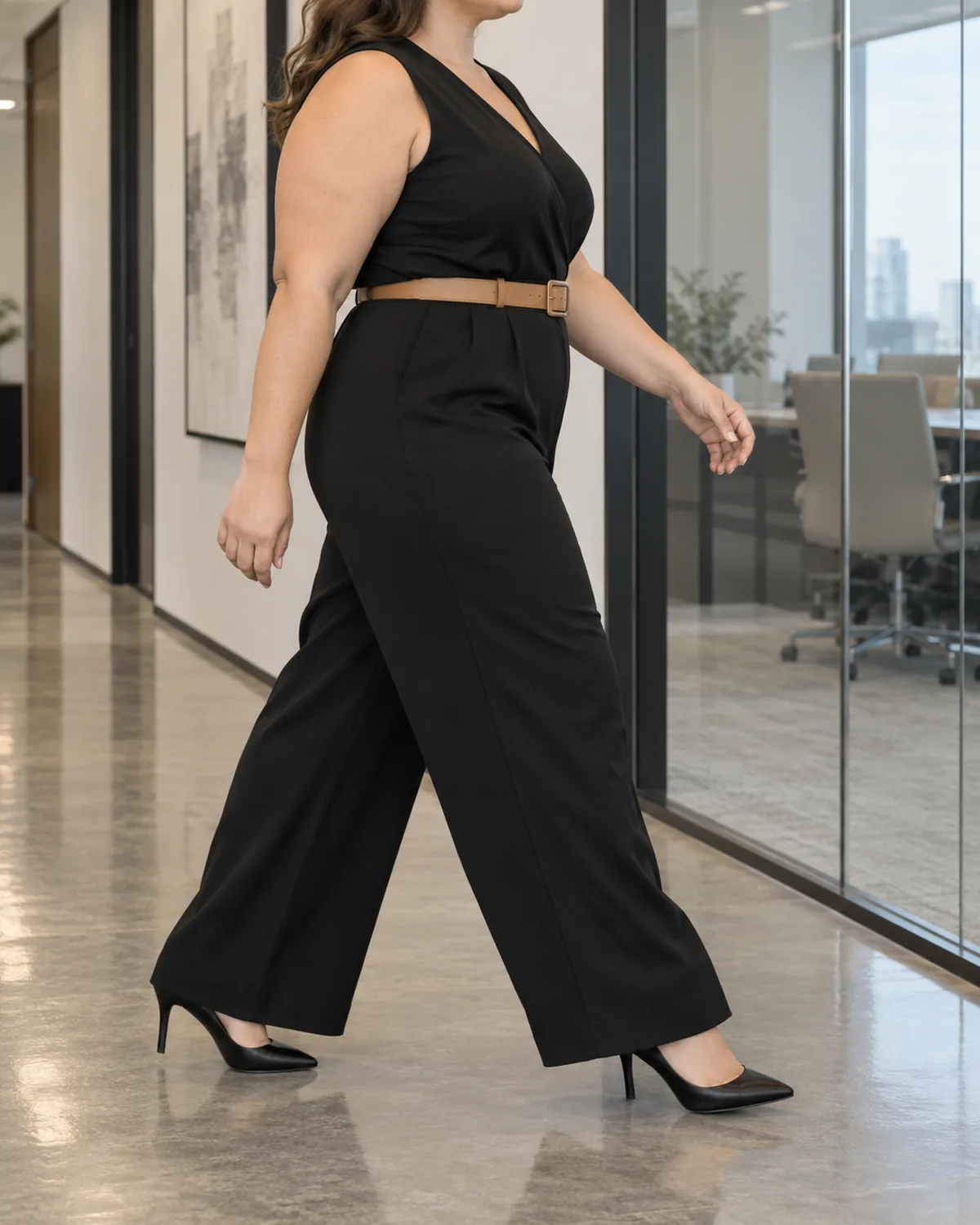
A single-piece alternative to the trouser suit. The V-neck and wide leg read as separates from a distance, and the leather belt at the natural waist gives the shape that a jumpsuit can lose without one. Ponte fabric provides stretch and recovery for a full day of sitting and standing. This works for offices where the dress code says "professional" without specifying "suit."
- Check that the jumpsuit torso is long enough that the crotch does not pull when standing
- The V-neck should stop above the bust line. Deep V-necks read as evening wear
- Choose a belt in a matching or similar tone so it does not break the vertical line
- Pair with a blazer for any external-facing meeting and remove it at your desk
14. Minimal Jewellery as a Rule
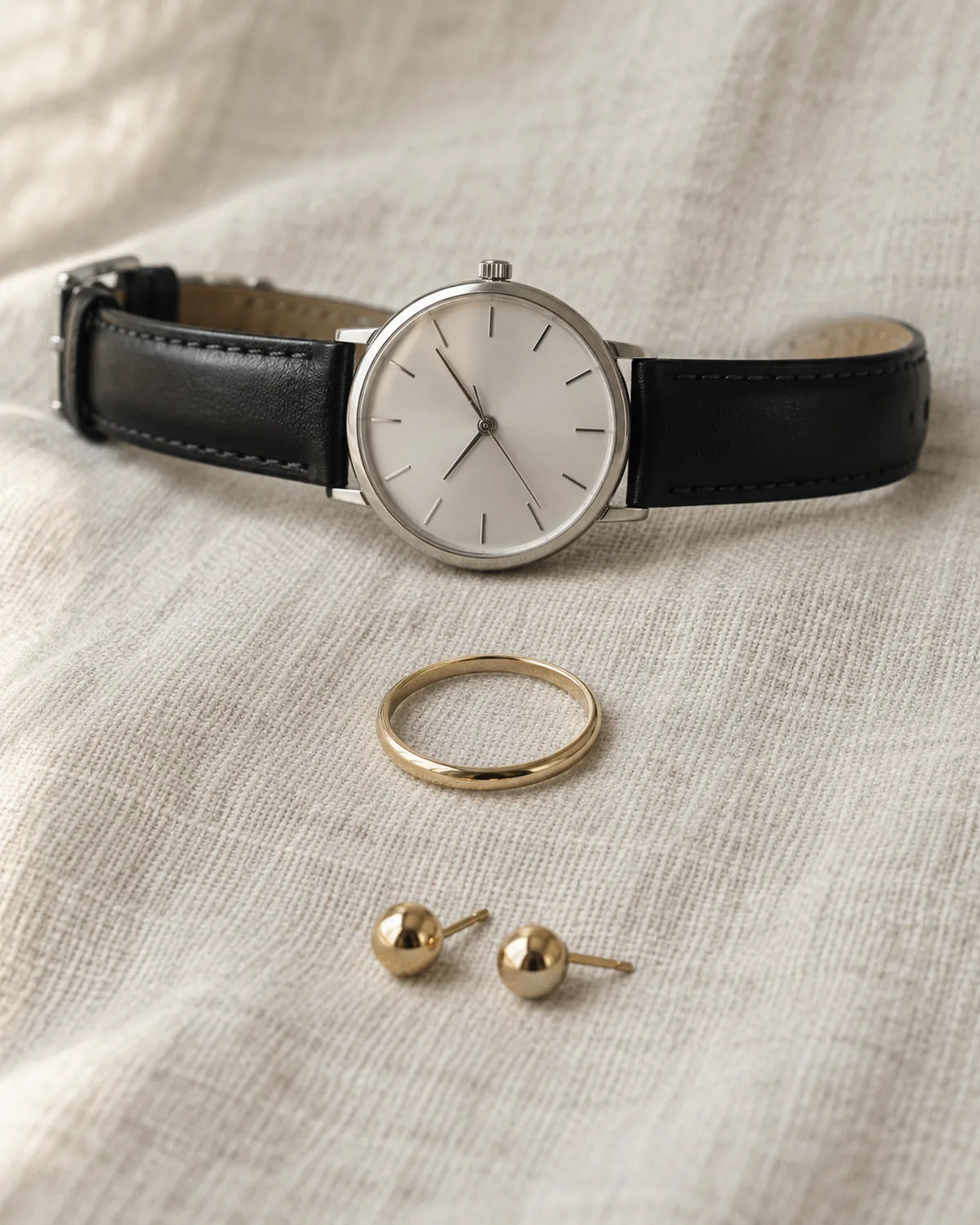
The Northern District of Oklahoma instructs that attendees should "abstain from any apparel or ornament calculated to attract attention to themselves." Berkeley Law's guideline is simpler: "keep it simple." One watch, one ring, stud earrings. This is not about taste. It is about what the setting allows before someone forms an opinion.
- Remove any piece you would not want a judge to comment on
- A watch with a leather or metal band reads professional; a smartwatch with a colourful band does not
- Stud earrings stay put; hoops and dangles move when you speak and can distract
- If you are unsure, fewer pieces is always the safer choice in a legal setting
15. Camel Blazer, Black Shell and Dark Trousers
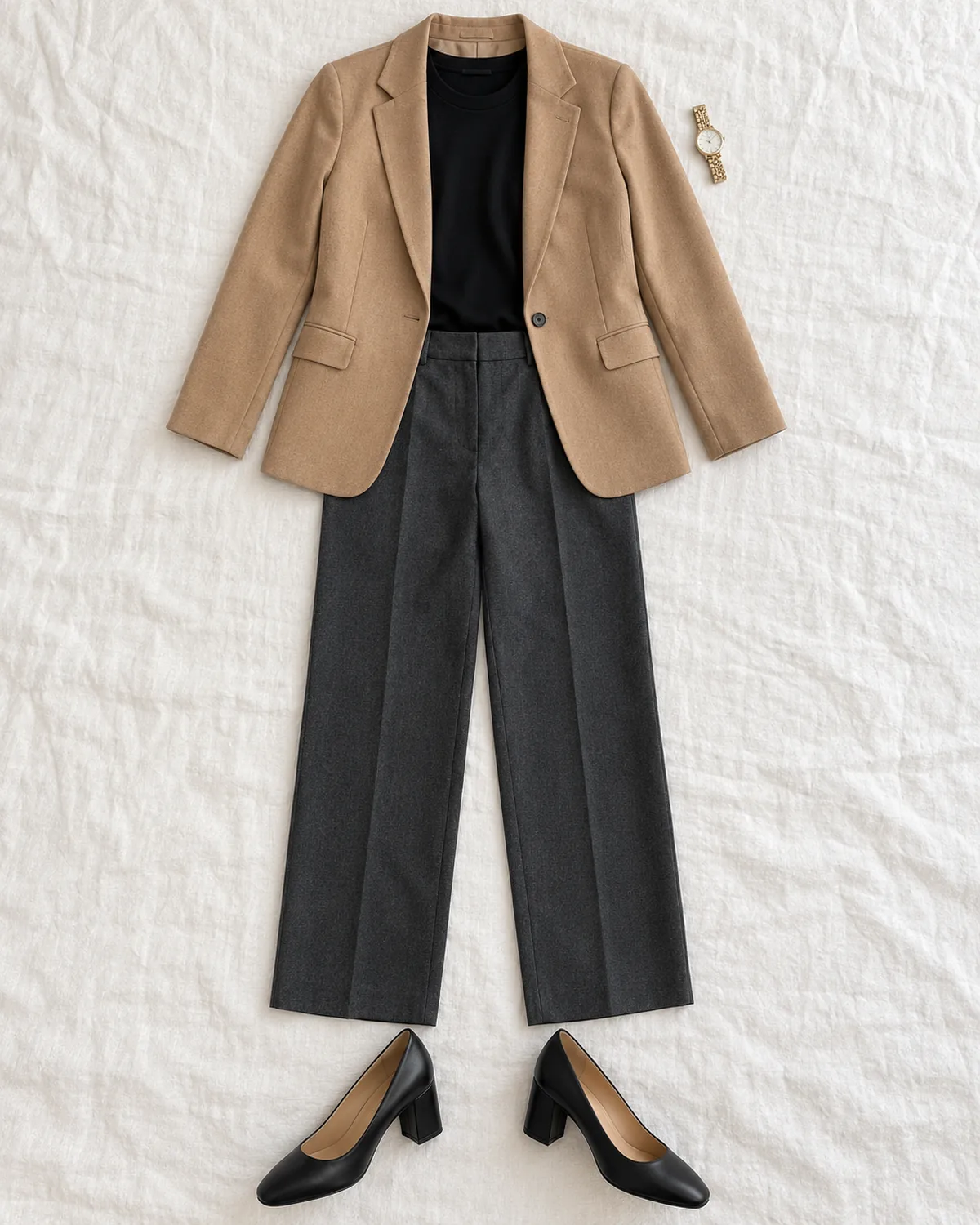
A contrast blazer that still reads neutral. Camel is business-appropriate without matching a suit and gives the eye something to land on without being loud. The black shell and dark trousers underneath do the structural work. This is for office days and client meetings where the full suit feels too heavy but jeans feel too light.
- Make sure the camel is a warm, muted tone. Bright tan reads casual
- The shell and trousers should match each other so the blazer is the only contrast piece
- Press the blazer; camel shows wrinkles faster than navy or charcoal
- This outfit does not go to a courtroom unless your jurisdiction is explicitly relaxed about colour
16. Fit-and-Flare Dress Under a Structured Jacket
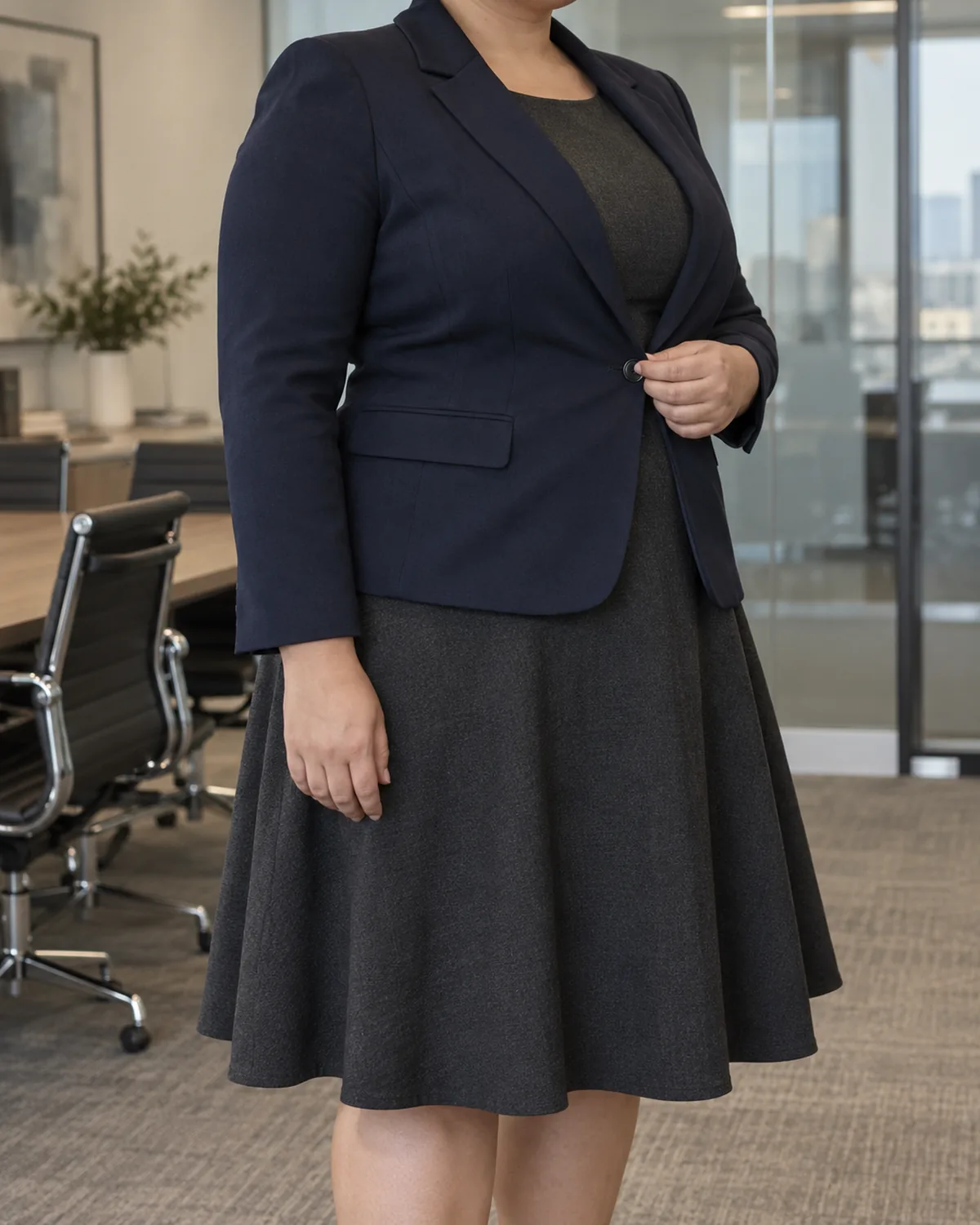
For client meetings where the full suit reads too corporate and separates read too casual. The dress flares below the waist for comfort and ease of movement while the structured jacket keeps the shoulders sharp and the silhouette intentional. The jacket is the anchor: remove it and the dress reads smart casual; keep it on and the look reads meeting-ready.
- The dress should flare from the natural waist, not the hip. A low flare point reads as a different silhouette
- The jacket should be short enough that the flare is visible below it
- Keep the dress in a dark neutral so the jacket and dress read as one outfit
- This is not a courtroom look unless the jacket closes cleanly and the dress hem reaches the knee
17. A Tailored Vest Over a Button-Front Shirt
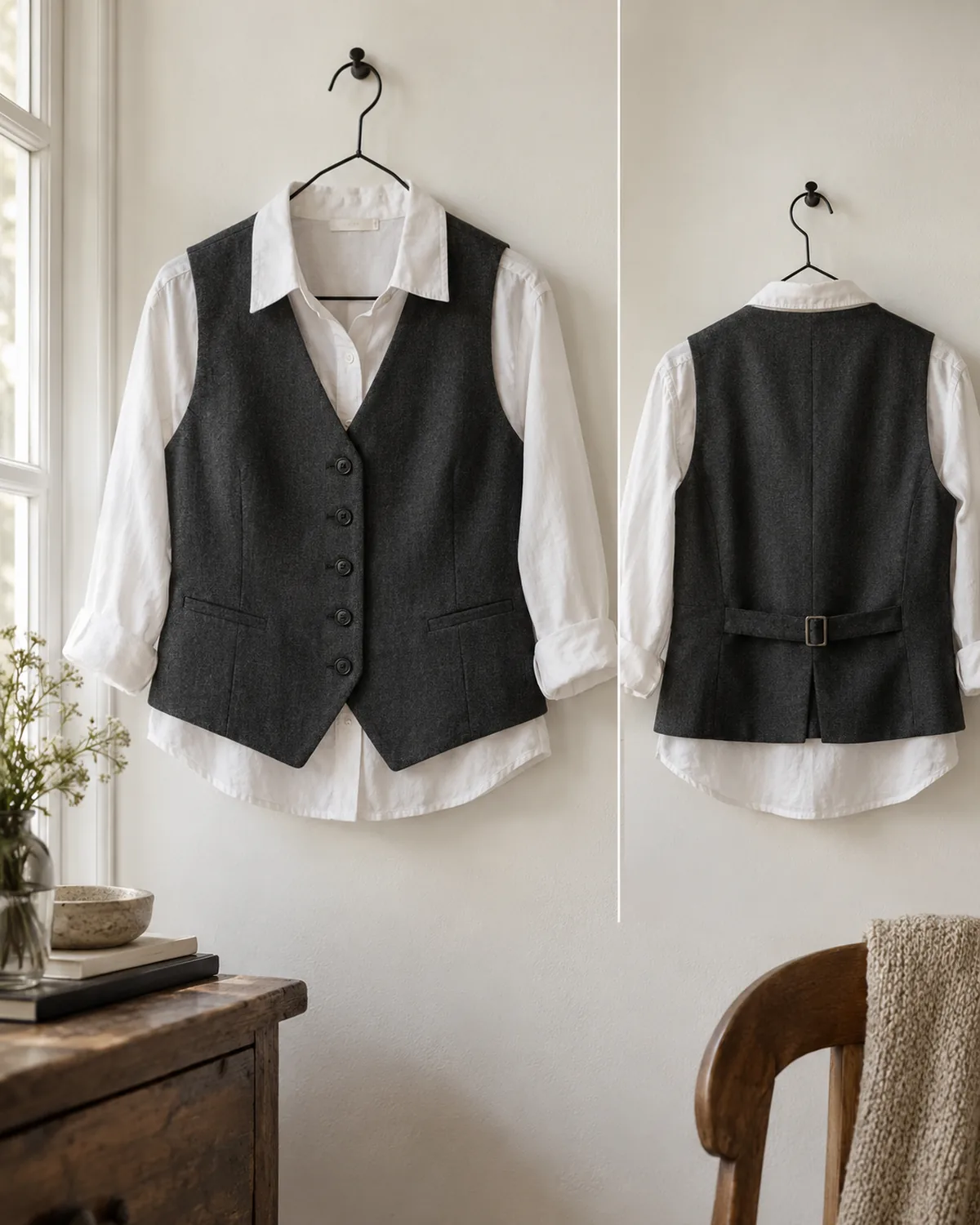
A three-piece silhouette without the jacket. The vest adds a layer and a clean vertical line without the bulk that a blazer adds in a warm courtroom. The button-front shirt provides the collar that most courtroom dress codes expect. For a plus size frame, the vest should close without pulling across the bust and the shirt should be long enough to stay tucked when you lift your arms.
- The vest should button flat with no gap between buttons. If it pulls, size up
- Choose a vest with a back panel that adjusts, not a fixed back seam
- The shirt collar should sit flat under the vest's neckline
- Pair with the trousers from idea 1 or idea 9 for a complete courtroom-ready look
18. Dark Trench Coat as Outerwear
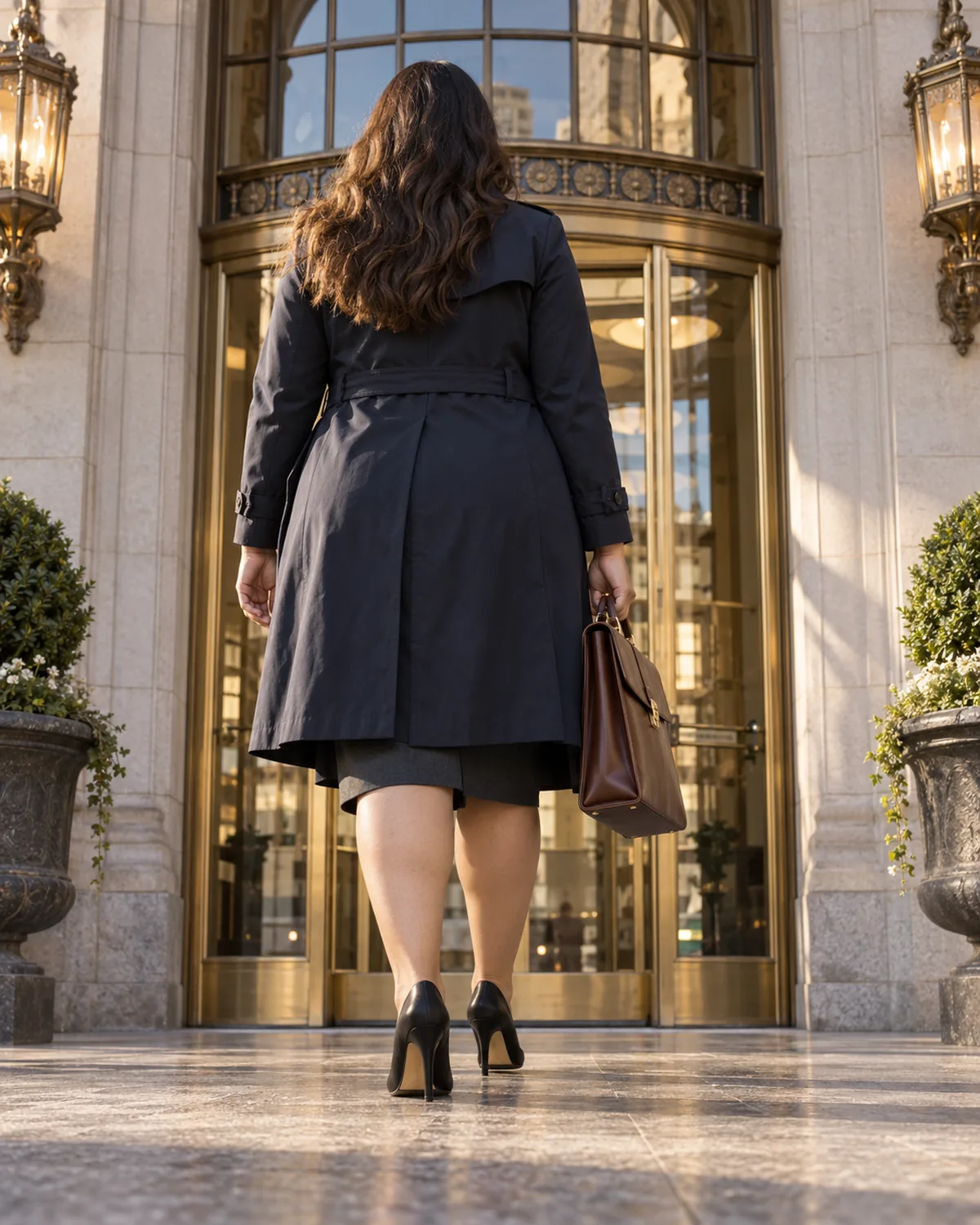
The arrival layer. What you wear walking into the building matters because it is the first thing the lobby, the security desk, and the opposing counsel see. A knee-length dark trench coat in a structured fabric reads intentional even when unbuttoned. It covers the suit underneath and signals that the rest of the outfit is just as considered.
- Choose a trench that ends at or just below the knee. Shorter reads casual, longer reads dramatic
- A belt at the natural waist gives shape; wear it tied at the front, not buckled
- Keep the coat dark enough that it works over both navy and charcoal suits
- Hang it before court. A crumpled trench undoes the impression before you take it off
Where the dress-code definitions come from
- Interviews: Dress and Presentation Guidelines — Career Development Office, Berkeley Law
- Proper Courtroom Attire — U.S. District Court for the Northern District of Oklahoma
Keep this one
Save it where you plan outfits
Pin the image above to the board you actually check on a Sunday night. This guide is written to be re-read, not read once.
Tonight, before you close this tab
- Pull out your darkest suit and check that both pieces still fit when sitting and standing.
- Line up two pairs of closed-toe, neutral-colour shoes: one flat, one mid-heel.
- Read your firm's written dress code end to end, marking anything that surprises you.
- Remove any jewellery you would not wear if a judge could see it.