8 Winter Work Outfits That Survive the Commute and the Office
Winter office dressing means two climates in one day. Eight outfit formulas that handle a freezing commute and a heated desk, with sourced dress-code baselines.
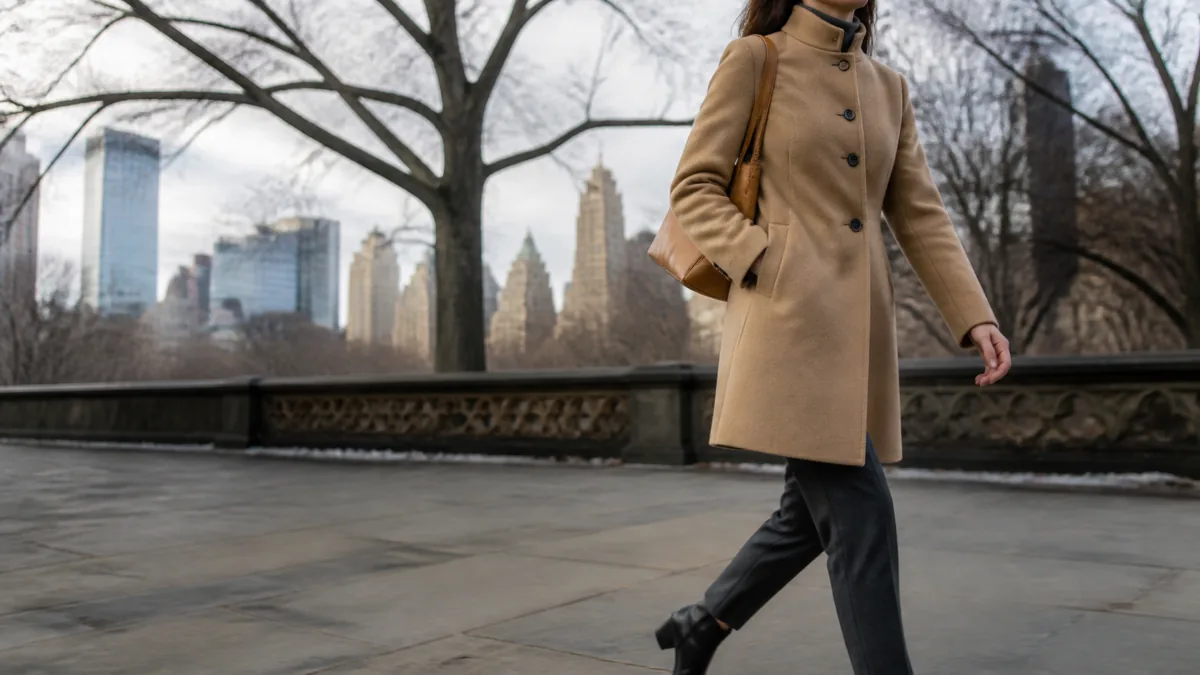
Working out an outfit for tomorrow? Save this page. It is easier to skim the night before than to remember.
At a glance
Works
- A wool-blend coat over a turtleneck and tailored trousers for the daily commute
- A midi knit dress with opaque tights and ankle boots for one-piece simplicity
- A chunky-knit cardigan kept at your desk as a permanent warm layer
- A cashmere crewneck tucked into a pencil skirt with tall boots to close the cold-leg gap
Depends
- A blazer layered under a topcoat, which only works if the coat is cut wide enough to fit the blazer shoulders
- A puffer vest under a structured coat, which adds bulk that some fitted coats will not accommodate
- Wide-leg wool trousers, which in my experience read as professional in most offices but may be too relaxed for a conservative dress code
Skip
- A parka over office clothes, which crushes blazer structure and reads as weekend gear
- Fleece zip-ups at the desk, which read as trailhead gear however clean they are
- Sheer tights in cold weather, which solve neither the warmth problem nor the professional one
The commute is freezing. The office is 70 degrees. And somewhere between the subway platform and your desk, you need to look like you planned this.
Winter work dressing is a layering problem. These eight outfits start from the office temperature and add outerwear on top, not the other way around.
1. A wool-blend coat over a turtleneck and tailored trousers
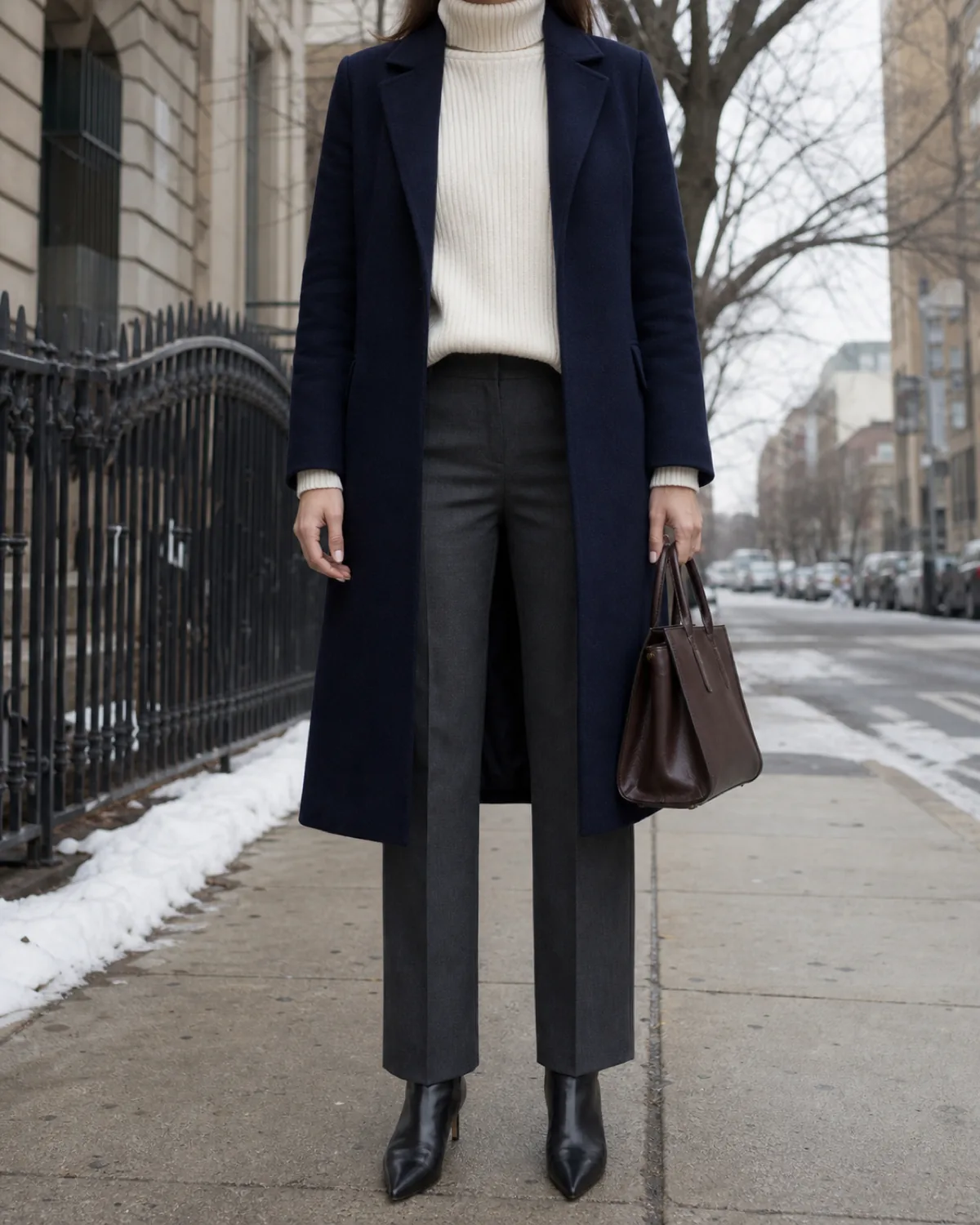
This is the baseline. A turtleneck and tailored trousers hold a clean line at the office; the coat goes over both and comes off at the door. Indeed's business casual guide lists sweaters among the baseline tops and cardigans or blazers as optional layers, "especially for the colder months," which makes a fine turtleneck and trousers safe for most offices.
The coat here is unbuttoned to show the outfit underneath, but in practice you button it against the cold and nobody sees the turtleneck until you arrive. That is the point. The office outfit is designed first. The coat is just transit.
- Match the trouser weight to the season so the fabric has enough body to hold a crease
- A structured bag in the hand or on the shoulder keeps the silhouette clean under the coat
- Check that the coat's sleeve length shows a sliver of turtleneck cuff, not a gap of bare wrist
2. A midi knit dress with opaque tights and ankle boots
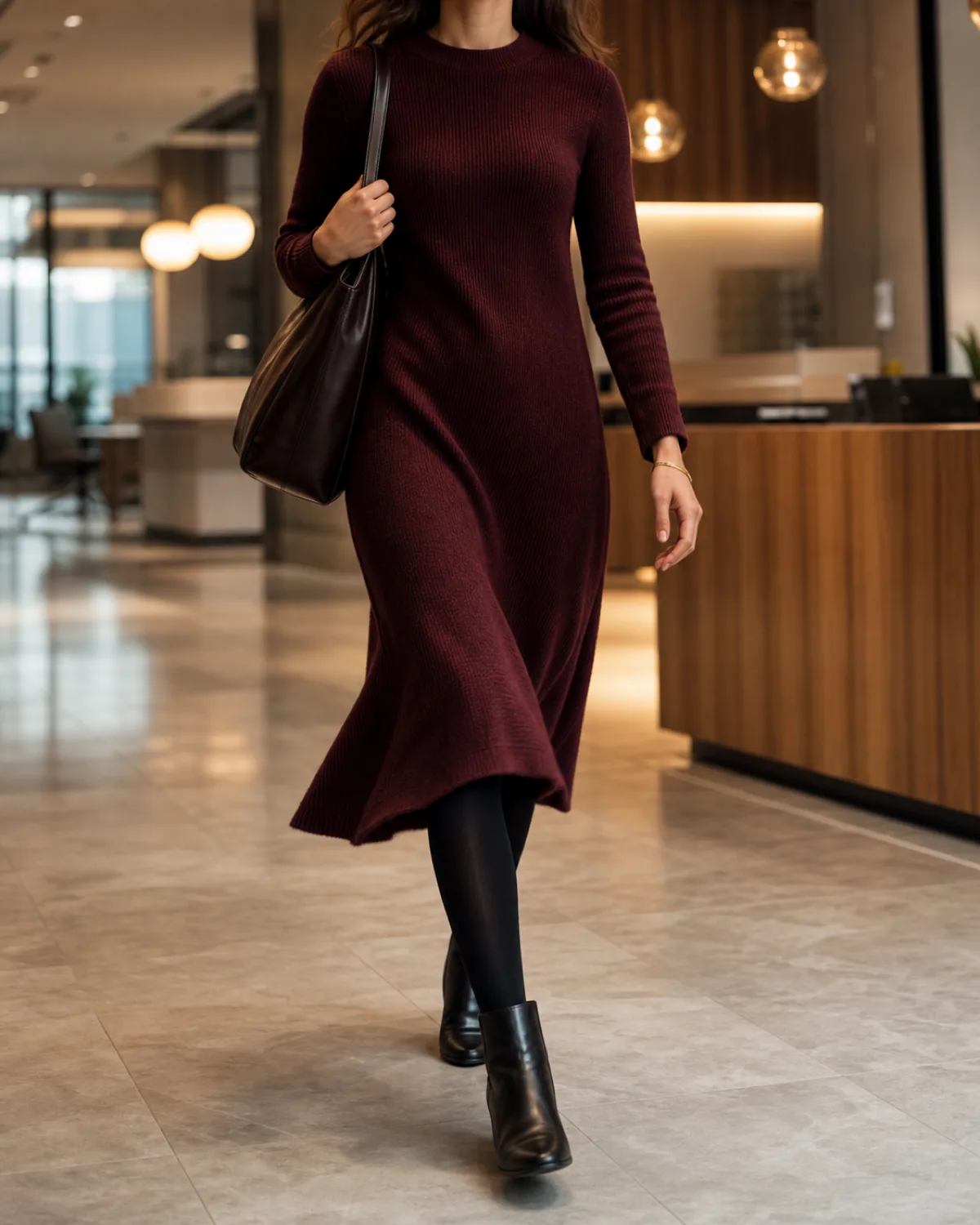
One piece solves the morning. A midi knit dress removes the separates problem entirely, and opaque tights plus ankle boots handle cold legs without visible layering. The burgundy here is a winter-weight colour that reads professional without defaulting to black.
The dress ends mid-calf. Illinois's career centre wants business casual dresses and skirts at or below the knee, and Indeed lists knee-length or maxi dresses, so this is well within business casual range.
The opaque tights close the gap between hemline and boots so there is no bare skin to worry about. In a heated office, the dress breathes better than a blazer-and-trousers stack.
- Pick a fine-gauge knit, not a chunky one, so the dress holds its shape through a full day of sitting
- Opaque tights, not sheer, for both warmth and a clean line
- A leather tote on the shoulder completes the look without adding another layer
Where to start
Find your situation, skip ahead
You commute by walking or public transit and need real outerwear
Start with idea 1 for the baseline coat formula, then look at idea 7 if you need extra insulation without bulk.
01 A wool-blend coat over a turtleneck and tailored trousers07 A puffer vest under a structured coat
Your office is heated but you still feel cold at your desk
Idea 4 is the desk cardigan that stays at the office permanently. Idea 8 turns your commute scarf into a desk layer.
04 A chunky-knit cardigan as a desk layer08 A scarf as an accessory for the indoor-outdoor transition
You want to wear skirts or dresses in winter without freezing
Idea 2 covers the knit dress with tights, and idea 6 shows how tall boots close the gap between a pencil skirt hemline and your knee.
02 A midi knit dress with opaque tights and ankle boots06 A cashmere crewneck with a pencil skirt and tall boots
3. A blazer layered under a topcoat
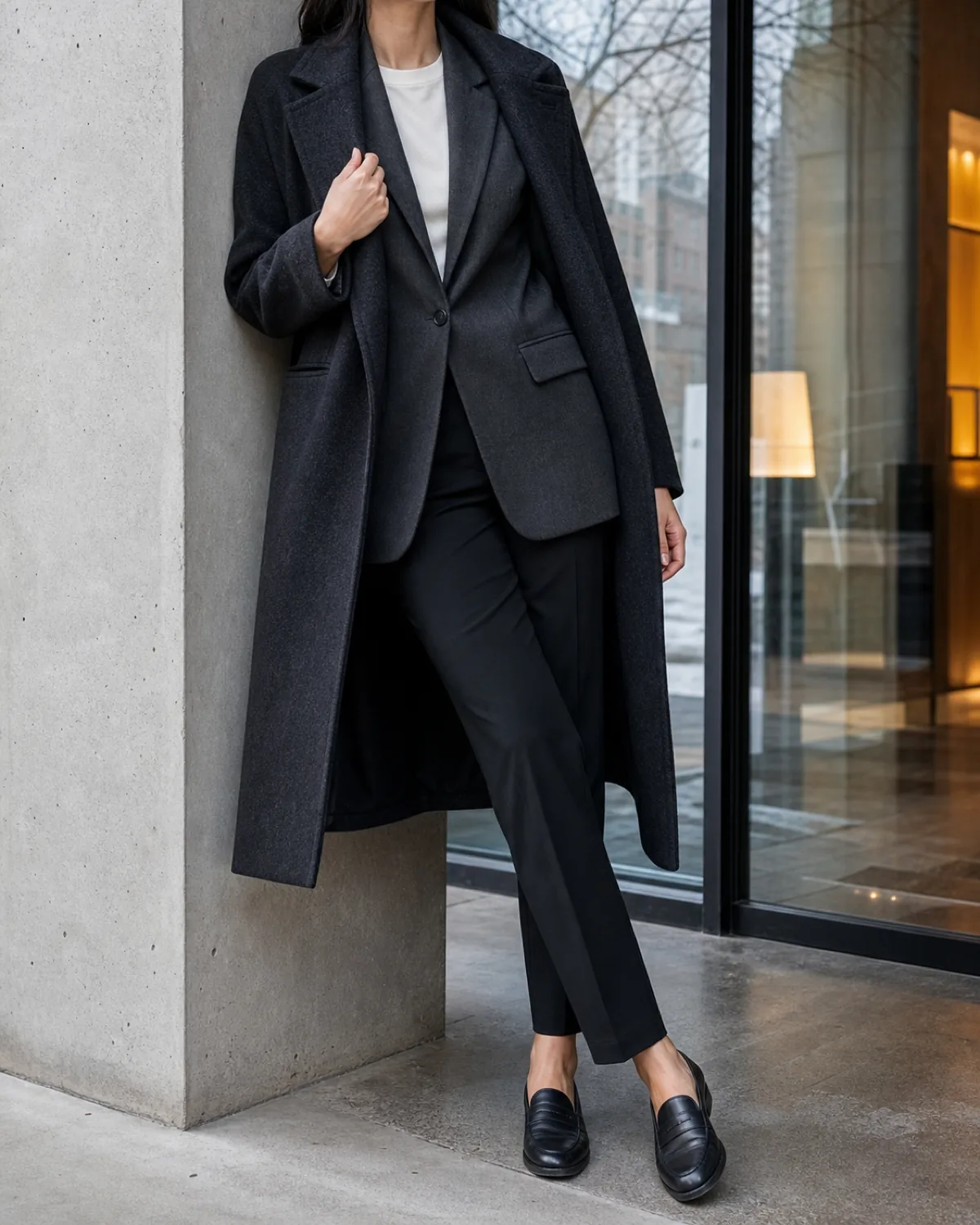
When the office expects business professional, you need blazer structure at your desk and real outerwear for the commute. The answer is fit. The topcoat must be cut wide enough in the shoulders to accommodate the blazer underneath without pulling or bunching.
This charcoal topcoat over a slightly lighter charcoal blazer shows the two-layer principle. The textures differ (heavier wool on top, finer on the blazer), which makes them read as separate garments rather than a mismatched suit. The white crewneck underneath adds a clean break between the two dark layers.
- Try the coat over the blazer at home before the first cold day
- If the shoulders pull, the coat is too narrow for layering and you need a wider cut
- Keep the undershirt simple so the layering does not add bulk at the collar
4. A chunky-knit cardigan as a desk layer
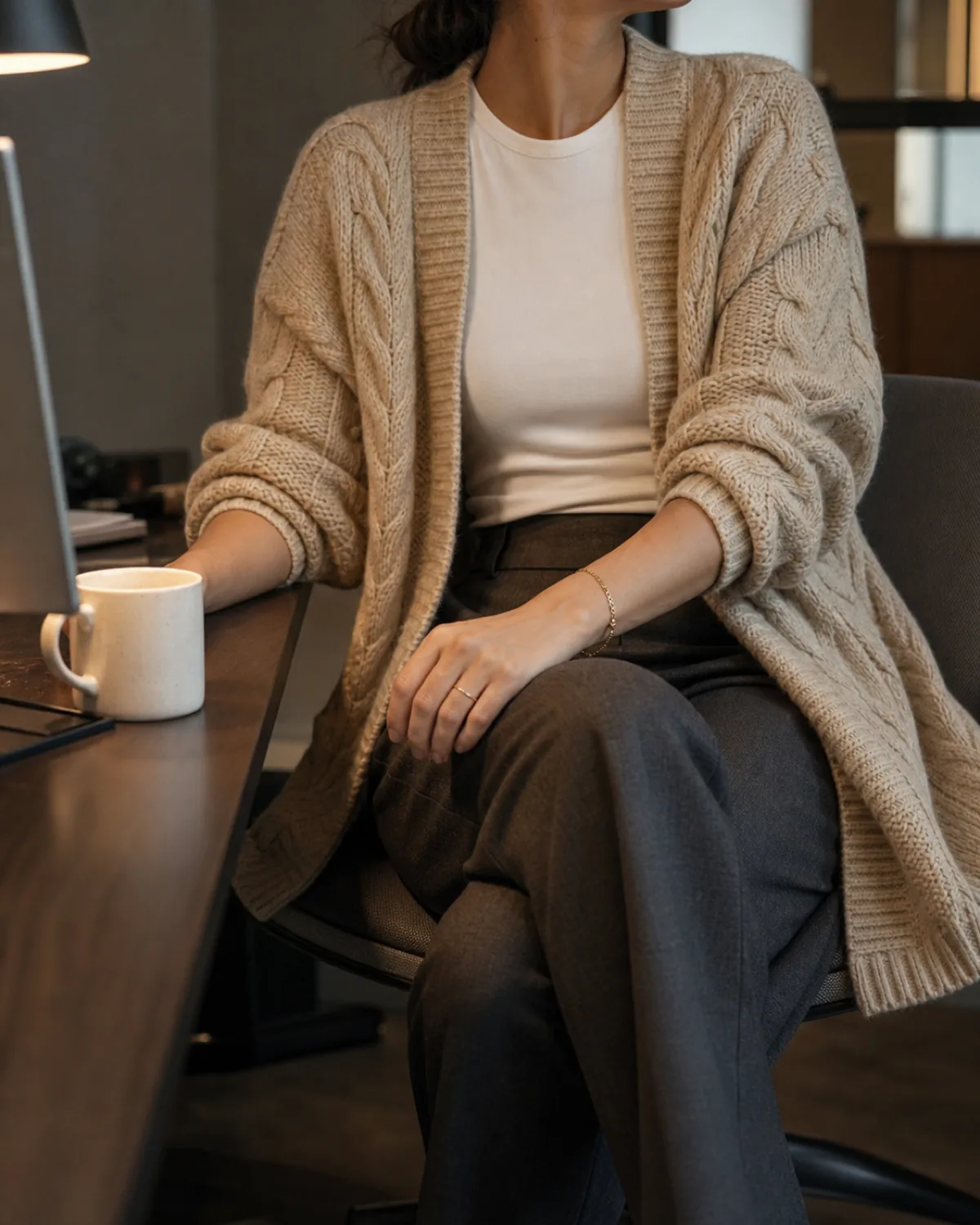
Some offices are heated to 68 and some to 74, and you cannot control which one you get. A chunky-knit cardigan that lives at your desk solves the problem permanently. It goes over any top, adds warmth without changing the outfit, and never leaves the office.
A SHRM article on clarifying dress codes, citing the staffing firm OfficeTeam, lists pullover sweaters and cardigans among the pieces business casual typically includes. This oatmeal cable-knit is oversized enough to drape comfortably over a crewneck and trousers without looking tight or pulled. The cable texture reads as intentional, not sloppy.
- Keep it at the office permanently so you never forget it on the wrong day
- Choose a neutral colour that works over every top you own
- Push the sleeves up slightly at the desk so the cuffs stay clean
5. Wide-leg wool trousers with a fitted knit
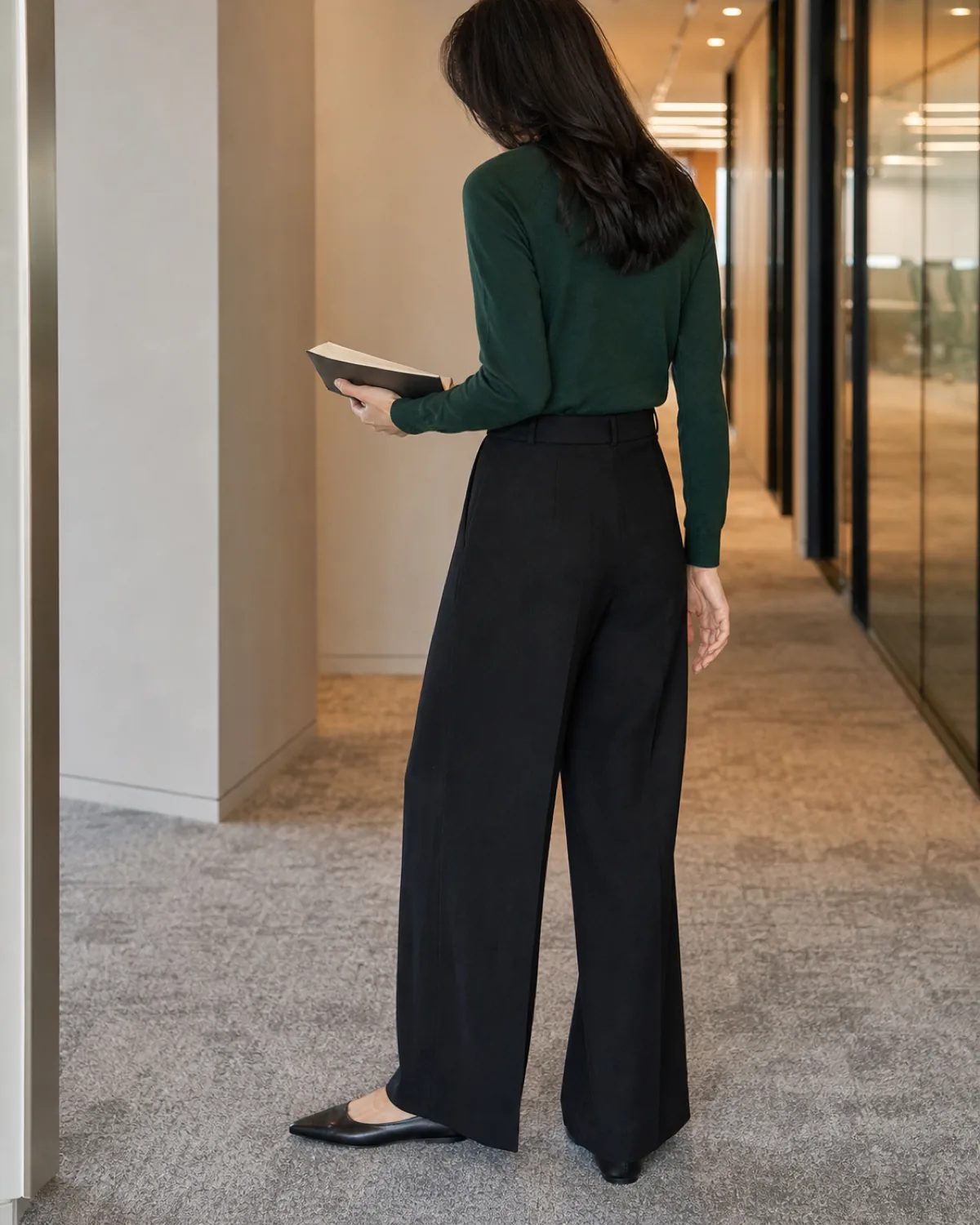
Heavier trousers carry warmth without visible bulk. Wide-leg wool in a winter weight drapes with enough body to hold its shape from morning to evening, and the fitted knit tucked in balances the silhouette so the wide legs read as deliberate, not baggy.
This forest-green merino crewneck adds colour without loudness. The high waist and visible waistband create a clean break between top and bottom. Pointed-toe flats keep the look streamlined at the ankle.
- Pick a trouser with enough weight to drape without creasing at the knee
- Tuck the knit in to define the waist and prevent the silhouette from reading shapeless
- A neutral flat keeps the eye on the trouser line, which is the point of this outfit
6. A cashmere crewneck with a pencil skirt and tall boots
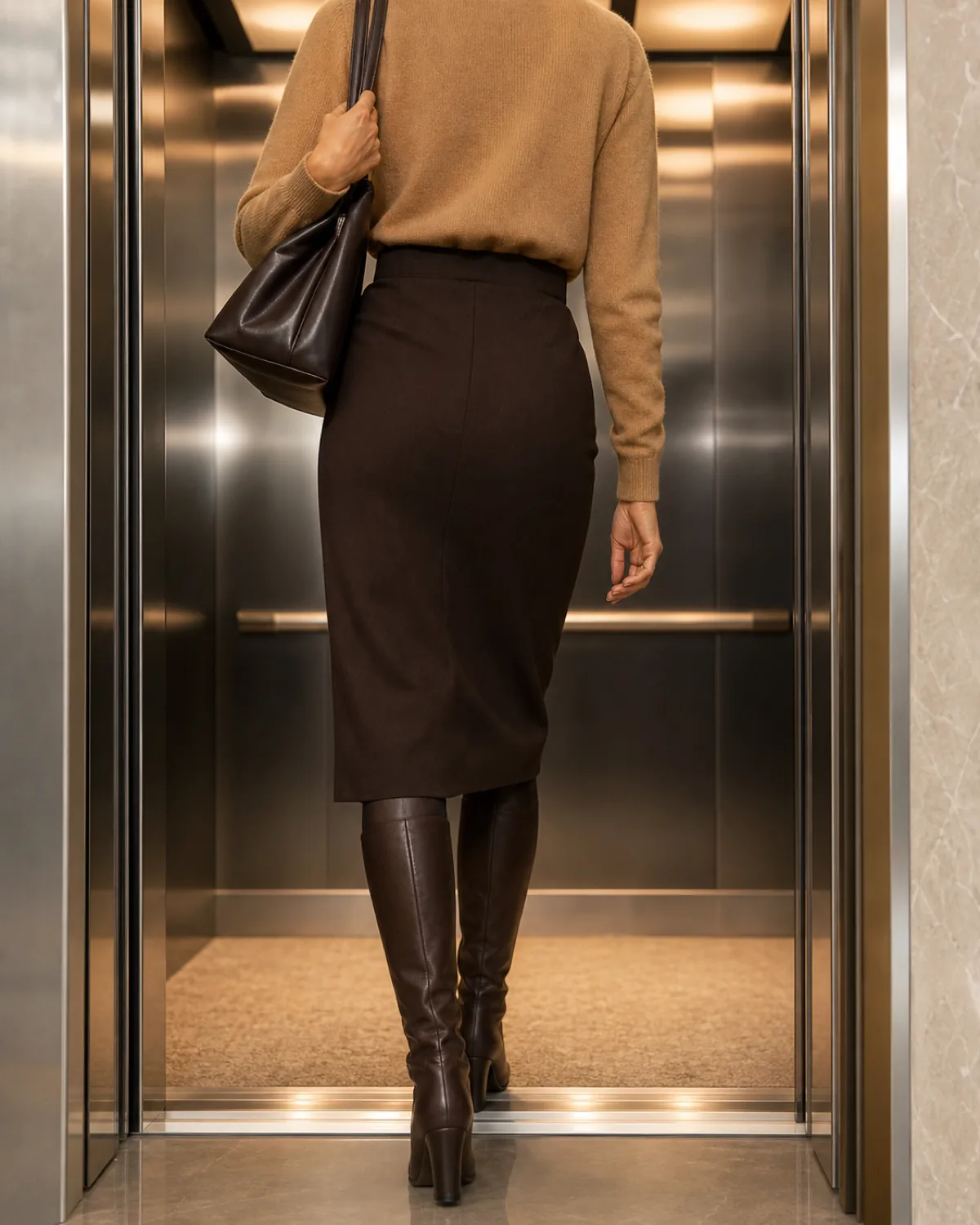
Skirts in winter work when the boots do the job of tights. Tall boots that rise to just below the knee close the gap between the pencil skirt hemline and your leg, which means no exposed skin and no need for thick hosiery.
Boots are on the business casual shoe lists from both Indeed and Illinois's career centre. Illinois's business professional list names flats, heels, loafers and oxford shoes, not boots, so check a conservative office's code before you rely on them.
The camel cashmere here is soft enough to tuck cleanly without bunching at the waist. The dark brown pencil skirt and matching boots create one unbroken line from waist to ankle.
- Match the boot colour to the skirt for the longest possible visual line
- Check that the boot shaft reaches the skirt hemline with no gap when you stand
- Cashmere pills at contact points, so rotate between two if you wear this formula weekly
7. A puffer vest under a structured coat
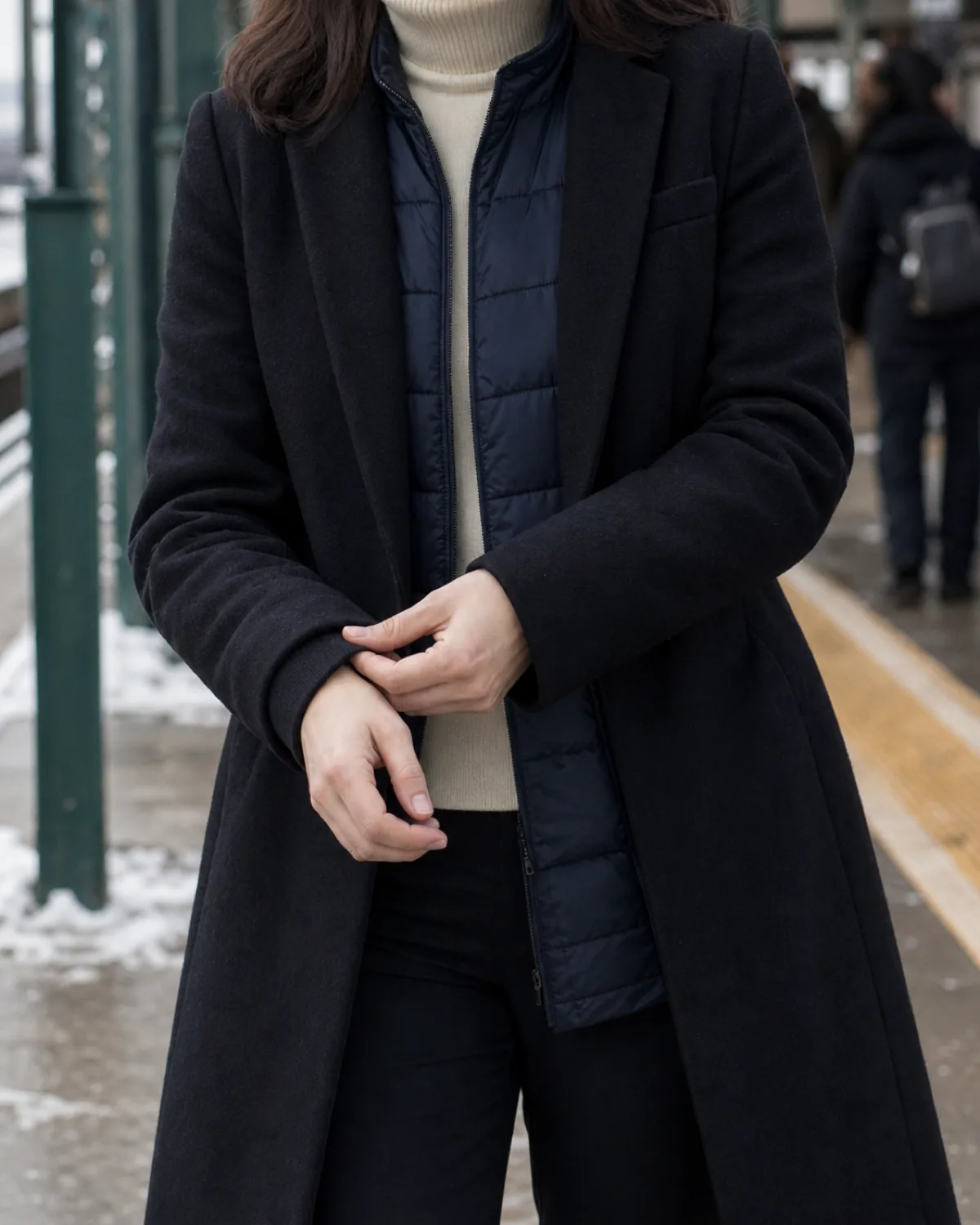
When the coat alone is not enough, a lightweight puffer vest adds insulation to the torso without sleeve bulk. The vest zips up between the coat and the turtleneck, and the coat closes over it. Nobody at the office sees it. Nobody on the platform feels the wind.
The quilted nylon is visible here because the coat is open, but in practice the vest disappears under a buttoned coat. The key is fit: the coat must have room for one extra layer in the torso without pulling at the buttons.
- Choose a thin, packable vest rather than a puffy one so it does not change the coat's silhouette
- The vest covers the torso only, which is where you lose the most heat
- Remove the vest at the office if the heating is adequate and drape it over your chair
8. A scarf as an accessory for the indoor-outdoor transition
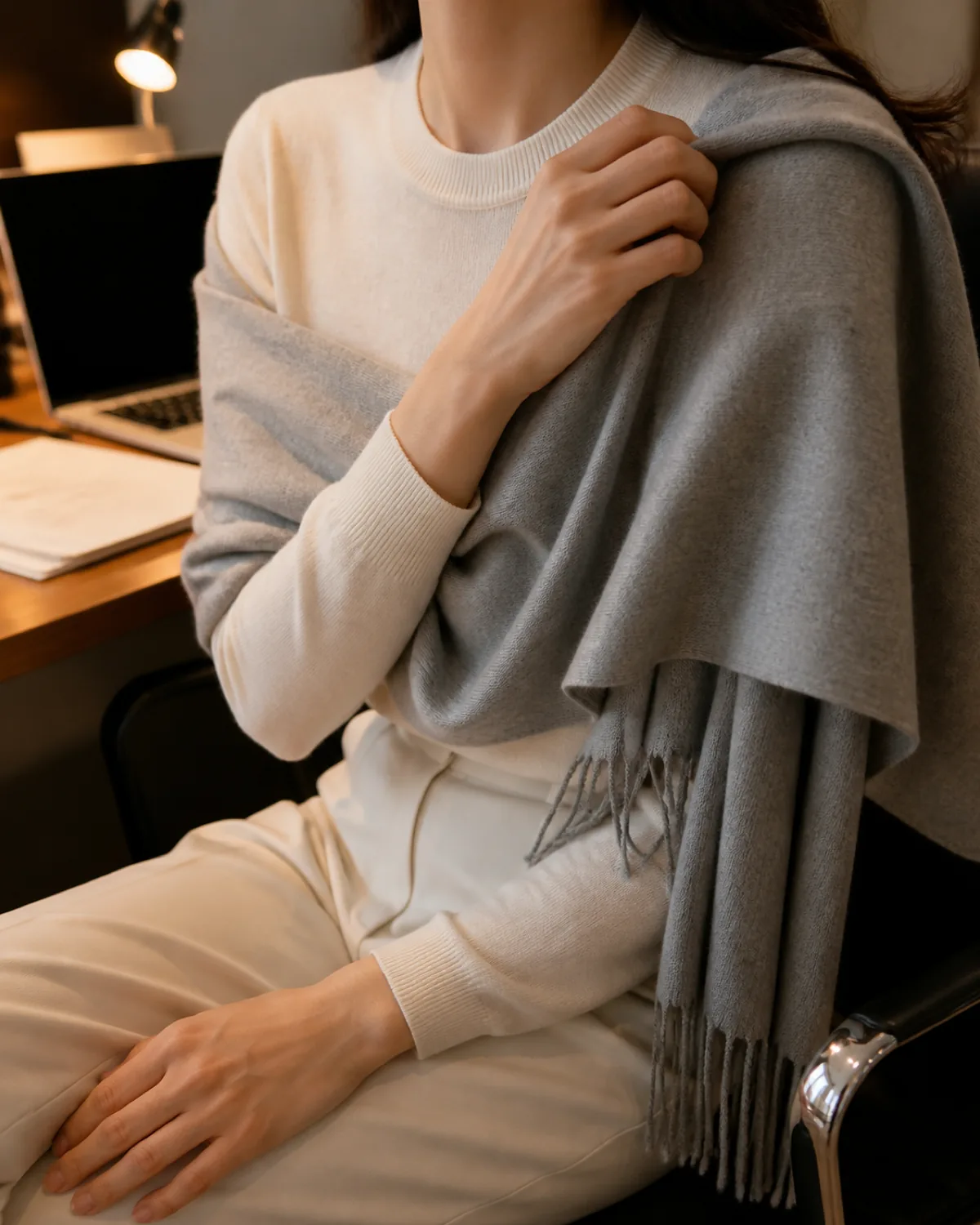
The moment you arrive at the office and start peeling off layers is when winter dressing looks its worst. A cashmere scarf solves both climates. On the commute, it wraps around your neck against the wind. At the desk, it drapes over one shoulder as a light wrap, which is warmer than nothing and looks more intentional than a coat draped over your chair.
This light grey cashmere works with almost any outfit in this guide. The fringe ends hang naturally, and the weight is light enough to stay on your shoulder without slipping.
- A wide scarf (at least 70 cm) works as both a neck wrap and a shoulder drape
- Cashmere is warm for its weight, which is why it works better here than a wool scarf
- Drape it at the desk rather than balling it in a drawer so it stays wrinkle-free for the commute home
Where the dress-code definitions come from
- What Is Business Casual Attire? (With Examples and Tips) — Indeed Career Guide
- Dress for Success — The Career Center, University of Illinois Urbana-Champaign
- Employees Dressing Too Casually? Clarify Your Dress Code — SHRM (Society for Human Resource Management)
Keep this one
Save it where you plan outfits
Pin the image above to the board you actually check on a Sunday night. This guide is written to be re-read, not read once.
Tonight, before you close this tab
- Check whether your winter coat fits over your blazer without pulling at the shoulders
- Keep a desk cardigan at the office permanently so you never have to plan around the heating
- Lay out tomorrow's outfit tonight and try the coat over it to make sure the layers work together
- Swap sheer tights for opaque ones in your drawer before the first cold week
- Test your tall boots with your pencil skirt to confirm the gap between hemline and boot top is closed