8 Cold Weather Work Outfits for Days When the Forecast Is Below Freezing
Cold weather work outfits built for sub-freezing commutes and heated offices. Eight layering formulas that keep you warm outside and polished inside.
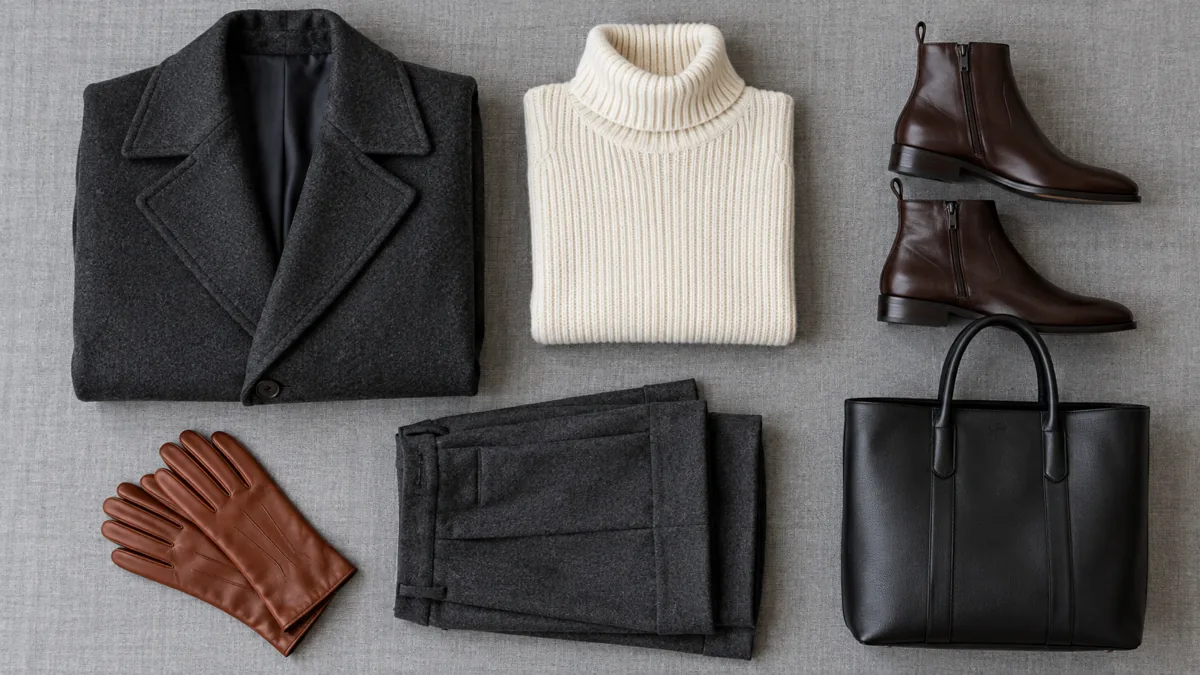
Working out an outfit for tomorrow? Save this page. It is easier to skim the night before than to remember.
At a glance
Works
- A wool overcoat over a complete office outfit, because the coat does the cold work and the underlayer does the office work
- Closed-toe leather boots, which every major career-centre guide lists as business-casual appropriate
- A cashmere or wool crew-neck layered over a collared shirt, which adds warmth without losing formality
Depends
- A puffer vest under a blazer, which works in offices where visible outerwear layers are accepted but not where the dress code is suit-only
- Opaque tights with a midi skirt, which reads office-appropriate in most business-casual settings but draws questions in strict business-professional ones
- A full-length down coat over a suit, practical for the coldest commutes but requires a place to hang a bulky coat at your desk
Skip
- A fleece jacket worn indoors as your main layer, which reads weekend-casual regardless of what is underneath
- Snow boots worn at your desk past the lobby, which signals you did not plan a shoe change
- An unlined cotton blazer as your only warm layer, which offers no insulation below forty degrees
Below-freezing mornings change the question from what to wear to how many layers can come off at the door without leaving you underdressed. The commute is one climate. The office is another. Every outfit here is built to handle that split.
These are not general winter looks. They are formulas for the days when the wind chill is in the teens or single digits and a regular wool blazer is not enough to get you from the car to the building.
1. Wool Overcoat Over a Turtleneck and Tailored Trousers
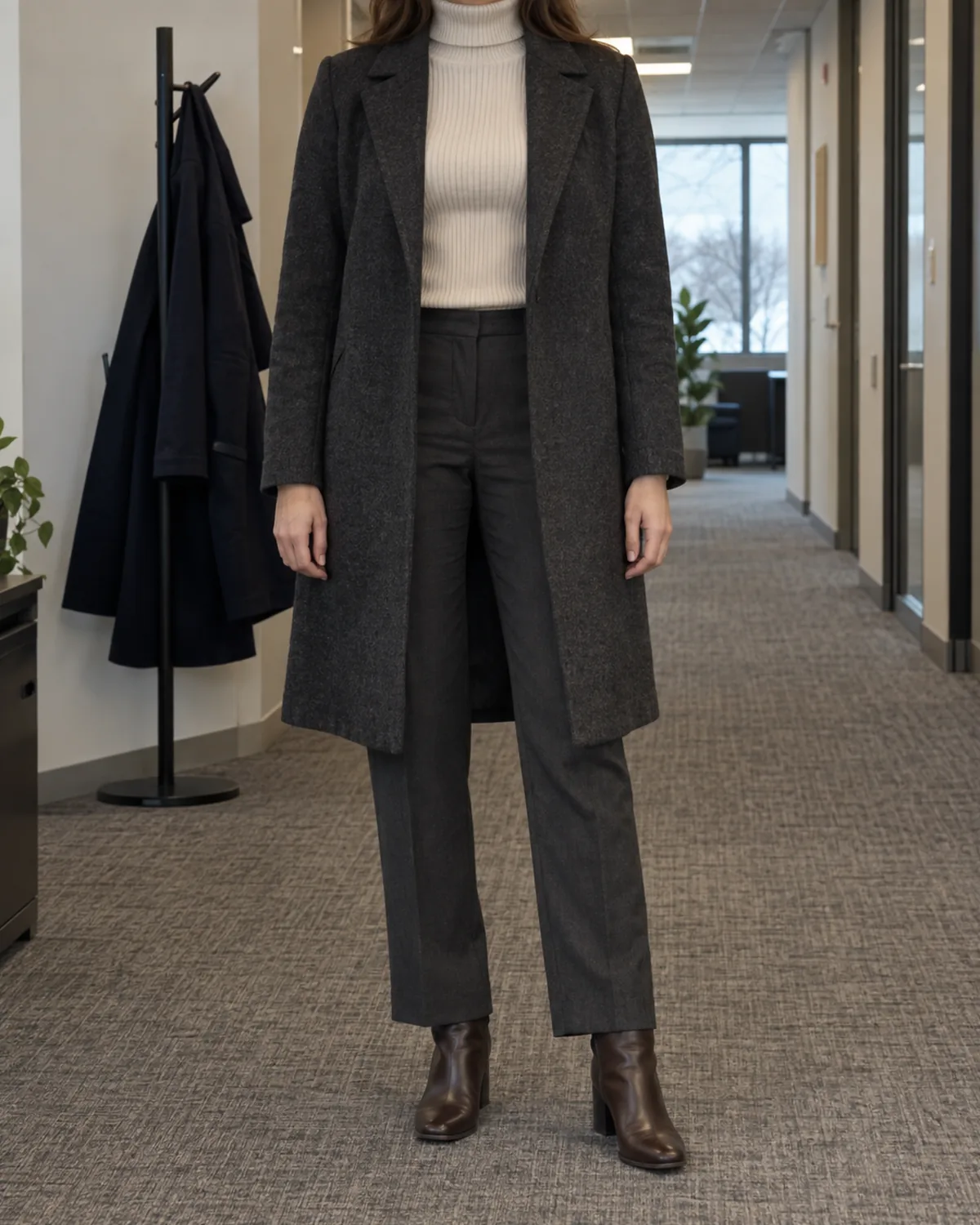
The structured overcoat is the cleanest way to split the commute from the desk. A charcoal knee-length wool coat buttons up for the walk and comes off at the door to reveal an ivory turtleneck and tailored trousers that need nothing else. The turtleneck replaces the scarf without the bulk.
Duke's attire guide notes that "heavier fabrics such as wool are commonly found in materials for suits, and can provide a smart look." That reasoning extends to outerwear that matches the formality underneath.
- Choose a coat that ends at or just below the knee so it covers the trouser line and blocks wind from the thighs down
- Keep the underlayer in a lighter tone than the coat so the two read as distinct pieces when the coat is open
- Invest in a coat with a proper lining rather than adding a separate mid-layer that bunches at the waist
- Hang the coat immediately rather than draping it over your chair where the wool will crease by afternoon
2. Puffer Vest Under a Blazer

Wearing the puffer as a mid-layer instead of an outer layer is the trick. A slim quilted vest sits flat under a navy blazer and adds genuine down insulation without the visual bulk of a puffer coat. The office sees a blazer. The commute gets down fill across the core.
Indeed lists "optional cardigans, blazers or sport coats (especially for the colder months)" as standard layering. A vest under that blazer is one step further in the same direction.
- Choose a vest thin enough that the blazer still buttons without pulling at the chest
- Leave the vest zipped and the blazer open if the office runs warm so you can shed one layer without removing both
- Match the vest to a neutral that disappears under the blazer rather than a contrast colour that draws attention to the layering
- Check that the vest collar does not stick above the blazer lapel when seated
Where to start
Find your situation, skip ahead
Your office is business casual and you need to survive a sub-freezing commute without looking like you just came off a ski lift
Start with ideas 1 and 4. A wool overcoat and a cashmere-over-shirt layer give you full coverage outside and a clean look inside.
01 Wool Overcoat Over a Turtleneck and Tailored Trousers04 Cashmere Crew-Neck Over a Collared Shirt
You walk or take transit and need maximum warmth without sacrificing boardroom readiness
Idea 7 pairs a full-length down coat with a wool suit. The swap happens at the coat rack.
07 Down Coat Over a Suit03 Lined Wool Trousers With Knee-High Boots
You want to wear a skirt in winter without freezing between the car and the door
Idea 5 covers the legs with opaque tights and structured ankle boots. Idea 6 uses a knit dress as a single warm piece.
05 Waterproof Ankle Boots With a Midi Skirt and Opaque Tights06 Heavyweight Knit Dress With a Belted Coat
3. Lined Wool Trousers With Knee-High Boots
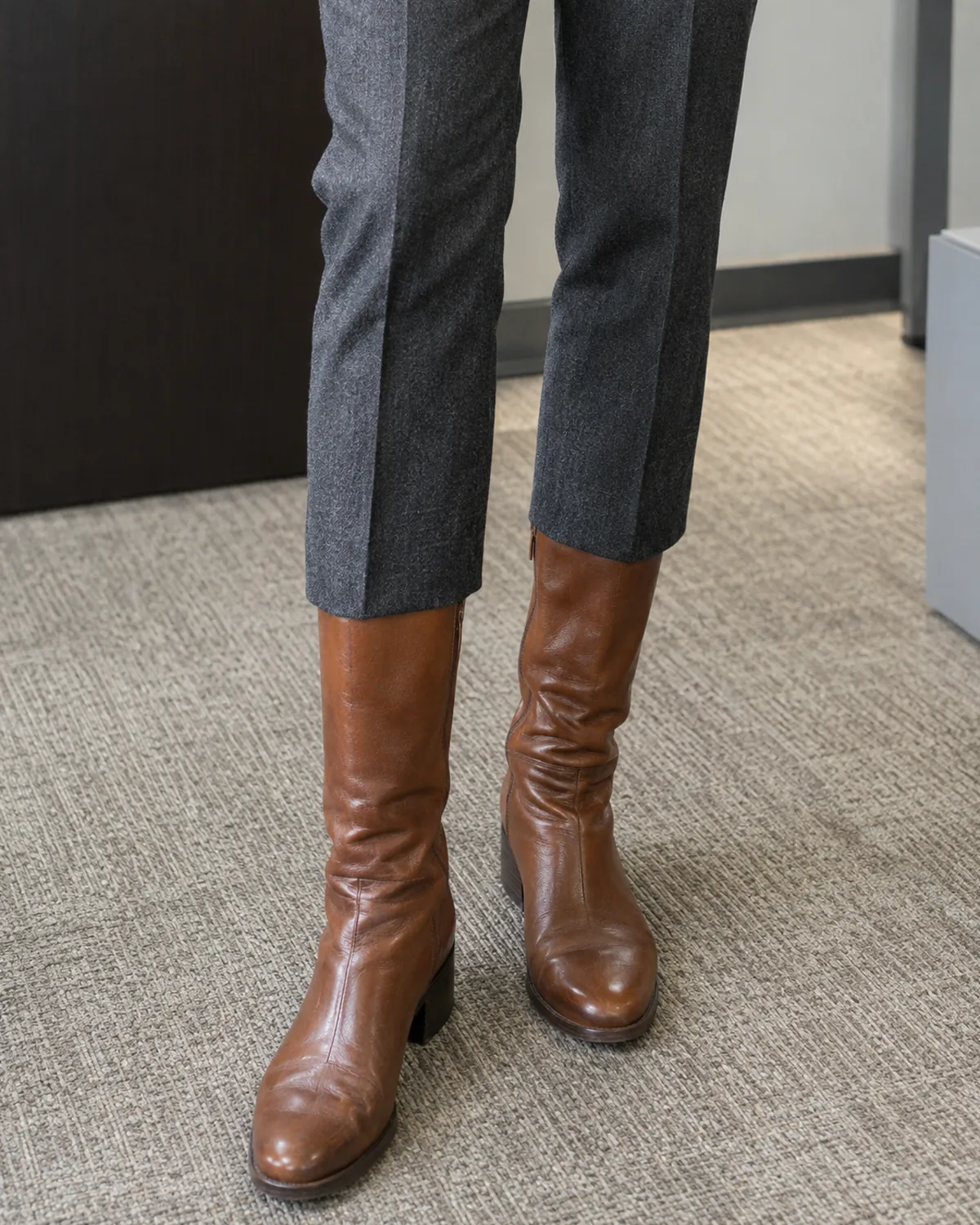
Unlined trousers below thirty degrees are miserable. Lined wool trousers paired with knee-high boots that meet the trouser hem close the gap that wind finds between hem and ankle. Illinois lists "boots" alongside loafers and flats as business-casual footwear. The knee-high height is a practical cold-weather extension of that category. The boot shaft and trouser hem should nearly touch.
- Choose boots with a structured shaft that holds its shape rather than slouching below the trouser hem
- Select a trouser with a straight or slightly wide leg so the boot shaft fits inside without bunching
- Keep the boot heel low enough for a commute walk on icy pavement
- Condition the leather before the season starts because salt stains set in fast on untreated boots
4. Cashmere Crew-Neck Over a Collared Shirt

This is the indoor workhorse of cold-weather office dressing. A camel cashmere crew-neck over a white collared shirt reads formal enough for any meeting without overheating at the desk. The collar lifts the sweater from weekend casual to office-ready. Indeed lists "button-down shirts, sweaters" as business-casual tops, and the crew-over-collar combination doubles down on both.
- Let the shirt collar sit naturally over the crew neckline rather than tucking it inside
- Show the shirt cuffs past the sweater sleeves by about half an inch so the layering reads intentional
- Choose a fine-gauge cashmere rather than a chunky knit so the shirt lies flat underneath
- Keep a lint roller at the desk because cashmere picks up everything from a wool coat lining
5. Waterproof Ankle Boots With a Midi Skirt and Opaque Tights
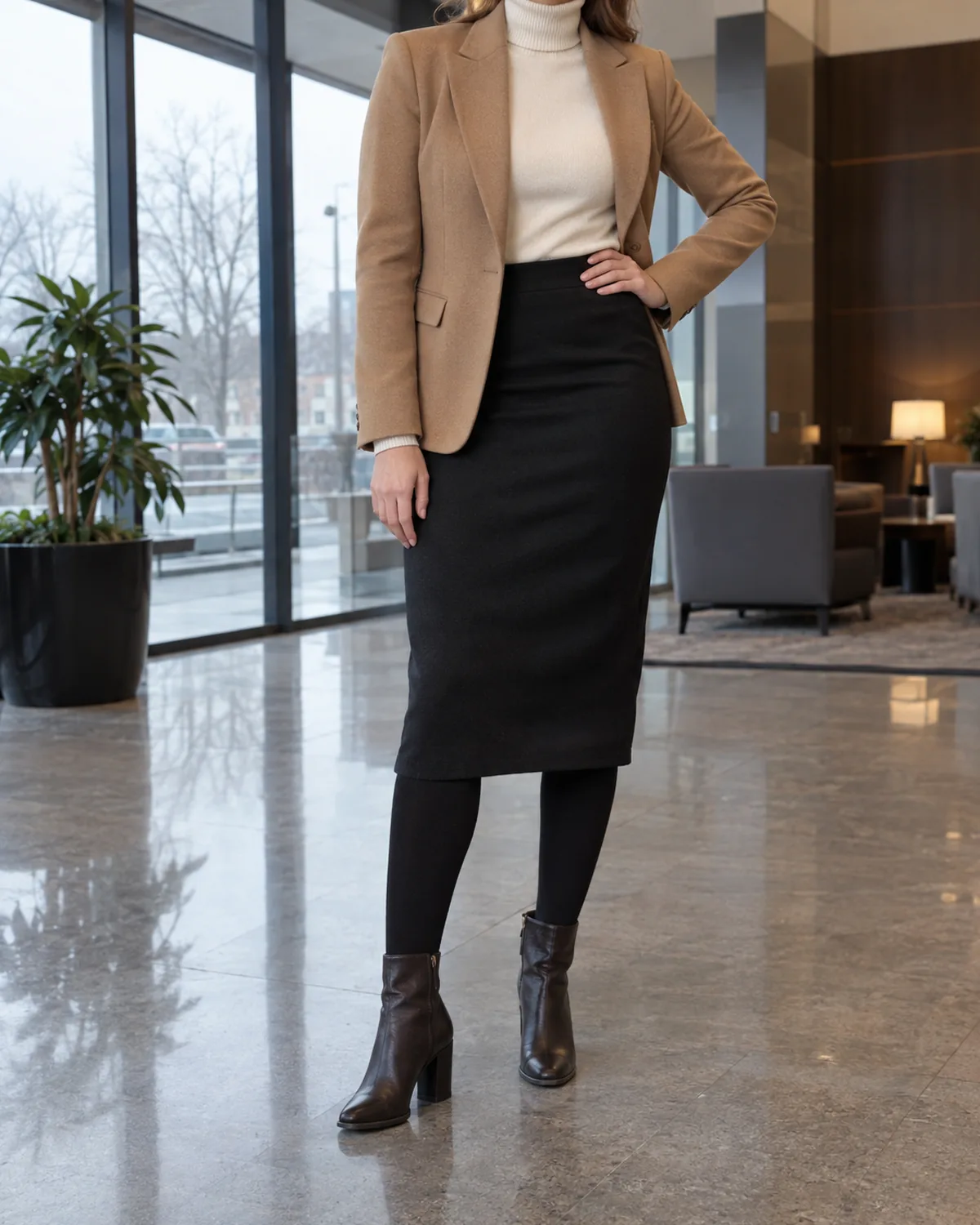
Skirts are not off-limits in the cold if the legs are covered. A black midi skirt with 80-denier tights and structured ankle boots keeps the lower half warm and the silhouette office-grade. The boots need a clean toe and a low block heel so they read as office shoes, not rain boots. The midi length means the exposed tights-to-boot gap is minimal.
- Choose 80-denier or heavier tights because anything thinner offers no real cold protection
- Confirm the boot shaft sits above the ankle bone so there is no exposed tights-only zone between boot and skirt
- Pair with a turtleneck and blazer on top so the outfit reads consistently layered rather than cold on top and warm on the bottom
- Carry the boots in a bag if the commute involves deep slush and switch at the office if the boots cannot handle it
6. Heavyweight Knit Dress With a Belted Coat
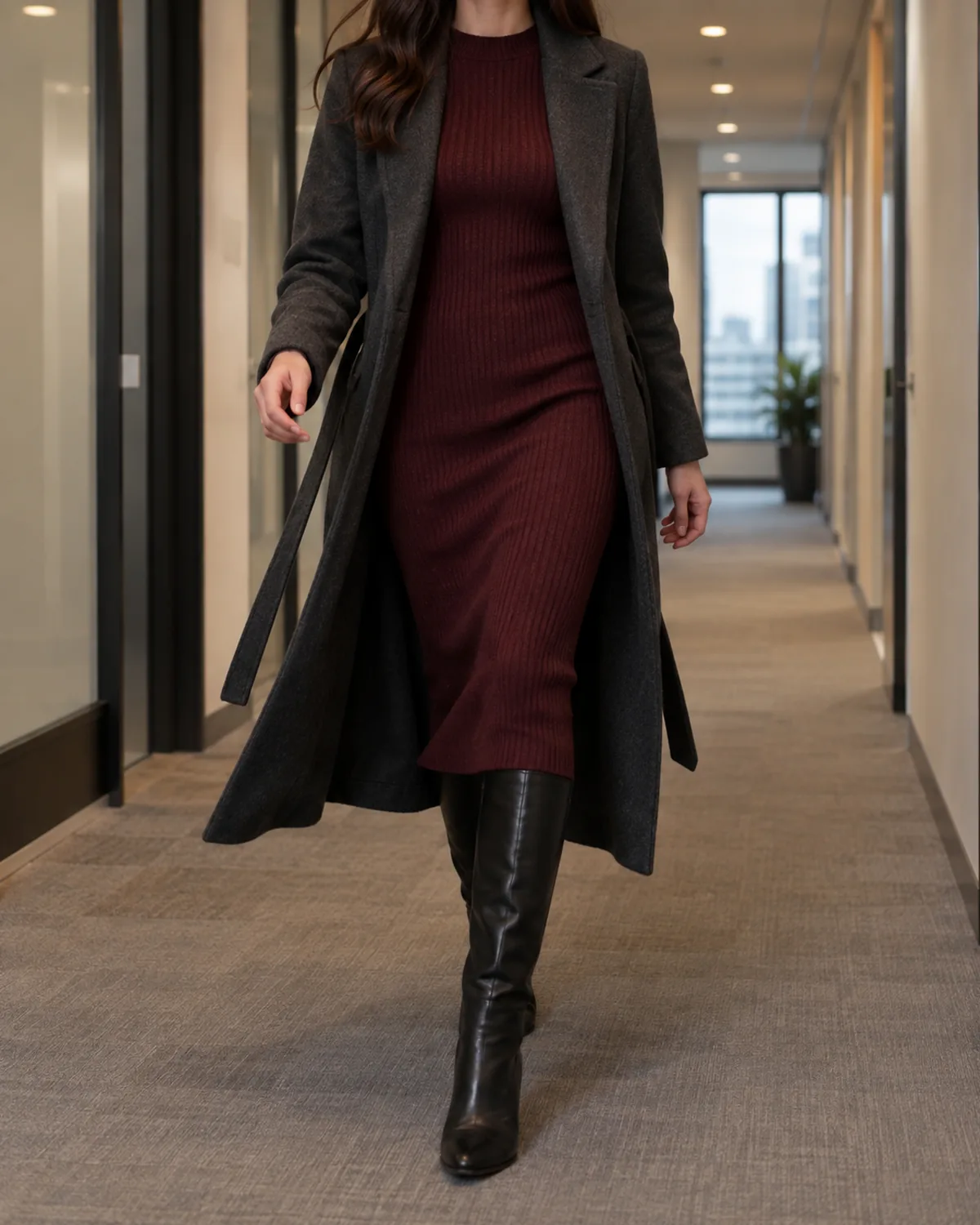
One-piece dressing for the coldest days. A ribbed wool-blend knit dress removes the tuck-and-layer problem entirely — no waistband, no shirt coming untucked, no gap between top and bottom where cold air finds skin. The belted coat cinches the waist on the commute and comes off to leave a complete, streamlined outfit. A midi length paired with knee-high boots closes the leg from hip to toe.
- Choose a dress with enough structure in the ribbing that it holds its shape rather than clinging after sitting
- Pick a belt coat rather than a buttoned coat because the belt adjusts to the dress silhouette underneath
- Leave the belt untied and hanging if the coat stays open indoors so it does not read as a bathrobe
- Keep the boot colour dark and close to the tights or dress so the leg reads as one unbroken line
7. Down Coat Over a Suit
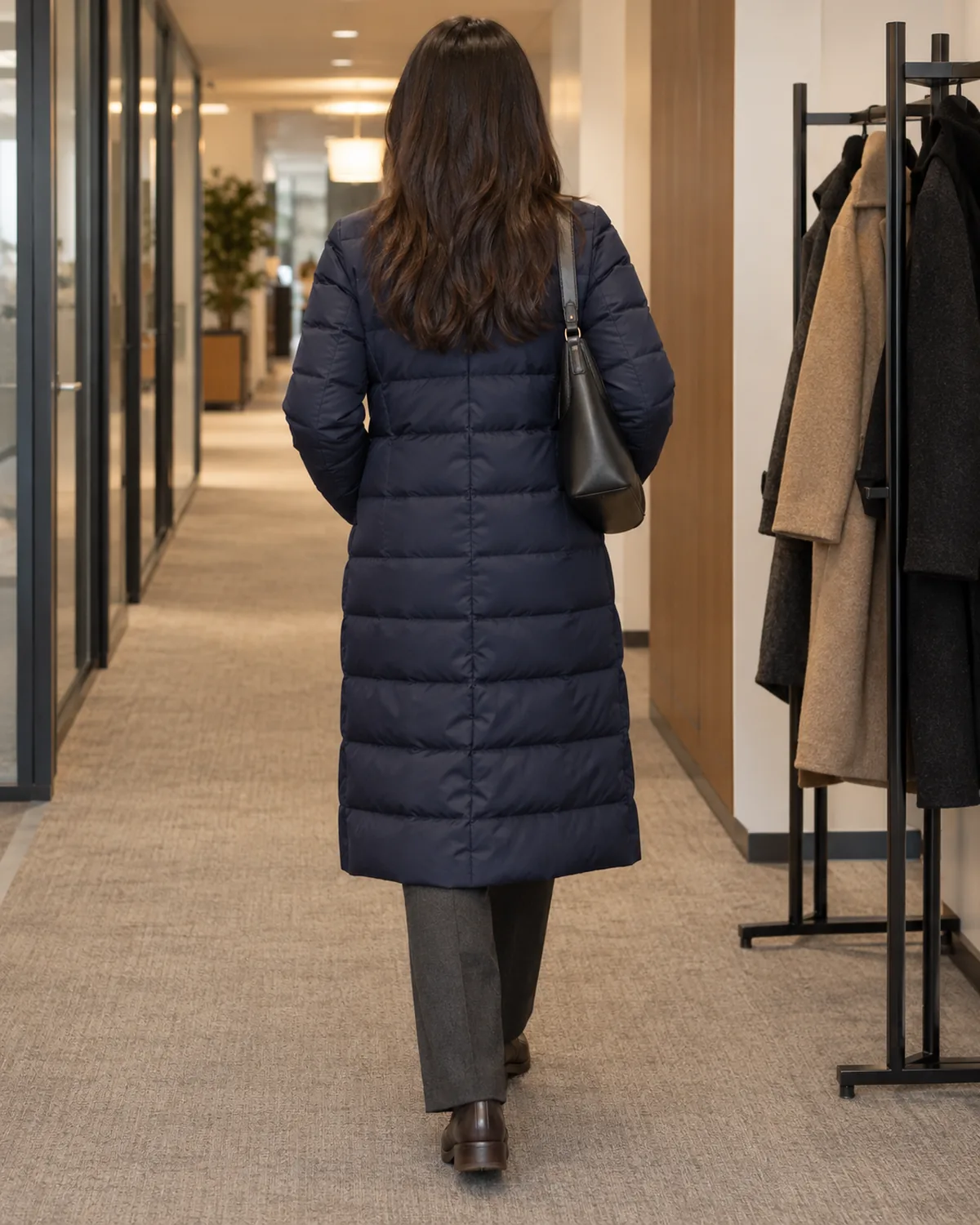
The most formal cold-weather formula and the warmest one. A full-length down coat over a charcoal wool suit is the answer for single-digit mornings with a client meeting at nine. The down coat is street-only. The suit is office-only. The swap happens at the coat rack.
Iowa recommends "a conservative well-pressed (black, navy, gray, brown) pant or skirt suit" as the professional baseline. A down coat over that baseline means you arrive warm and wrinkle-free.
- Choose a down coat long enough to cover the suit jacket hem so the jacket does not peek out and catch wind
- Pick a down coat in navy or black that does not clash with the suit underneath
- Allow five minutes at the office to let the suit fabric settle before walking into a meeting because down coats compress the layers
- Hang the down coat on a wide hanger rather than a hook because the loft recovers faster when the coat is not crushed
8. Merino Base Layer Under Everything
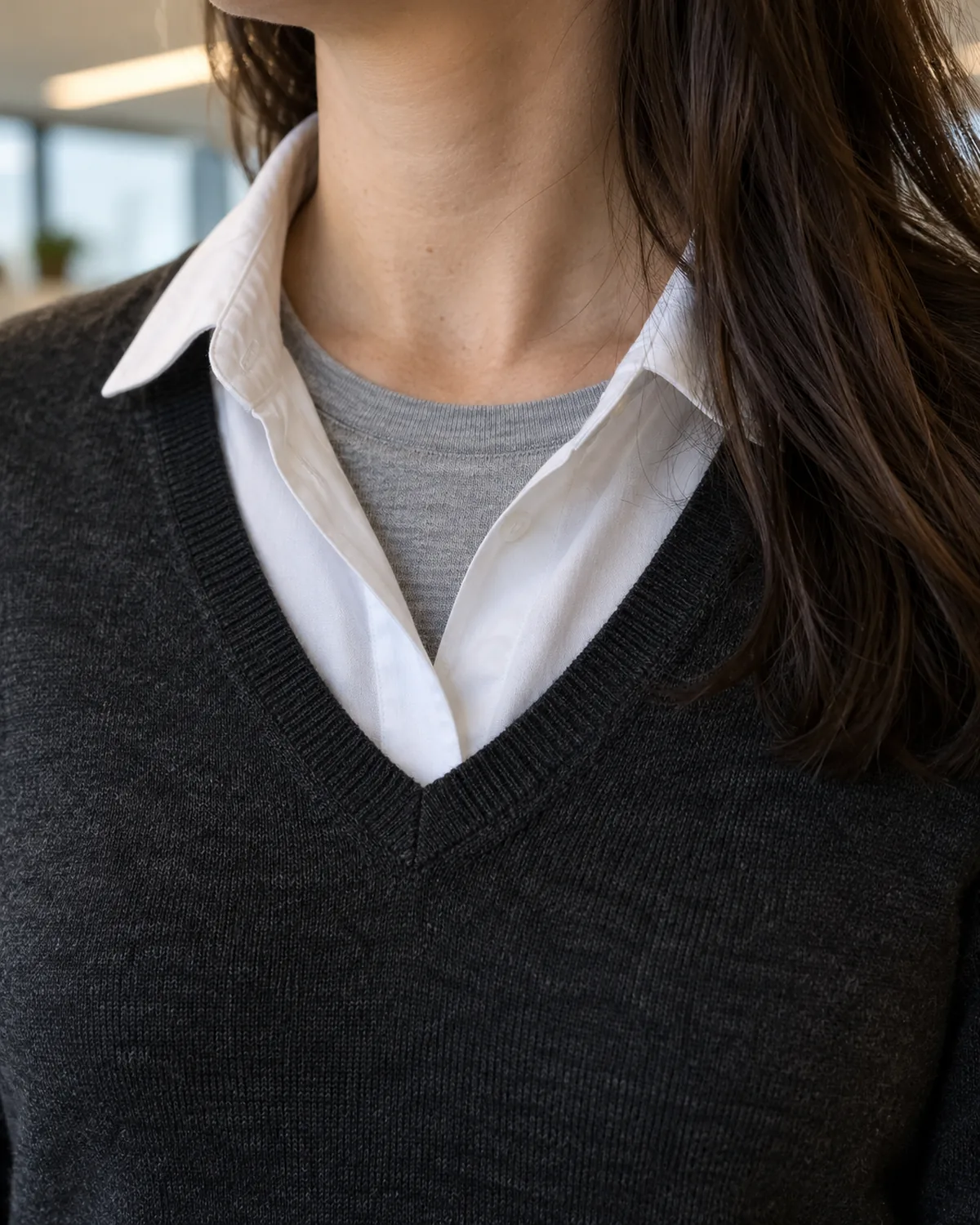
The invisible first layer. A lightweight merino base layer worn under regular office clothes adds warmth that no one sees. It does not change the outfit. It changes the temperature of the outfit. Merino regulates heat better than cotton and resists odour better than synthetics, which matters when the office is heated and you cannot strip down.
- Choose a fine-gauge merino that lies flat under a collared shirt without adding visible bulk at the shoulder seam
- Pick a crew neck for the base layer so it sits below the shirt collar and stays invisible
- Wash merino on cold and lay flat to dry because the dryer will shrink it past the point where it fits under office clothes
- Start with just the top on moderate cold days and add the leggings only when the temperature drops below twenty
Where the dress-code definitions come from
- What Is Business Casual Attire? (With Examples and Tips) — Indeed Career Guide
- Attire Guide — Career Hub, Duke University
- Dress for Success — The Career Center, University of Illinois Urbana-Champaign
- Dress for Success — Pomerantz Career Center, The University of Iowa
Keep this one
Save it where you plan outfits
Pin the image above to the board you actually check on a Sunday night. This guide is written to be re-read, not read once.
Tonight, before you close this tab
- Check tomorrow's wind chill and decide whether your current coat actually covers it
- Pull one complete desk outfit from the closet tonight and confirm it looks finished without any outer layer
- Find a pair of closed-toe boots that could handle salt and slush without looking like hiking boots
- Lay a merino base layer on the bed and try it under tomorrow's shirt to see if the bulk is visible