11 Work Outfits for Hot Weather That Still Pass Dress Code
Hot-weather work outfits that stay within dress-code lines. Eleven combinations with fabric and silhouette picks for offices where the heat follows you inside.
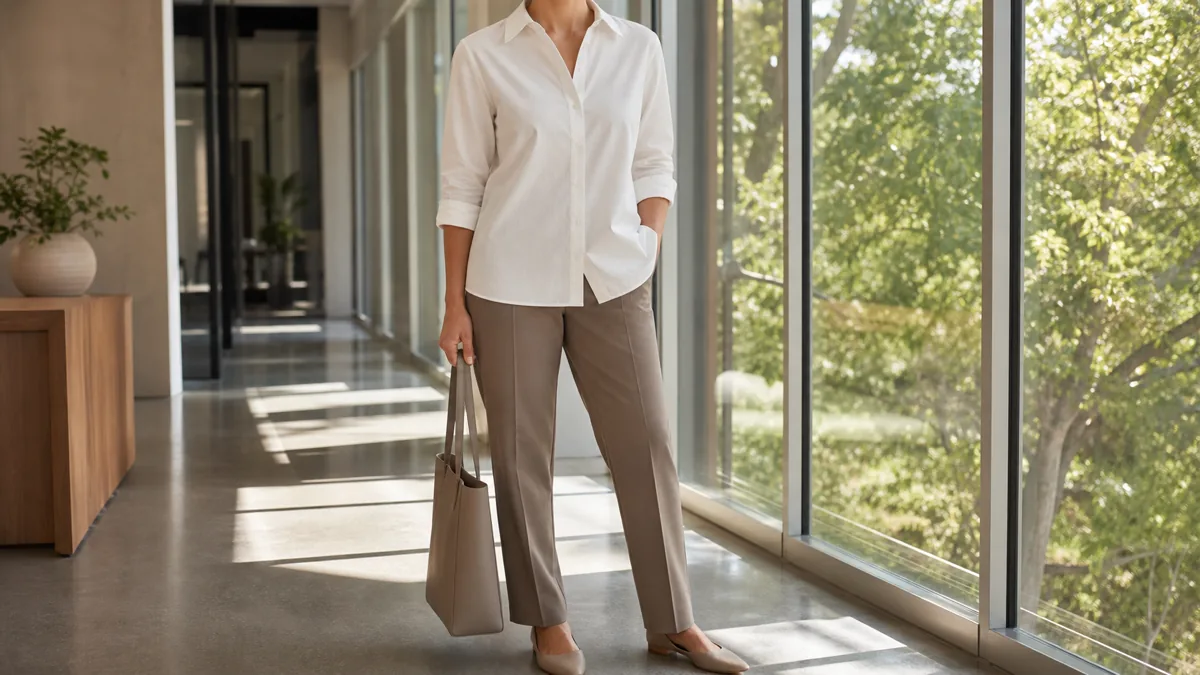
Working out an outfit for tomorrow? Save this page. It is easier to skim the night before than to remember.
At a glance
Works
- A cotton poplin shirt untucked over straight-leg trousers — breathable weave that still reads as polished
- A sleeveless shell with a lightweight cardigan kept at your desk for meetings
- Wide-leg linen-blend trousers that let air circulate without wrinkling by ten o'clock
- An unlined cotton blazer over a camisole — the blazer reads as structure, the camisole handles the heat
Depends
- Culottes — only where you have seen people at your level wear them without comment
- Open-toe mules — Duke's attire guide accepts open toes at its casual level; a sample summer policy quoted by SHRM rules them out
- A polo shirt — reads right in casual and creative offices but too informal for client-facing floors
Skip
- Pure linen anything — it wrinkles within an hour and reads as rumpled by lunchtime
- Flip-flops, gym sandals, or any shoe you would wear to a pool
- Spaghetti straps without a layer, even in a casual office
When the temperature hits ninety and you still have to look professional, the problem is not just the commute. It is the entire day.
Most hot-weather advice focuses on staying cool outside and ignores the fact that dress codes do not take a summer break. These eleven outfits handle the heat without crossing the line your office draws.
1. A cotton poplin shirt untucked over straight-leg trousers
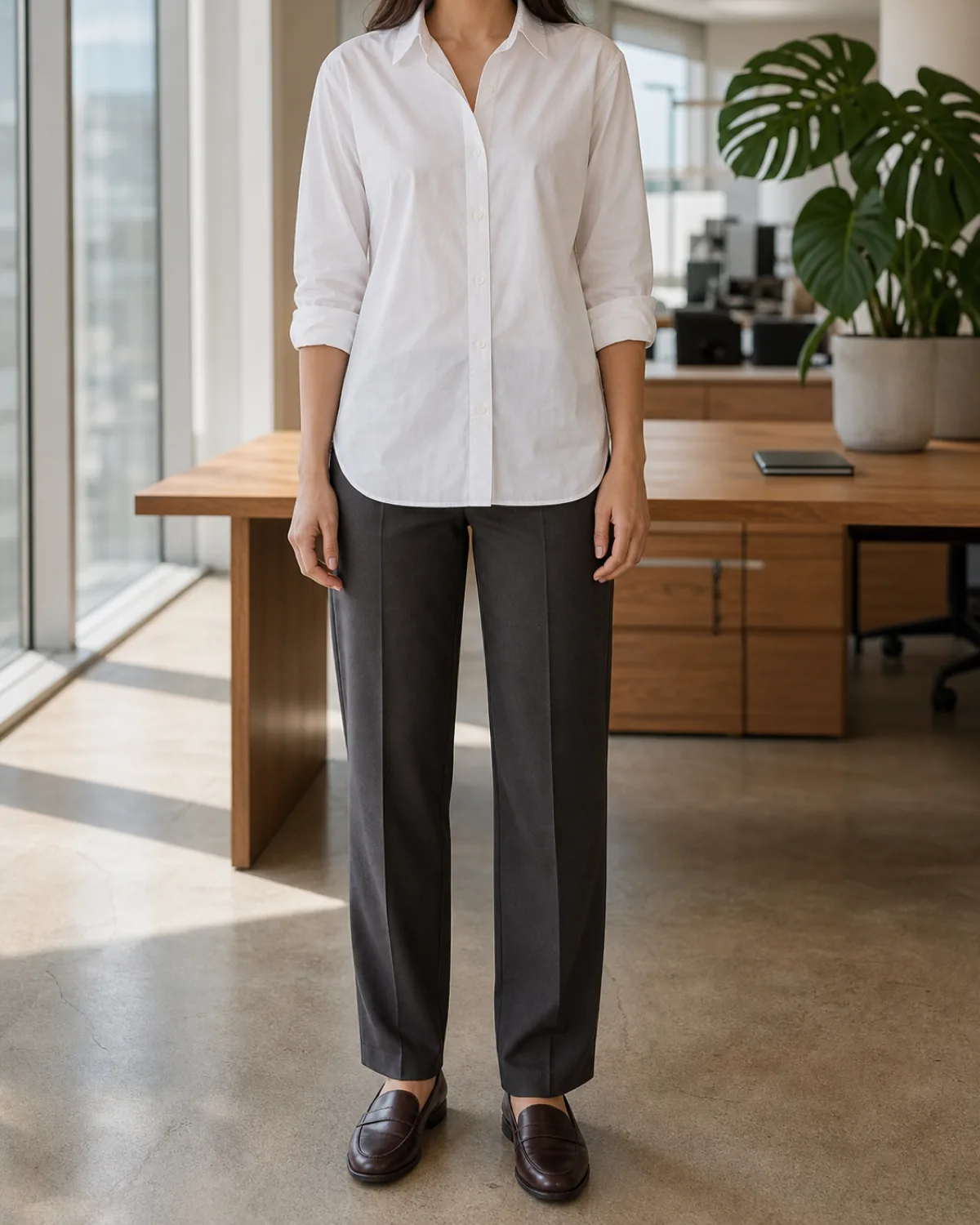
Poplin is a tight weave that reads polished but is thin enough to breathe. The untucked hem in a straight cut keeps airflow at the waist without reading as sloppy. Indeed's business-casual list pairs button-down shirts with slacks and closed-toed shoes such as loafers, and this outfit lands squarely inside it.
Roll the sleeves to the forearms. It looks deliberate, not disheveled, and it lets heat escape.
- Cotton poplin breathes better than oxford cloth and wrinkles less than pure linen
- An untucked straight hem reads as intentional if the shirt is not too long — aim for the hip bone
- Dark trousers absorb heat outside but hide the creasing that light colours show at the knee
- Swap the loafers for leather flats on days when the commute is especially hot
2. A sleeveless shell under a lightweight cardigan you can remove
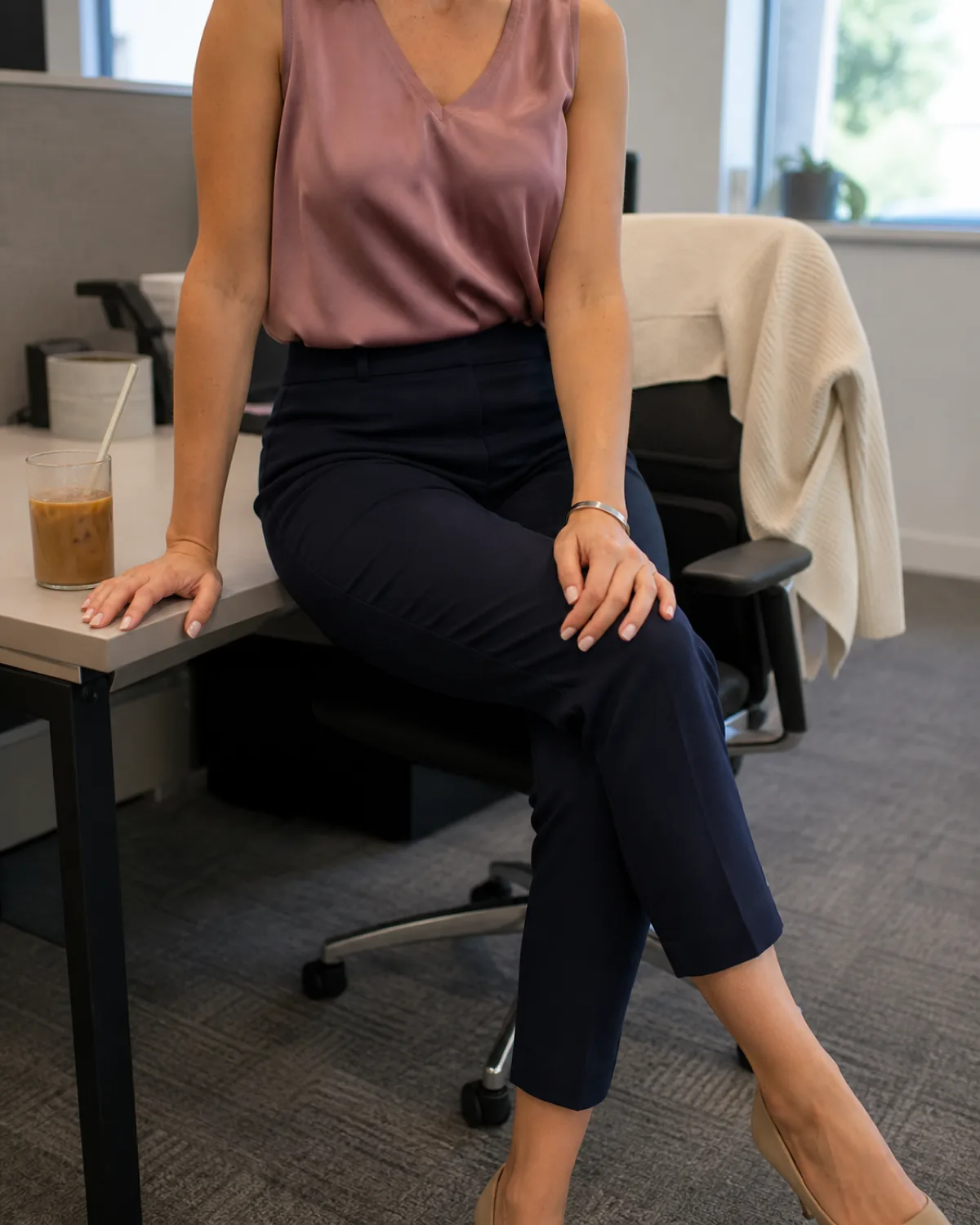
The shell does the work in the heat. The cardigan goes on for meetings or client-facing moments and stays on the back of your chair the rest of the time. This gives you two dress-code registers in one outfit without carrying a separate bag.
A V-neck shell in a matte fabric sits closer to professional than a tank top and reads as a finished piece on its own. Check your handbook on sleeveless tops first: an HR specialist quoted by SHRM said sleeveless dress shirts were allowed at one employer and not at the next.
- A sleeveless shell is cooler than any short-sleeve blouse, and its high neckline reads more deliberate than a tank
- Keep the cardigan at the office permanently so you never have to plan around temperature
- Tucking the shell in defines the waist and keeps it from reading as a casual tank
- Navy or black ankle trousers in a lightweight weave pair with almost any shell colour
3. Wide-leg linen-blend trousers with a tucked knit tee
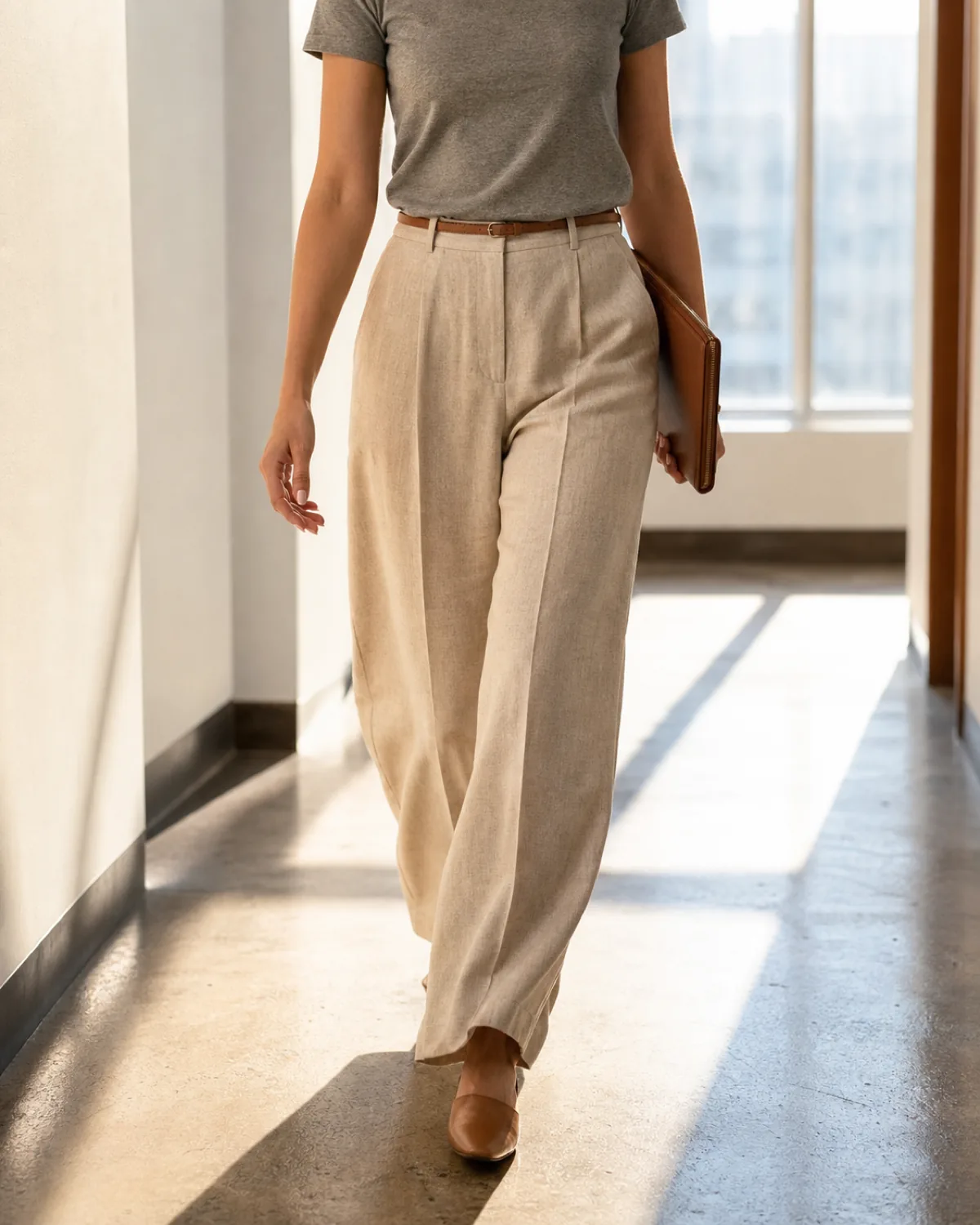
Linen blend, not pure linen. The blend resists the wrinkle spiral that makes pure linen look slept-in by mid-morning. Wide legs let air circulate around your legs while reading as trousers, not pajamas, because the pressed front crease holds the structure.
The tucked knit tee defines the waistline and separates this from a weekend outfit. It reads as deliberate because you chose to tuck it.
- A pressed front crease is the detail that makes wide-leg trousers read as workwear
- A narrow belt at the waist anchors the tuck and adds a small structural signal
- Open-toe mules split the guides: Duke accepts open toes at its casual level, a sample summer policy quoted by SHRM rules them out, so check yours first
- A fine-gauge knit tee breathes better than a woven blouse and drapes without clinging
Where to start
Find your situation, skip ahead
Your office has a written dress code and the building runs hot
Start with idea 1 or 5. Both stay within standard business-casual lines and the fabrics breathe well enough for a warm office.
01 A cotton poplin shirt untucked over straight-leg trousers05 Ponte ankle trousers with a short-sleeve blouse
Your office is casual and you want to stay cool without looking careless
Ideas 7, 9, and 11 sit at the relaxed end of professional. Check whether your office allows culottes and denim before committing to 7 or 10.
07 Culottes with a crisp button-down09 A polo in pique cotton with tailored chinos11 A matching set in lightweight crepe or chambray
You commute on foot or by transit in the heat and need to arrive looking presentable
Ideas 3 and 4 handle movement and humidity. Wide-leg linen blend and a shirtdress both survive a sweaty commute better than tailored trousers.
03 Wide-leg linen-blend trousers with a tucked knit tee04 A breathable shirtdress with a structured belt
4. A breathable shirtdress with a structured belt
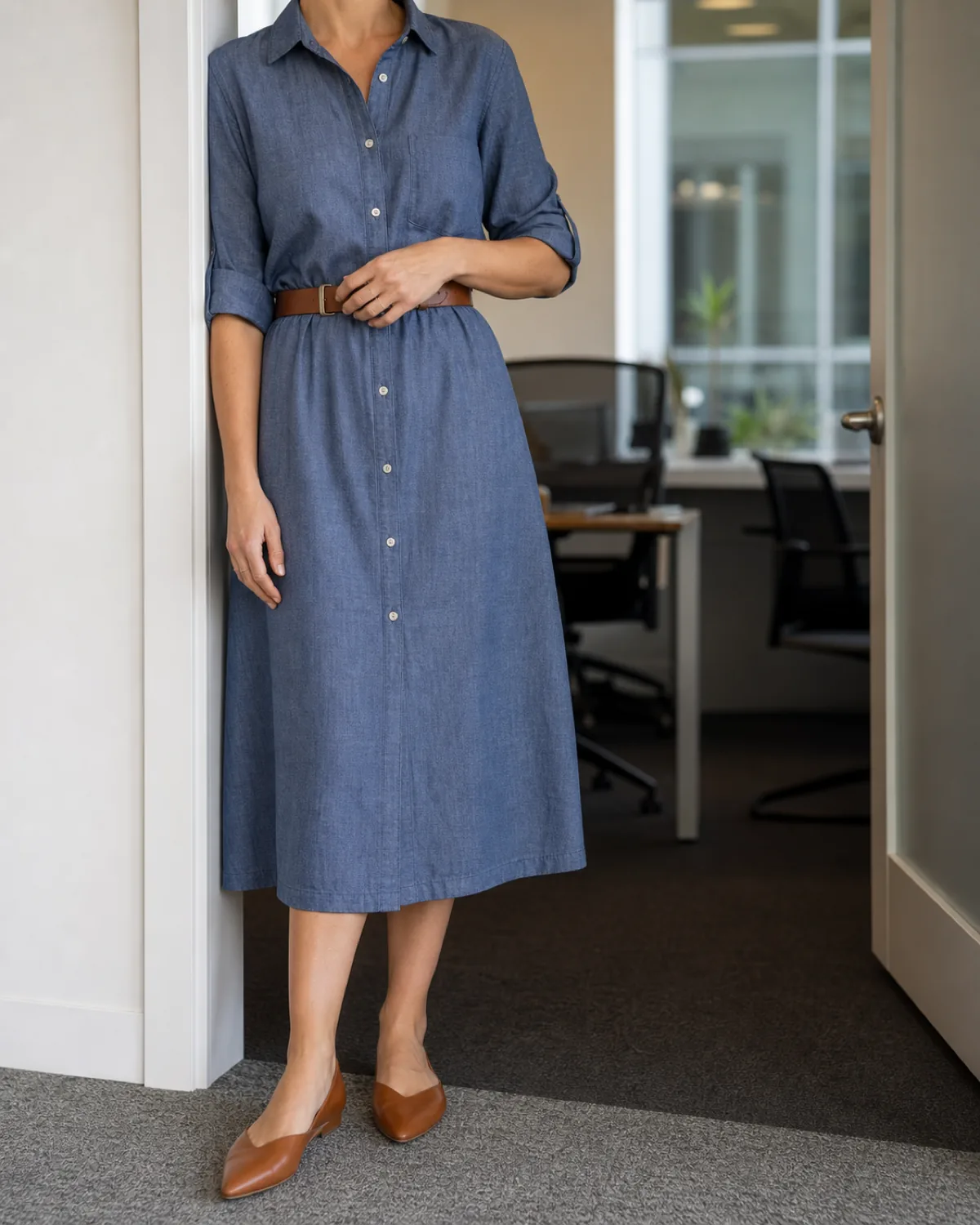
One piece, one decision. The belt is what separates this from a sundress: it cinches the waist, adds a visible hardware detail, and signals that you put the outfit together on purpose. Cotton chambray breathes well and softens with each wash without losing its collar structure.
The collar and front button placket do the formality work. The rest of the dress just needs to fit and fall cleanly.
- A shirtdress with a collar reads as more professional than a pullover dress in the same fabric
- The belt should sit at your true waist, not on your hips — it keeps the silhouette intentional
- Chambray breathes better than structured cotton and reads less casual than jersey
- Mid-calf length sits well below the knee-height hemline that career-centre guides set, without running warm the way knee-length can
5. Ponte ankle trousers with a short-sleeve blouse
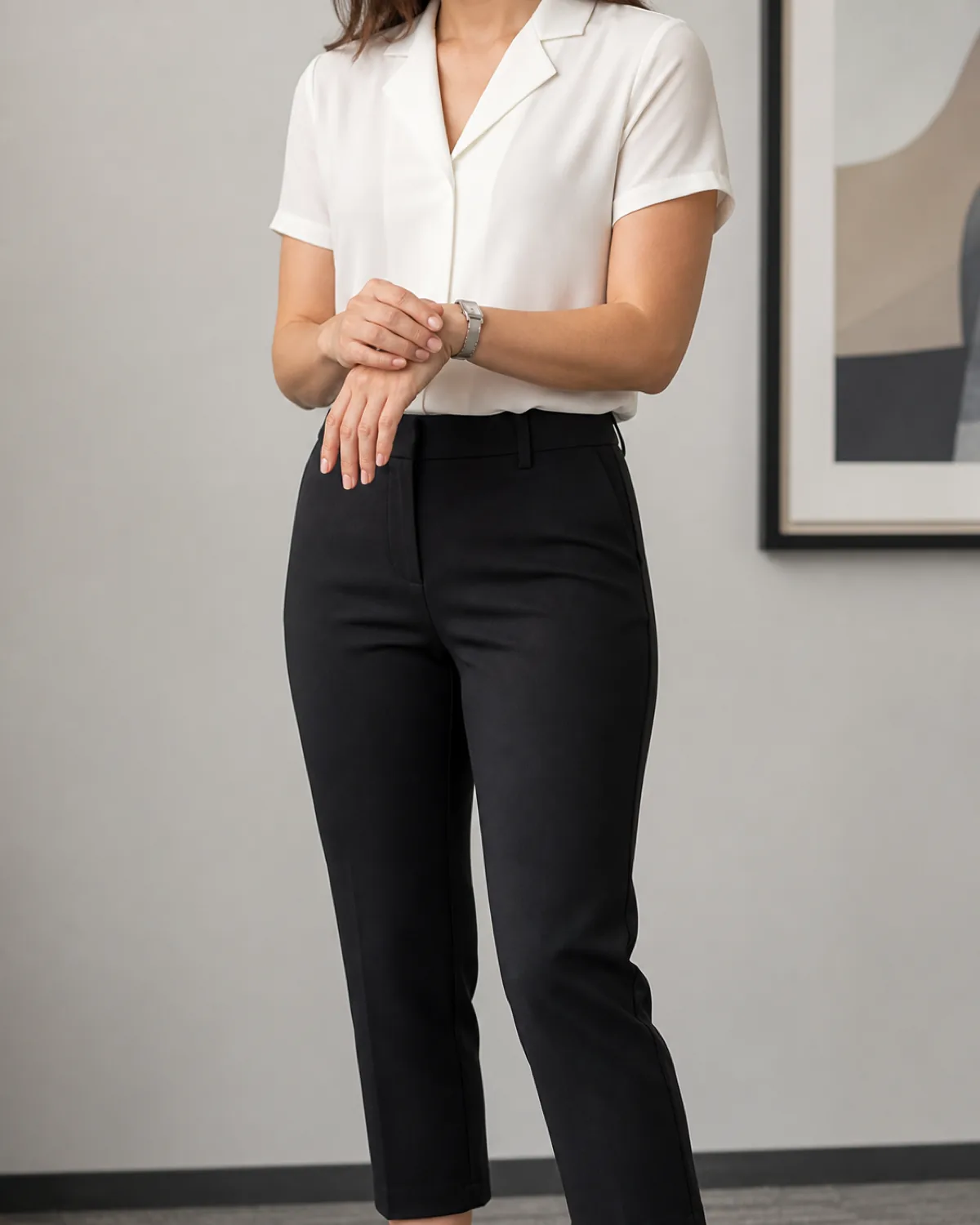
Ponte stretches and does not wrinkle, which makes it a default bottom layer for hot days when you do not want to think about creasing. A thin-weave ponte traps less heat than you expect. Short-sleeved shirts appear on the appropriate list of a sample summer policy quoted by SHRM, and the notched collar adds just enough structure to read as intentional.
This combination works for days when you want to look put-together without spending any mental energy on it.
- Thin-weave ponte holds its shape through humidity and sitting without bagging at the knees
- Short sleeves end cleanly at mid-upper-arm — no rolling, no adjusting
- A notched collar on the blouse adds a small formality signal without extra warmth
- Black ponte pairs with nearly anything and hides the knee crease that lighter trousers show
6. A cotton blazer with nothing heavy underneath
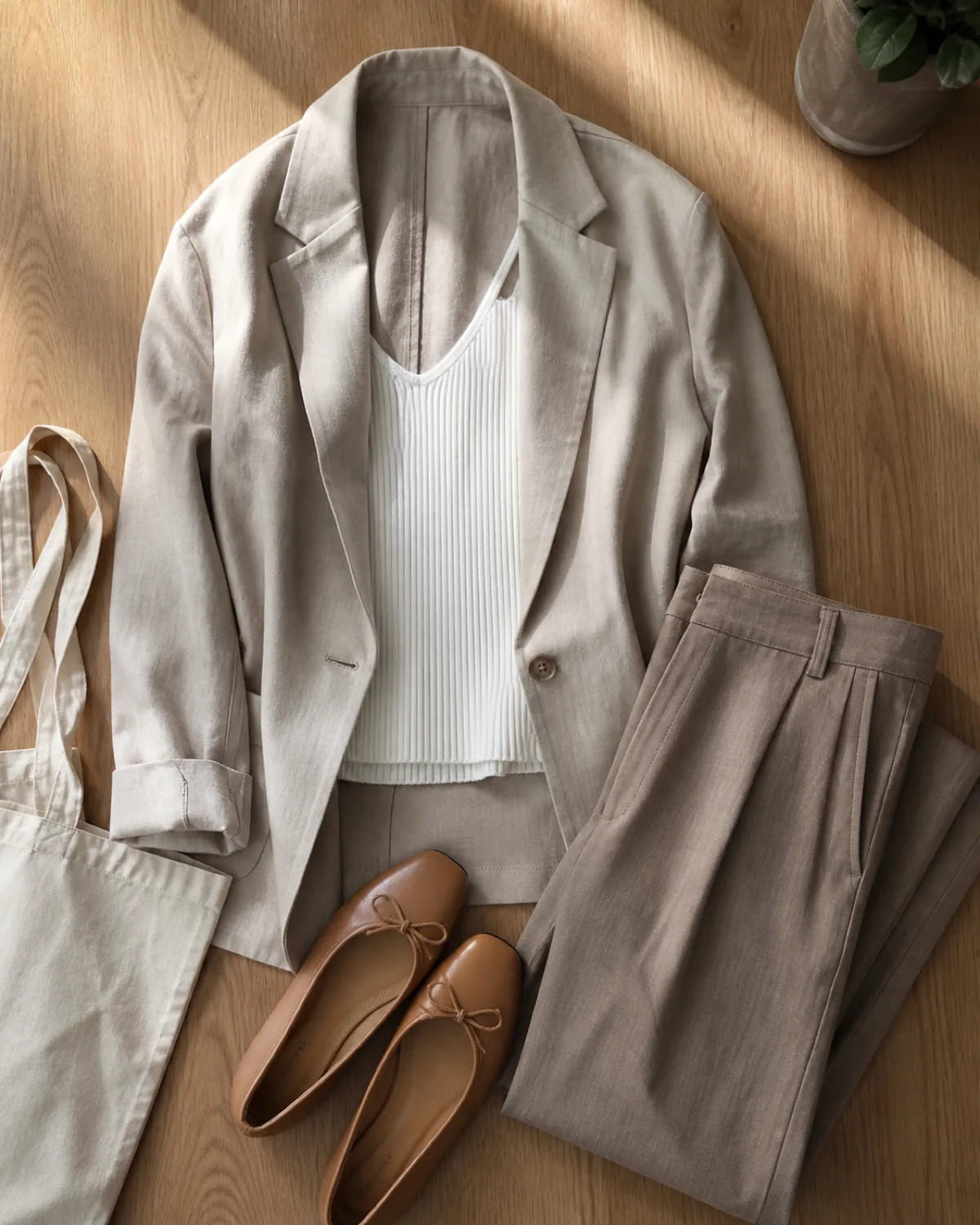
An unlined cotton blazer over a camisole or tank. The blazer says "I tried" even when everything underneath is minimal. Unlined is the key word — a lined blazer in cotton defeats the purpose because the lining traps heat against your body.
This is the outfit for days when you need to look a level above casual but the temperature makes anything structured feel unbearable.
- An unlined blazer folds smaller than a lined one and weighs less in your bag
- A ribbed knit camisole has enough texture to not read as underwear under an open blazer
- Cotton-linen blend blazers exist and breathe slightly better than pure cotton
- Keep the blazer on indoors: Texas A&M lists camisoles among tops to avoid, and a sample summer policy quoted by SHRM calls tank tops inappropriate
7. Culottes with a crisp button-down
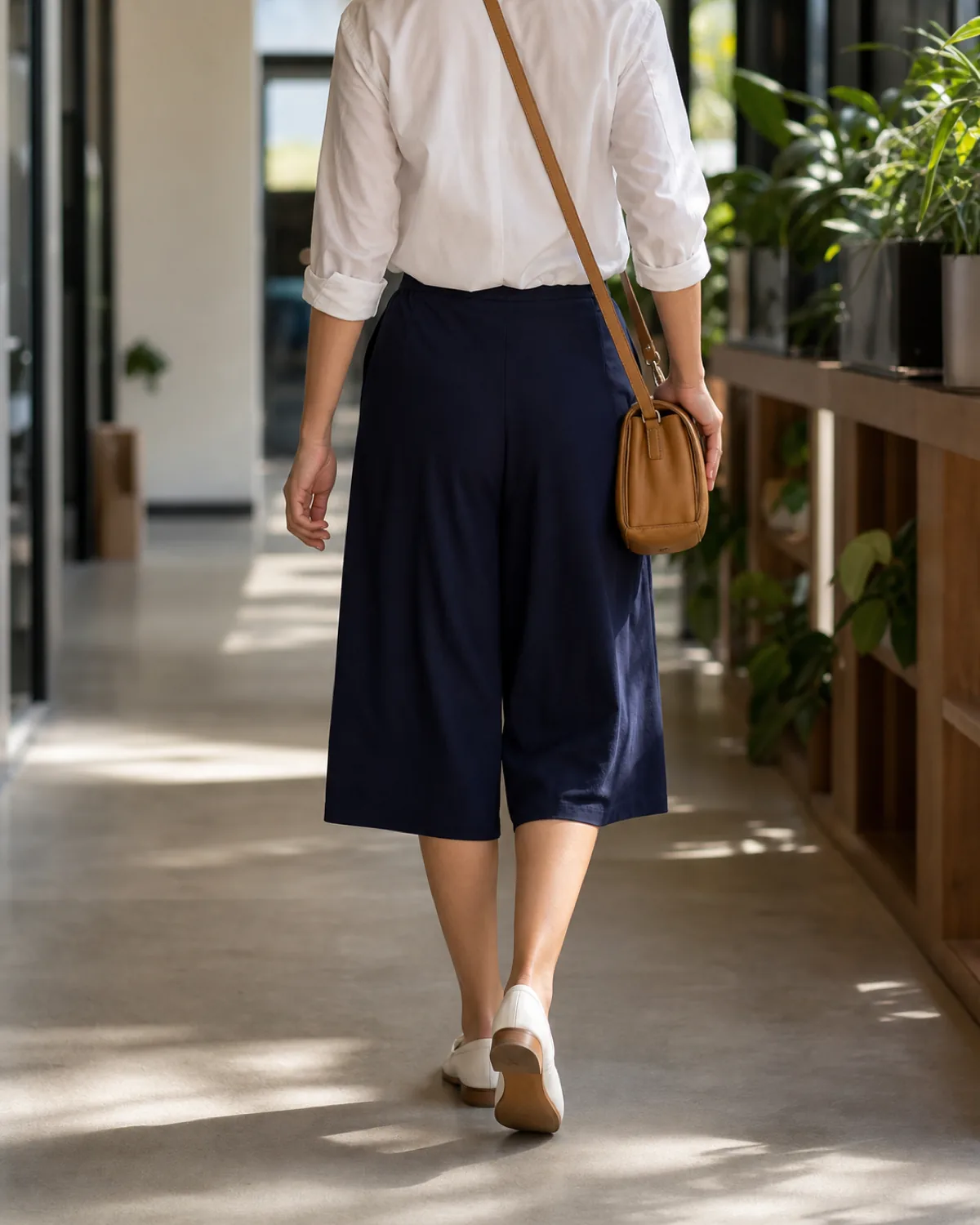
Culottes give knee-to-ankle airflow while reading as trousers from behind. From this angle, the wide drape and clean hemline look like a structured skirt or wide-leg trouser. Not every office accepts culottes, so look at what people at your level wear before committing.
Roll the sleeves of the button-down two turns for ventilation. It reads as a choice, not as sloppiness.
- Culottes in a structured fabric like ponte or crepe hold their shape better than in linen
- The hemline should fall just below the knee — too short and they read as shorts
- A tucked-in button-down with culottes keeps the waistline visible and the outfit anchored
- Pair with loafers or closed-toe mules — heels work but are not necessary
8. A cotton-voile midi skirt with a ventilated back pleat
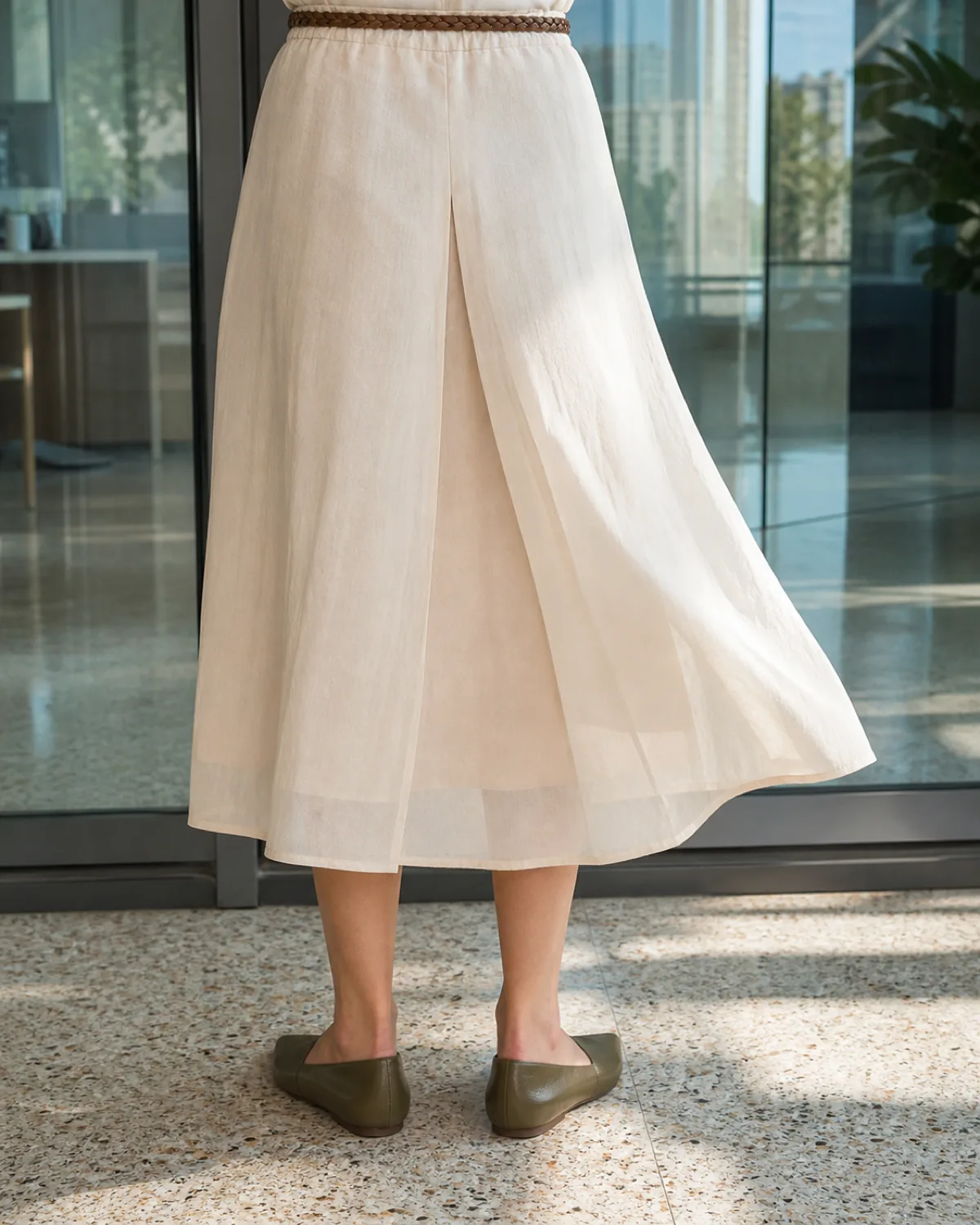
Cotton voile is sheer enough to let air through but not sheer enough to be see-through when lined. The pleat adds movement and ventilation that a pencil silhouette cannot offer. You can see the light passing through the fabric at the pleat in the image — that is how thin the weave is.
Midi length clears the hemline test with room to spare. Iowa's career centre says skirts should fall at or below the knee, and Duke's attire guide puts the limit at the top of the kneecap.
- A lined voile skirt gives you transparency for airflow without transparency for exposure
- The pleat opens as you walk and closes as you stand — it ventilates only when you need it
- A braided leather belt at the waist reads as a finished detail without adding bulk
- Pair with closed-toe flats to keep the formality level consistent with the skirt
9. A polo in pique cotton with tailored chinos
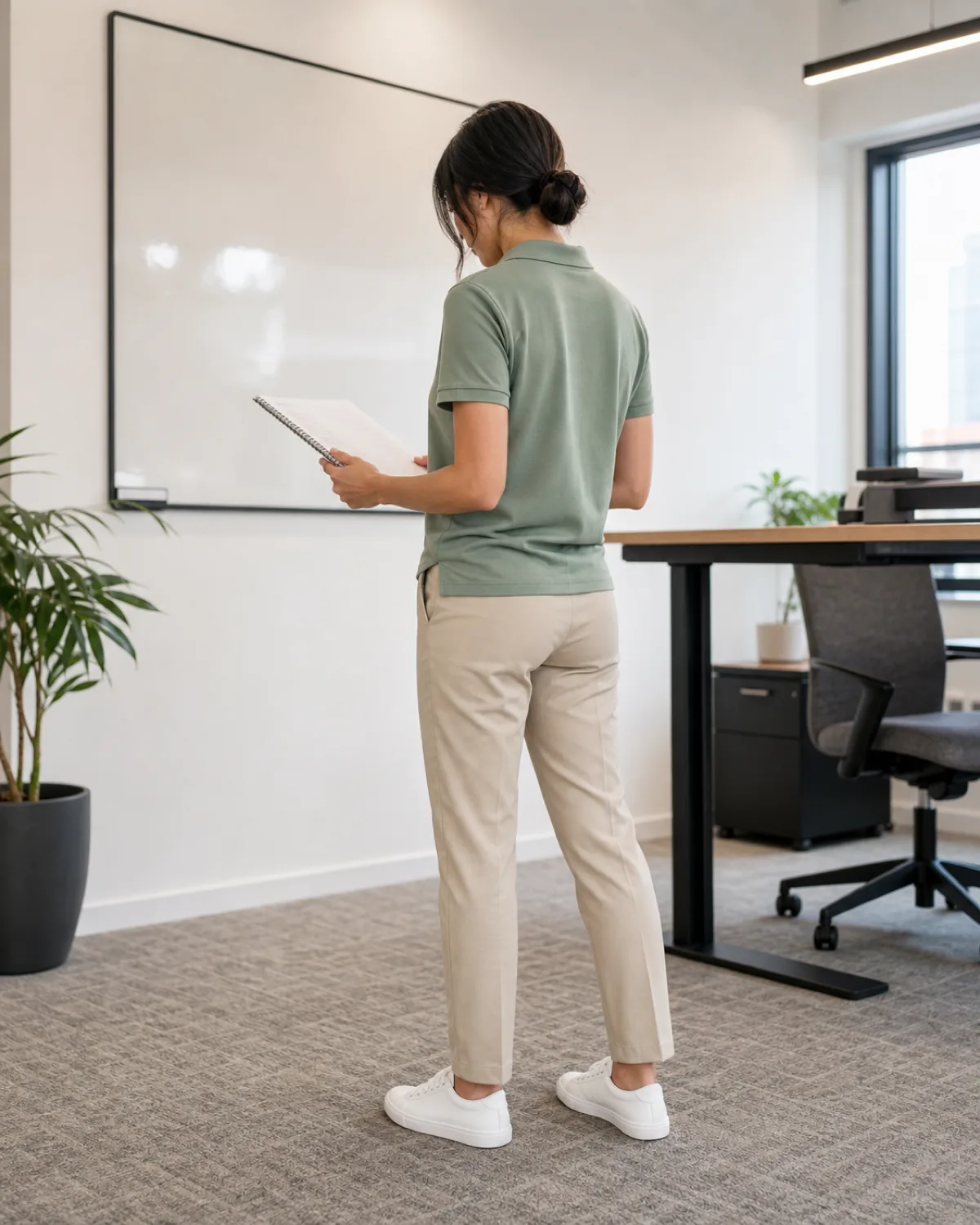
A polo is cooler than a button-down and more structured than a tee. Pique cotton has a visible texture that reads as intentional rather than plain. This combination works in offices that sit at the casual end of business casual — creative studios, tech companies, startups that have an unwritten dress code rather than a written one.
The chinos do the formality work here. A slight taper at the ankle keeps them from reading as weekend khakis.
- Pique cotton has a waffle-like texture that breathes well and holds its shape
- Tailored chinos with a taper read differently from flat-front khakis — the fit is the signal
- White sneakers work in casual offices but not in most traditional business environments
- If your office is on the fence, wear loafers instead of sneakers and the polo still works
10. Dark straight-leg jeans with a fluid blouse
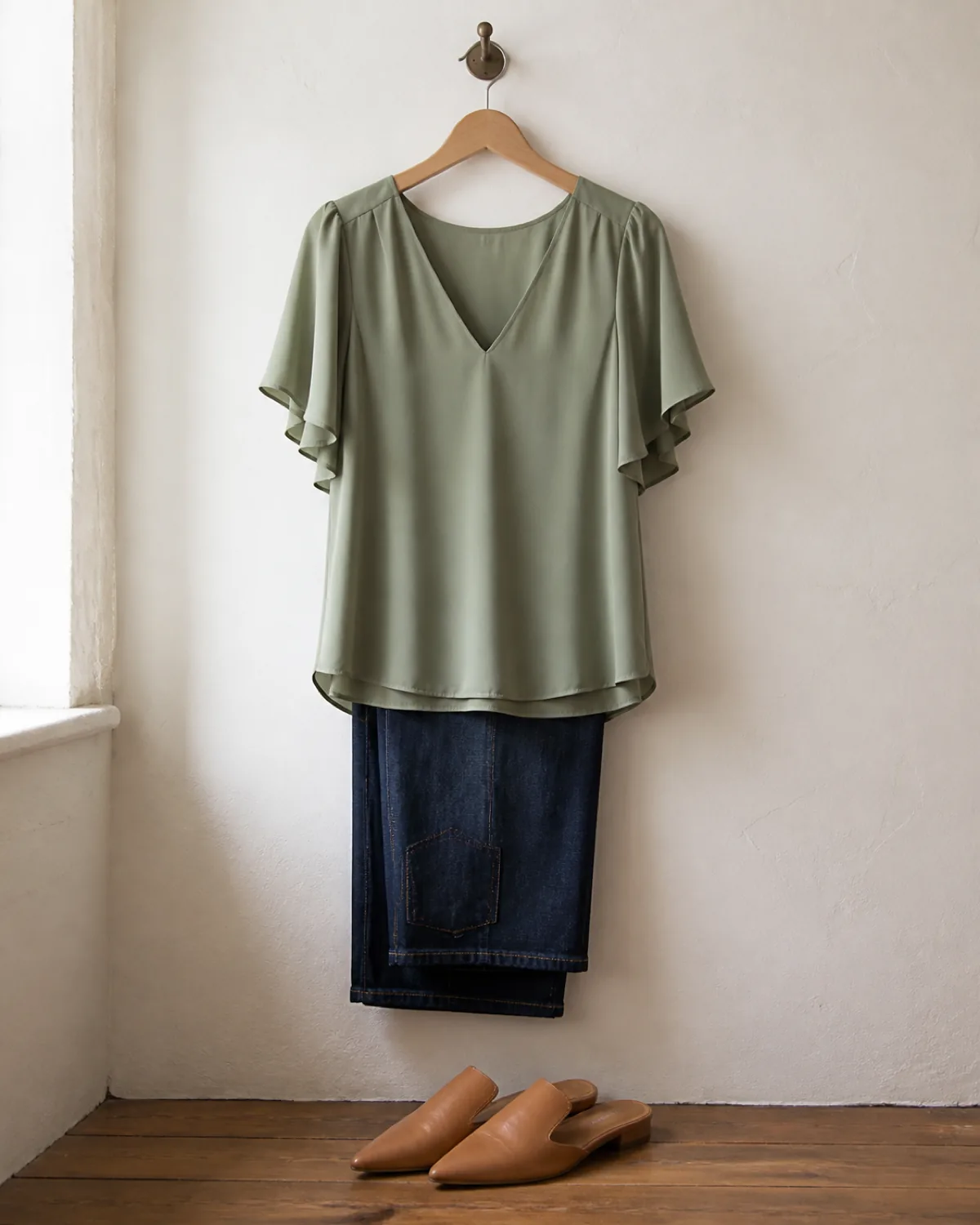
Some offices allow dark jeans year-round. In hot weather, they become a stable bottom half that lets you go lighter on top. The fluid blouse with flutter sleeves offsets the weight of the denim — it moves when you move and lets air in through the sleeve openings.
Confirm denim is allowed at your office before committing. If it is, dark indigo reads as more intentional than faded or distressed.
- Dark straight-leg jeans read closer to trousers than any other denim silhouette
- A fluid blouse in crepe or a similar draping fabric contrasts with the rigidity of denim
- Flutter sleeves add movement and ventilation without the casualness of a tank top
- Pointed-toe mules or loafers keep the formality level above what sneakers would signal
11. A matching set in lightweight crepe or chambray
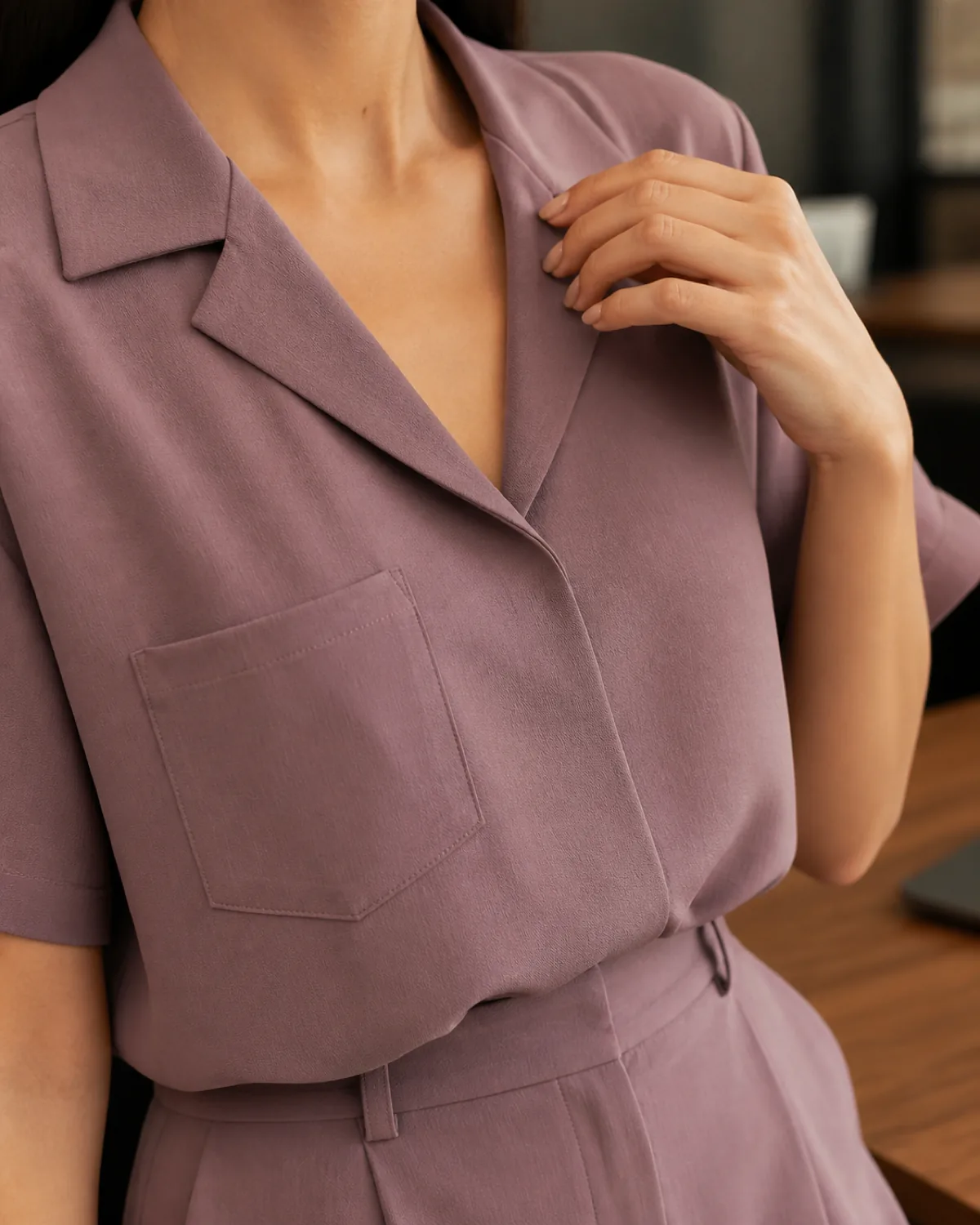
A matching set removes every morning decision. The fabric match reads as coordinated even though the two pieces are simple. Crepe drapes without clinging and has a matte surface grain that photographs as texture, not flatness. A camp collar on the top keeps the neckline open and the look relaxed without reading as underdressed.
This is the outfit for days when you want to look like you planned something but do not want to spend any time planning it.
- Crepe drapes away from the body instead of clinging to it — a real advantage in humidity
- A matching set in one colour reads as more polished than two separate pieces in two colours
- The camp collar sits flat and open — no buttoning, no adjusting, no heat trapped at the neck
- Lightweight crepe wrinkles less than linen and packs smaller than ponte
Start with the coolest fabric your dress code still accepts, then adjust formality up from there. One well-chosen lightweight layer is easier to put on than to undo a sweat stain.
Where the dress-code definitions come from
- What Is Business Casual Attire? (With Examples and Tips) — Indeed Career Guide
- What Not to Wear This Summer (At Work) — SHRM (Society for Human Resource Management)
- Employees Dressing Too Casually? Clarify Your Dress Code — SHRM (Society for Human Resource Management)
- Attire Guide — Career Hub, Duke University
- Dress for Success — Pomerantz Career Center, The University of Iowa
- Dress for Success — Career Center, Texas A&M University
Keep this one
Save it where you plan outfits
Pin the image above to the board you actually check on a Sunday night. This guide is written to be re-read, not read once.
Tonight, before you close this tab
- Check your employee handbook for a summer dress-code addendum or seasonal adjustment
- Try your lightest work trousers after a full wash cycle to see how they hold up in humidity
- Keep a lightweight cardigan or unlined blazer at the office permanently for meetings
- Confirm whether your office allows open-toe shoes before buying summer work sandals
- Lay out tomorrow's outfit tonight with both the commute temperature and the office temperature in mind